
1930s Celluloid “Indian Chief in Canoe” Paddle-Action Toy – Made in Japan

A rare 1930s Japanese celluloid paddle-action toy featuring a canoeing “Indian Chief,” with articulated rowing arm and vibrant hand-tinted colouring.
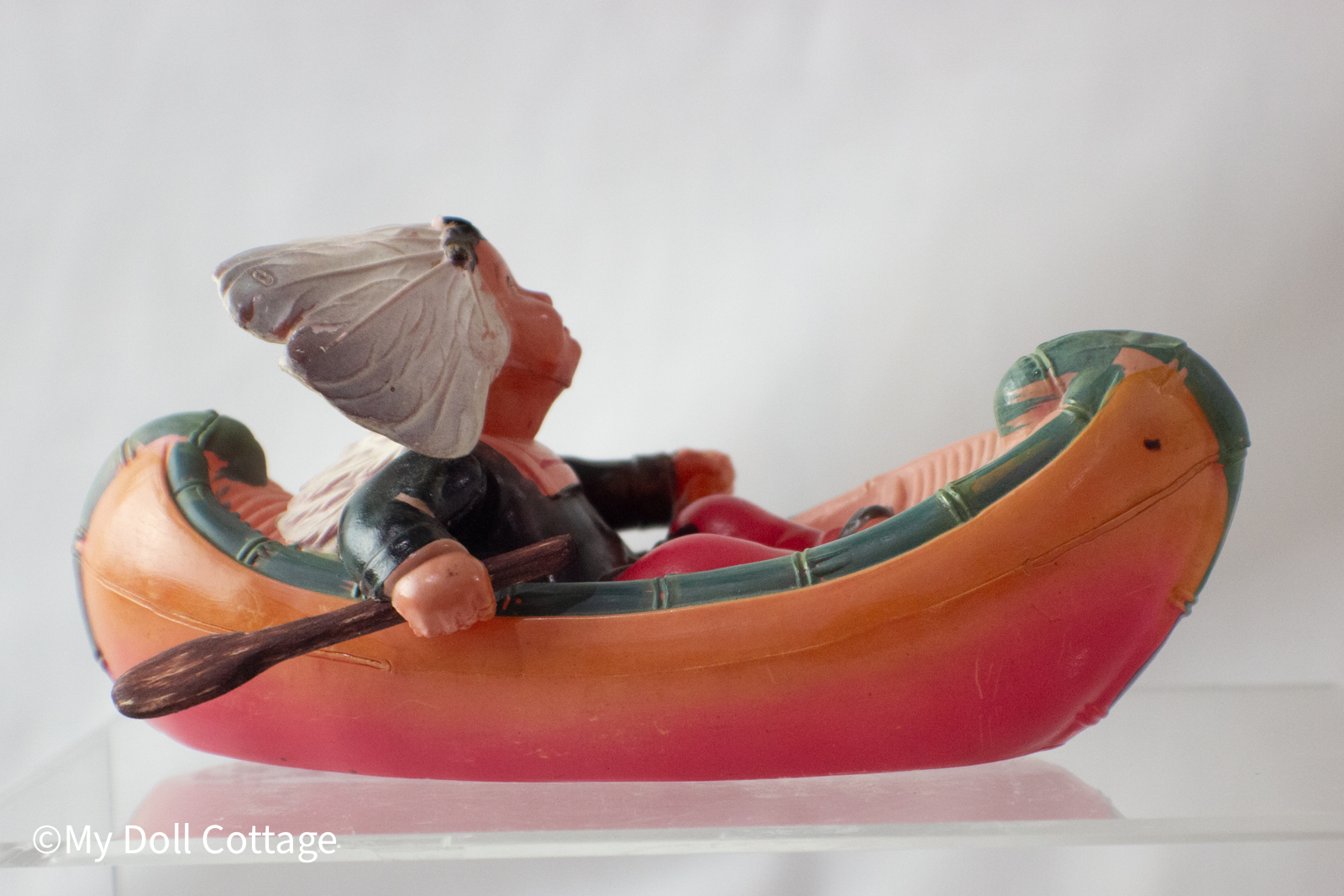
This charming early 20th-century toy is a Japanese celluloid paddle-action figure, produced during the 1930s, a peak period for light weight moulded celluloid toys exported from Japan. The toy depicts a stylised “Indian Chief” seated in a vividly coloured canoe, complete with an articulated arm designed to simulate a rowing motion when handled.
The canoe is moulded in gradient tones of pink, orange and green, with raised ribbing to imitate wood and lashings. The figure features a moulded feather headdress, painted facial features, and a single embossed oar extending from the moving arm. Despite its fragile material, the toy has survived in excellent condition, with only light surface wear consistent with age.
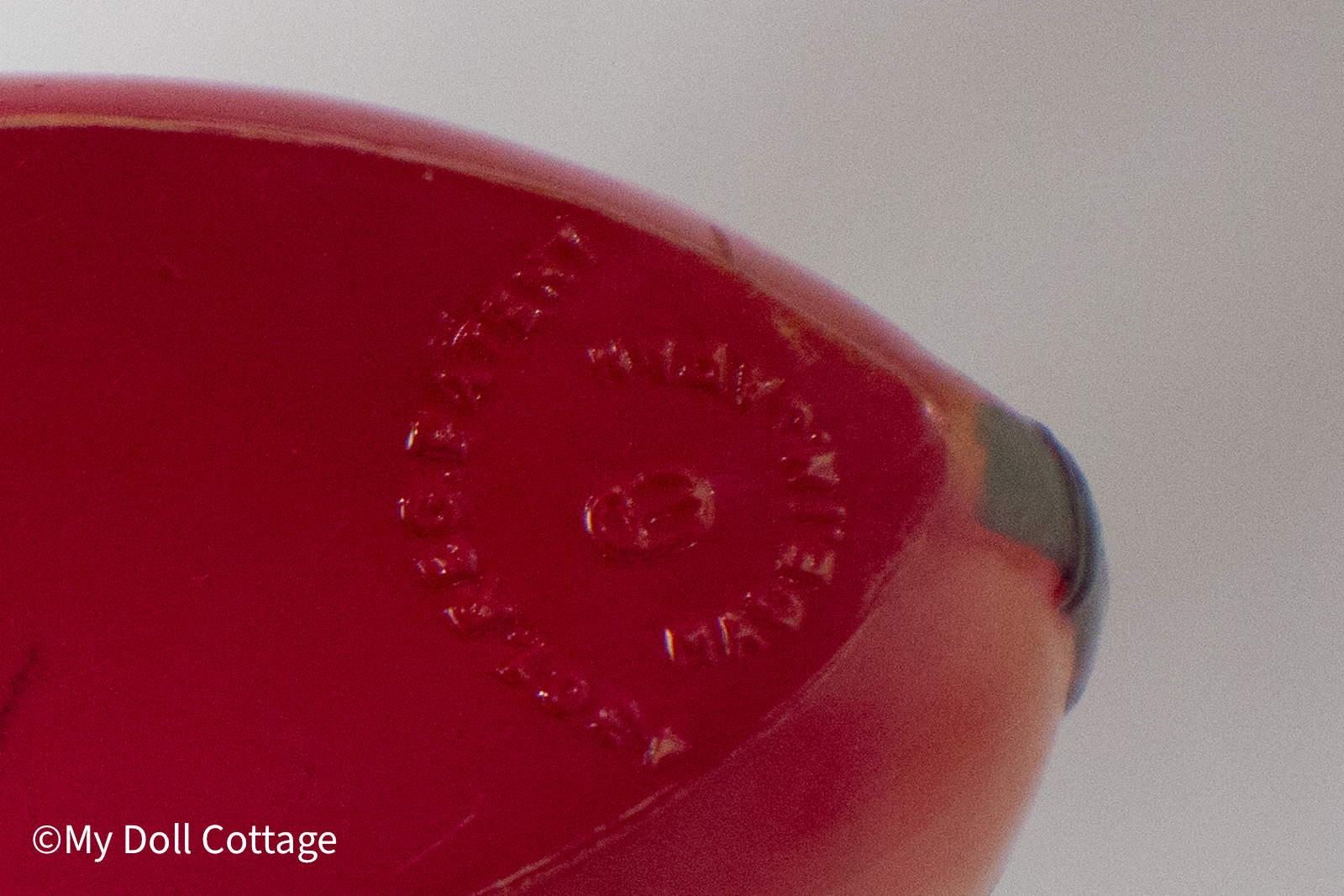
The underside is embossed “MADE IN JAPAN / REG. PATENT / 4307”, a mark associated with small Japanese celluloid manufacturers active between the late 1920s and mid-1930s. These toys were commonly exported internationally and sold through variety stores and novelty catalogues.
Features
Measurements: 170 x 80 x 70 mm
Condition: Excellent - Minorpaint wear typical of 1930s pieces.
Markings: MADE IN JAPAN / REG. PATENT / 4307,INSPECTION PASS TCTMA - Made in Japan
Date Note: Date is an estimate based on available research and stylistic features. If you have additional information, please contact us to help update our records.
Made from the following materials
Celluloid, a type of thermoplastic made from camphor and nitrocellulose, emerged in the mid-19th century as one of the first synthetic plastics. Its invention marked a revolutionary development in the toy industry, leading to the production of lightweight, durable, and colourful dolls and toys that captured the imagination of children and collectors alike.
The commercialization of celluloid began in the 1860s, with its use expanding rapidly throughout the following decades. Manufacturers recognized its potential as a substitute for more traditional materials such as wood, cloth, and porcelain. As celluloid was easy to mold and could be produced in a variety of vibrant colors, it quickly became a popular choice for making dolls and toys, significantly impacting the design and aesthetics of playthings during this period.
By the early 20th century, celluloid dolls had gained immense popularity. These dolls were often designed to mimic the appearance of porcelain dolls while being much lighter and more affordable. Celluloid allowed for a wide range of expressions and features, leading to dolls that had more lifelike appearances and intricate detailing. The flexibility of celluloid enabled doll makers to create movable limbs and heads, further enhancing the play experience.
Celluloid also inspired innovative toy designs beyond dolls. During the early to mid-20th century, manufacturers produced a variety of celluloid toys, including miniature animals, figurines, and even playsets. The ability to mass-produce these items made them accessible to a broader audience, solidifying their place in toy history.
Despite its initial success, the use of celluloid began to decline in the late 20th century due to concerns about its flammability and the introduction of safer, more durable synthetic materials. Additionally, the aging process of celluloid can lead to warping and deterioration, which can affect the longevity of toys made from this material. As a result, many collectors today seek vintage celluloid toys for their historical significance and nostalgic value.
Celluloid toys represent a pivotal moment in the evolution of doll and toy making, showcasing the innovative spirit of the early 20th century. These toys not only reflect the technological advancements of their time but also capture the joy and creativity of childhood play. At our museum, we celebrate the legacy of celluloid toys, exploring their impact on design, culture, and the experiences of children across generations.

Additional Product Images




Related Dolls and Toys from our collection
