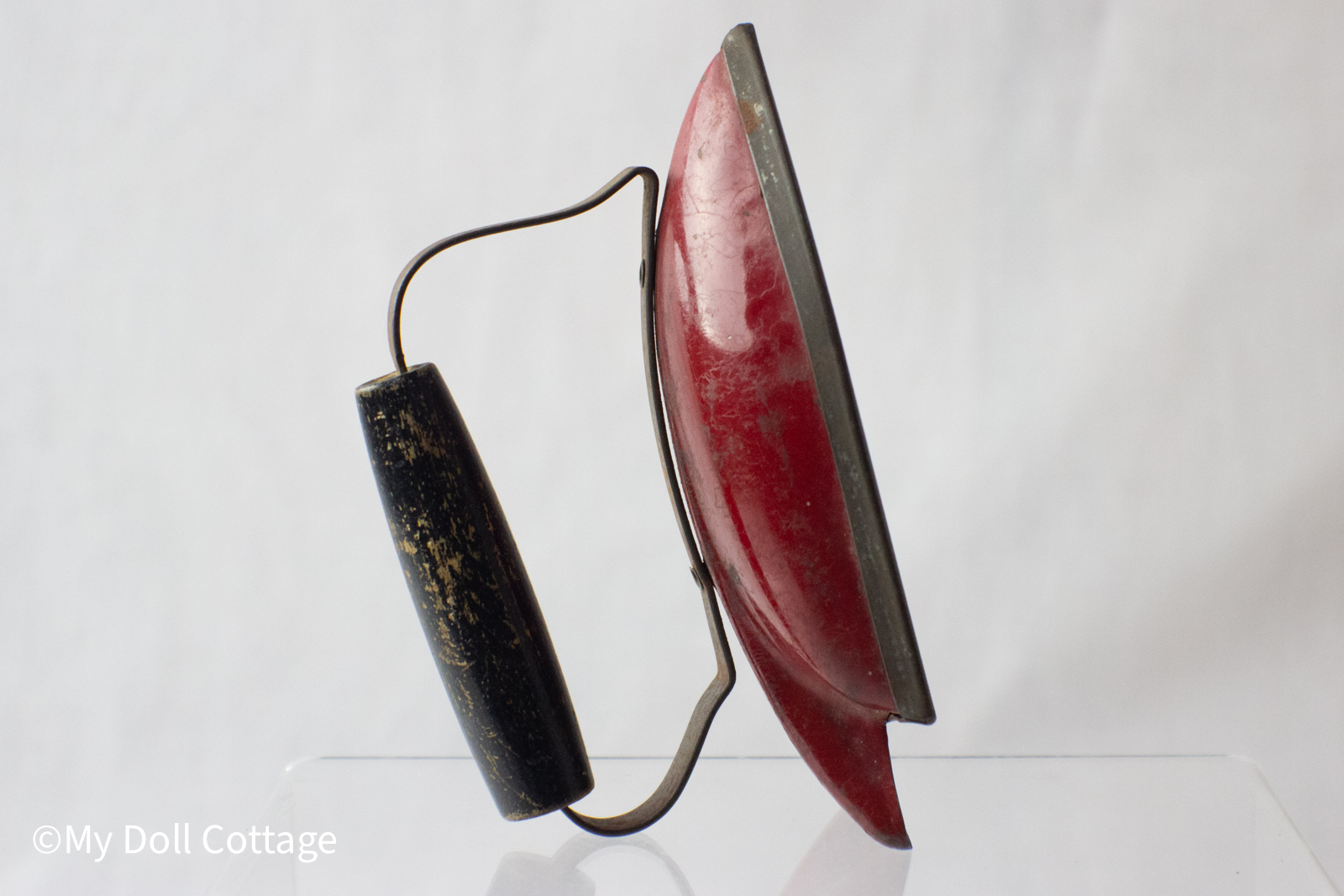
1930s Wolverine Sunny Suzy Toy Iron – Red & Black

A 1930s Sunny Suzy toy iron by Wolverine, featuring a metal body and wooden handle, showing age wear typical of early American tin toys.
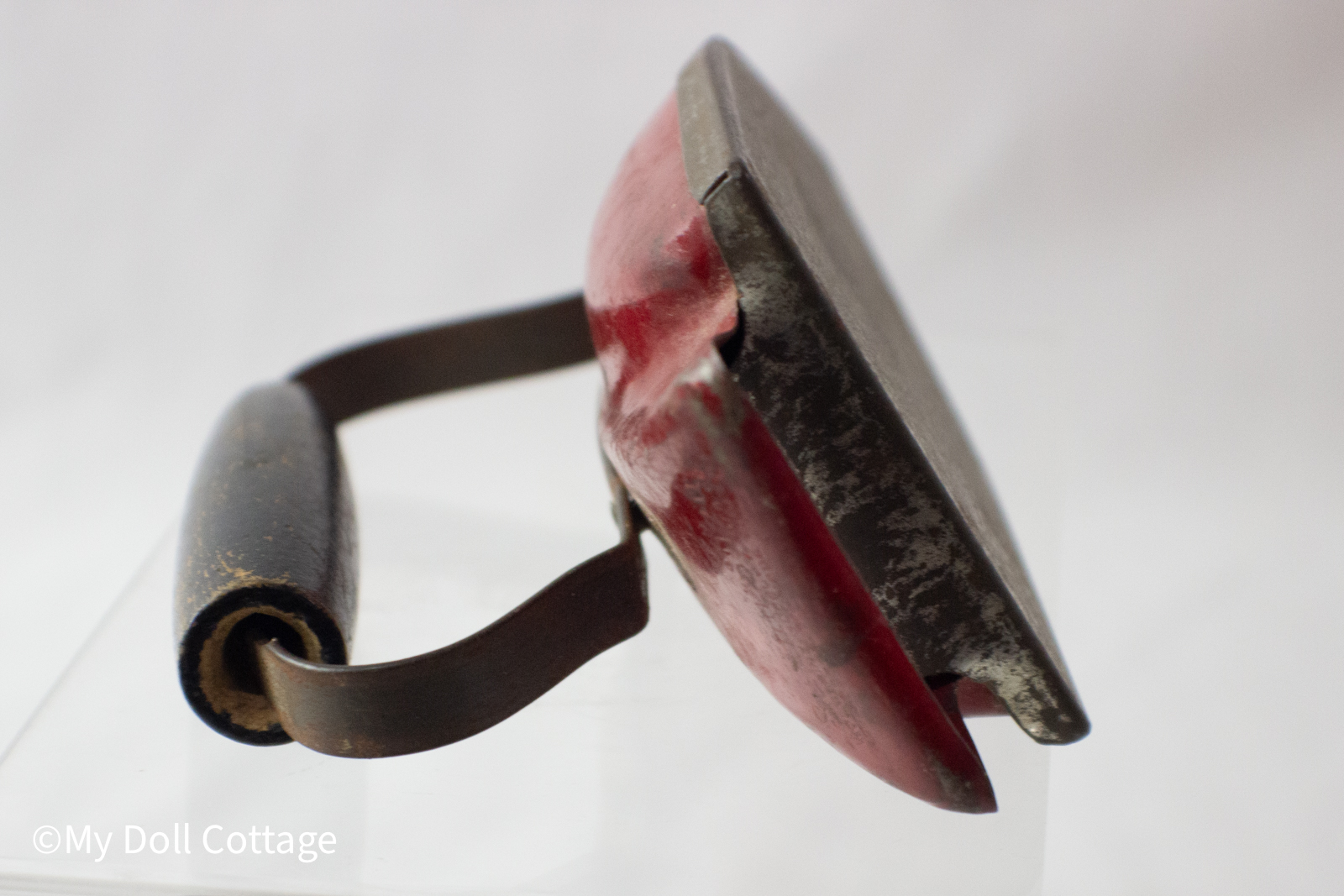
This vintage Sunny Suzy toy iron, produced by the Wolverine Supply & Manufacturing Co. of Pittsburgh, USA, dates to the 1930s. The iron features a classic red painted tin body, paired with a curved black wooden handle supported by simple bent-metal brackets — hallmarks of Wolverine’s early pre-war household-themed toys. Its pointed sole plate and streamlined form reflect the company’s signature approach to creating realistic yet child-friendly replicas of everyday domestic items.
The iron shows expected age-related wear, including surface scratches, scattered paint loss, tarnishing to the metal plate, and movement in the wooden handle. Despite this visible use, the structure remains solid, and the piece stands as a strong example of early American tinplate toy manufacture.
Wolverine Supply & Mfg. Co. (est. 1903, Pittsburgh, Pennsylvania) gained prominence during the 1920s–1940s for its durable, lithographed, and painted metal toys. The Sunny Suzy range included irons, washing machines, stoves, and laundry accessories, many of which became staples in American playrooms for decades. This iron illustrates Wolverine’s emphasis on realism, longevity, and accessible design.
Features
Measurements: 140 x 70 x 100 mm
Condition: Good - handle loose Tarnish
Markings: Sunny Suzy Wolerine Surplus MFG Co Pittsburgh
Date Note: Date is an estimate based on available research and stylistic features. If you have additional information, please contact us to help update our records.
Made from the following materials
Metal has played a significant role in the history of dolls and toys, with materials like cast iron, tin, and brass being used for centuries to create durable and appealing playthings. Each type of metal has distinct characteristics that have influenced its application in the toy industry, leading to a variety of designs and styles.
Cast Iron
Cast iron was one of the first metals used in toy manufacturing, particularly during the 19th century. Its strength and durability made it ideal for creating toys that could withstand the rigors of play. Cast iron toys were often made using molds, allowing for mass production and the creation of intricate designs. Popular cast iron toys included figurines, toy cars, and trains, many of which featured detailed craftsmanship and decorative paintwork. These toys were not only popular with children but also became collectible items over time, cherished for their historical significance and nostalgic appeal.
Tin
Tin, often used in the form of tinplate, became a favored material for toy manufacturing in the late 19th and early 20th centuries. Tin toys were lightweight, affordable, and could be produced in large quantities, making them accessible to a wide audience. Tinplate was often stamped or lithographed with colorful designs, bringing characters and scenes to life. Classic examples of tin toys include wind-up cars, robots, and playful animals, many of which featured moving parts that delighted children. Tin toys remain popular among collectors today, valued for their charm and the artistry involved in their design.
Brass
Brass, an alloy of copper and zinc, has been used in toy making for its attractive appearance and durability. It is particularly well-suited for creating smaller components, such as gears and mechanisms in wind-up toys. The shiny, golden hue of brass gives toys a sense of elegance and sophistication, often seen in decorative pieces and collectibles. While brass dolls are less common than those made from other materials, some artisans have crafted beautiful dolls with brass accents, adding a touch of luxury to their designs.
Throughout history, the use of metal in dolls and toys has allowed for a diverse range of creations, each reflecting the technological advancements and artistic trends of their time. The durability of metal ensures that many of these toys have stood the test of time, allowing them to be enjoyed by new generations of children and collectors alike.
At our museum, we celebrate the legacy of metal dolls and toys, highlighting their role in the evolution of play and the craftsmanship that goes into creating these timeless treasures. From the strength of cast iron to the whimsical designs of tin and the elegance of brass, these materials tell a rich story of creativity and innovation in the world of toys.
Wood in Dolls and Toys
Wood has a long and rich history in the creation of dolls and toys, valued for its durability, natural beauty, and versatility. As one of the oldest materials used in toy making, wood has played a significant role in various cultures around the world, offering endless possibilities for creativity and craftsmanship.
What is Wood?
Wood is a natural material sourced from trees, known for its strength, warmth, and unique grain patterns. Its availability and ease of manipulation have made it a favored choice for artisans and toy makers for centuries. From softwoods like pine and cedar to hardwoods like oak and maple, different types of wood offer varying characteristics that influence the design and functionality of toys.
Applications in Doll and Toy Making
Wood has been used to create a wide range of dolls and toys throughout history. Early wooden dolls often featured simple shapes and painted faces, serving as cherished companions for children. These dolls were crafted with care, sometimes adorned with fabric clothing or accessories made from other materials. The tactile nature of wood allows for a comforting feel, making wooden dolls especially appealing to young children.
In addition to dolls, wooden toys have a rich tradition that includes building blocks, puzzles, and cars. Wooden blocks, in particular, are celebrated for their educational value, encouraging creativity and imaginative play as children construct their own worlds. The durability of wood ensures that these toys can withstand the rigors of play, often becoming family heirlooms passed down through generations.
Cultural Significance
Wooden toys and dolls hold cultural significance in many societies. For example, traditional wooden dolls from countries like Germany and Scandinavia often reflect local customs, attire, and folklore. These handcrafted pieces not only serve as toys but also as representations of cultural heritage and craftsmanship.
Artistic Expression and Collectibility
With the rise of artisan craftsmanship, wooden dolls and toys have gained popularity among collectors and enthusiasts. Artisans often showcase their skills by creating beautifully detailed and intricately designed wooden toys that appeal to both children and adults. The natural beauty of wood, combined with unique craftsmanship, adds to the collectibility and charm of these items.

Additional Product Images



Related Dolls and Toys from our collection
