
1946–1953 Midwinter “Peggy Gibson” Nursery Rhyme Porcelain Mug – England

A charming post-war English porcelain nursery mug by Midwinter, featuring whimsical Peggy Gibson illustrations and produced during the early Burslem Portland backstamp period.
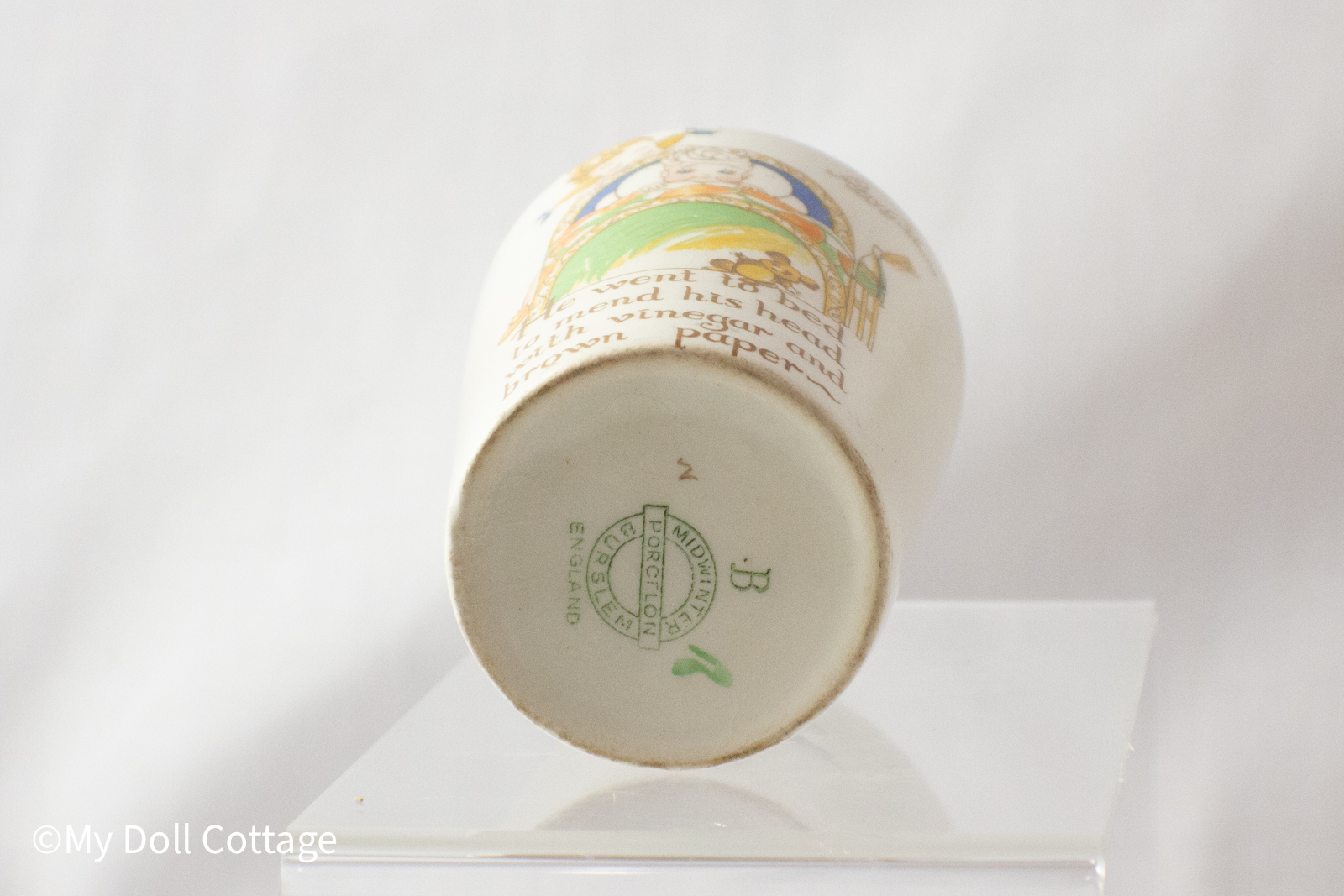
This porcelain child’s mug was produced by Midwinter at their Burslem works in Staffordshire, England, during the late 1940s to early 1950s. The base mark reading “Midwinter Burslem Portland England” confirms manufacture between 1946 and 1953, following the company’s post-war rebranding and export expansion.
The mug features classic nursery imagery illustrated by Peggy Gibson, a well-known British illustrator whose work appeared widely on children’s ceramics, books, and nursery wares during the mid-20th century. The illustrated verse “He went to bed to mend his head with vinegar and brown paper” is taken from traditional English rhyme culture, a popular decorative theme for children’s tableware of the era.
Crafted in glazed porcelain with a soft cream ground and gentle pastel detailing, this mug shows light age-related crazing consistent with mid-century English ceramics. It remains structurally sound and displays well, making it suitable for both collectors of children’s ceramics and nursery display collections.
Features
Measurements: 70 mm round x 100 mm high
Condition: Good overall; light crazing present, no cracks or repairs noted
Markings: Midwinter Burslem Portland England
Date Note: Date is an estimate based on available research and stylistic features. If you have additional information, please contact us to help update our records.
Made from the following materials
Porcelain dolls and toys represent a unique category of collectible ceramics renowned for their fine artistry and exquisite details. Made from a specific blend of clay, feldspar, and quartz, porcelain is fired at high temperatures, resulting in a durable and often translucent material. This firing process allows for intricate detailing and smooth surfaces, making porcelain ideal for creating lifelike dolls and toys.
Porcelain dolls gained popularity in the late 19th and early 20th centuries, characterized by their delicate features and painted expressions. The craftsmanship involved in making porcelain dolls often includes hand-painted facial details, finely sculpted limbs, and beautifully tailored outfits, often made from luxurious fabrics. These dolls are cherished not only as toys but also as collectibles and decorative art pieces, reflecting the artistry of the craftsmen who create them.
Throughout their history, porcelain dolls have been made in various styles, from traditional to contemporary designs, each capturing a unique aspect of doll-making artistry. Today, porcelain dolls and toys continue to captivate collectors and enthusiasts, valued for their beauty, craftsmanship, and the stories they tell across generations.

Additional Product Images


Related Dolls and Toys from our collection
