
c.1860s Brass Counter Bell – Patent August 26, 1863
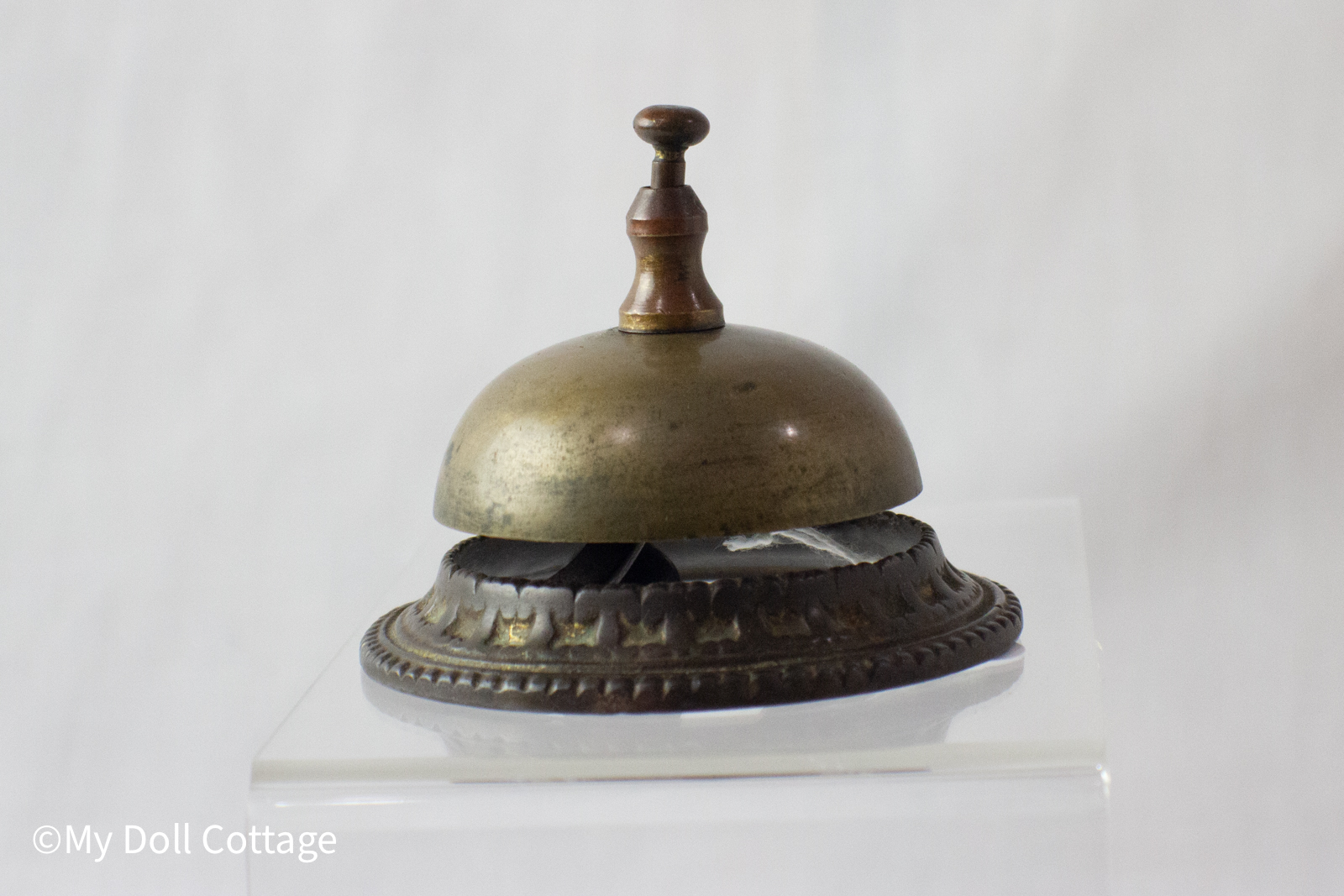
An early American service counter bell from the 1860s, featuring a brass dome and cast iron base, marked with an 1863 U.S. patent date.
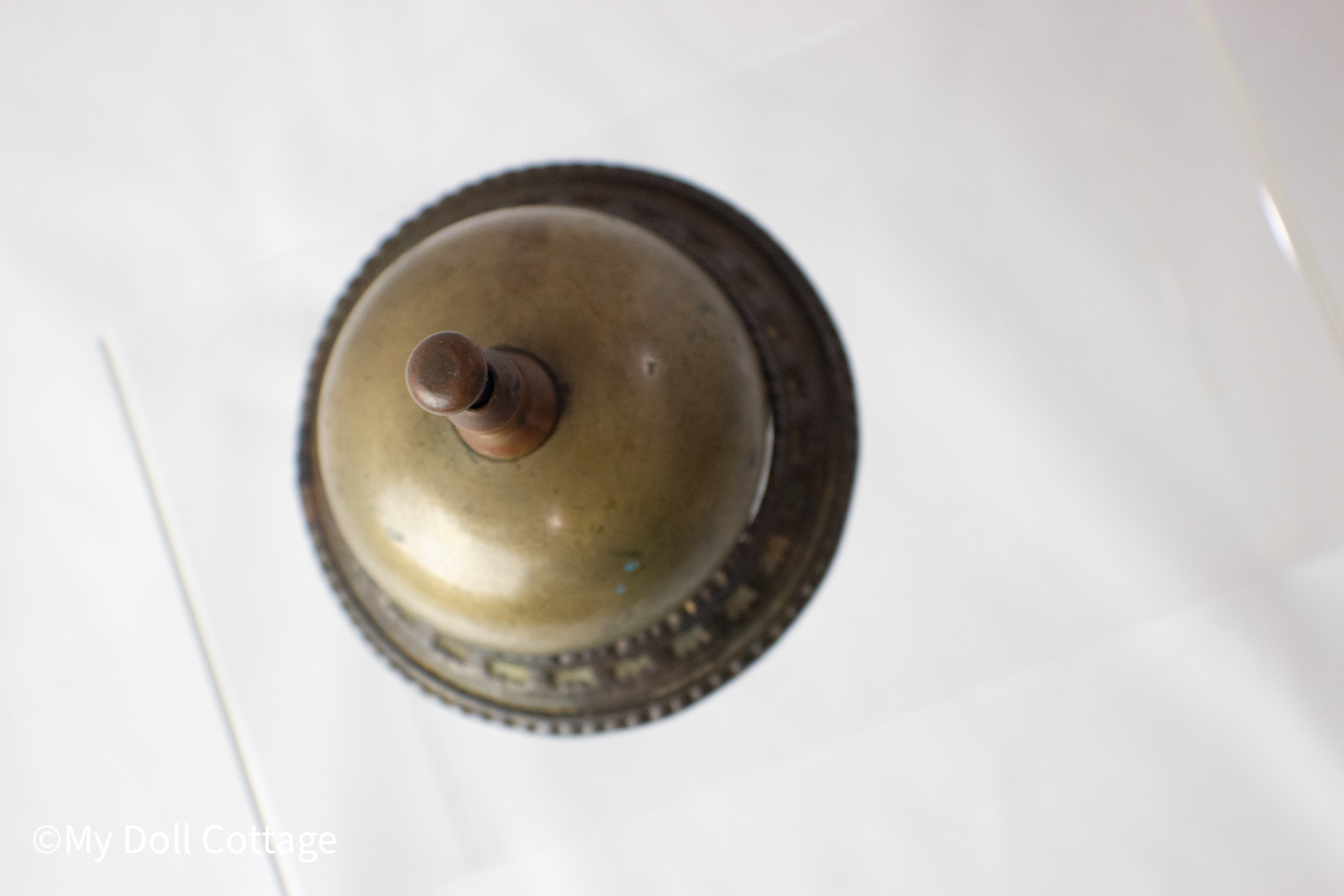
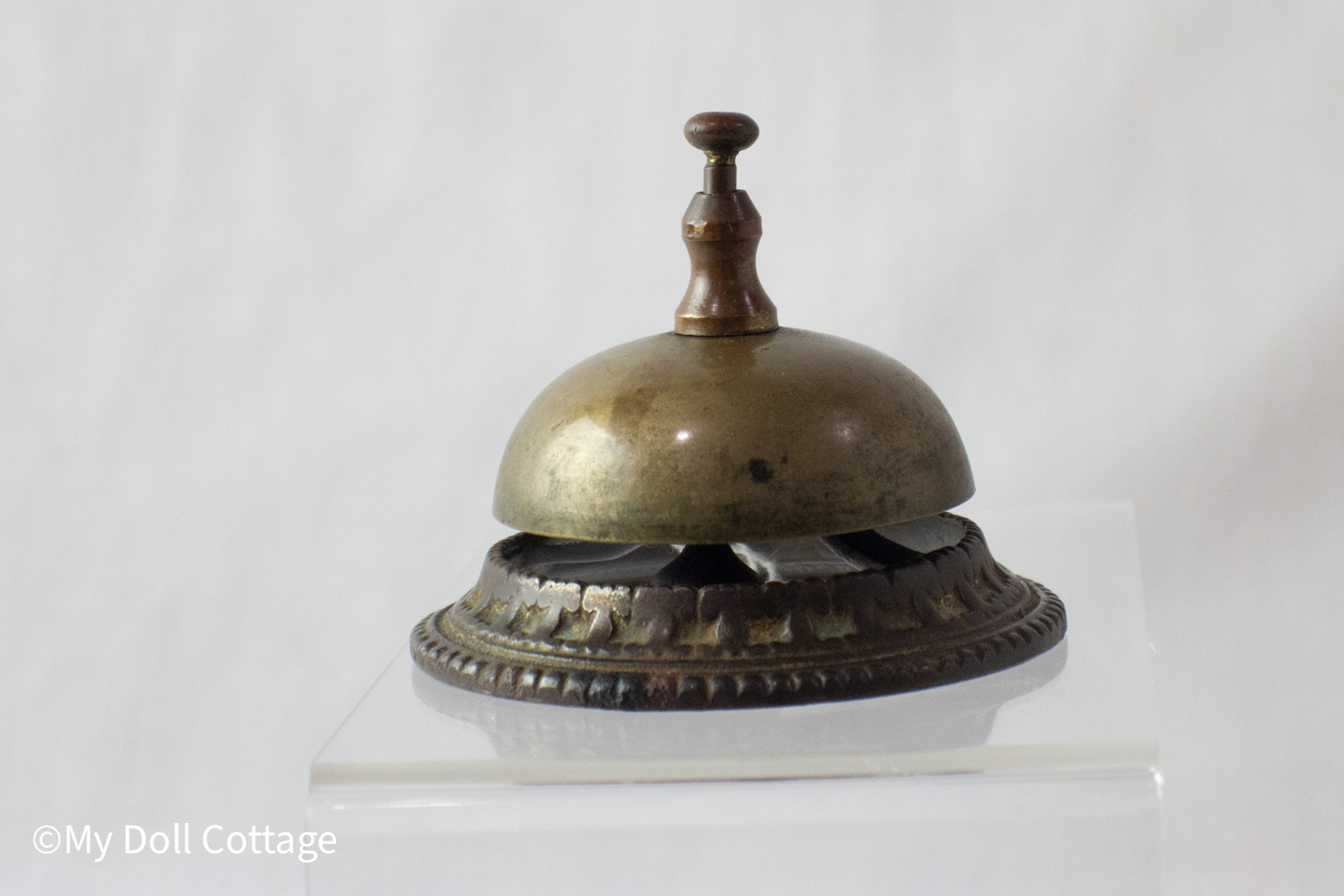
This Victorian-era service bell dates to approximately the 1860s and represents an early form of the mechanical plunger counter bells used in hotels, shops, and reception desks throughout the 19th century. The bell consists of a solid brass dome mounted on a heavy cast iron base decorated with a raised repeating border typical of mid-century American foundry work.
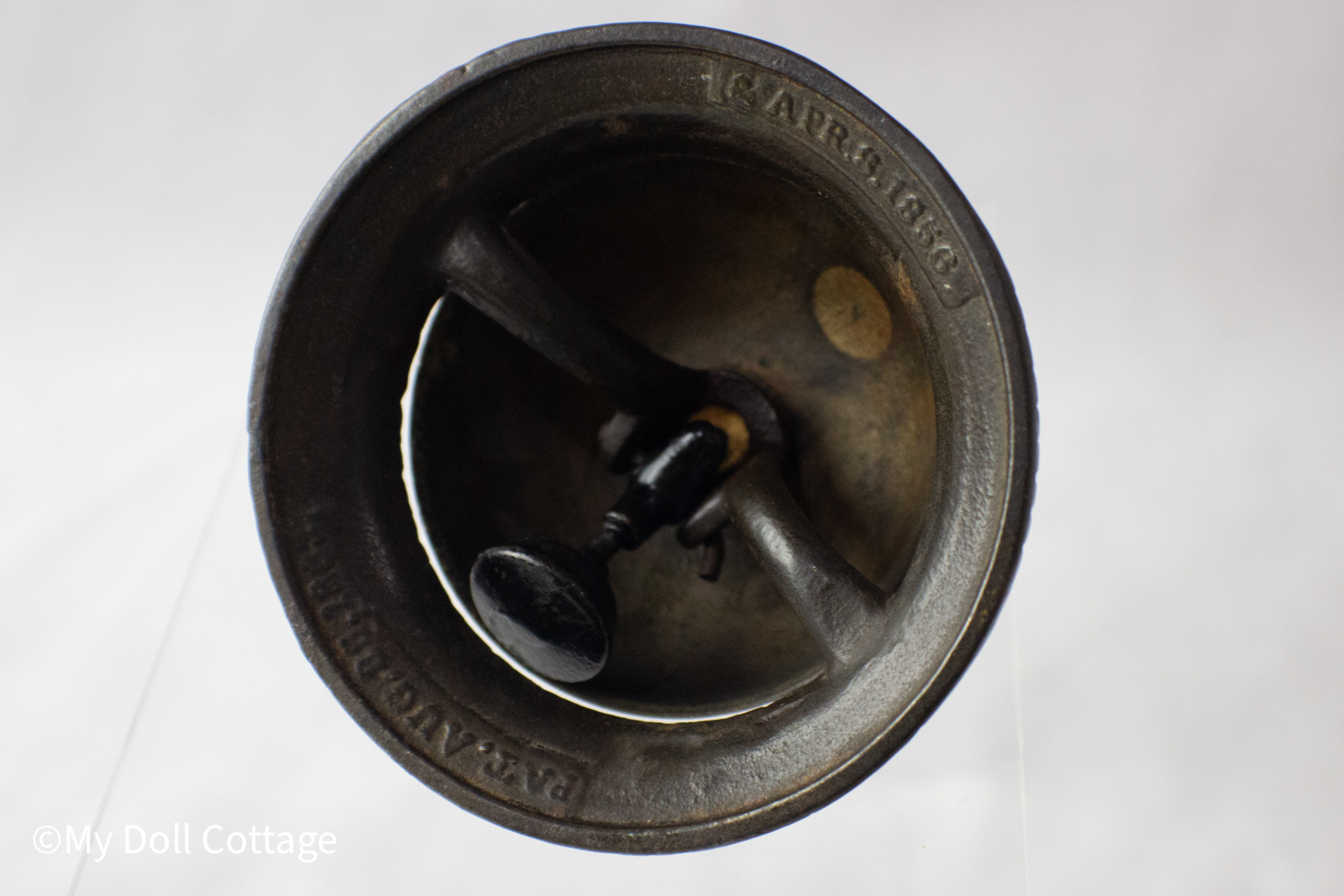
The plunger mechanism is turned brass with a rounded handle, functioning with a firm, clear strike.The underside of the bell is stamped with two early markings: “APR. 8 1856”(likely a design registration date) and “PAT. AUG. 26 1863,” which corresponds to a real U.S. patent relating to mechanical call bells. These dates place the bell firmly in the mid-Victorian period, when American manufacturers were rapidly standardising service counter equipment for commercial use. This example remains in excellent functional condition, with expected aged patina across the brass and iron surfaces.
Features
Measurements: 90 mm round x 80 mm high
Condition: Excellent
Markings: "APR.8 1856” and “PAT. AUG. 26 1863"
Date Note: Date is an estimate based on available research and stylistic features. If you have additional information, please contact us to help update our records.
Made from the following materials
Brass, an alloy of copper and zinc, has played a significant role in the history of doll and toy making, valued for its durability, malleability, and ability to hold intricate details. Over the centuries, brass has been used in various forms to enhance the beauty and functionality of dolls and toys, contributing to their appeal and longevity.
Brass was first introduced in the doll-making industry in the late 18th and early 19th centuries. Initially, it was used to create small decorative elements and accessories for dolls, such as buttons, clasps, and hinges. These embellishments added elegance and detail to dolls, enhancing their overall appearance.
The 19th century marked a significant evolution in the use of brass with the advent of automaton dolls and toys. Skilled artisans began incorporating brass mechanisms into these creations, allowing for movement and interaction. These mechanical dolls could perform actions such as walking, dancing, or even playing musical instruments, captivating audiences with their lifelike movements. The intricate brass gears and components used in these automata showcased the craftsmanship and engineering skills of the time.

Additional Product Images


Related Dolls and Toys from our collection
