c.1920–1930 Pink Celluloid Baby Vanity Set in Original Presentation Box
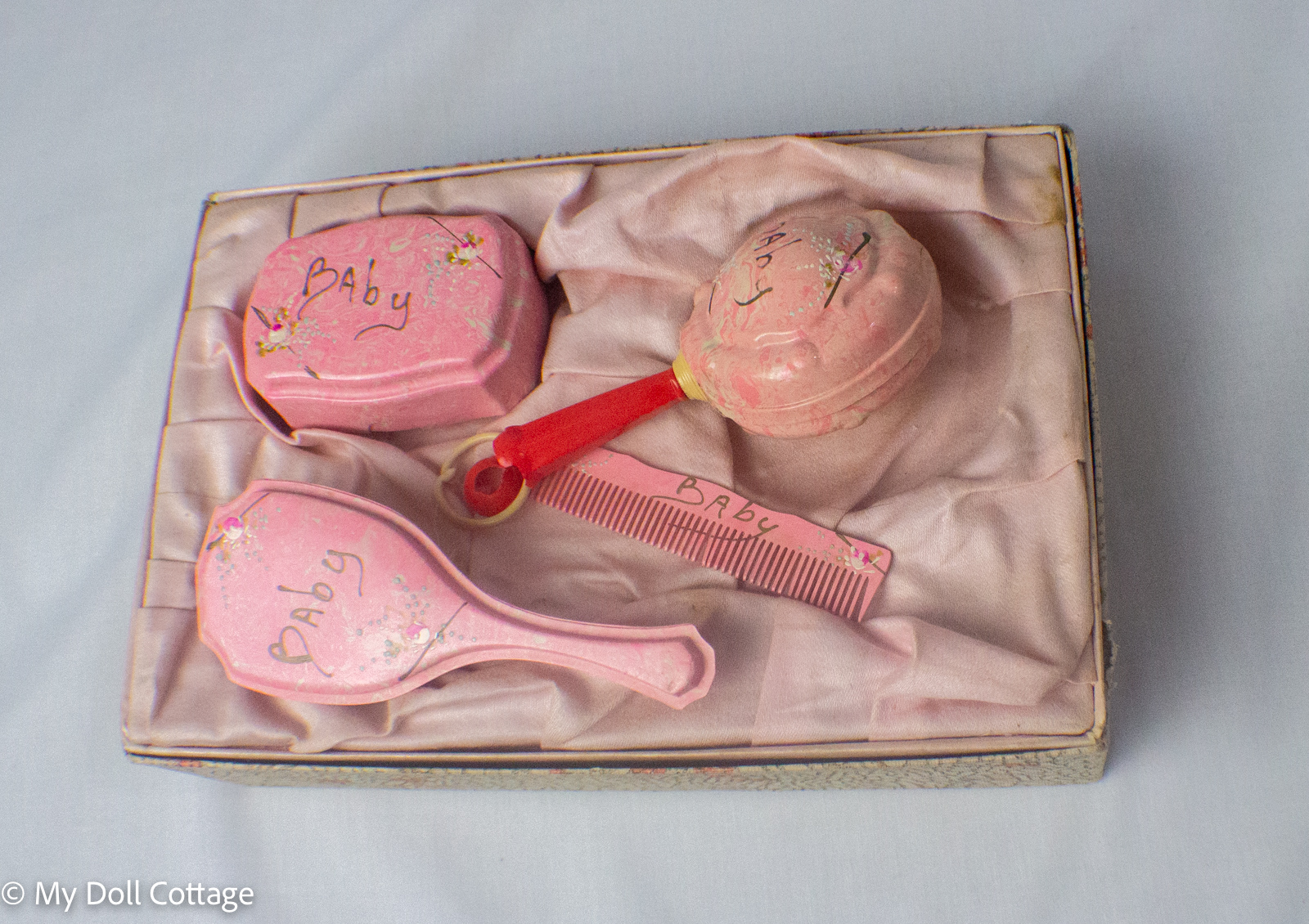
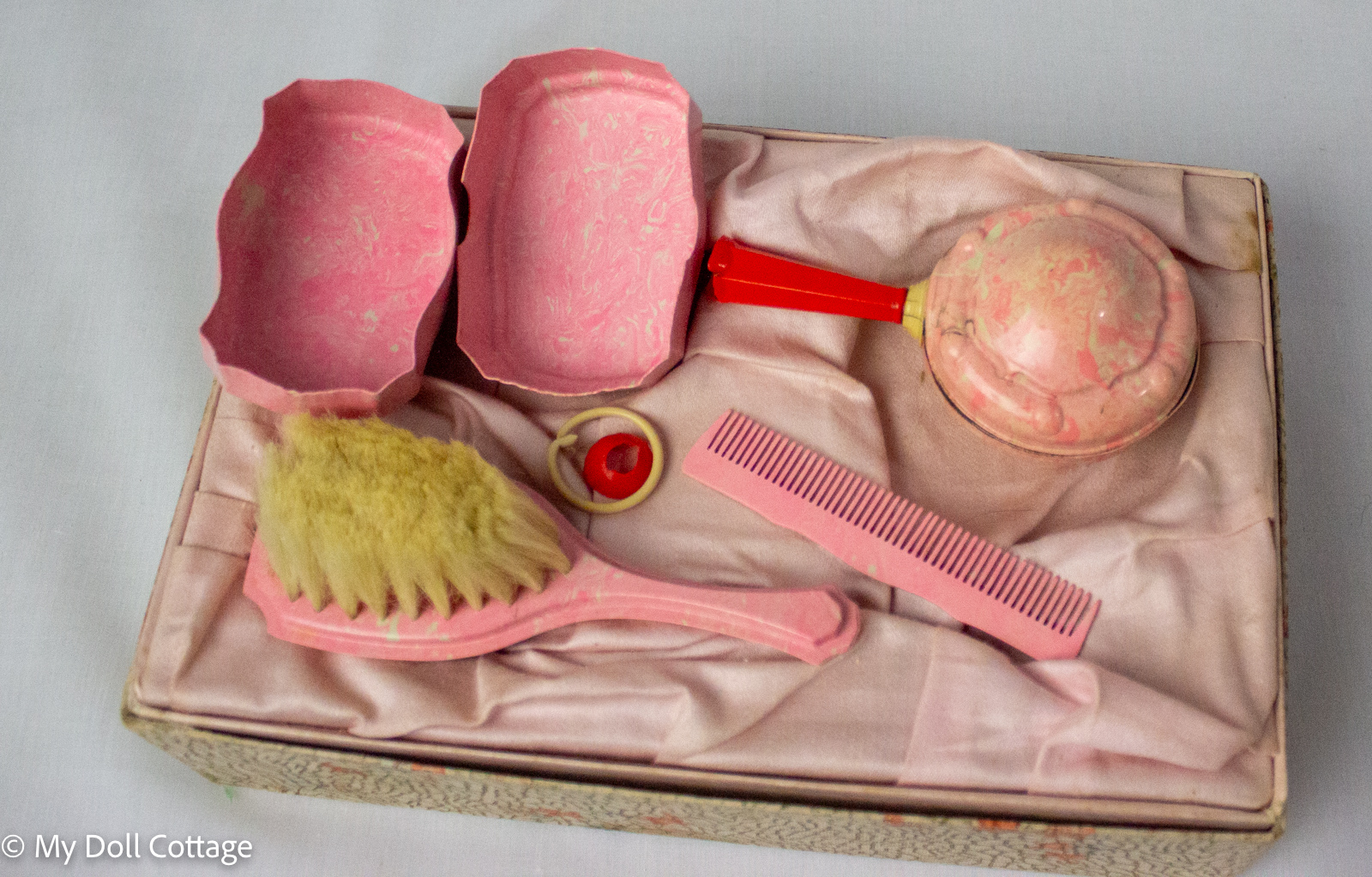
A charming four-piece pink celluloid baby vanity set dating to the 1920s, complete with its original presentation box and satin-lined interior.
Celluloid vanity and grooming sets became popular during the 1920s and early 1930s as decorative nursery gifts and children's dressing table accessories. Lightweight, colourful and inexpensive to manufacture, celluloid allowed makers to produce attractive toiletry sets decorated with floral motifs and soft pastel finishes.
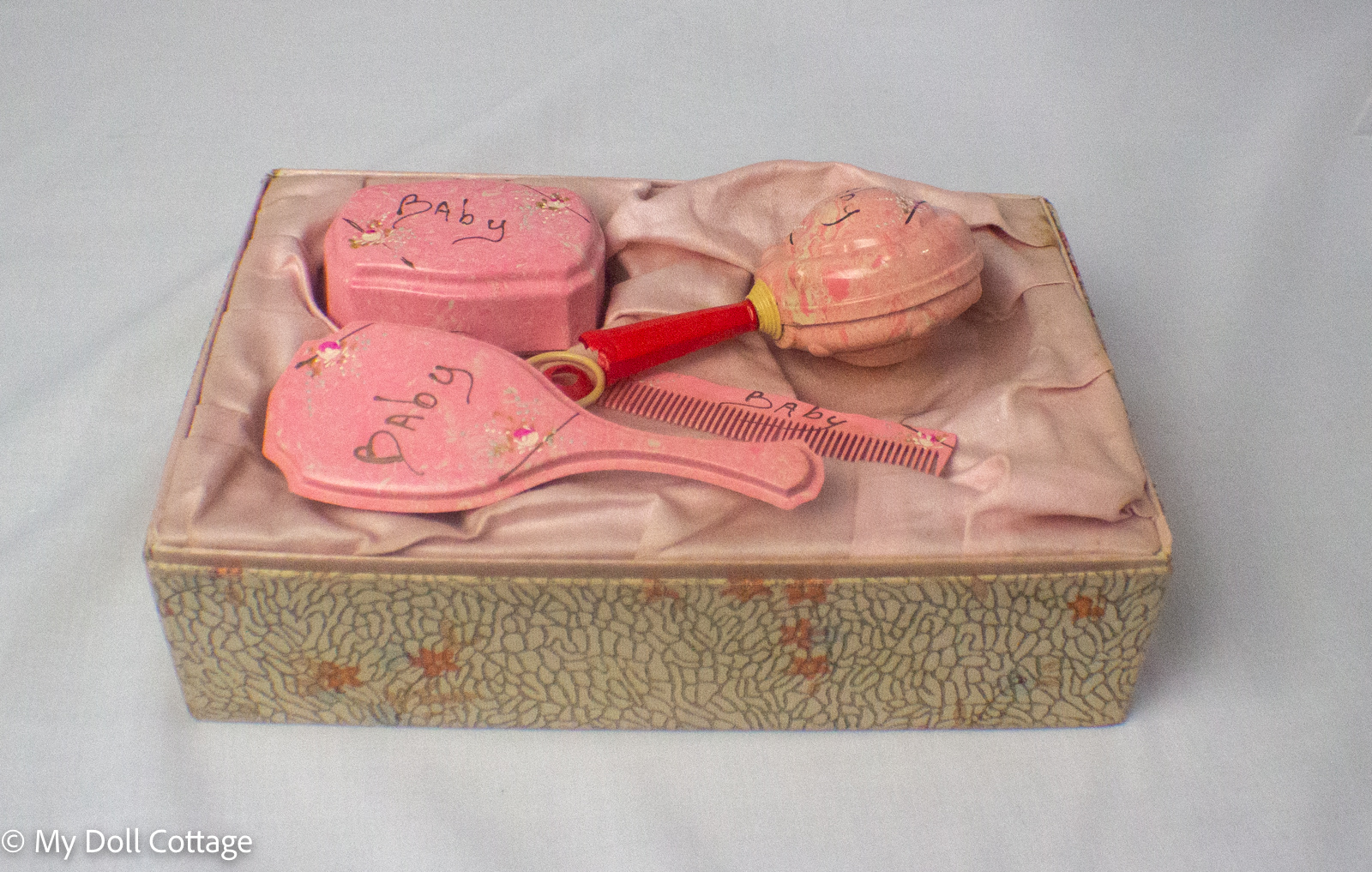
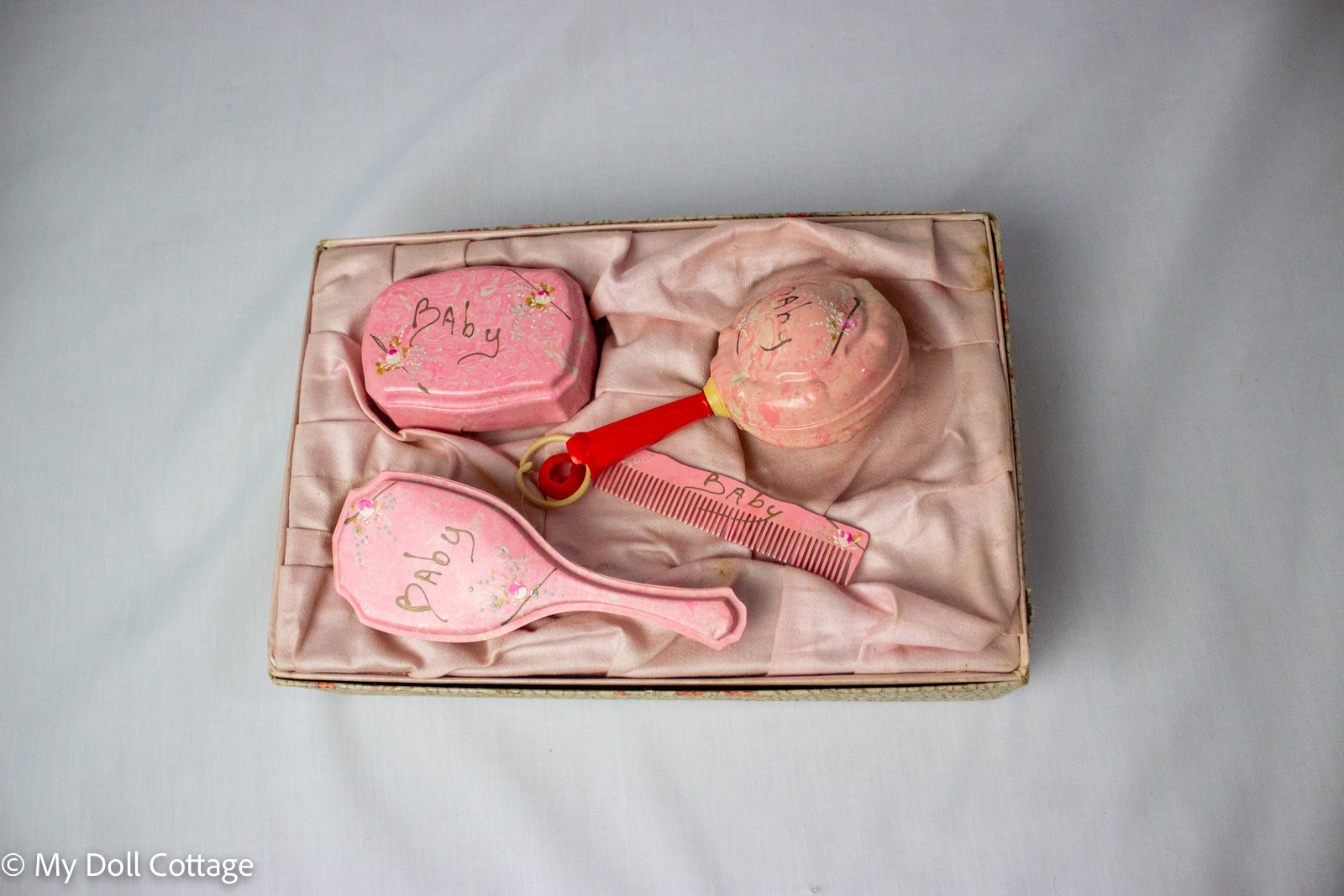
This delightful four-piece set comprises a hand mirror, comb, covered powder or trinket box and baby rattle, all housed in the original fitted presentation boxlined with pink satin. The pieces are decorated in marbled pink celluloid with delicate floral transfers and hand-painted 'Baby' lettering, typical of giftware produced during the interwar years.
No manufacturer's marks are present. Similar vanity sets were produced in Germany, Japan and the United States during the 1920s–1930s for export markets. Based on its styling, materials and presentation, this example most likely dates to approximately 1925–1935.
Complete boxed sets have become increasingly difficult to locate, particularly with their original satin-lined box intact, making this a desirable nursery and doll ephemera collectible.
Features
Measurements: Presentation box: 270 × 170 ×70 mm
Condition: Very Good - Rattle Broken at end
Markings: No makers marks
Date Note: Date is an estimate based on available research and stylistic features. If you have additional information, please contact us to help update our records.
Made from the following materials
Celluloid, a type of thermoplastic made from camphor and nitrocellulose, emerged in the mid-19th century as one of the first synthetic plastics. Its invention marked a revolutionary development in the toy industry, leading to the production of lightweight, durable, and colourful dolls and toys that captured the imagination of children and collectors alike.
The commercialization of celluloid began in the 1860s, with its use expanding rapidly throughout the following decades. Manufacturers recognized its potential as a substitute for more traditional materials such as wood, cloth, and porcelain. As celluloid was easy to mold and could be produced in a variety of vibrant colors, it quickly became a popular choice for making dolls and toys, significantly impacting the design and aesthetics of playthings during this period.
By the early 20th century, celluloid dolls had gained immense popularity. These dolls were often designed to mimic the appearance of porcelain dolls while being much lighter and more affordable. Celluloid allowed for a wide range of expressions and features, leading to dolls that had more lifelike appearances and intricate detailing. The flexibility of celluloid enabled doll makers to create movable limbs and heads, further enhancing the play experience.
Celluloid also inspired innovative toy designs beyond dolls. During the early to mid-20th century, manufacturers produced a variety of celluloid toys, including miniature animals, figurines, and even playsets. The ability to mass-produce these items made them accessible to a broader audience, solidifying their place in toy history.
Despite its initial success, the use of celluloid began to decline in the late 20th century due to concerns about its flammability and the introduction of safer, more durable synthetic materials. Additionally, the aging process of celluloid can lead to warping and deterioration, which can affect the longevity of toys made from this material. As a result, many collectors today seek vintage celluloid toys for their historical significance and nostalgic value.
Celluloid toys represent a pivotal moment in the evolution of doll and toy making, showcasing the innovative spirit of the early 20th century. These toys not only reflect the technological advancements of their time but also capture the joy and creativity of childhood play. At our museum, we celebrate the legacy of celluloid toys, exploring their impact on design, culture, and the experiences of children across generations.

Additional Product Images
Related Dolls and Toys from our collection
