
c.1955–1965 Child’s Faux Fur Muff with Rubber Doll Face
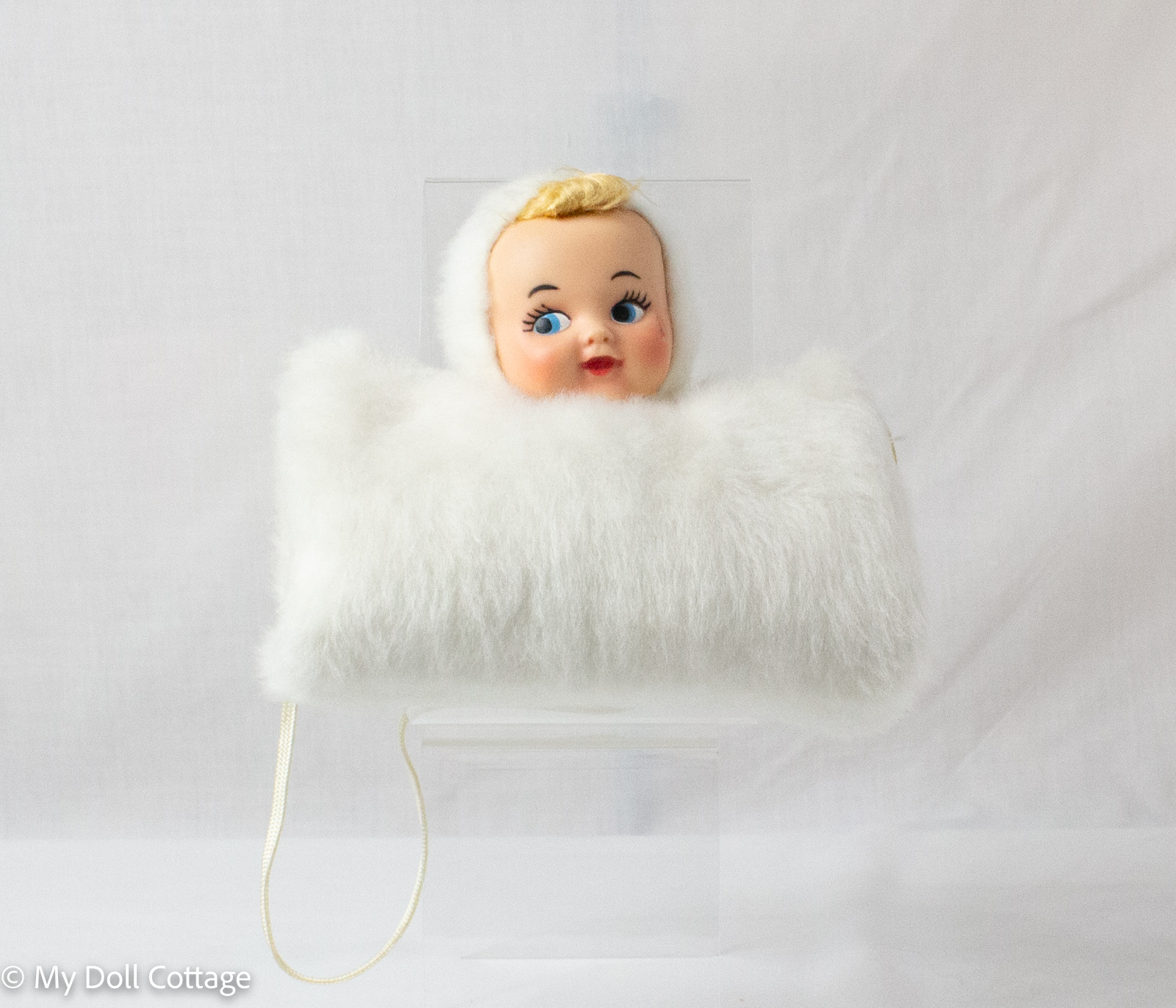
A charming mid-century child’s hand muff featuring a vinyl doll face set into soft faux fur with cord handle.
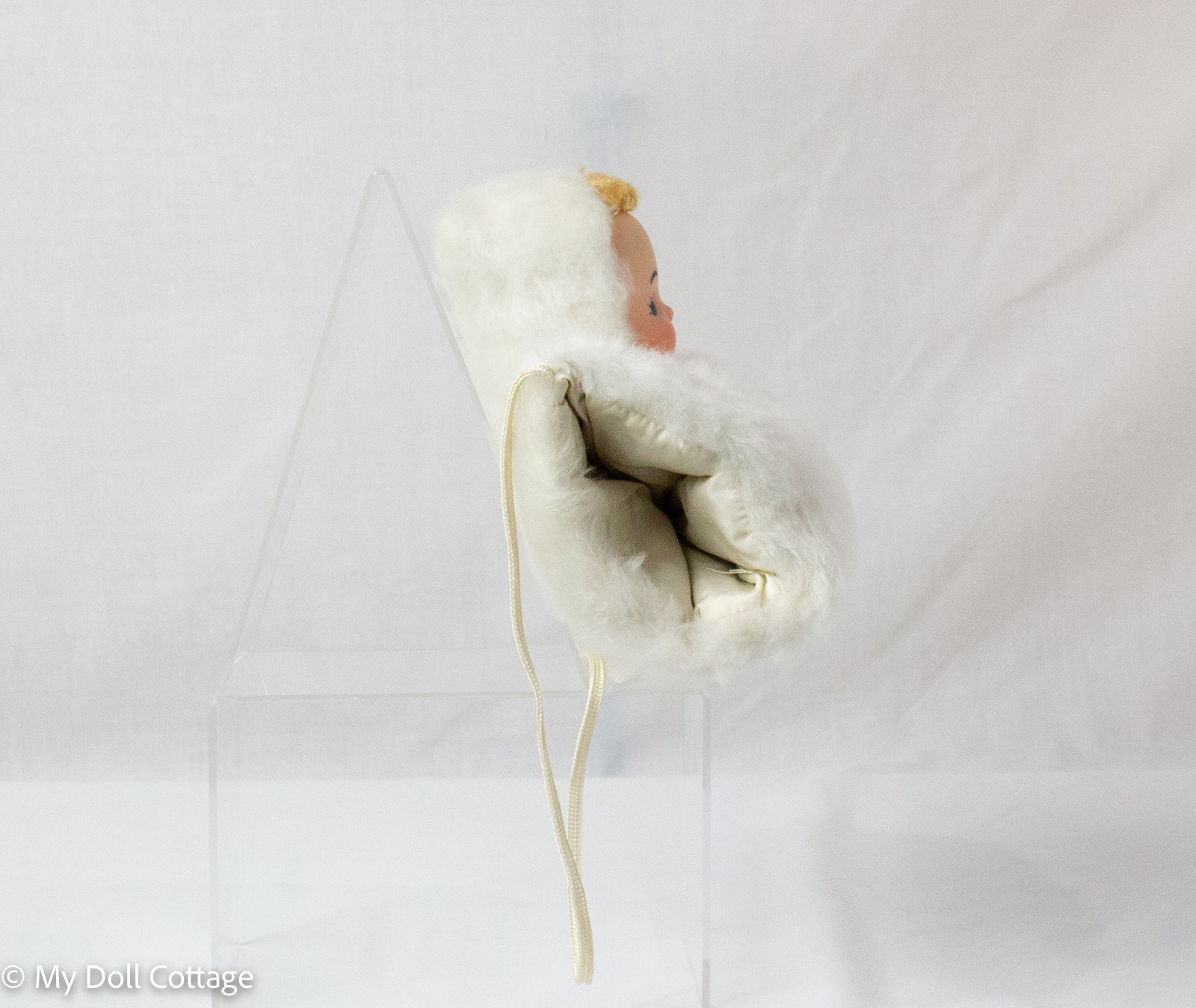
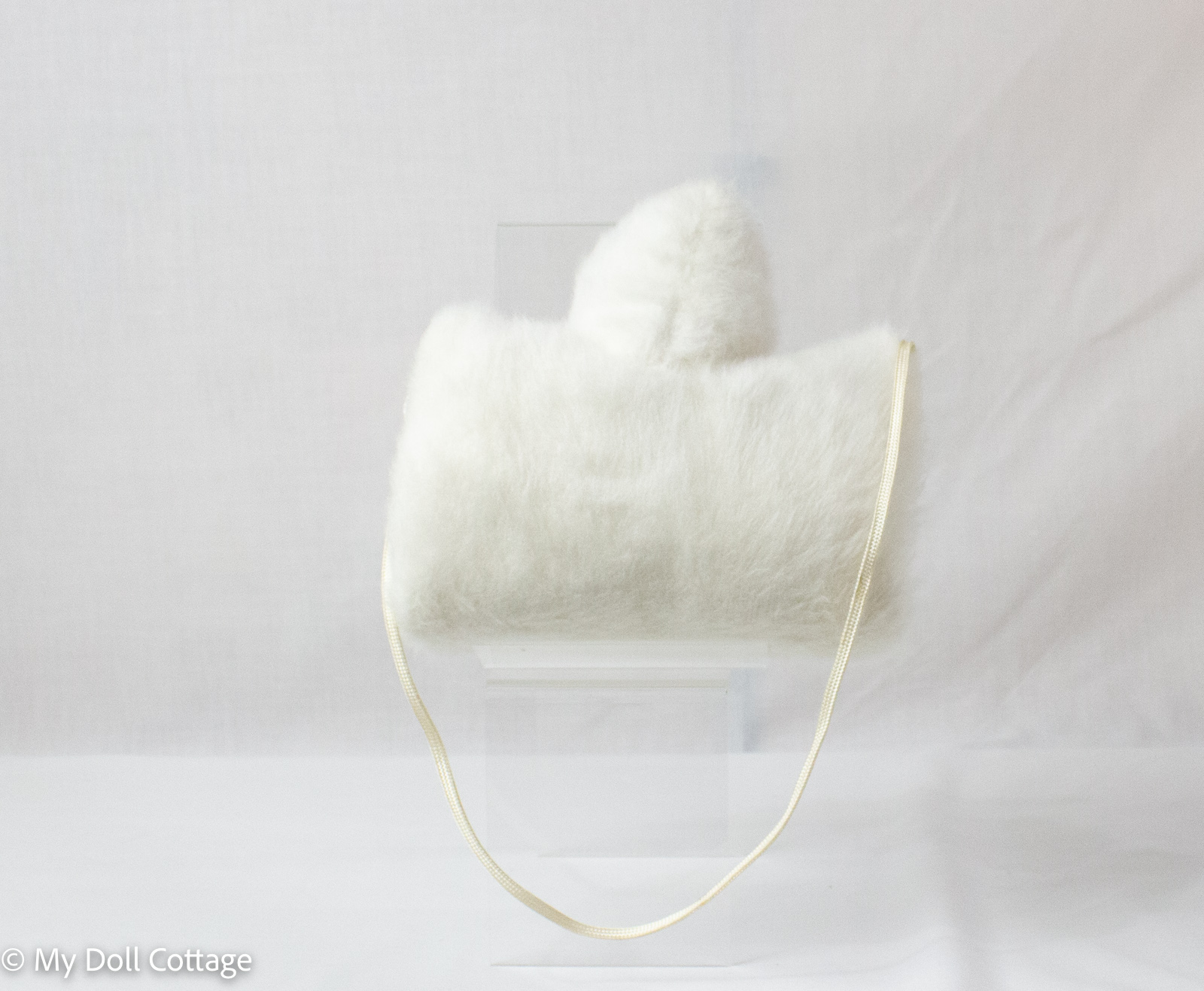
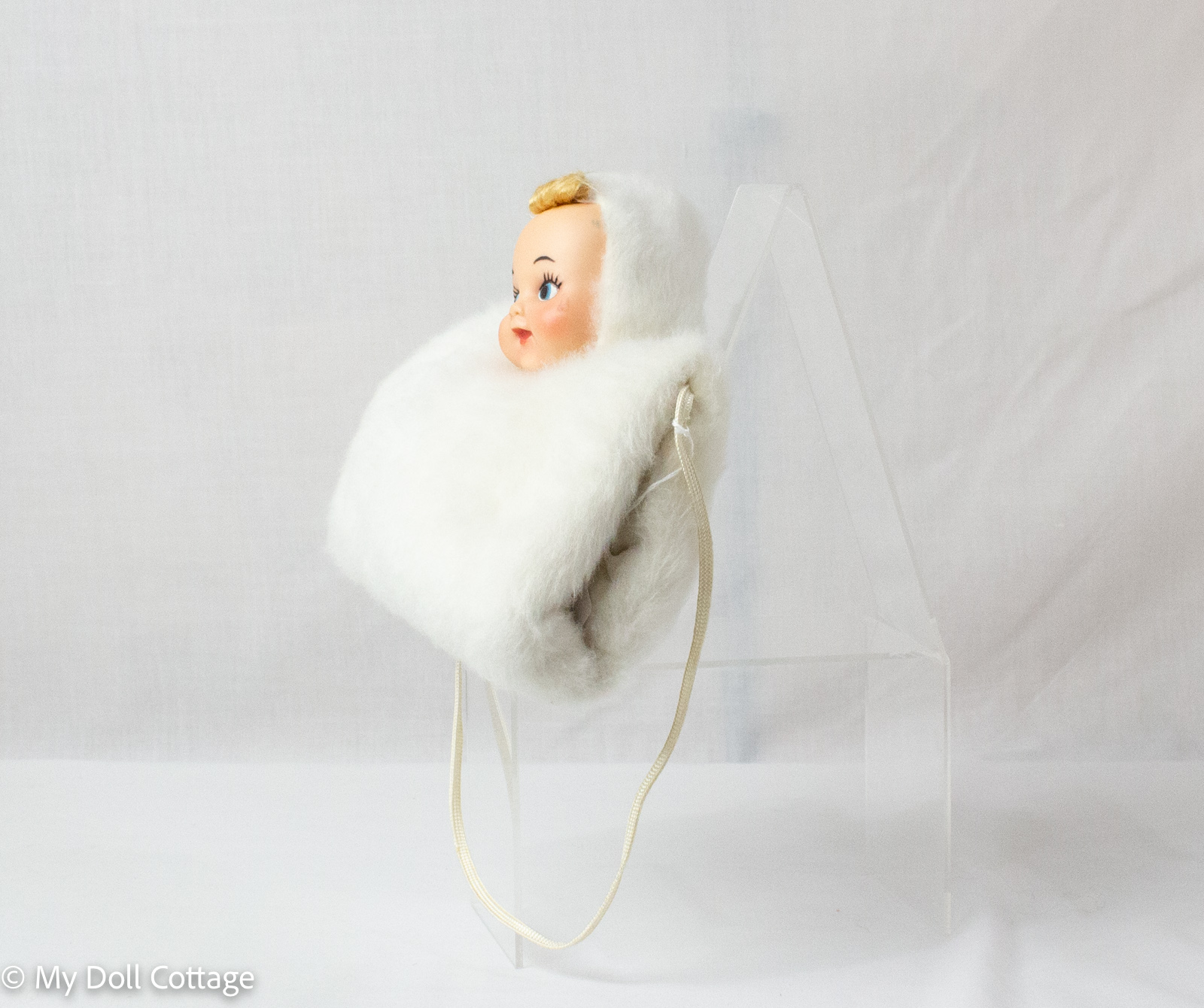
This delightful child’s hand muff is a whimsical example of mid-century novelty accessories, combining functional winter wear with playful doll design. The muff is constructed from soft white faux fur, forming a rounded cushion shape designed to keep small hands warm. Set into the front is a sweetly styled vinyl doll face, with painted blue eyes, delicately arched brows, and softly blushedcheeks, framed by a faux fur hood.
The dollface is made from soft rubber (vinyl), a material widely adopted in the 1950s as plastics became more accessible and replaced earlier composition elements. The stylised facial features and bright colouring are consistent with mass-produced export dolls of the era, particularly those manufactured in Japan for international markets. During the 1950s and 1960s, Japan became a major producer of affordable novelty toys and accessories, many of which were exported to Australia, the United Kingdom, and the United States.
The muff includes a simple cord handle, allowing it to be carried or worn around the neck, making it both practical and decorative. Items such as this were especially as children’s winter accessories and giftware, often sold in department stores and variety shops.
Unmarked examples are common for this type of item, as many were produced for export without permanent branding. Today, these novelty muffs are appreciated for their nostalgic charm, distinctive design, and crossover appeal between doll collecting and vintage fashion accessories.
Features
Measurements: 220mm x 100 mm
Condition: Excellent
Markings:
Date Note: Date is an estimate based on available research and stylistic features. If you have additional information, please contact us to help update our records.
Made from the following materials
Cloth dolls and toys have a rich history, rooted in the traditions of various cultures around the world. Made primarily from fabric, these dolls are characterized by their soft textures, vibrant colors, and the use of various sewing techniques. The creation of cloth dolls dates back centuries, often reflecting the cultural heritage and artistic expressions of the communities that produce them.
Historically, cloth dolls were often handmade by mothers and grandmothers as toys for children, using scraps of fabric and other materials available in the household. These dolls were not only sources of comfort and play but also served as tools for teaching children about sewing and crafting. The diversity of fabrics used—ranging from cotton and wool to silk and felt—allowed for endless creativity in design, giving rise to a multitude of styles and forms.
Cloth dolls often embody the characteristics of the culture from which they originate. For instance, traditional rag dolls from the United States were typically made from leftover fabric and filled with scraps, while Japanese Kokeshi dolls are simple wooden dolls often painted with floral designs. In many cultures, cloth dolls have also served ceremonial purposes, being used in rituals or as representations of important figures.
In the modern era, cloth dolls have seen a resurgence in popularity, particularly among those who appreciate handmade and artisanal items. Contemporary artisans create unique cloth dolls that often incorporate modern design elements while honoring traditional techniques. These dolls may feature intricate stitching, detailed facial expressions, and a variety of clothing styles, making them appealing to collectors and children alike.
Today, cloth dolls and toys continue to be cherished for their tactile quality and the personal touch that comes from being handmade. Their ability to convey warmth, creativity, and cultural significance makes them timeless treasures in the world of toys, offering both play and connection to the rich history of doll making.
Composition
Composition dolls and toys represent a unique chapter in the history of doll-making, particularly prominent from the early 20th century until the mid-20th century. These dolls are crafted from a mixture of materials, primarily wood pulp, sawdust, and other additives, which are then pressed and molded into shapes. This innovative process allowed for the mass production of dolls and toys that were more affordable and durable than their porcelain or clay counterparts.
The composition material was designed to mimic the look and feel of more expensive materials while being lighter and less fragile. These dolls often featured painted facial details, painted hair, and fabric bodies, making them accessible to a broader audience. Because of their affordability, composition dolls became extremely popular during the Great Depression, as families sought quality toys at reasonable prices.
Dolls made from composition often reflect the styles and fashions of the eras in which they were created. Many classic designs include baby dolls with chubby cheeks, elegant fashion dolls, and character dolls based on popular culture. The versatility of composition allowed for a wide range of expressions and poses, making these dolls appealing to children and collectors alike.
However, as synthetic materials and plastics emerged in the mid-20th century, the popularity of composition dolls began to decline. Over time, the composition material was found to be less durable than other options, leading to issues like chipping and cracking, especially when exposed to moisture. Today, many collectors seek out vintage composition dolls for their historical significance and the nostalgia they evoke.
Composition dolls and toys remain an important part of the history of doll making, showcasing the evolution of materials and techniques used to create cherished playthings. At our museum, we celebrate these dolls not only for their craftsmanship but also for the stories they tell about the times and cultures in which they were made.
Vinyl has become one of the most widely used materials in the production of dolls and toys, thanks to its durability, versatility, and ability to be moulded into intricate designs. Since its introduction in the mid-20th century, vinyl has significantly impacted the toy industry, allowing for the creation of vibrant, detailed, and long-lasting playthings that have captured the hearts of children and collectors alike.
What is Vinyl?
Vinyl is a type of plastic made from polyvinyl chloride (PVC), which is known for its strength, flexibility, and resistance to wear and tear. This synthetic material can be produced in various colors and textures, making it ideal for crafting lifelike dolls and toys that appeal to a broad audience. Vinyl can be easily molded and shaped, allowing manufacturers to create complex forms and features, from realistic facial expressions to detailed clothing.
Applications in Doll and Toy Making
Vinyl is particularly popular in the production of soft-bodied dolls, action figures, and playsets. Vinyl dolls often have a soft exterior while maintaining a solid structure, making them lightweight and easy for young children to handle. Many classic doll brands, such as Barbie and American Girl, utilize vinyl for their figures, providing a realistic look and feel while ensuring durability for play.
In addition to dolls, vinyl is widely used for a range of toys, including play kitchen sets, figurines, and collectible toys. The ability to create bright colors and intricate designs has made vinyl a favorite material for manufacturers aiming to produce eye-catching toys that resonate with children's imaginations.
Collectibility and Customization
Vinyl toys have become highly collectible, particularly among adult enthusiasts who appreciate the artistry and craftsmanship involved in their design. Many artists and independent designers have embraced vinyl as a medium, creating limited-edition figures and unique toys that appeal to collectors. Customization has also gained popularity, with enthusiasts modifying vinyl toys to create one-of-a-kind pieces, showcasing their artistic skills and personal styles.

Additional Product Images
Related Dolls and Toys from our collection
