1950s Palitoy “Bill and Ben the Flowerpot Men” Glove Puppet – Licensed by Andy Pandy Ltd
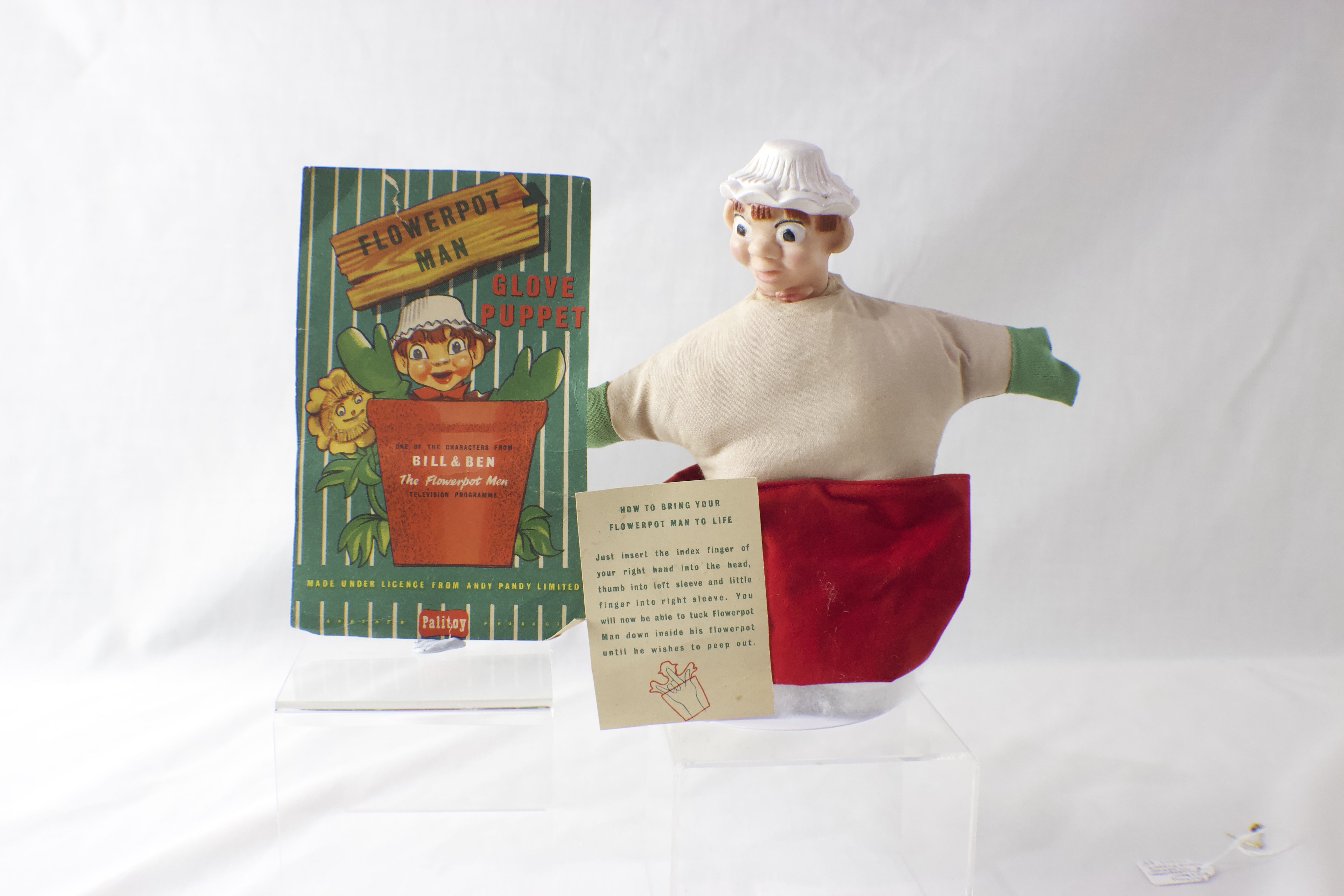
A 1950s Palitoy glove puppet depicting Bill or Ben the Flowerpot Man from the beloved British children’s TV series, complete with original tag and instruction card.
This charming Bill and Ben Flowerpot Man glove puppet was produced by Palitoy Ltd, Leicester, England, under license from Andy Pandy Limited during the 1950s. The puppet represents one of the twin Flowerpot Men from The Flowerpot Men television series — part of the BBC’s iconic “Watch with Mother” programming that first aired in 1952.
Constructed with a vinyl head, cloth body, and felt flowerpot base, this example captures the cheerful, wide-eyed charm of the original television characters created by Freda Lingstrom and Maria Bird. It comes complete with its original printed card insert titled 'How to Bring Your Flowerpot Man to Life,' which provides playful operating instructions for animating the puppet.
Though there is minor age-related staining on the fabric, it remains well-preserved for its age, and the colours remain vibrant. Puppets of this era were made to encourage imaginative storytelling and are now cherished pieces of British television and toy history.
Features:
Manufacturer: Palitoy Ltd
License: Andy Pandy Limited
Country of Manufacture: United Kingdom
Date: Circa 1952–1956
Materials: Vinyl, cloth, felt
Condition: Good vintage condition with some light staining (not visible in photographs).
Made from the following materials
Cloth dolls and toys have a rich history, rooted in the traditions of various cultures around the world. Made primarily from fabric, these dolls are characterized by their soft textures, vibrant colors, and the use of various sewing techniques. The creation of cloth dolls dates back centuries, often reflecting the cultural heritage and artistic expressions of the communities that produce them.
Historically, cloth dolls were often handmade by mothers and grandmothers as toys for children, using scraps of fabric and other materials available in the household. These dolls were not only sources of comfort and play but also served as tools for teaching children about sewing and crafting. The diversity of fabrics used—ranging from cotton and wool to silk and felt—allowed for endless creativity in design, giving rise to a multitude of styles and forms.
Cloth dolls often embody the characteristics of the culture from which they originate. For instance, traditional rag dolls from the United States were typically made from leftover fabric and filled with scraps, while Japanese Kokeshi dolls are simple wooden dolls often painted with floral designs. In many cultures, cloth dolls have also served ceremonial purposes, being used in rituals or as representations of important figures.
In the modern era, cloth dolls have seen a resurgence in popularity, particularly among those who appreciate handmade and artisanal items. Contemporary artisans create unique cloth dolls that often incorporate modern design elements while honoring traditional techniques. These dolls may feature intricate stitching, detailed facial expressions, and a variety of clothing styles, making them appealing to collectors and children alike.
Today, cloth dolls and toys continue to be cherished for their tactile quality and the personal touch that comes from being handmade. Their ability to convey warmth, creativity, and cultural significance makes them timeless treasures in the world of toys, offering both play and connection to the rich history of doll making.
Composition
Composition dolls and toys represent a unique chapter in the history of doll-making, particularly prominent from the early 20th century until the mid-20th century. These dolls are crafted from a mixture of materials, primarily wood pulp, sawdust, and other additives, which are then pressed and molded into shapes. This innovative process allowed for the mass production of dolls and toys that were more affordable and durable than their porcelain or clay counterparts.
The composition material was designed to mimic the look and feel of more expensive materials while being lighter and less fragile. These dolls often featured painted facial details, painted hair, and fabric bodies, making them accessible to a broader audience. Because of their affordability, composition dolls became extremely popular during the Great Depression, as families sought quality toys at reasonable prices.
Dolls made from composition often reflect the styles and fashions of the eras in which they were created. Many classic designs include baby dolls with chubby cheeks, elegant fashion dolls, and character dolls based on popular culture. The versatility of composition allowed for a wide range of expressions and poses, making these dolls appealing to children and collectors alike.
However, as synthetic materials and plastics emerged in the mid-20th century, the popularity of composition dolls began to decline. Over time, the composition material was found to be less durable than other options, leading to issues like chipping and cracking, especially when exposed to moisture. Today, many collectors seek out vintage composition dolls for their historical significance and the nostalgia they evoke.
Composition dolls and toys remain an important part of the history of doll making, showcasing the evolution of materials and techniques used to create cherished playthings. At our museum, we celebrate these dolls not only for their craftsmanship but also for the stories they tell about the times and cultures in which they were made.

Additional Product Images


Related Dolls and Toys from our collection