1955 Knickerbocker Humpty Dumpty Stuffed Toy – Made in USA

A 1955 American-made Knickerbocker Humpty Dumpty stuffed character toy featuring a moulded painted face, tartan fabric body and its original manufacturer’s tags.
This Humpty Dumpty stuffed character toy was produced by the Knickerbocker Toy Co., Inc. of New York in 1955.
Designed around the familiar nursery-rhyme character, Humpty Dumpty has an egg-shaped stuffed body with four soft fabric limbs and a large moulded character face.The face is painted with bright blue eyes, rosy cheeks, red smiling lips and a small curl of yellow hair. A yellow plush fabric surrounds the face and continues onto the hands and feet.
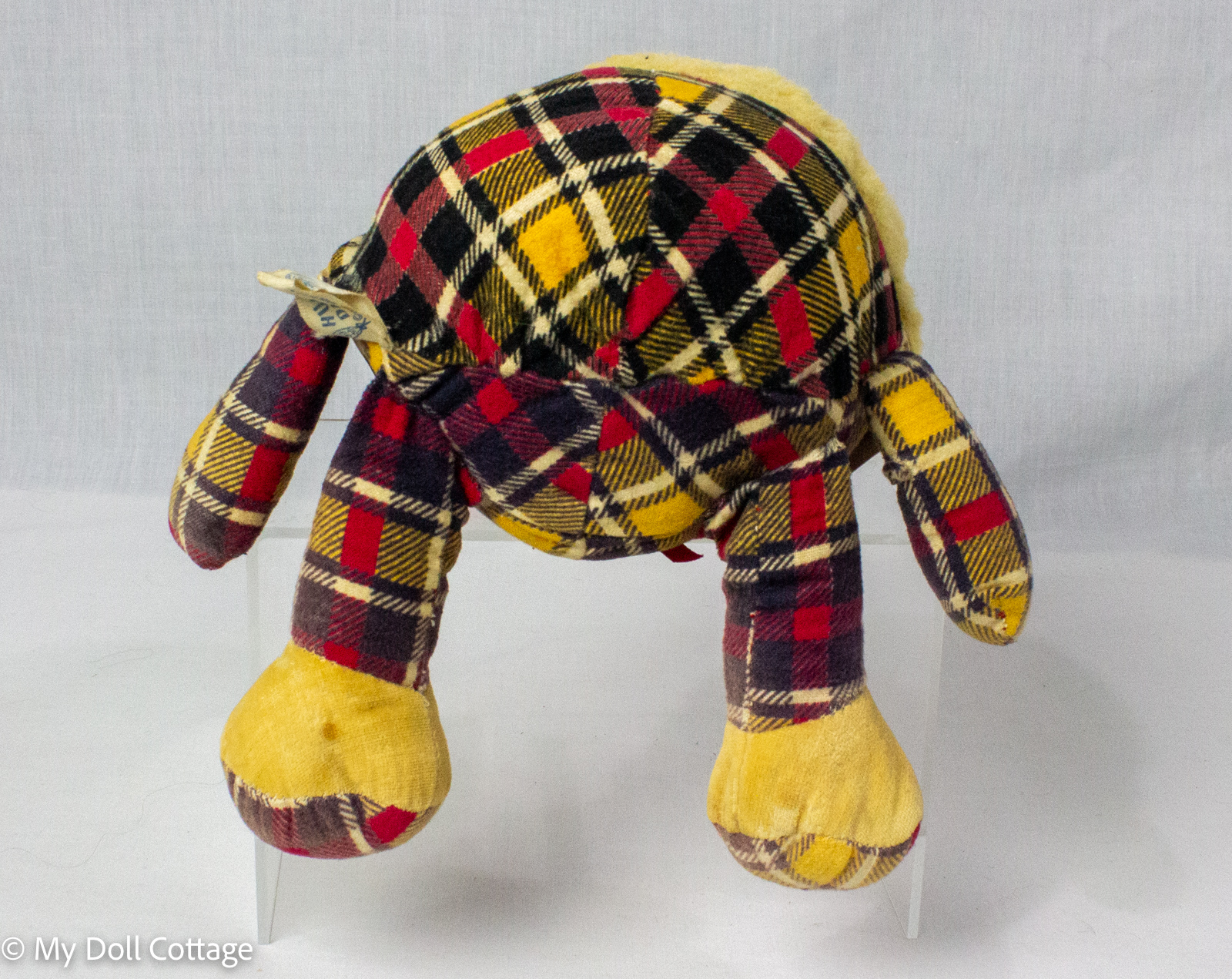
The body and limbs are covered in a distinctive multi coloured tartan-patterned fabric inyellow, red, black and brown. A white collar and red ribbon bow complete the character’s costume.
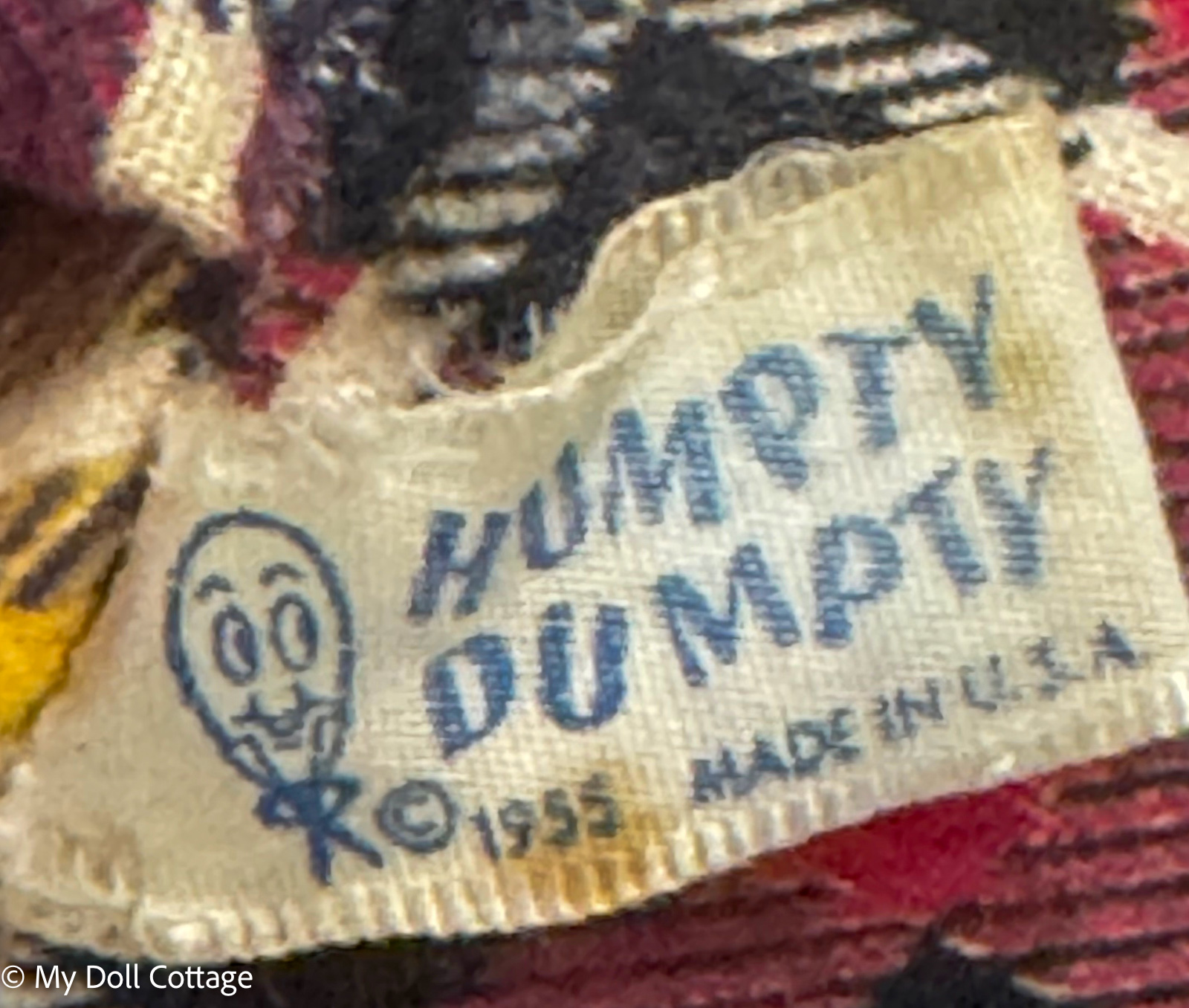
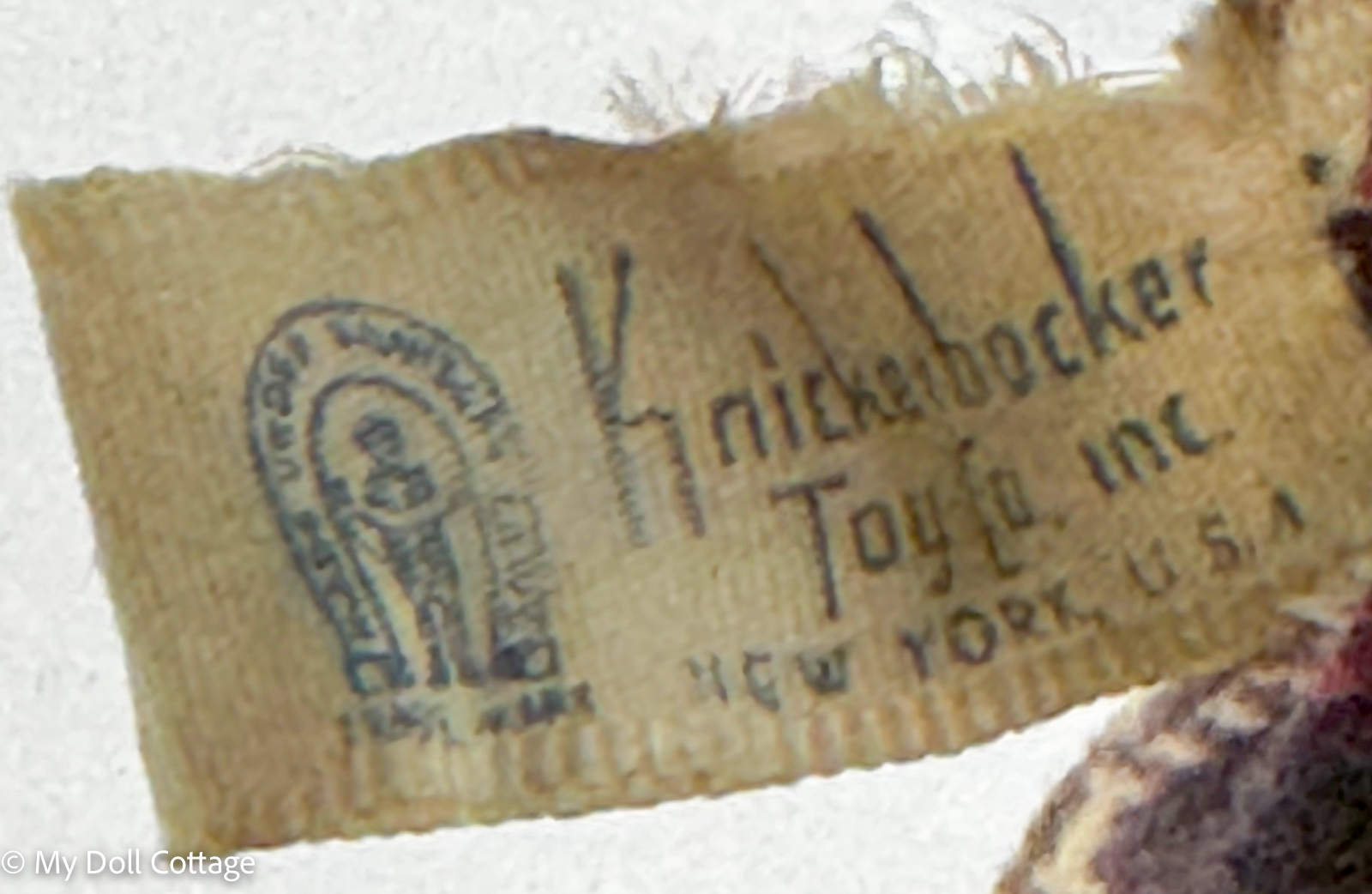
Importantly, this example retains its original fabric identification tags. One is printed “Humpty Dumpty”, together with a copyright date of 1955 and “Made in U.S.A.” A second identifies the Knickerbocker Toy Co., Inc., New York, U.S.A.
The 1955 date can also be independently confirmed through United States copyright records. On 5 April 1955, Knickerbocker Toy Co., Inc. registered a model and rawing described as “Humpty Dumpty; face for stuffed doll”. This provides unusually strong documentary evidence for dating this particular toy design.
Knickerbockerwas a long-established American toy company particularly associated with teddy bears, stuffed animals and character toys. During the 1950s the company produced a variety of distinctive soft toys incorporating moulded character faces, combining the traditional comfort of a stuffed toy with the expressive features made possible by moulded materials.
Humpty Dumpty was an ideal character for this form of toy. Rather than attempting to reproduce a human body, the manufacturer could use the character’s familiar rounded form as the body itself, with the large expressive face becoming the dominant feature.
The survival of the original Knickerbocker tags adds considerably to the historical value of this example, allowing the manufacturer, country of manufacture and date to be documented rather than relying solely upon stylistic identification.
Features
Measurements: 300mm high × 230 mm wide × 140 mm deep (approx. 13 inches)
Condition: Good - small dents and surface scratches
Markings: HUMPTY DUMPTY, © 1955, MADE IN U.S.A. & KnickerbockerToy Co., Inc., New York, U.S.A.
Date Note: Date is an estimate based on available research and stylistic features. If you have additional information, please contact us to help update our records.
Made from the following materials
Vinyl has become one of the most widely used materials in the production of dolls and toys, thanks to its durability, versatility, and ability to be moulded into intricate designs. Since its introduction in the mid-20th century, vinyl has significantly impacted the toy industry, allowing for the creation of vibrant, detailed, and long-lasting playthings that have captured the hearts of children and collectors alike.
What is Vinyl?
Vinyl is a type of plastic made from polyvinyl chloride (PVC), which is known for its strength, flexibility, and resistance to wear and tear. This synthetic material can be produced in various colors and textures, making it ideal for crafting lifelike dolls and toys that appeal to a broad audience. Vinyl can be easily molded and shaped, allowing manufacturers to create complex forms and features, from realistic facial expressions to detailed clothing.
Applications in Doll and Toy Making
Vinyl is particularly popular in the production of soft-bodied dolls, action figures, and playsets. Vinyl dolls often have a soft exterior while maintaining a solid structure, making them lightweight and easy for young children to handle. Many classic doll brands, such as Barbie and American Girl, utilize vinyl for their figures, providing a realistic look and feel while ensuring durability for play.
In addition to dolls, vinyl is widely used for a range of toys, including play kitchen sets, figurines, and collectible toys. The ability to create bright colors and intricate designs has made vinyl a favorite material for manufacturers aiming to produce eye-catching toys that resonate with children's imaginations.
Collectibility and Customization
Vinyl toys have become highly collectible, particularly among adult enthusiasts who appreciate the artistry and craftsmanship involved in their design. Many artists and independent designers have embraced vinyl as a medium, creating limited-edition figures and unique toys that appeal to collectors. Customization has also gained popularity, with enthusiasts modifying vinyl toys to create one-of-a-kind pieces, showcasing their artistic skills and personal styles.
Textiles have played a fundamental role in human history, serving both practical and expressive purposes across cultures and time periods. Historically, textiles were among the earliest manufactured materials, created through processes such as spinning, weaving, felting, knitting, and later industrial mechanisation.
Natural fibres including wool, cotton, linen, and silk were used for centuries to produce clothing, household goods, and toys, with techniques and patterns often reflecting regional traditions, available resources, and social status. The Industrial Revolution marked a significant shift in textile production, introducing mechanised looms, mass manufacturing, and new dyeing methods, which made textile goods more affordable and widely available.
In the context of dolls and toys, textiles were essential for creating soft bodies, clothing, and accessories that mirrored everyday dress and domestic life. Early dolls were often constructed from cloth or fabric-covered forms, while the late 19th and early 20th centuries saw the introduction of specialised plush and mohair textiles for soft toys, particularly in Europe. These materials were chosen for their durability, tactile appeal, and ability to hold shape, contributing to the emotional comfort associated with childhood play. Textile use also allowed for detailed costuming, enabling dolls to reflect contemporary fashion, occupational dress, or cultural identity.
Over time, textile production expanded to include synthetic fibres such as rayon, nylon, and polyester, which became increasingly common from the mid-20th century onward. These materials offered greater consistency, lower cost, and easier care, influencing the design and manufacture of mass-produced toys and accessories. Today, historical textiles in toys and dolls provide valuable insight into manufacturing techniques, trade networks, and social change. Differences in fibre type, weave, and construction help researchers date objects, identify regions of origin, and understand evolving standards of craftsmanship, making textiles a key material category within museum and collection documentation.
Additional Product Images
Related Dolls and Toys from our collection
