1960s Marx Fred Flintstone on Green Dinosaur Ramp Walker
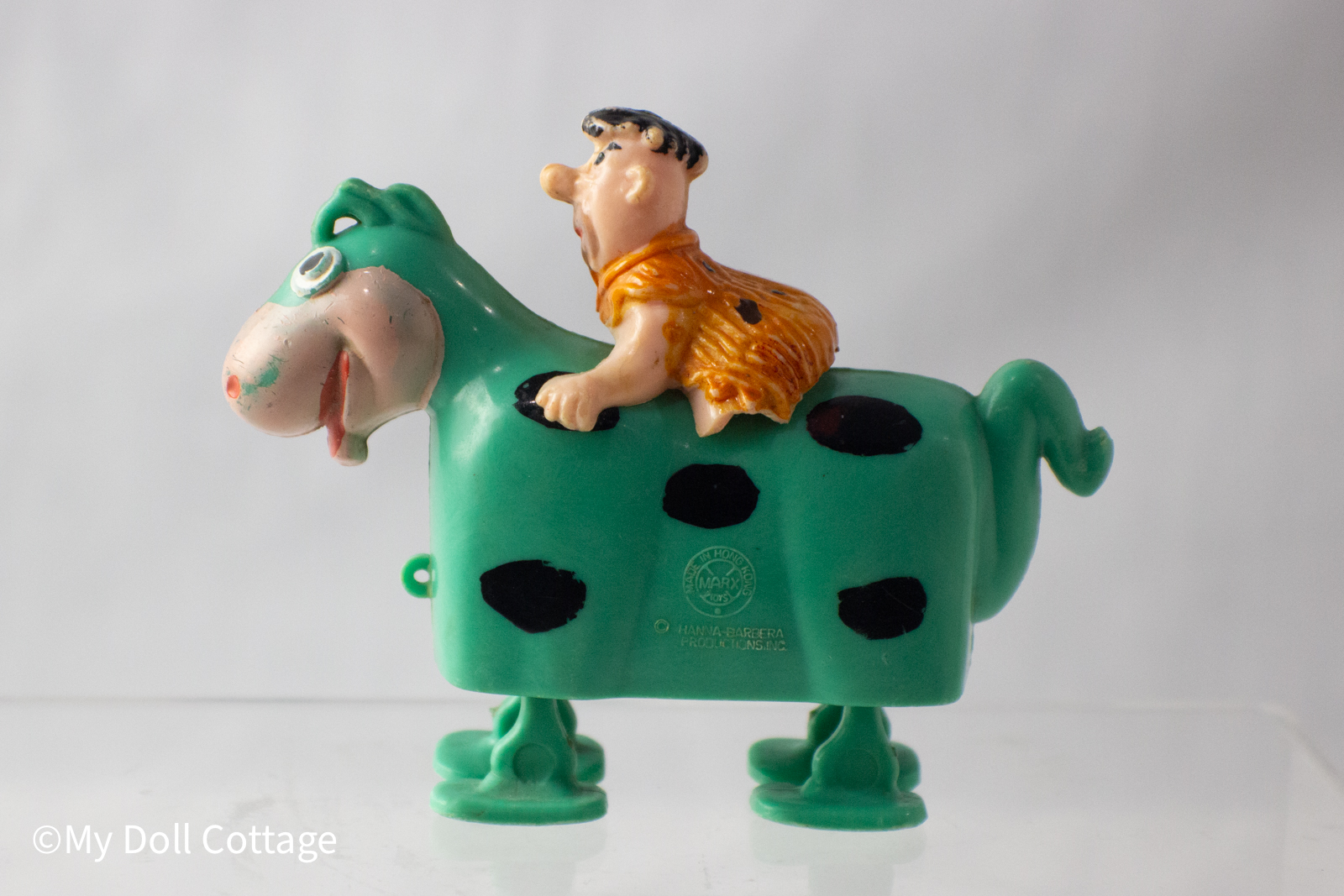
A 1960s Marx ramp walker featuring Fred Flintstone riding a green dinosaur, produced under license from Hanna-Barbera Productions, made in Hong Kong, and known for its classic mechanical walking motion.
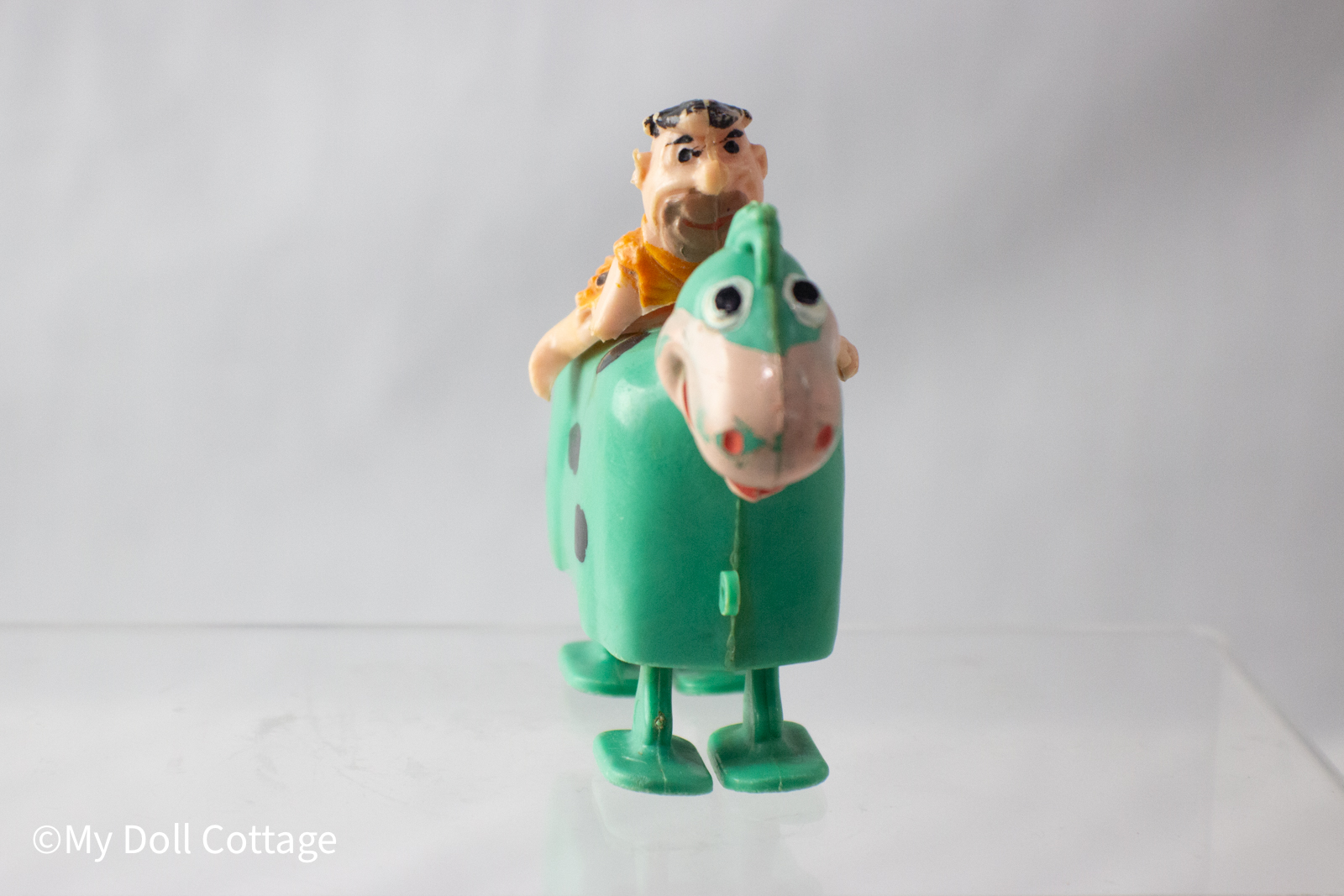
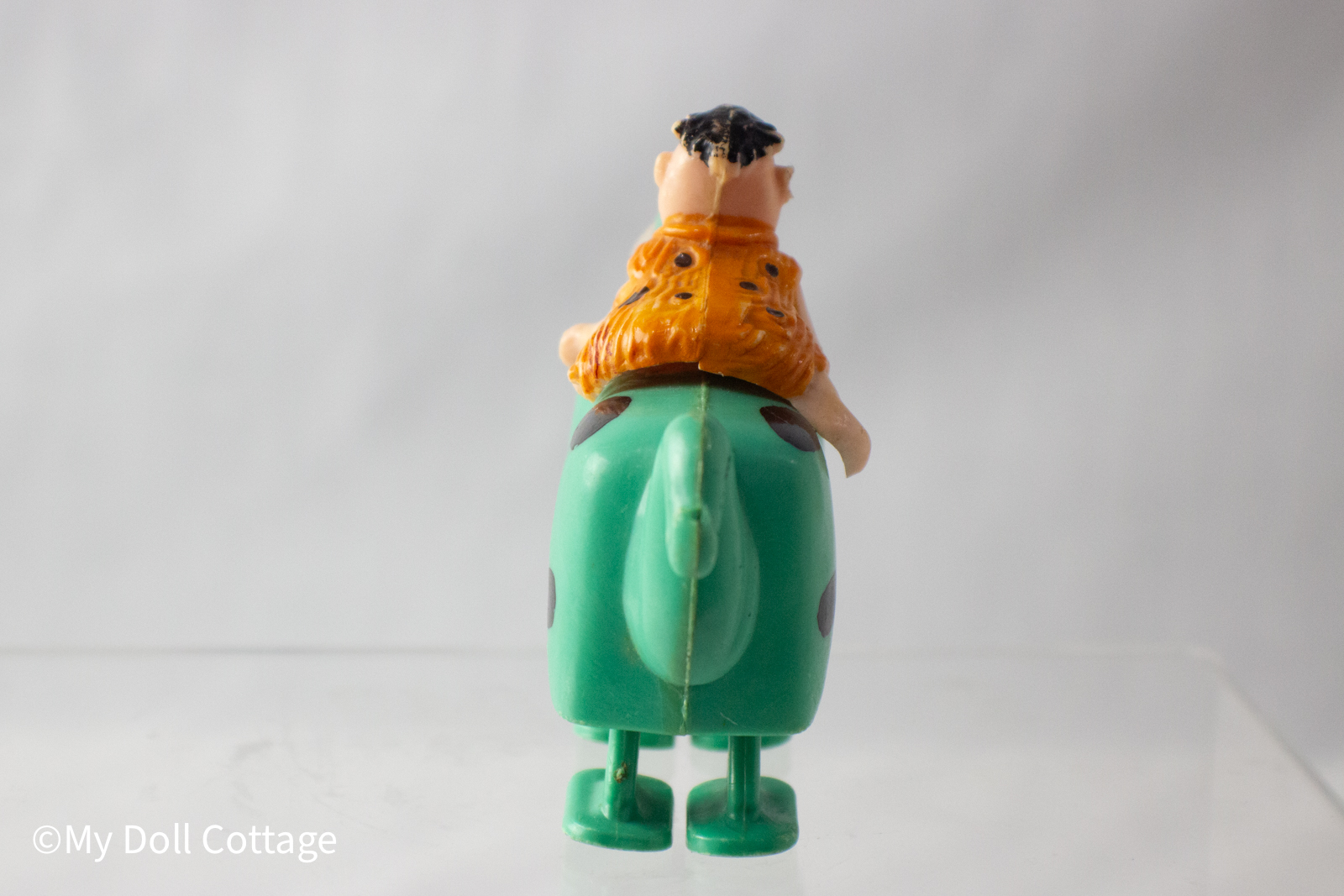
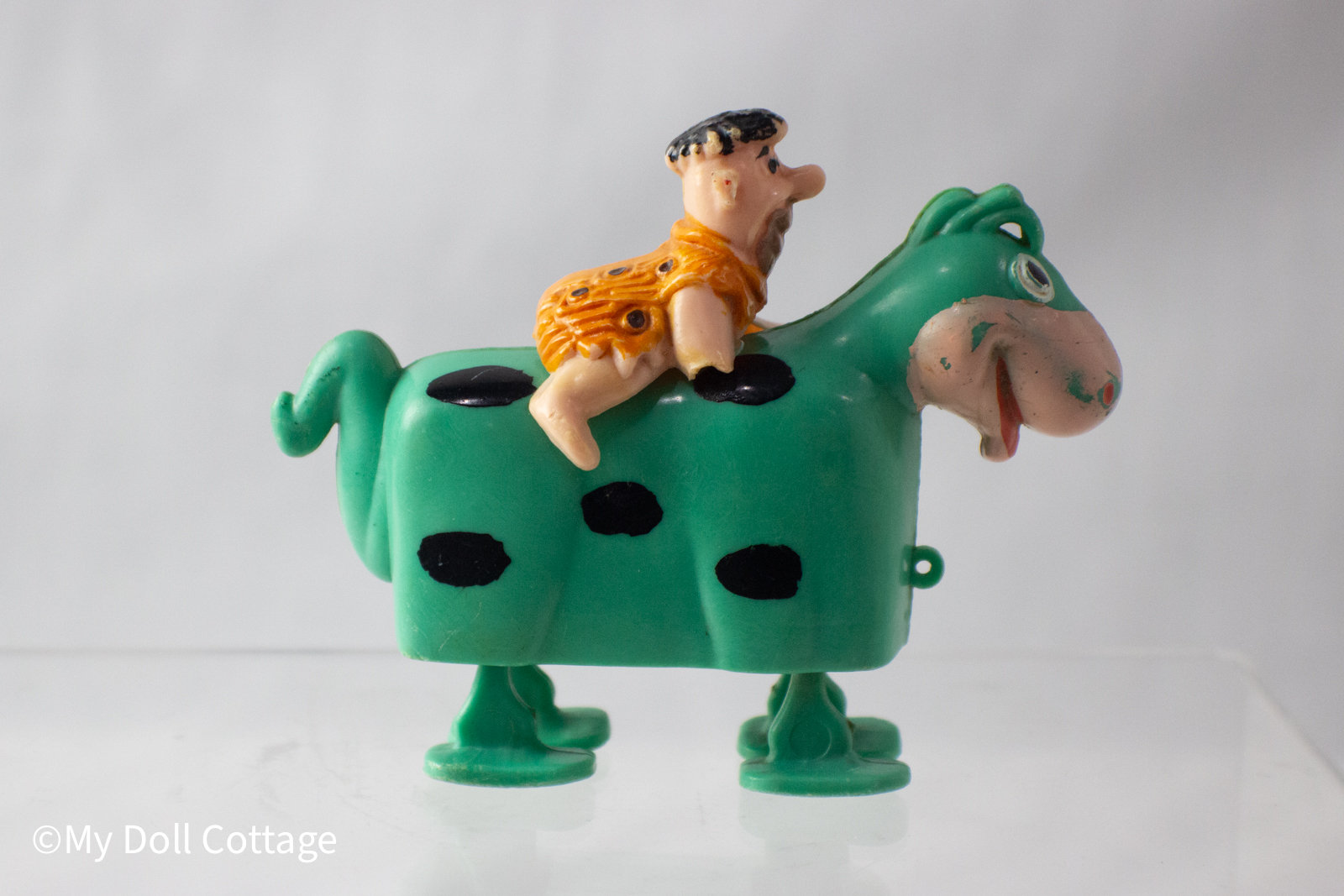
This charming 1960s Marx ramp walker bring some of television’s most beloved Stone Age characters to life. The toy features Fred Flintstone, dressed in his signature orange spotted tunic, seated a top a green dinosaur with black spots—likely modelled after Dino, his loyal prehistoric pet.
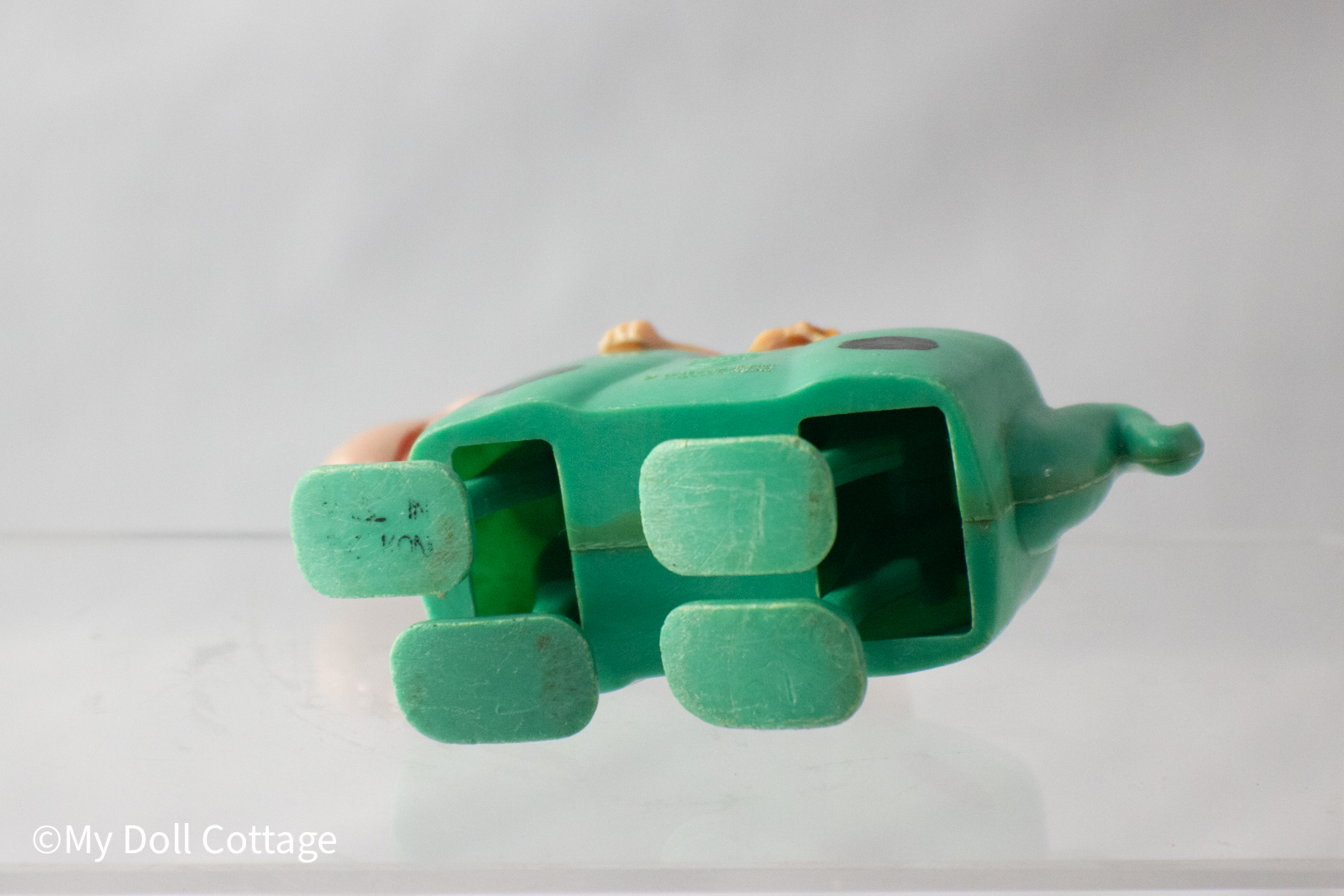
Manufactured by Louis Marx & Co. and marked “MARX – Made in Hong Kong © Hanna-Barbera Productions Inc.,” this piece was part of Marx’s licensed character ramp walker line, which also included figures from The Jetsons and Yogi Bear. Measuring approximately 100 mm long x 80 mm high x 40 mm wide, the walker is made from durable injection-molded plastic in bright colours typical of the era.
The ramp walker design was simple yet ingenious: when placed on a gently sloped surface, gravity and a linked-leg mechanism caused the figure to “walk” forward. Marx produced these toys primarily during the early to mid-1960s as affordable novelty items, making them a staple in both American and export toy markets. This example remains in excellent vintage condition, showing only light paint wear consistent with age, and retains its clear manufacturer’s mark and functional walking mechanism. It represents a delightful combination of animation nostalgia and 1960s toy innovation.
Features
• Manufacturer: Louis Marx & Co.
• Country of Origin: Made in Hong Kong
• Material: Injection-molded plastic
• Mechanism: Ramp walker (gravity-poweredmovement)
• Dimensions: 100 mm long x 80 mm high x 40mm wide
• Markings: “MARX – Made in Hong Kong ©Hanna-Barbera Productions Inc.”
• Condition: Excellent – light wear, fullyfunctional
• Character: Fred Flintstone riding greendinosaur
• Era: 1960s
Designer and Brand
Designer: Hanna-Barbera Productions Inc
Brand/Company: Marx Toys
Made from the following materials
Hard plastic dolls and toys emerged as a significant innovation in the toy industry during the mid-20th century, revolutionizing the way dolls were designed and manufactured. Hard plastic is a type of thermoplastic, characterized by its durability, lightweight nature, and resistance to breakage. This material became popular for creating dolls, action figures, and various toys due to its versatility and ability to hold intricate details and vibrant colors.
The development of hard plastic allowed for the mass production of toys that were not only affordable but also more resilient than earlier materials like composition or porcelain. As a result, manufacturers were able to produce a wide variety of designs, from classic baby dolls to trendy fashion figures, each with detailed facial features and movable limbs. This material also enabled the incorporation of new techniques, such as molded hair and painted eyes, which enhanced the realism and appeal of the dolls.
Among the earliest forms of hard plastic used in toy manufacturing was **Bakelite**, created in the early 1900s by Belgian chemist Leo Baekeland. Bakelite is one of the first synthetic plastics, made from phenol and formaldehyde. Its properties, including heat resistance and electrical insulation, made it ideal for various applications, including toys. While Bakelite itself is not commonly used in doll-making today, its introduction paved the way for the development of modern plastics in the toy industry.
**Catalin** is another early form of hard plastic that emerged in the 1930s and was often used for creating vibrant toys and dolls. Like Bakelite, Catalin is a thermosetting plastic known for its durability and ability to hold color well. Catalin toys often featured bright, translucent colors and intricate designs, capturing the imaginations of children and collectors alike.
As hard plastic became the standard for many types of dolls and toys, it solidified its place in the industry, leading to the creation of iconic brands and beloved characters. Today, hard plastic dolls and toys continue to be popular, appreciated for their longevity and the nostalgia they evoke. Collectors value vintage hard plastic toys for their craftsmanship and the unique place they hold in the history of toy making.
At our museum, we celebrate the legacy of hard plastic dolls and toys, highlighting their role in shaping the modern toy industry and their enduring appeal across generations.

Additional Product Images

Related Dolls and Toys from our collection