1998 – Germany – Steiff – Standing Terrier Dog
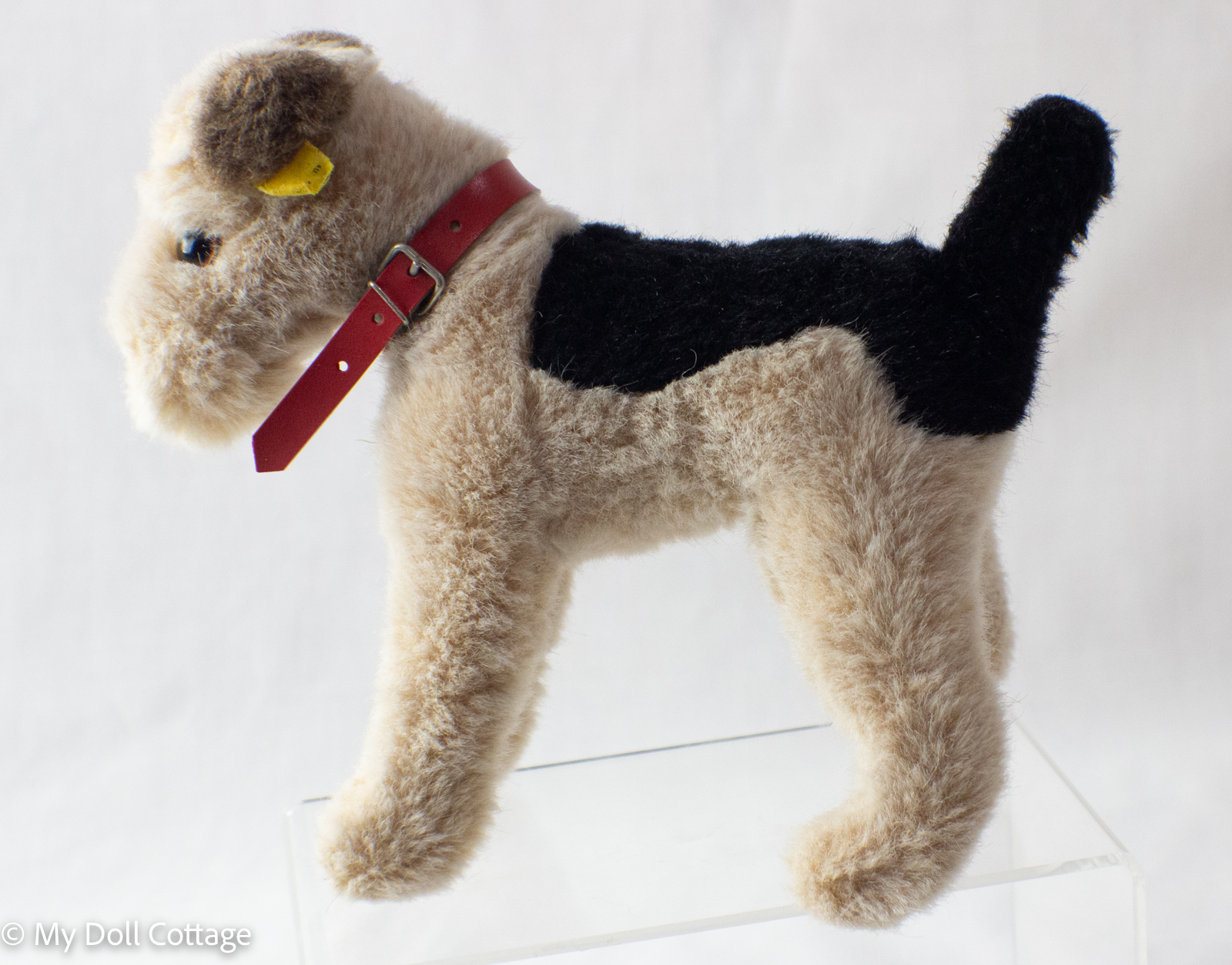
A 1998 Steiff standing terrier dog plush figure retaining its ear button and original tag, though the tag is worn and largely illegible.
This Steiff terrier is crafted in light brown mohair plush with contrasting darker back panel and tail, closely resembling traditional wire-haired terrier breeds. The dog features upright posture, sculpted muzzle, black stitched nose, and expressive glass or safety eyes. A red leatherette collar with metal buckle encircles the neck. The original Steiff ear button remains present, along with a yellow fabric tag that is heavily worn and no longer legible.
By the late 1990s, Steiff continued its long standing tradition of producing realisticanimal figures using high-quality mohair and traditional German craftsmanship.During this period, Steiff animals commonly retained the yellow ear tag andmetal button as primary authentication markers. Standing dog models were particularly popular among collectors and gift buyers due to their breed realism and display appeal.
Standing plush animals such as this terrier were designed for both decorative display and gentle imaginative play. Internal wire or structural reinforcement allows the figure to stand independently, maintaining realistic posture while preserving the softness characteristic of Steiff plush production.
Features
Measurements: 190 mm high x 210 mm wide x 100 mm deep
Condition: Good - minor wear including tag
Markings: Metal ear button (“Knopf im Ohr”) present; yellow fabric tag attached but worn and illegible
Date Note: Date is an estimate based on available research and stylistic features. If you have additional information, please contact us to help update our records.
Made from the following materials
Textiles have played a fundamental role in human history, serving both practical and expressive purposes across cultures and time periods. Historically, textiles were among the earliest manufactured materials, created through processes such as spinning, weaving, felting, knitting, and later industrial mechanisation.
Natural fibres including wool, cotton, linen, and silk were used for centuries to produce clothing, household goods, and toys, with techniques and patterns often reflecting regional traditions, available resources, and social status. The Industrial Revolution marked a significant shift in textile production, introducing mechanised looms, mass manufacturing, and new dyeing methods, which made textile goods more affordable and widely available.
In the context of dolls and toys, textiles were essential for creating soft bodies, clothing, and accessories that mirrored everyday dress and domestic life. Early dolls were often constructed from cloth or fabric-covered forms, while the late 19th and early 20th centuries saw the introduction of specialised plush and mohair textiles for soft toys, particularly in Europe. These materials were chosen for their durability, tactile appeal, and ability to hold shape, contributing to the emotional comfort associated with childhood play. Textile use also allowed for detailed costuming, enabling dolls to reflect contemporary fashion, occupational dress, or cultural identity.
Over time, textile production expanded to include synthetic fibres such as rayon, nylon, and polyester, which became increasingly common from the mid-20th century onward. These materials offered greater consistency, lower cost, and easier care, influencing the design and manufacture of mass-produced toys and accessories. Today, historical textiles in toys and dolls provide valuable insight into manufacturing techniques, trade networks, and social change. Differences in fibre type, weave, and construction help researchers date objects, identify regions of origin, and understand evolving standards of craftsmanship, making textiles a key material category within museum and collection documentation.

Additional Product Images


Related Dolls and Toys from our collection


