
c.1900–1910 Armand Marseille Mould 390 Bisque-Head Doll – Germany

A fine c.1900–1910 German Armand Marseille mould 390 doll with bisque socket head, blue glass eyes, open mouth with teeth, auburn wig and fully jointed composition body, standing approximately 420 mm high.
This attractive 17½-inch Armand Marseille doll was manufactured in Germany during the early twentieth century and is an example of the firm's extremely successful mould 390 doll.
The back of the bisque socket head bears the impressed Armand Marseille factory marking together with Germany, 390, A 1½ M.
Mould 390 became one of Armand Marseille's most widely produced doll heads and is frequently encountered on German jointed composition bodies. Surviving examples with comparable markings, blue sleeping eyes, open mouths and jointed bodies are consistently identified as Armand Marseille 390 dolls.
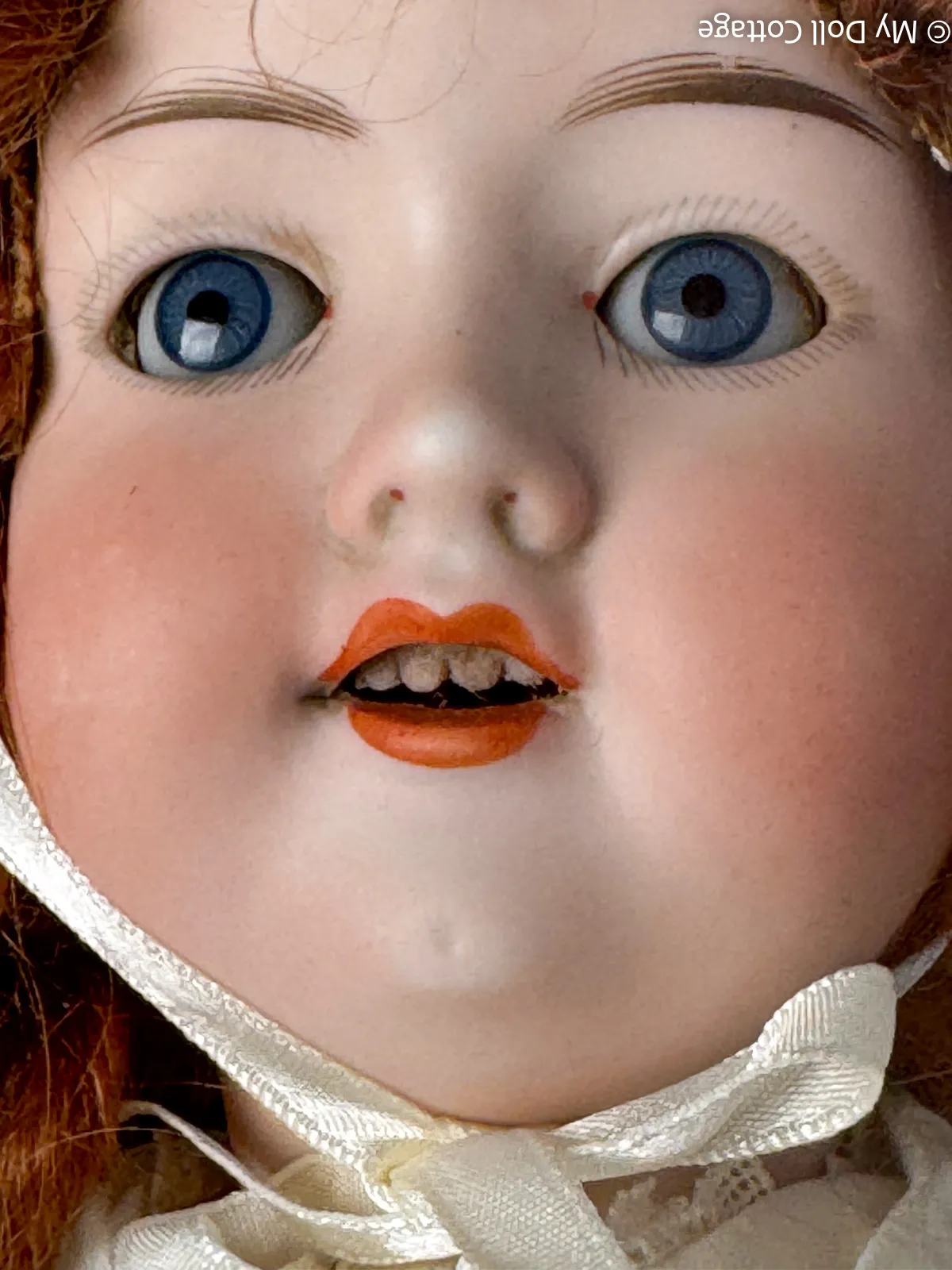
The doll has a finely modelled bisque socket head with delicately painted feathered eyebrows and eyelashes, softly blushed cheeks and an open mouth painted in a warm coral-red tone. Inside the mouth is a row of small upper teeth.
She has striking blue glass sleepy eyes with detailed irises.
Her mohair auburn-brown wig is arranged in curls and ringlets around the face. The wig has a hessian base and appears original.
The head is mounted on a fully jointed composition body, articulated at the shoulders, elbows, wrists, hips and knees. This type of ball-jointed body was commonly paired with Armand Marseille's 390 socket head.
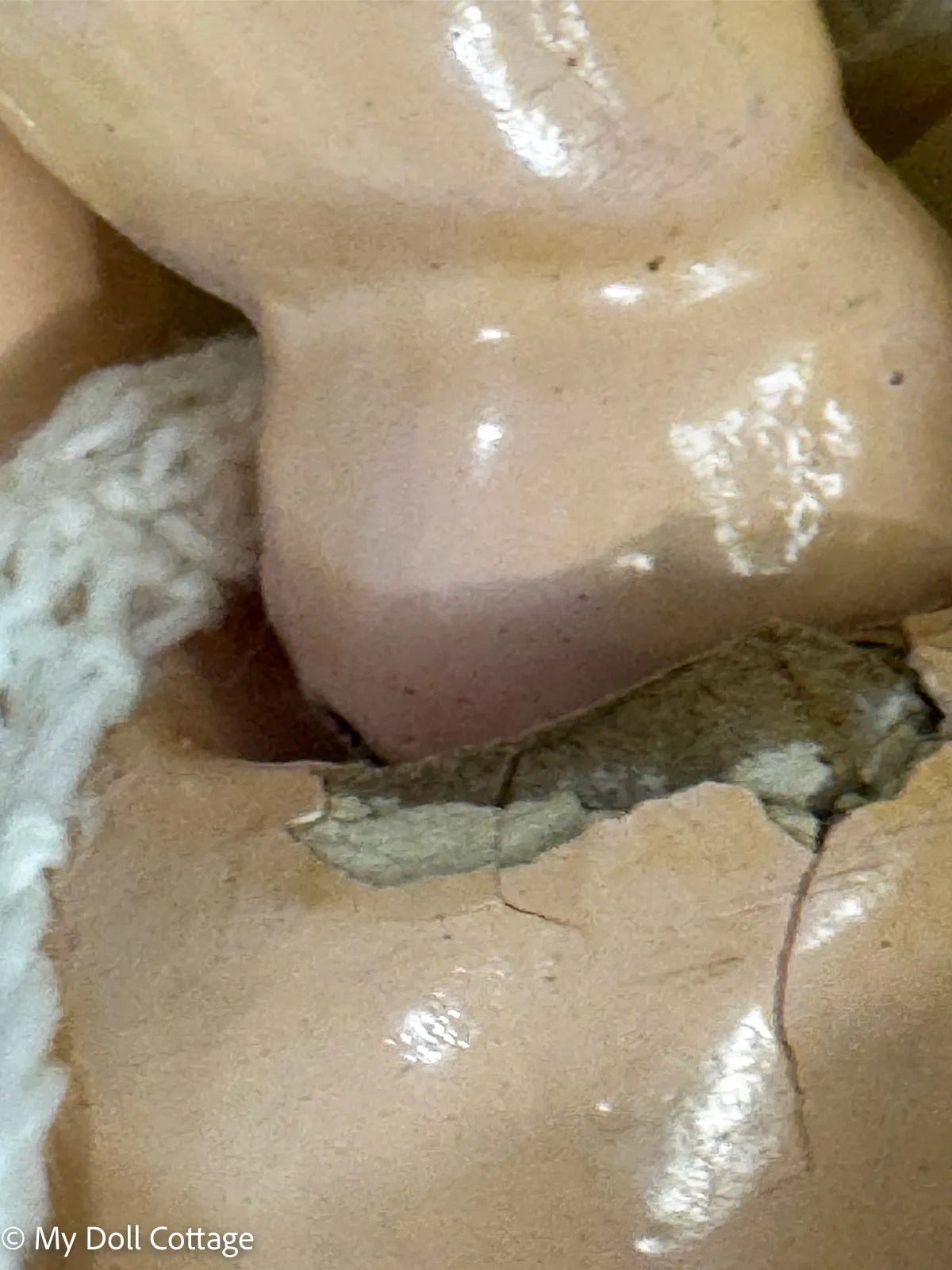
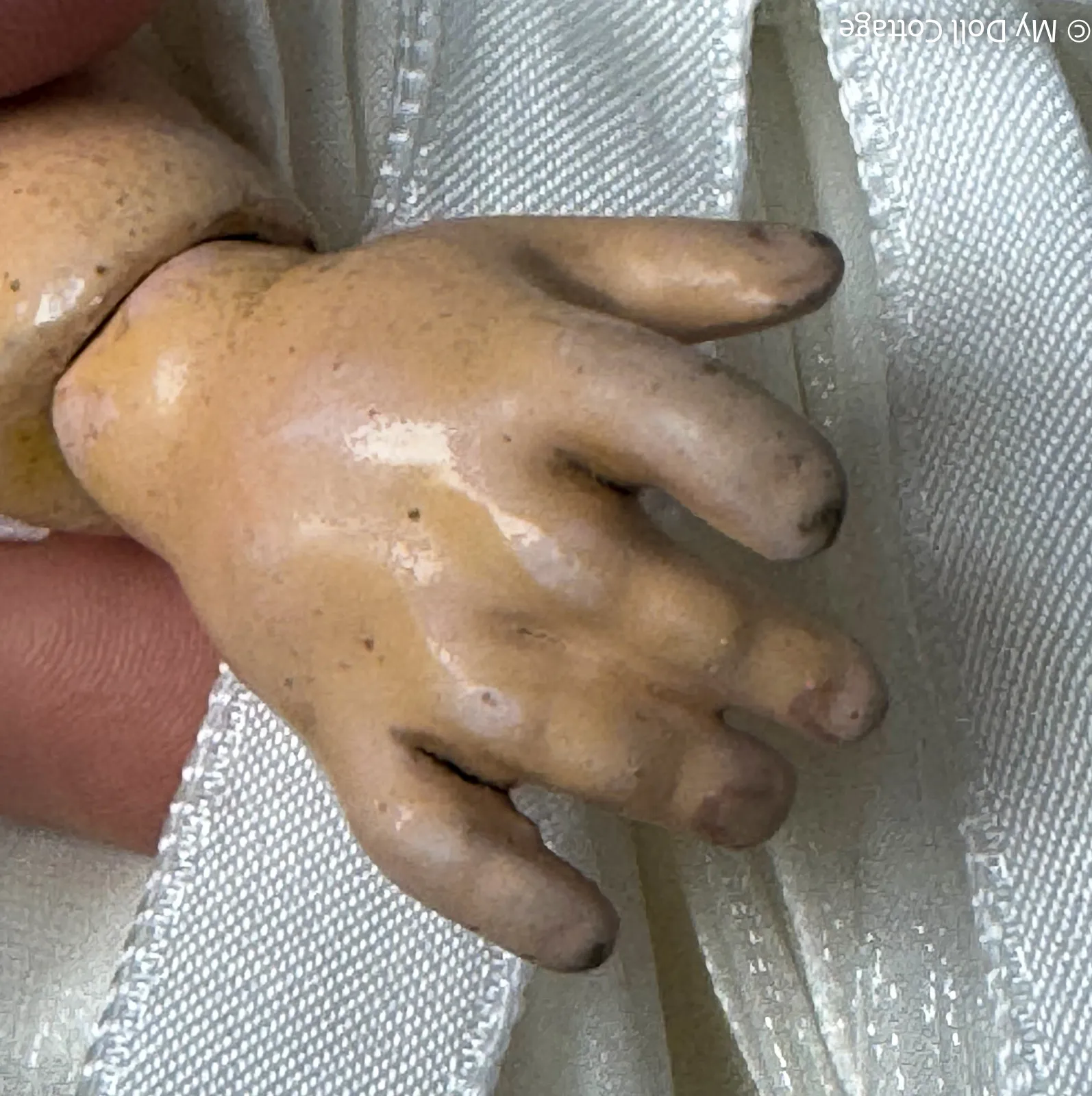
There is expected age-related surface wear and cracking around some joints, together with deterioration and losses to the composition around the upper leg/hip area. The hands retain their individual fingers but show surface wear and small losses.
Despite wear to the composition body, the bisque head appears particularly well preserved, with strong facial colouring and no obvious hairline crack or major chips.
The doll is dressed in a long cream-white satin-style gown trimmed with lace, with a matching lace bonnet. The clothing is sympathetic to the period and presentation of the doll, but is not original.
Features
Measurements: 420h x 160w x 120d mm
Condition: Good - sign of age typical on composition dolls. Not in it's origonal clothes
Markings: Armand Germany/ 390 / A 1½ M
Date Note: Date is an estimate based on available research and stylistic features. If you have additional information, please contact us to help update our records.
Made from the following materials

Additional Product Images



Related Dolls and Toys from our collection


