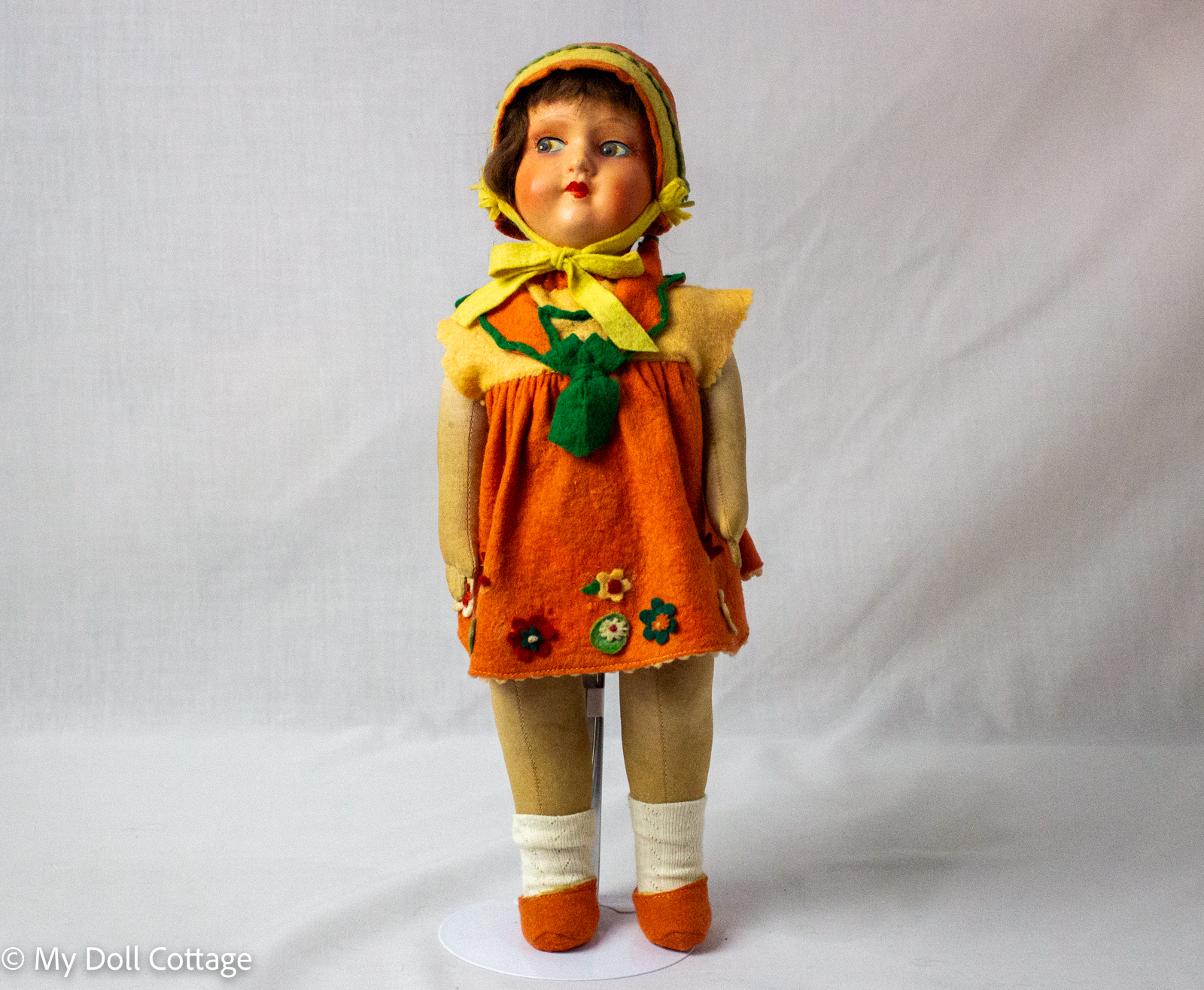
c.1917–1925 – Russia (attributed) – Unknown Maker – Stockinette Character Doll (Village Boy)

A hand-crafted Russian stockinette doll depicting a village boy, featuring a cloth body, painted features, and human hair, reflective of early 20th-century folk-style doll making.
This Village Boy Doll is constructed from stockinette fabric tightly stretched over a stuffed form, creating a softly modelled head and limbs. The facial features are hand-painted directly onto the fabric, including finely shaped brows, detailed eyes, and a subtle red mouth, giving the figure a life like yet stylised expression. The hair appears to be human hair, applied in sparse strands, now worn and uneven with age. The hands and feet are simple stitched forms, with the legs wrapped in fabric strips to imitate traditional bindings. The figure is dressed in a layered outfit consisting of a simple tunic, striped trousers, and a wool felt-style jacket, with woven fibre shoes completing the rural aesthetic.
Dolls of this type are commonly associated with early 20th-century Eastern European and Russian folk traditions, particularly around the period of the Russian Revolution and immediate post-revolution years. During this time, industrial production was disrupted, and many toys were handmade using available materials. Stockinette dolls were a practical alternative to more expensivebisque or composition dolls, allowing artisans or families to create expressivefigures using fabric and natural fibres. The stylised clothing and construction suggest influence from traditional peasant dress, reinforcing its attribution as a “village” character doll.
These dolls were often made either for children’s play or as decorative folk items, sometimes sold in local markets or produced in small workshop settings. Their value lies not only in their handmade nature but also in their cultural representation of rural life during a significant period of social and political change. Each example tends to be unique, reflecting the maker’s materials, skill, and regional influences.
Features
Measurements: 400mm x 170mm Square, 65mm wide
Condition: Good - Hat missing
Markings: Village Boy
Date Note: Date is an estimate based on available research and stylistic features. If you have additional information, please contact us to help update our records.
Made from the following materials
Cloth dolls and toys have a rich history, rooted in the traditions of various cultures around the world. Made primarily from fabric, these dolls are characterized by their soft textures, vibrant colors, and the use of various sewing techniques. The creation of cloth dolls dates back centuries, often reflecting the cultural heritage and artistic expressions of the communities that produce them.
Historically, cloth dolls were often handmade by mothers and grandmothers as toys for children, using scraps of fabric and other materials available in the household. These dolls were not only sources of comfort and play but also served as tools for teaching children about sewing and crafting. The diversity of fabrics used—ranging from cotton and wool to silk and felt—allowed for endless creativity in design, giving rise to a multitude of styles and forms.
Cloth dolls often embody the characteristics of the culture from which they originate. For instance, traditional rag dolls from the United States were typically made from leftover fabric and filled with scraps, while Japanese Kokeshi dolls are simple wooden dolls often painted with floral designs. In many cultures, cloth dolls have also served ceremonial purposes, being used in rituals or as representations of important figures.
In the modern era, cloth dolls have seen a resurgence in popularity, particularly among those who appreciate handmade and artisanal items. Contemporary artisans create unique cloth dolls that often incorporate modern design elements while honoring traditional techniques. These dolls may feature intricate stitching, detailed facial expressions, and a variety of clothing styles, making them appealing to collectors and children alike.
Today, cloth dolls and toys continue to be cherished for their tactile quality and the personal touch that comes from being handmade. Their ability to convey warmth, creativity, and cultural significance makes them timeless treasures in the world of toys, offering both play and connection to the rich history of doll making.
Composition
Composition dolls and toys represent a unique chapter in the history of doll-making, particularly prominent from the early 20th century until the mid-20th century. These dolls are crafted from a mixture of materials, primarily wood pulp, sawdust, and other additives, which are then pressed and molded into shapes. This innovative process allowed for the mass production of dolls and toys that were more affordable and durable than their porcelain or clay counterparts.
The composition material was designed to mimic the look and feel of more expensive materials while being lighter and less fragile. These dolls often featured painted facial details, painted hair, and fabric bodies, making them accessible to a broader audience. Because of their affordability, composition dolls became extremely popular during the Great Depression, as families sought quality toys at reasonable prices.
Dolls made from composition often reflect the styles and fashions of the eras in which they were created. Many classic designs include baby dolls with chubby cheeks, elegant fashion dolls, and character dolls based on popular culture. The versatility of composition allowed for a wide range of expressions and poses, making these dolls appealing to children and collectors alike.
However, as synthetic materials and plastics emerged in the mid-20th century, the popularity of composition dolls began to decline. Over time, the composition material was found to be less durable than other options, leading to issues like chipping and cracking, especially when exposed to moisture. Today, many collectors seek out vintage composition dolls for their historical significance and the nostalgia they evoke.
Composition dolls and toys remain an important part of the history of doll making, showcasing the evolution of materials and techniques used to create cherished playthings. At our museum, we celebrate these dolls not only for their craftsmanship but also for the stories they tell about the times and cultures in which they were made.

Additional Product Images


Related Dolls and Toys from our collection