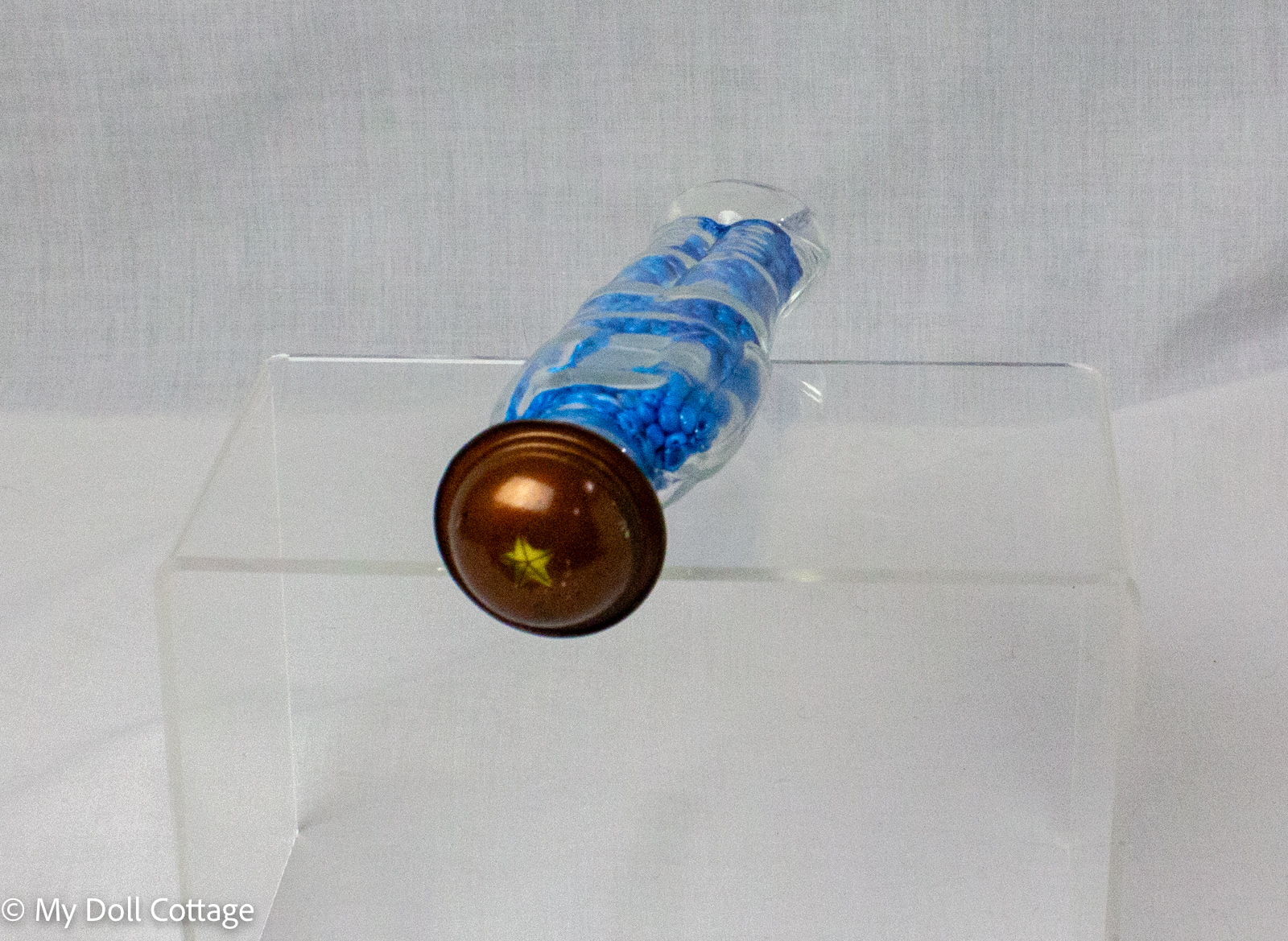
c.1920 Glass Soldier Candy Container with Metal Helmet
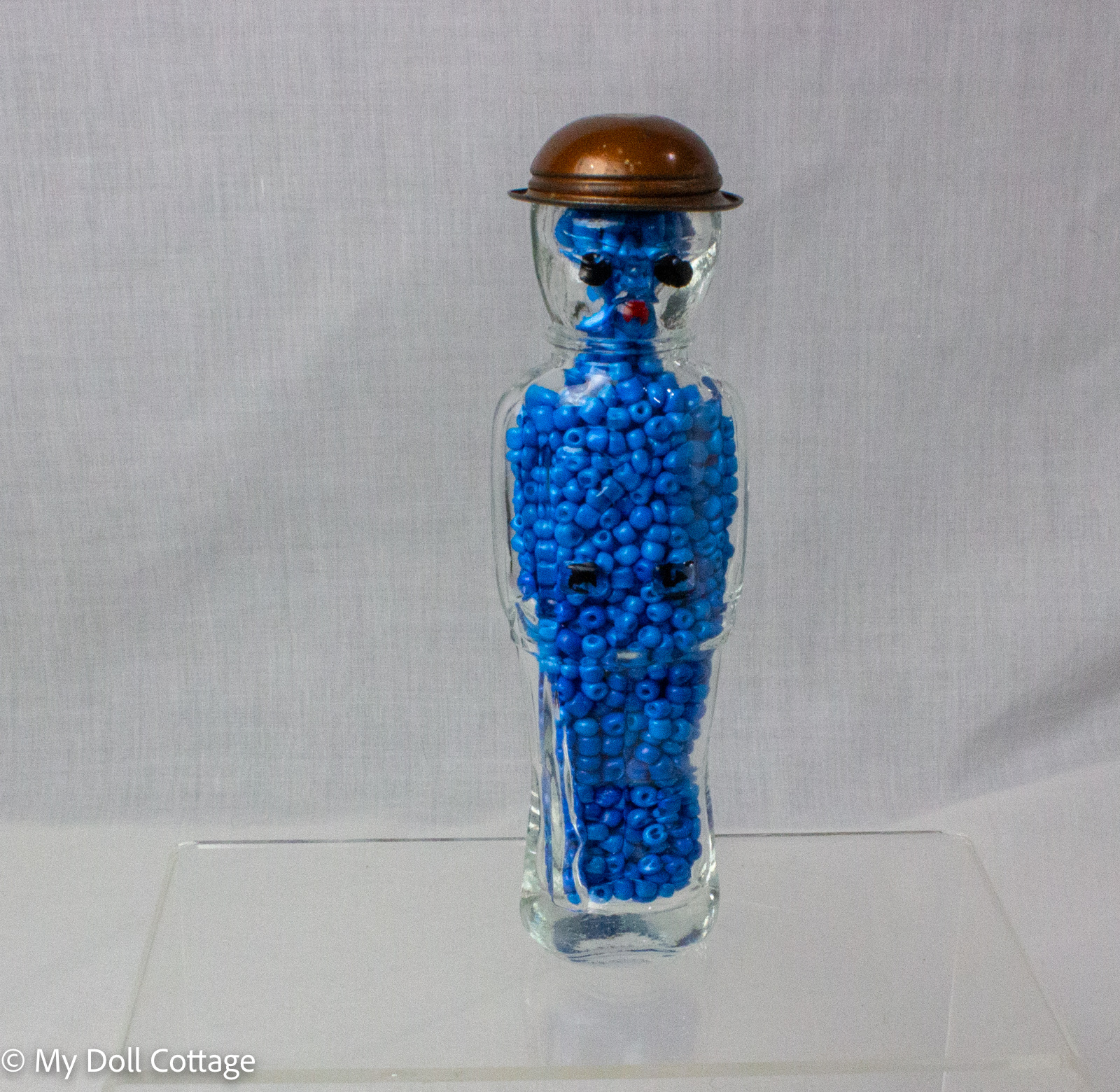
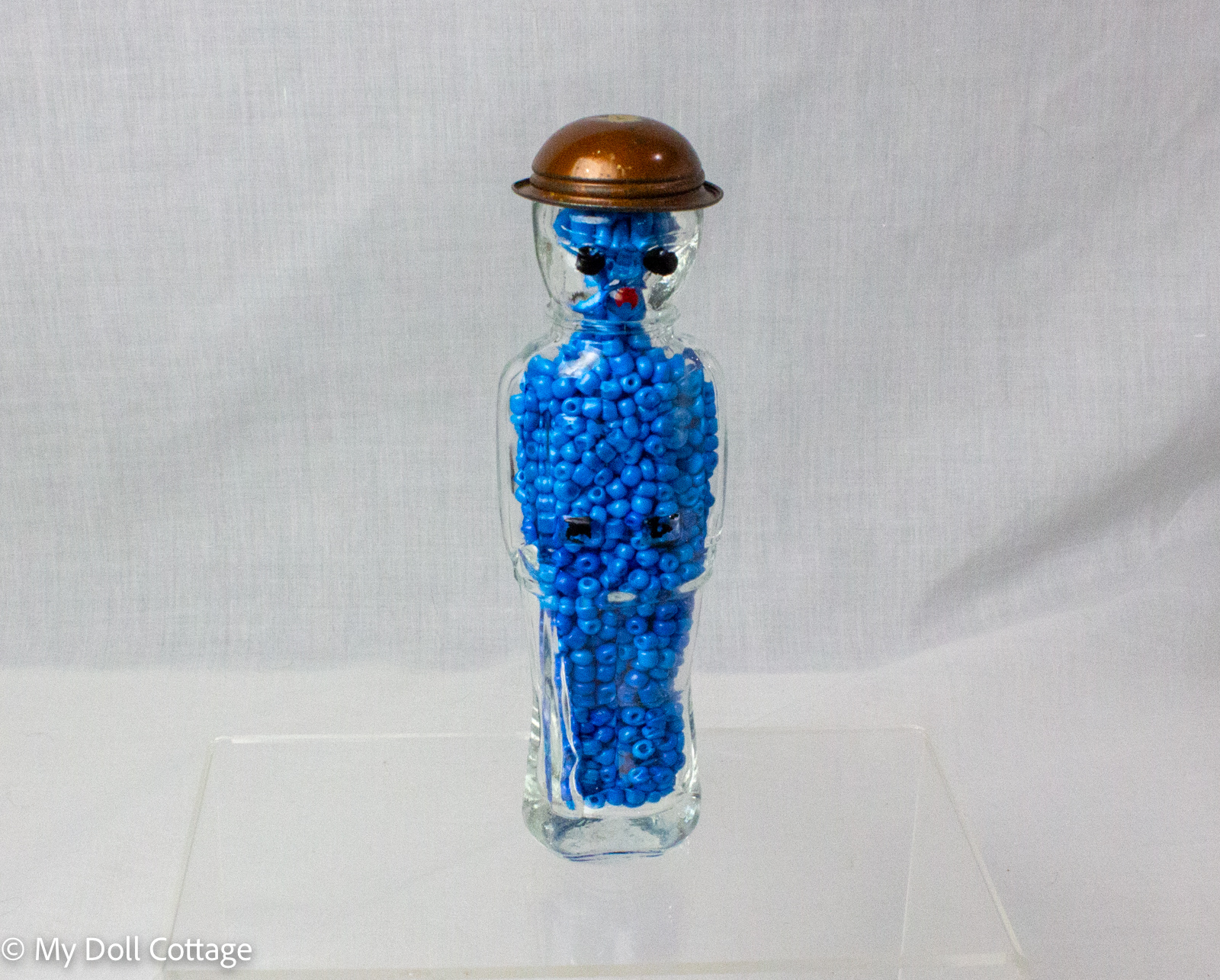
A charming early twentieth-century figural glass candy container depicting a standing toy soldier with its original painted metal helmet, dating to around the 1920s.
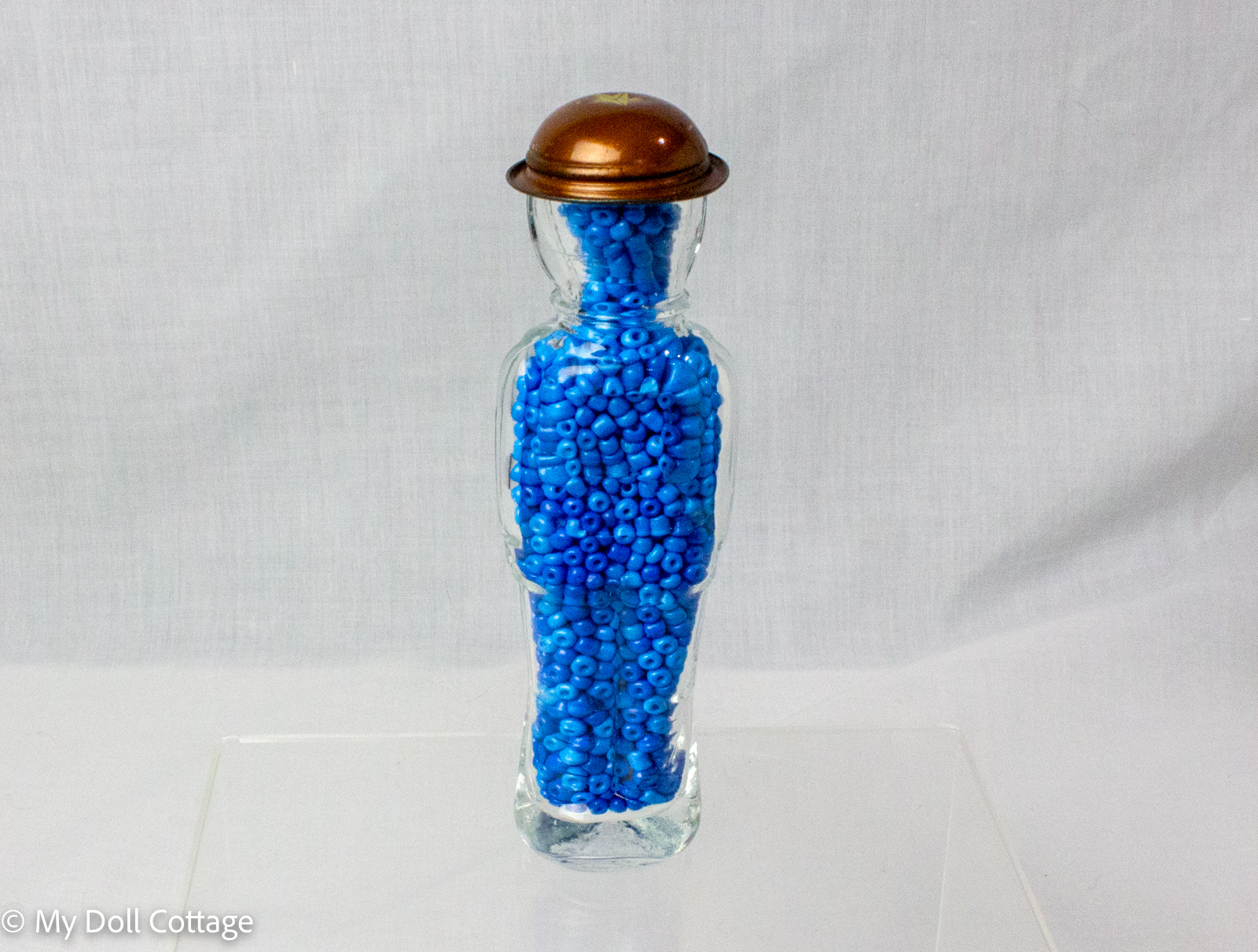
This delightful figural candy container dates to approximately 1920–1930 and was produced during the golden age of novelty glass candy containers. Moulded in clear pressed glass, it depicts astanding soldier with moulded uniform details, originally hand-painted facial features and decorative accents, traces of which remain today.
The soldier retains its original painted pressed-metal helmet, an important feature that adds significantly to its authenticity and collector appeal. The glass body originally housed small confectionery or sugar sweets, with there movable helmet allowing the contents to be accessed. Similar examples were produced in both the United States and Germany, although without a maker's markthe exact manufacturer cannot be confirmed. The overall style is consistentwith examples dating from the 1920s.
The example remains in excellent structural condition and still displays remnants of its original painted decoration, making it an attractive addition to collections of vintage confectionery, antique toys and novelty glass.
Features
Measurements: 160h x 50w x 45d mm
Condition: Excellent
Markings: Nil
Date Note: Date is an estimate based on available research and stylistic features. If you have additional information, please contact us to help update our records.
Made from the following materials
...
Metal has played a significant role in the history of dolls and toys, with materials like cast iron, tin, and brass being used for centuries to create durable and appealing playthings. Each type of metal has distinct characteristics that have influenced its application in the toy industry, leading to a variety of designs and styles.
Cast Iron
Cast iron was one of the first metals used in toy manufacturing, particularly during the 19th century. Its strength and durability made it ideal for creating toys that could withstand the rigors of play. Cast iron toys were often made using molds, allowing for mass production and the creation of intricate designs. Popular cast iron toys included figurines, toy cars, and trains, many of which featured detailed craftsmanship and decorative paintwork. These toys were not only popular with children but also became collectible items over time, cherished for their historical significance and nostalgic appeal.
Tin
Tin, often used in the form of tinplate, became a favored material for toy manufacturing in the late 19th and early 20th centuries. Tin toys were lightweight, affordable, and could be produced in large quantities, making them accessible to a wide audience. Tinplate was often stamped or lithographed with colorful designs, bringing characters and scenes to life. Classic examples of tin toys include wind-up cars, robots, and playful animals, many of which featured moving parts that delighted children. Tin toys remain popular among collectors today, valued for their charm and the artistry involved in their design.
Brass
Brass, an alloy of copper and zinc, has been used in toy making for its attractive appearance and durability. It is particularly well-suited for creating smaller components, such as gears and mechanisms in wind-up toys. The shiny, golden hue of brass gives toys a sense of elegance and sophistication, often seen in decorative pieces and collectibles. While brass dolls are less common than those made from other materials, some artisans have crafted beautiful dolls with brass accents, adding a touch of luxury to their designs.
Throughout history, the use of metal in dolls and toys has allowed for a diverse range of creations, each reflecting the technological advancements and artistic trends of their time. The durability of metal ensures that many of these toys have stood the test of time, allowing them to be enjoyed by new generations of children and collectors alike.
At our museum, we celebrate the legacy of metal dolls and toys, highlighting their role in the evolution of play and the craftsmanship that goes into creating these timeless treasures. From the strength of cast iron to the whimsical designs of tin and the elegance of brass, these materials tell a rich story of creativity and innovation in the world of toys.

Additional Product Images
Related Dolls and Toys from our collection
