c.1930–1940 – Bakelite Travel Manicure Set
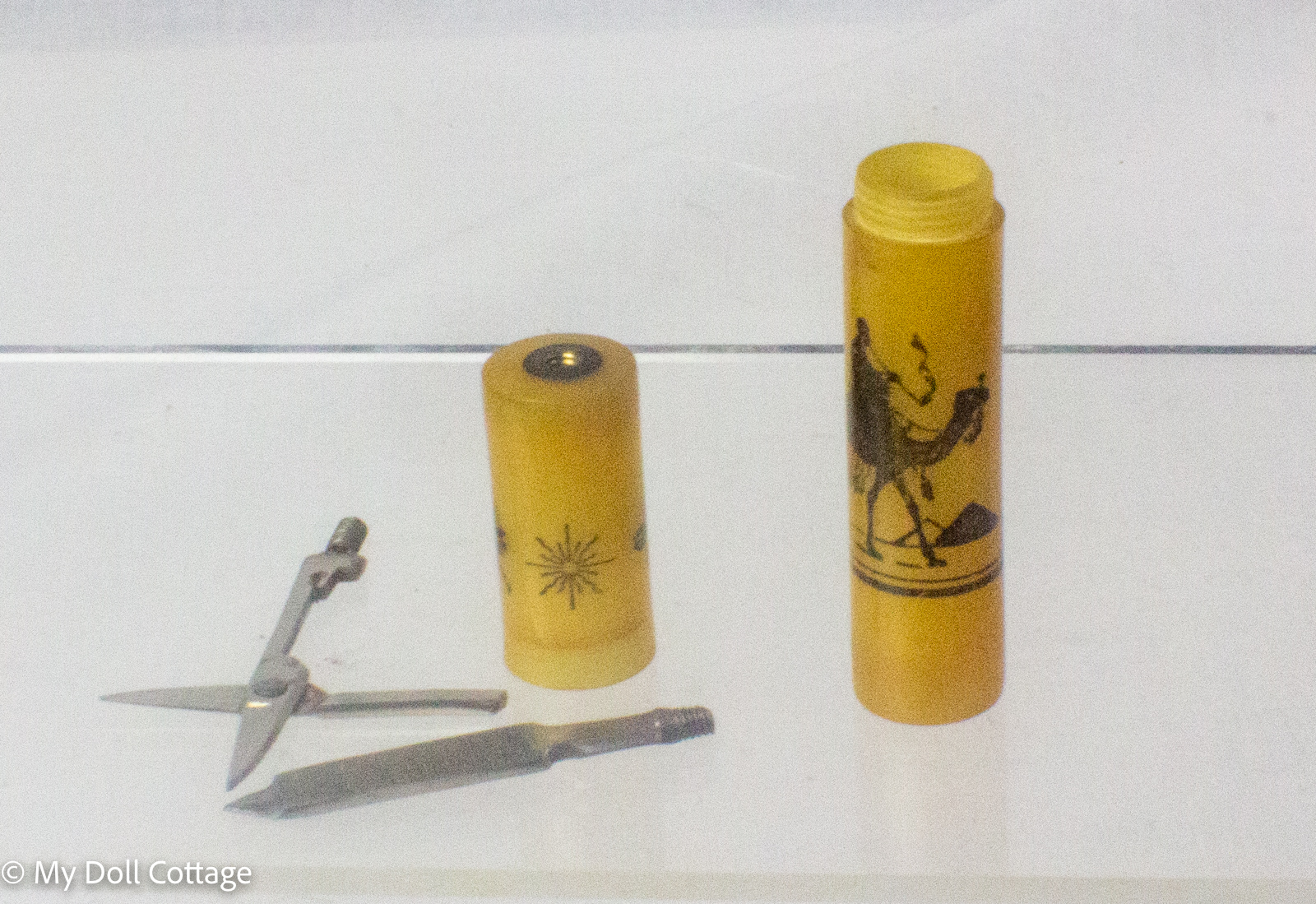
A compact Art Deco-era Bakelite travel manicure set featuring folding scissors and a removable nail file housed in a decorative Egyptian Revival case.
Portable grooming sets became increasingly popular during the 1920s and 1930s as travel by rail, ship and motorcar became more accessible. Designed to be light weight and compact, these small manicure kits allowed users to maintain their appearance while travelling.
This example consists of a cylindrical Bakelite case decorated with black transfer designs depicting a camel beneath palm trees, stylised flowers and Egyptian-inspired motifs. The decoration reflects the widespread fascination with Egyptian art following the discovery of Tutankhamun's tomb in 1922.
The case contains two manicure implements: folding scissors that pivot from the holder for safe storage, and a threaded steel nail file that screws securely into the opposite end. Although unmarked, the materials and construction are consistent with European or Japanese export novelty grooming accessories produced during the 1930s.
The set remains in excellent condition with both original tools present and bright transfer decoration.
Historical Notes
The discovery of Tutankhamun's tomb in 1922 inspired an international Egyptian Revival design movement throughout the Art Deco period. Bakelite, introduced in 1907, became a popular material for dressing table accessories and travel grooming sets due to its durability andability to be moulded into decorative forms.
Features
Measurements: Case: 80 × 10 mm, Scissors: 45 × 10 × 3 mm, File: 45 × 8 × 2 mm
Condition: Excellent
Markings:
Date Note: Date is an estimate based on available research and stylistic features. If you have additional information, please contact us to help update our records.
Made from the following materials
Bakelite, developed by Belgian-American chemist Leo Baekeland in 1907, was the world’s first fully synthetic plastic and became one of the most influential materials of the early 20th century. Non-conductive, heat-resistant, and incredibly durable, it was widely used from the 1920s to the 1950s in telephones, radios, jewellery, kitchenware, and children’s toys. Its distinctive glossy finish and deep colours—typically black, brown, red, or marbled tones—make Bakelite items highly collectible today. Authentic pieces can often be identified by their weight, warmth to the touch, and the characteristic formaldehyde scent when gently heated or rubbed. Bakelite remains a favourite among collectors for its craftsmanship, historical significance, and iconic Art Deco appeal.
Metal has played a significant role in the history of dolls and toys, with materials like cast iron, tin, and brass being used for centuries to create durable and appealing playthings. Each type of metal has distinct characteristics that have influenced its application in the toy industry, leading to a variety of designs and styles.
Cast Iron
Cast iron was one of the first metals used in toy manufacturing, particularly during the 19th century. Its strength and durability made it ideal for creating toys that could withstand the rigors of play. Cast iron toys were often made using molds, allowing for mass production and the creation of intricate designs. Popular cast iron toys included figurines, toy cars, and trains, many of which featured detailed craftsmanship and decorative paintwork. These toys were not only popular with children but also became collectible items over time, cherished for their historical significance and nostalgic appeal.
Tin
Tin, often used in the form of tinplate, became a favored material for toy manufacturing in the late 19th and early 20th centuries. Tin toys were lightweight, affordable, and could be produced in large quantities, making them accessible to a wide audience. Tinplate was often stamped or lithographed with colorful designs, bringing characters and scenes to life. Classic examples of tin toys include wind-up cars, robots, and playful animals, many of which featured moving parts that delighted children. Tin toys remain popular among collectors today, valued for their charm and the artistry involved in their design.
Brass
Brass, an alloy of copper and zinc, has been used in toy making for its attractive appearance and durability. It is particularly well-suited for creating smaller components, such as gears and mechanisms in wind-up toys. The shiny, golden hue of brass gives toys a sense of elegance and sophistication, often seen in decorative pieces and collectibles. While brass dolls are less common than those made from other materials, some artisans have crafted beautiful dolls with brass accents, adding a touch of luxury to their designs.
Throughout history, the use of metal in dolls and toys has allowed for a diverse range of creations, each reflecting the technological advancements and artistic trends of their time. The durability of metal ensures that many of these toys have stood the test of time, allowing them to be enjoyed by new generations of children and collectors alike.
At our museum, we celebrate the legacy of metal dolls and toys, highlighting their role in the evolution of play and the craftsmanship that goes into creating these timeless treasures. From the strength of cast iron to the whimsical designs of tin and the elegance of brass, these materials tell a rich story of creativity and innovation in the world of toys.

Additional Product Images


Related Dolls and Toys from our collection