
c.1930–1940 – Ladies' Celluloid Purse Comb
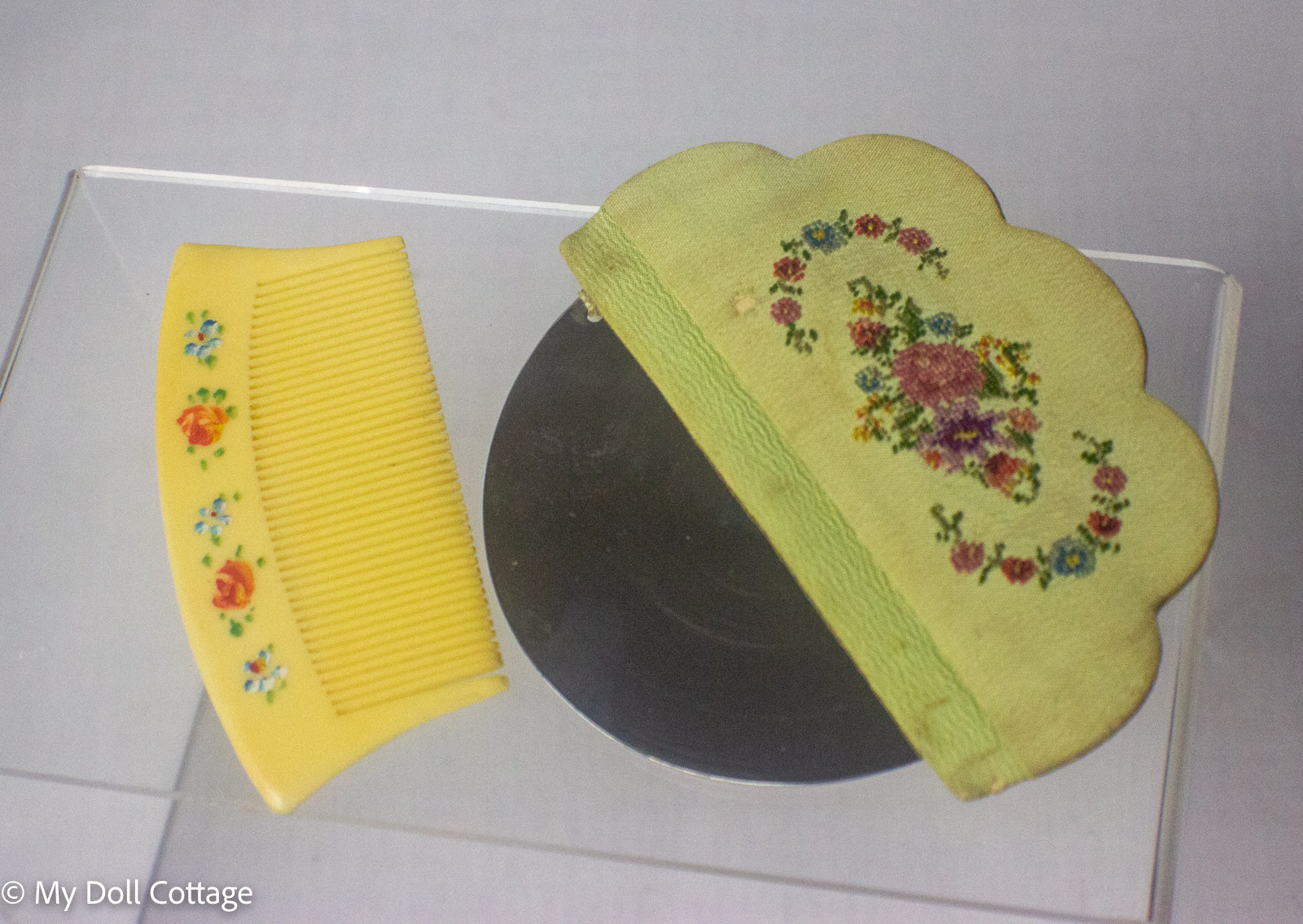
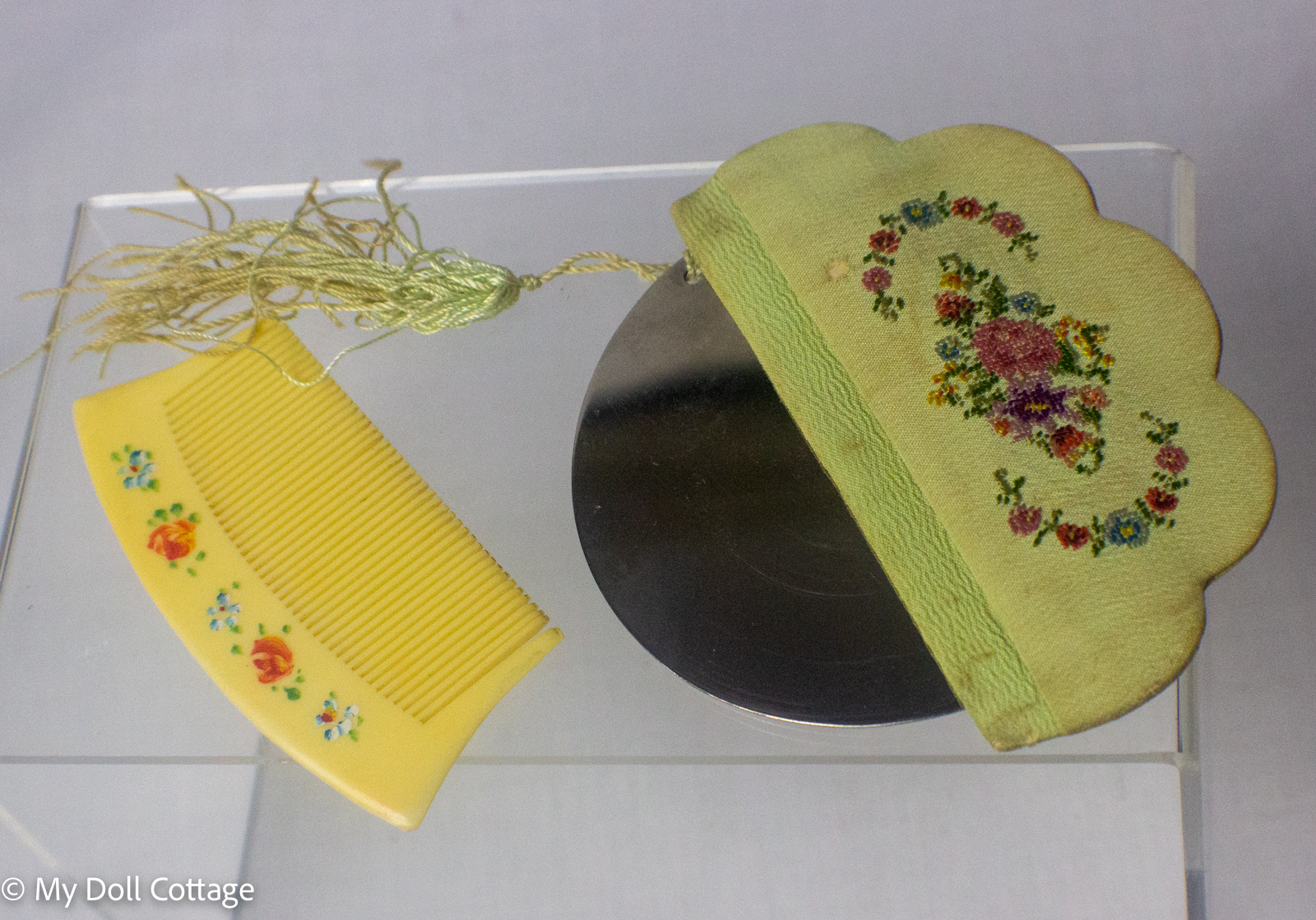
A charming Art Deco-era ladies' purse comb featuring a floral decorated celluloid comb housed within a hand-embroidered fabric holder with swivel opening.
During the 1920s and 1930s, ladies commonly carried compact grooming accessories in their handbags as part of their daily toilette.
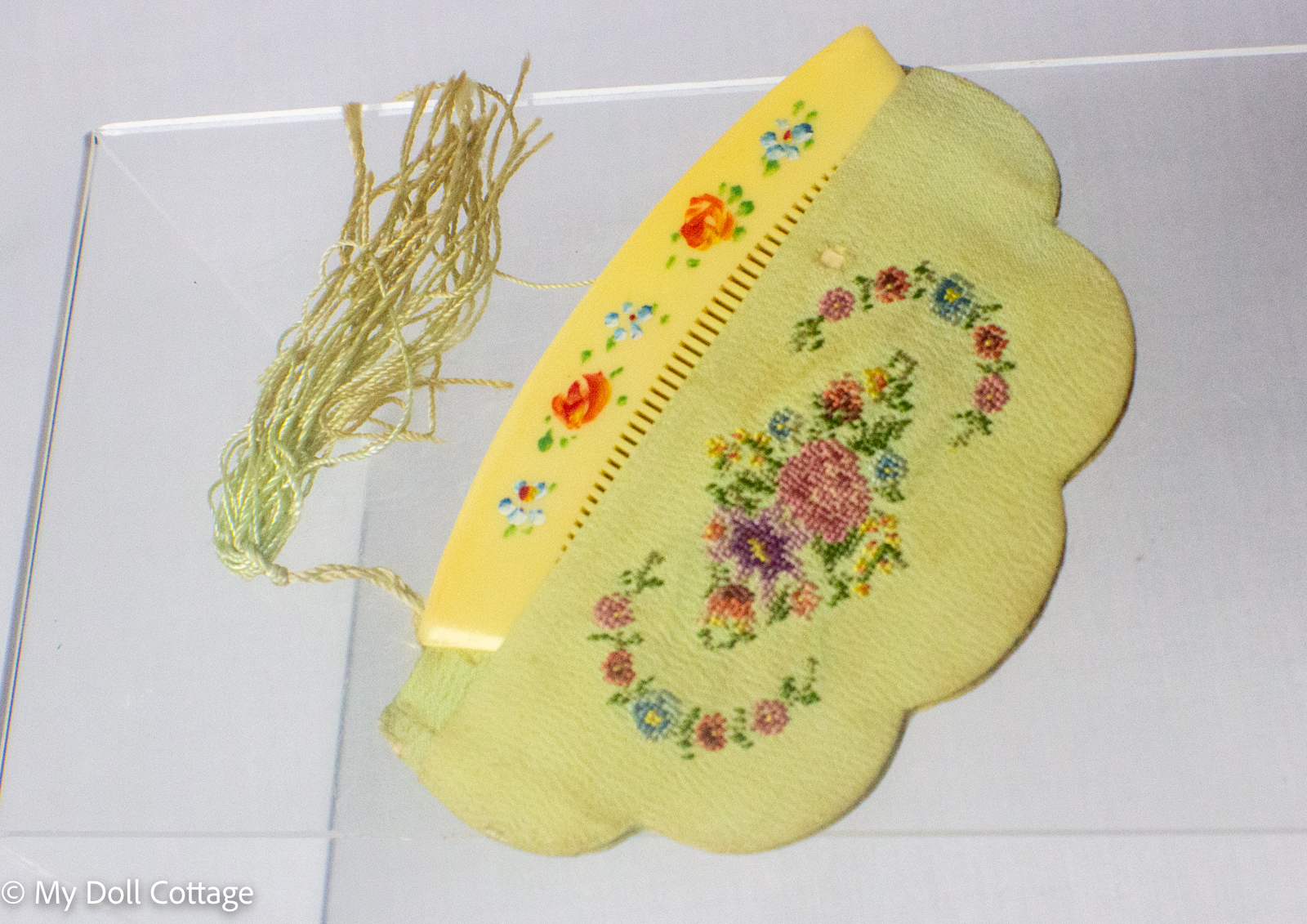
This attractive example dates to approximately 1930–1940 and consists of a finely moulded celluloid comb decorated with colourful hand-painted floral motifs. The comb is housed within a beautifully hand-embroidered fabric case featuring a floral bouquet surrounded by a wreath on a pale green backgroundwith a scalloped edge.
The comb pivots from a central swivel mechanism, allowing it to rotate outwards for use before folding neatly back into its protective holder. Although unmarked, the materials and construction are consistent with purse combs produced in Europe during the Art Deco period.
Complete examples retaining both the original comb and embroidered holder arebecoming increasingly difficult to find.
Historical Notes
Celluloid became one of the most widely used early plastics for vanity accessories during the early twentieth century. Decorative purse combs became fashionable during the Art Deco period as practical yet elegant handbag accessories.
By the late 1940s, celluloid was gradually replaced by newer plastics such as cellulose acetate.
Features
Measurements: 110× 70 × 5 mm
Condition: Excellent
Markings:
Date Note: Date is an estimate based on available research and stylistic features. If you have additional information, please contact us to help update our records.
Made from the following materials
Celluloid, a type of thermoplastic made from camphor and nitrocellulose, emerged in the mid-19th century as one of the first synthetic plastics. Its invention marked a revolutionary development in the toy industry, leading to the production of lightweight, durable, and colourful dolls and toys that captured the imagination of children and collectors alike.
The commercialization of celluloid began in the 1860s, with its use expanding rapidly throughout the following decades. Manufacturers recognized its potential as a substitute for more traditional materials such as wood, cloth, and porcelain. As celluloid was easy to mold and could be produced in a variety of vibrant colors, it quickly became a popular choice for making dolls and toys, significantly impacting the design and aesthetics of playthings during this period.
By the early 20th century, celluloid dolls had gained immense popularity. These dolls were often designed to mimic the appearance of porcelain dolls while being much lighter and more affordable. Celluloid allowed for a wide range of expressions and features, leading to dolls that had more lifelike appearances and intricate detailing. The flexibility of celluloid enabled doll makers to create movable limbs and heads, further enhancing the play experience.
Celluloid also inspired innovative toy designs beyond dolls. During the early to mid-20th century, manufacturers produced a variety of celluloid toys, including miniature animals, figurines, and even playsets. The ability to mass-produce these items made them accessible to a broader audience, solidifying their place in toy history.
Despite its initial success, the use of celluloid began to decline in the late 20th century due to concerns about its flammability and the introduction of safer, more durable synthetic materials. Additionally, the aging process of celluloid can lead to warping and deterioration, which can affect the longevity of toys made from this material. As a result, many collectors today seek vintage celluloid toys for their historical significance and nostalgic value.
Celluloid toys represent a pivotal moment in the evolution of doll and toy making, showcasing the innovative spirit of the early 20th century. These toys not only reflect the technological advancements of their time but also capture the joy and creativity of childhood play. At our museum, we celebrate the legacy of celluloid toys, exploring their impact on design, culture, and the experiences of children across generations.
Metal has played a significant role in the history of dolls and toys, with materials like cast iron, tin, and brass being used for centuries to create durable and appealing playthings. Each type of metal has distinct characteristics that have influenced its application in the toy industry, leading to a variety of designs and styles.
Cast Iron
Cast iron was one of the first metals used in toy manufacturing, particularly during the 19th century. Its strength and durability made it ideal for creating toys that could withstand the rigors of play. Cast iron toys were often made using molds, allowing for mass production and the creation of intricate designs. Popular cast iron toys included figurines, toy cars, and trains, many of which featured detailed craftsmanship and decorative paintwork. These toys were not only popular with children but also became collectible items over time, cherished for their historical significance and nostalgic appeal.
Tin
Tin, often used in the form of tinplate, became a favored material for toy manufacturing in the late 19th and early 20th centuries. Tin toys were lightweight, affordable, and could be produced in large quantities, making them accessible to a wide audience. Tinplate was often stamped or lithographed with colorful designs, bringing characters and scenes to life. Classic examples of tin toys include wind-up cars, robots, and playful animals, many of which featured moving parts that delighted children. Tin toys remain popular among collectors today, valued for their charm and the artistry involved in their design.
Brass
Brass, an alloy of copper and zinc, has been used in toy making for its attractive appearance and durability. It is particularly well-suited for creating smaller components, such as gears and mechanisms in wind-up toys. The shiny, golden hue of brass gives toys a sense of elegance and sophistication, often seen in decorative pieces and collectibles. While brass dolls are less common than those made from other materials, some artisans have crafted beautiful dolls with brass accents, adding a touch of luxury to their designs.
Throughout history, the use of metal in dolls and toys has allowed for a diverse range of creations, each reflecting the technological advancements and artistic trends of their time. The durability of metal ensures that many of these toys have stood the test of time, allowing them to be enjoyed by new generations of children and collectors alike.
At our museum, we celebrate the legacy of metal dolls and toys, highlighting their role in the evolution of play and the craftsmanship that goes into creating these timeless treasures. From the strength of cast iron to the whimsical designs of tin and the elegance of brass, these materials tell a rich story of creativity and innovation in the world of toys.
Textiles have played a fundamental role in human history, serving both practical and expressive purposes across cultures and time periods. Historically, textiles were among the earliest manufactured materials, created through processes such as spinning, weaving, felting, knitting, and later industrial mechanisation.
Natural fibres including wool, cotton, linen, and silk were used for centuries to produce clothing, household goods, and toys, with techniques and patterns often reflecting regional traditions, available resources, and social status. The Industrial Revolution marked a significant shift in textile production, introducing mechanised looms, mass manufacturing, and new dyeing methods, which made textile goods more affordable and widely available.
In the context of dolls and toys, textiles were essential for creating soft bodies, clothing, and accessories that mirrored everyday dress and domestic life. Early dolls were often constructed from cloth or fabric-covered forms, while the late 19th and early 20th centuries saw the introduction of specialised plush and mohair textiles for soft toys, particularly in Europe. These materials were chosen for their durability, tactile appeal, and ability to hold shape, contributing to the emotional comfort associated with childhood play. Textile use also allowed for detailed costuming, enabling dolls to reflect contemporary fashion, occupational dress, or cultural identity.
Over time, textile production expanded to include synthetic fibres such as rayon, nylon, and polyester, which became increasingly common from the mid-20th century onward. These materials offered greater consistency, lower cost, and easier care, influencing the design and manufacture of mass-produced toys and accessories. Today, historical textiles in toys and dolls provide valuable insight into manufacturing techniques, trade networks, and social change. Differences in fibre type, weave, and construction help researchers date objects, identify regions of origin, and understand evolving standards of craftsmanship, making textiles a key material category within museum and collection documentation.

Additional Product Images
Related Dolls and Toys from our collection


