c.1940s Austrian Miniature Full Wax Baby Dolls in Original Presentation Box
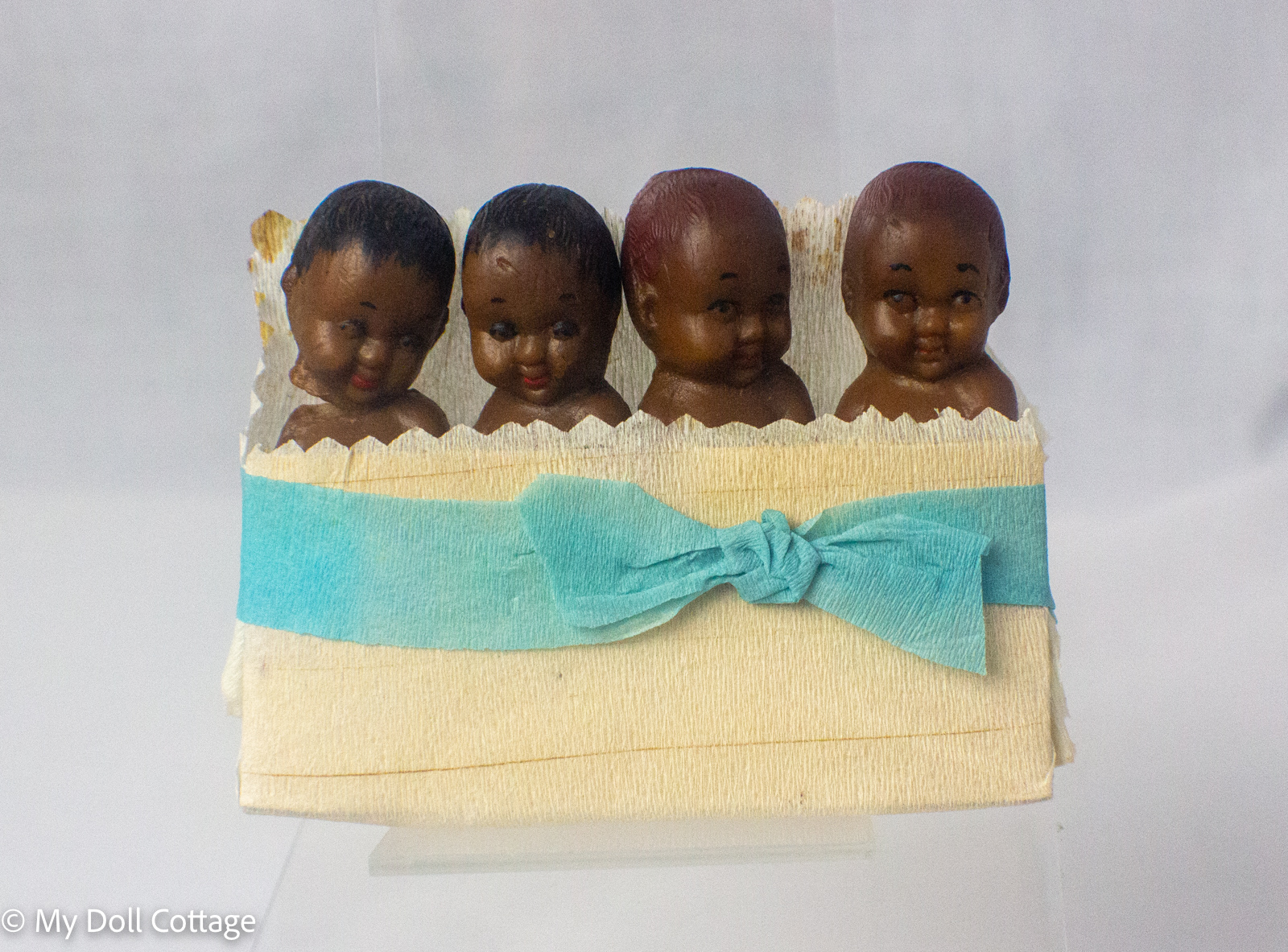
A charming boxed set of four miniature full wax Kewpie-style baby dolls produced by MEM Vienna, Austria, retaining their original crepe paper presentation box.
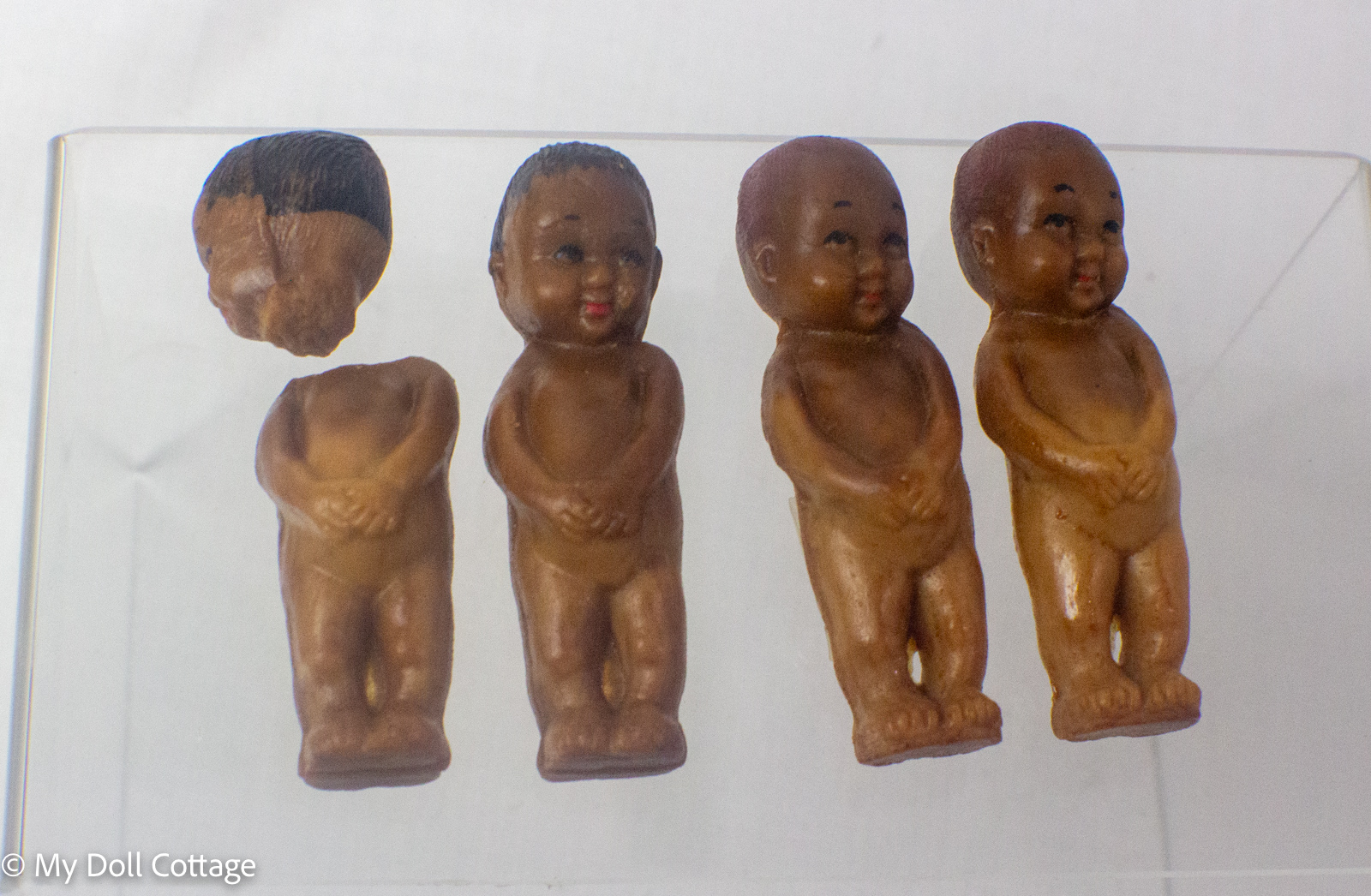
This delightful miniature doll set consists of four brown-toned frozen wax baby dolls presented in their original cream crepe paper box tied with a pale blue paper ribbon. Each doll is moulded in a standing pose with clasped hands and painted facial features including side-glancing eyes and red lips. The dolls feature moulded hair in varying shades and retain much of their original painted finish.
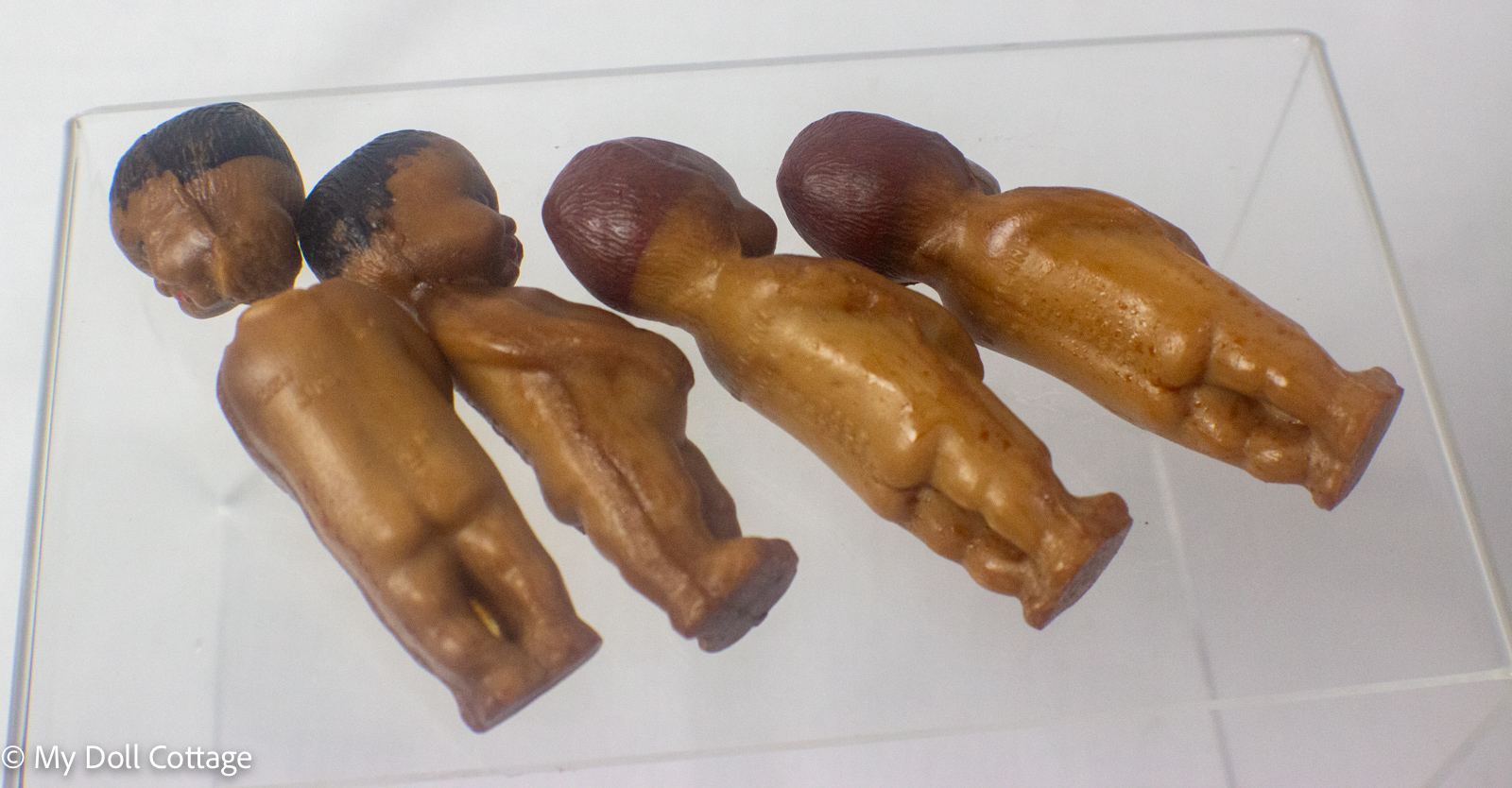
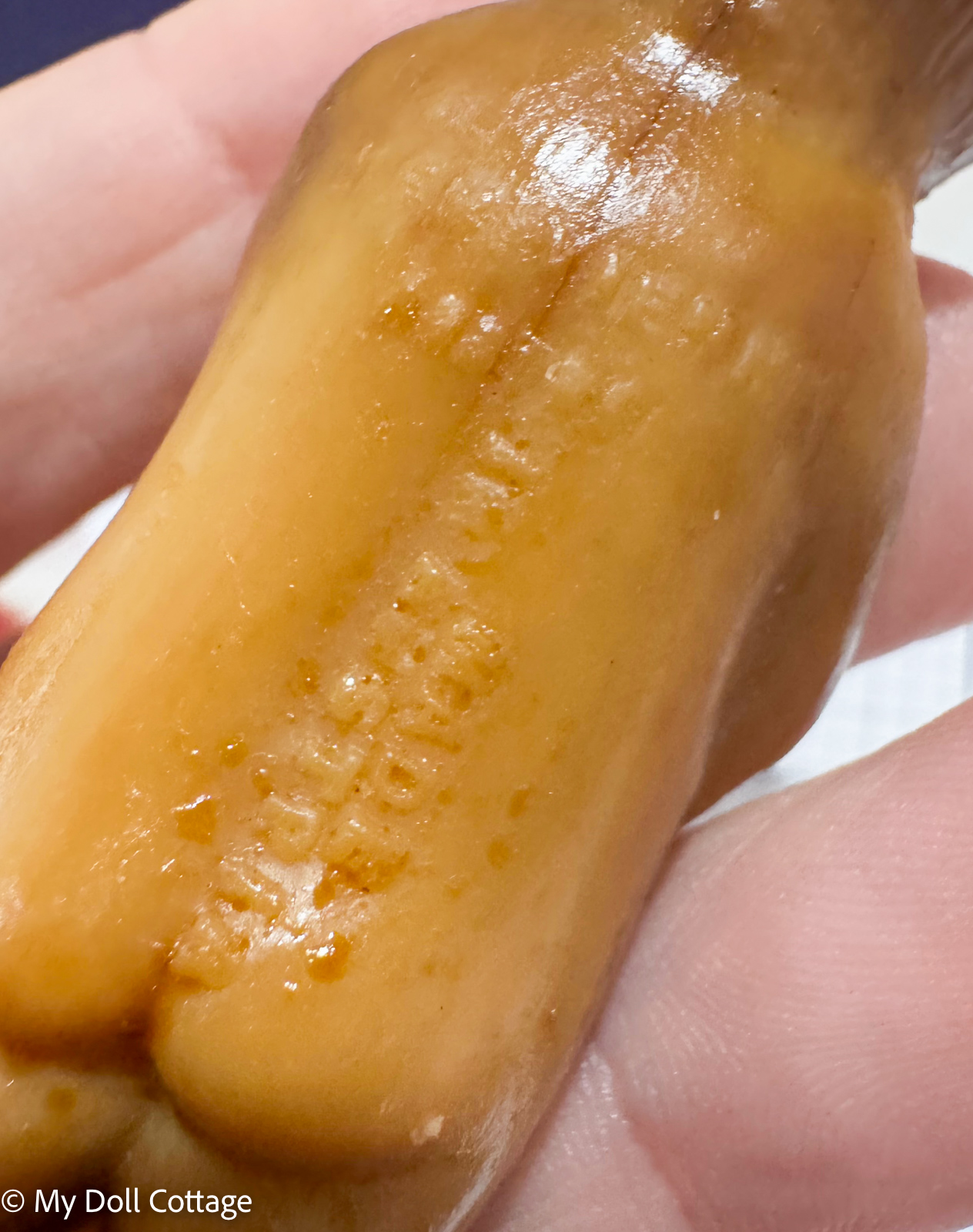
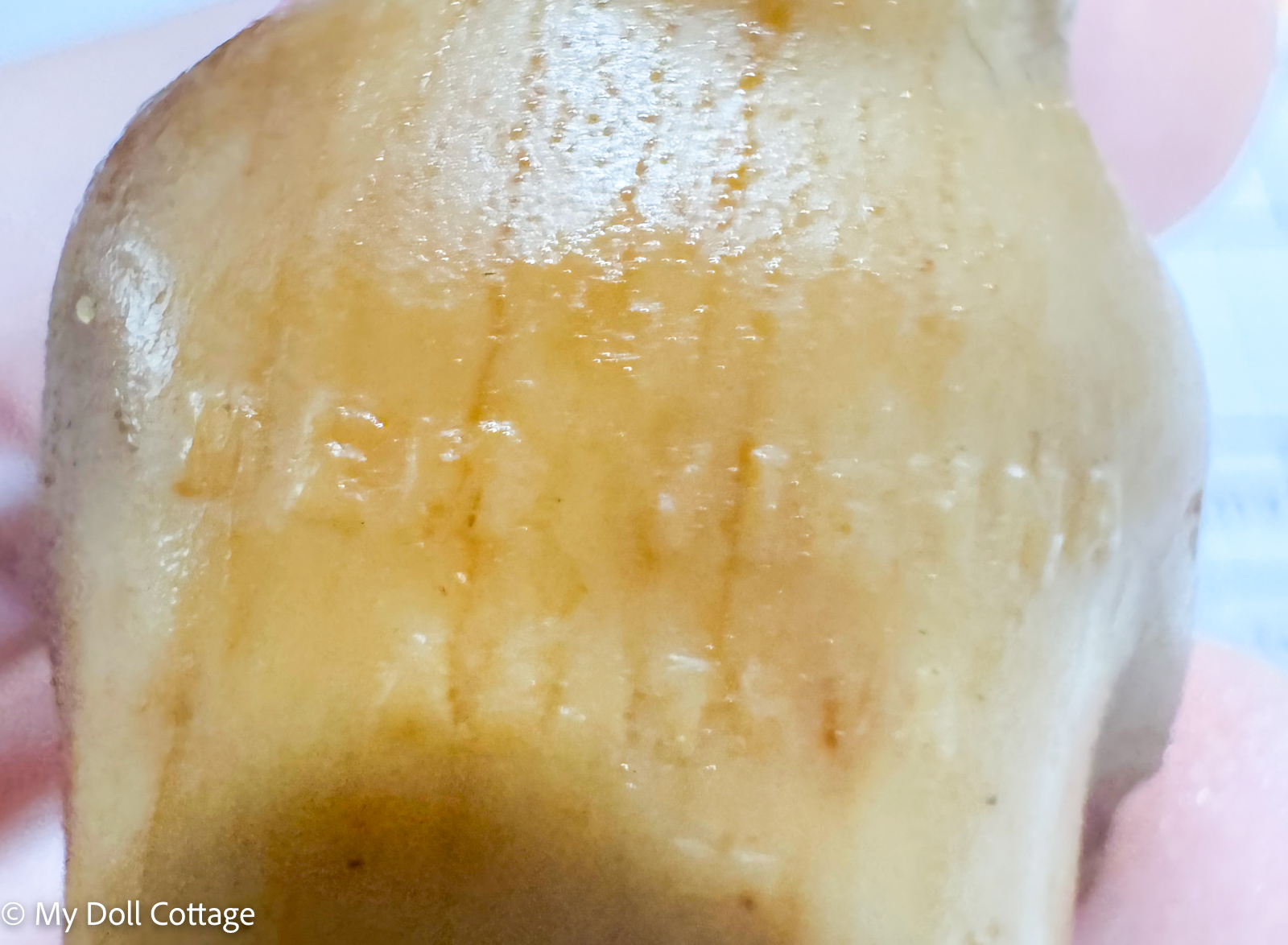
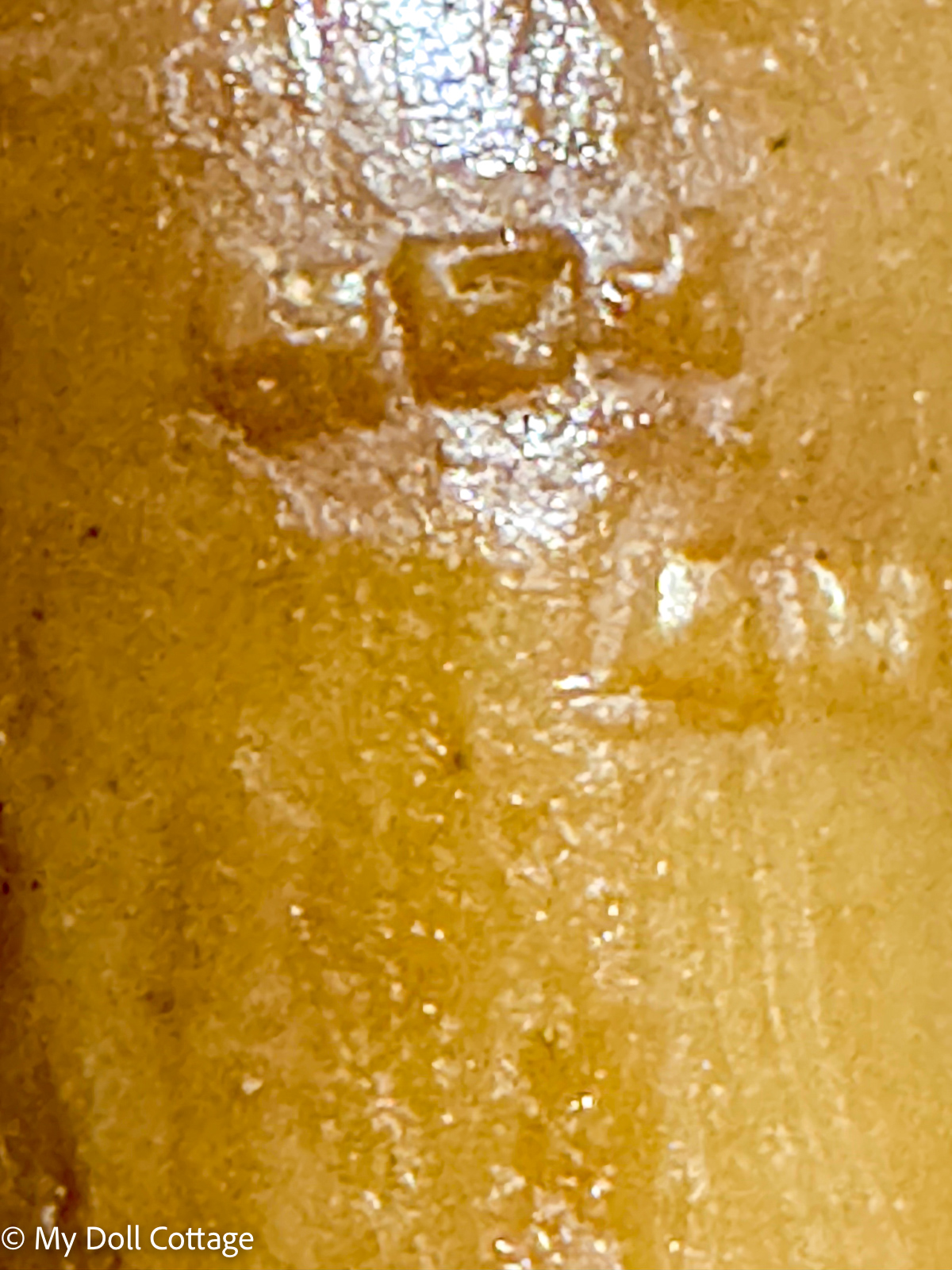
The dolls appear to be produced from wax, a technique commonly used for small novelty and souvenir dolls during the 1930s and 1940s. The underside markings reading “Vienna Made in Austria” identify the set as Austrian export production. Vienna was an important centre for decorative doll and novelty manufacturing during the early 20th century, producing many small boxed gift items intended for European and international markets.
Kewpie-inspired figures remained highly popular throughout the first half ofthe 20th century following the success of Rose O’Neill’s original Kewpie characters. Small boxed sets such as this were often sold as gift novelties, party favours, or decorative keepsakes. The survival of both the original crepe paper presentation packaging and all four dolls together significantly enhances the rarity and collectability of the set.
Condition
The dolls retain strong original paint and overall display well. One doll head was damaged during transit and requires repair or reattachment. Minor age-related wear, surface marks, and small manufacturing imperfections are present consistent with wax and composition materials of the period. The original crepe paper box and ribbon survive with age-related wear and fragility.
Historical Significance
Small boxed doll novelties from Austria represent an important category ofearly 20th-century export toys and giftware. Vienna manufacturers became known for finely detailed miniature decorative items that blended folk art, souvenir culture, and popular character influences such as the Kewpie. Surviving complete boxed sets are increasingly scarce due to the fragile nature of wax materials and paper packaging.
Features
Measurements: • Box: 110 mm x 90 mm x 25 mm, Dolls: 80 mm x 25 mm x 25 mm each
Condition: Fair
Markings: MEM Vienna Made in Austria
Date Note: Date is an estimate based on available research and stylistic features. If you have additional information, please contact us to help update our records.
Made from the following materials
Wax has been a notable material in the production of dolls and toys for centuries, valued for its malleability, durability, and aesthetic appeal. Historically, wax has played a significant role in the creation of both decorative and functional playthings, as well as in the crafting of lifelike dolls that capture the imagination.
What is Wax?
Wax is a natural or synthetic substance that is typically soft, pliable, and can be molded into various shapes. Natural waxes, such as beeswax, have been used for thousands of years, while synthetic waxes, including paraffin and microcrystalline wax, have become more common in modern production. The unique properties of wax, including its ability to hold shape and retain fine details, make it an ideal material for doll and toy making.
Applications in Doll Making
In the realm of doll-making, wax has been used to create lifelike features and detailed expressions. Wax dolls, often crafted with a solid core and a wax exterior, can be molded to exhibit intricate facial features, realistic skin textures, and beautiful painted details. This technique allows for a degree of customization and personalization, making wax dolls especially cherished by collectors.
Historically, wax dolls were popular in the 19th century as educational tools for children, serving as examples of fashion and society. They were often used in schools to teach young girls about proper attire and manners. The ability to dress and style these dolls further enhanced their appeal, as children could engage in imaginative play while learning about their cultural context.
Toys and Figurines
In addition to dolls, wax has been used to create a variety of toys and figurines. Wax was commonly employed in the production of toy soldiers, animals, and other play figures. The ability to easily mold and color wax made it an attractive choice for manufacturers seeking to produce colorful and durable toys.
Artistic Expression and Collectibility
Wax has also been embraced by artists and crafters who seek to explore its potential for artistic expression. Wax sculptures and figures can be created with exquisite detail, leading to the production of limited-edition collectible dolls and toys. Many contemporary artists experiment with wax in their work, creating unique pieces that showcase the material's versatility and beauty.

Additional Product Images
Related Dolls and Toys from our collection
