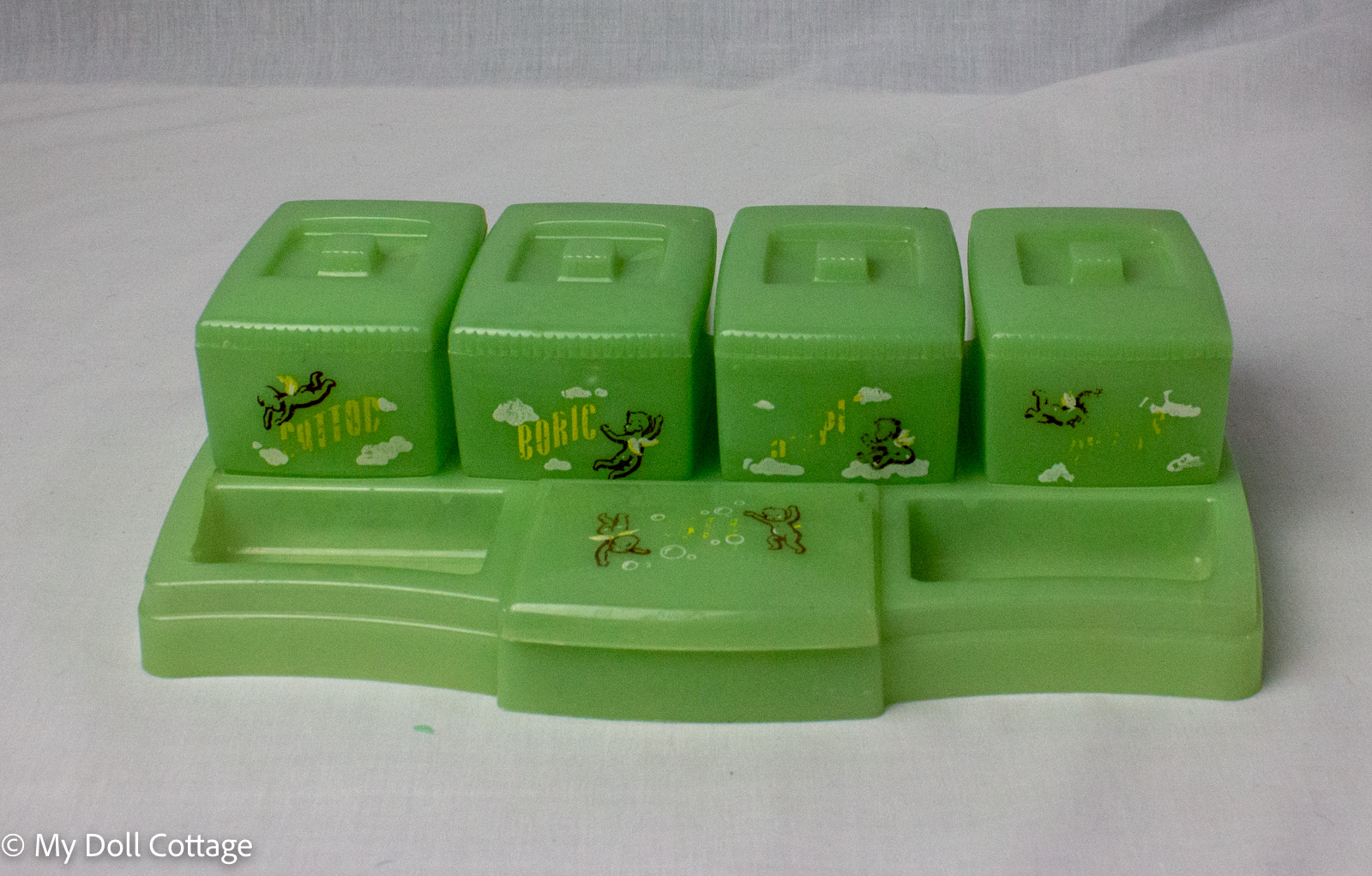
c.1950 The Clarolyte Nursery Tray and Containers Set, U.S.A.

A complete jadeite-green Clarolyte nursery tray set with four labelled containers, manufactured in New York, U.S.A., during the early 1950s for organising infant care essentials.
Manufactured by The Clarolyte Co. of New York, this attractive moulded plastic nursery organiser dates to the early 1950s. Clarolyte specialised in durable plastic household and nursery products during the post-war period, and this set reflects the popularity of colourful hygienic plastics replacing painted wood and metal.
The matching set comprises a tray with four removable lidded containers labelled Cotton, Boric, Swab and Nipple, together with a central covered compartment. These sets were designed to keep baby-care essentials clean,organised and readily accessible on the nursery dresser.
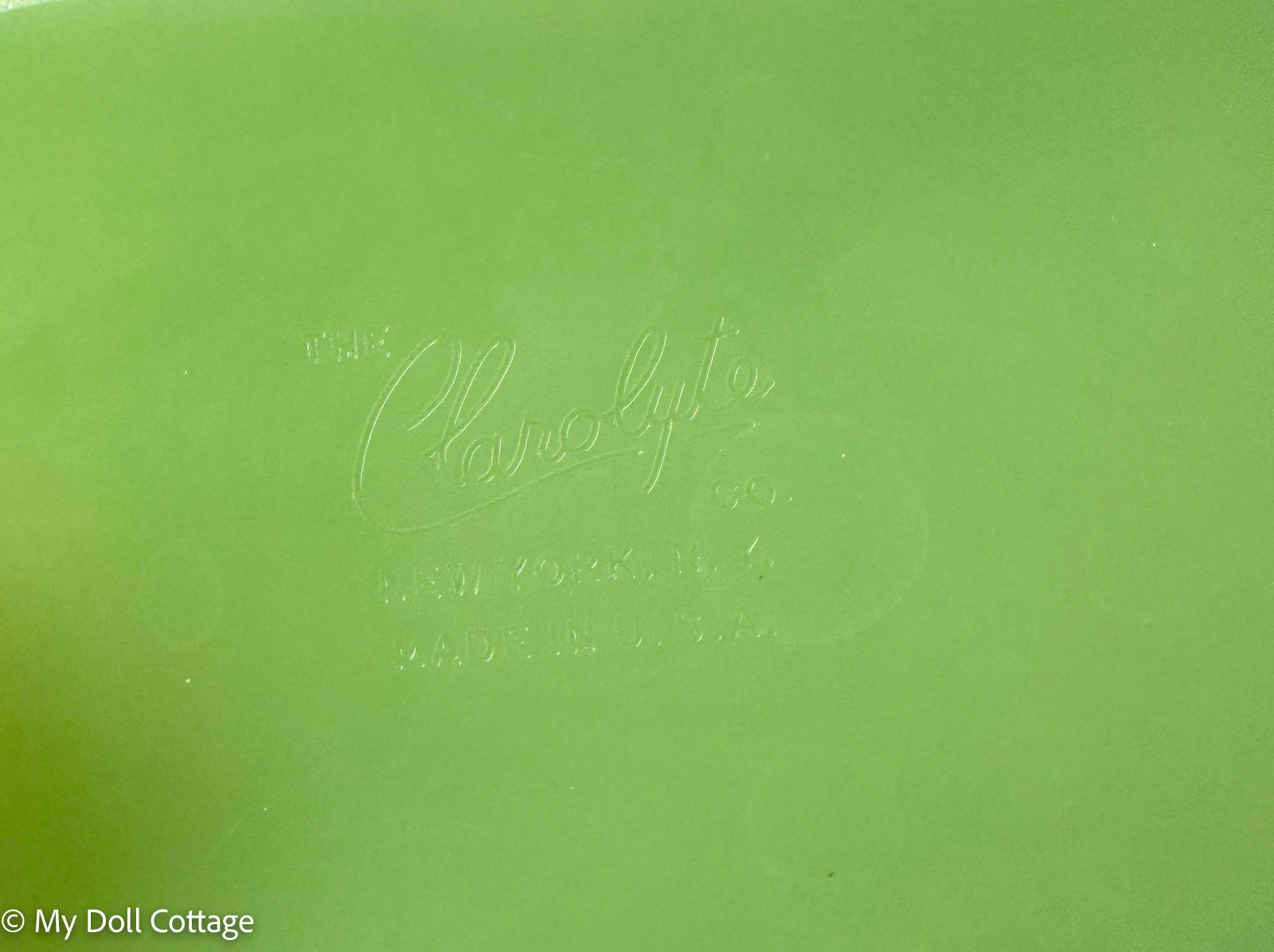
The underside of the components is embossed 'The Clarolyte Co., New York, N.Y.,Made in U.S.A.', confirming the American manufacture. The jadeite-green colour ris typical of mid-century nursery accessories and remains highly sought after by collectors.
Features
Measurements: 80h x 290w x 190d mm
Condition: Excellent
Markings: The Clarolyte Co., New York, N.Y.,Made in U.S.A
Date Note: Date is an estimate based on available research and stylistic features. If you have additional information, please contact us to help update our records.
Made from the following materials
Hard plastic dolls and toys emerged as a significant innovation in the toy industry during the mid-20th century, revolutionizing the way dolls were designed and manufactured. Hard plastic is a type of thermoplastic, characterized by its durability, lightweight nature, and resistance to breakage. This material became popular for creating dolls, action figures, and various toys due to its versatility and ability to hold intricate details and vibrant colors.
The development of hard plastic allowed for the mass production of toys that were not only affordable but also more resilient than earlier materials like composition or porcelain. As a result, manufacturers were able to produce a wide variety of designs, from classic baby dolls to trendy fashion figures, each with detailed facial features and movable limbs. This material also enabled the incorporation of new techniques, such as molded hair and painted eyes, which enhanced the realism and appeal of the dolls.
Among the earliest forms of hard plastic used in toy manufacturing was **Bakelite**, created in the early 1900s by Belgian chemist Leo Baekeland. Bakelite is one of the first synthetic plastics, made from phenol and formaldehyde. Its properties, including heat resistance and electrical insulation, made it ideal for various applications, including toys. While Bakelite itself is not commonly used in doll-making today, its introduction paved the way for the development of modern plastics in the toy industry.
**Catalin** is another early form of hard plastic that emerged in the 1930s and was often used for creating vibrant toys and dolls. Like Bakelite, Catalin is a thermosetting plastic known for its durability and ability to hold color well. Catalin toys often featured bright, translucent colors and intricate designs, capturing the imaginations of children and collectors alike.
As hard plastic became the standard for many types of dolls and toys, it solidified its place in the industry, leading to the creation of iconic brands and beloved characters. Today, hard plastic dolls and toys continue to be popular, appreciated for their longevity and the nostalgia they evoke. Collectors value vintage hard plastic toys for their craftsmanship and the unique place they hold in the history of toy making.
At our museum, we celebrate the legacy of hard plastic dolls and toys, highlighting their role in shaping the modern toy industry and their enduring appeal across generations.

Additional Product Images



Related Dolls and Toys from our collection
