c.1950s–1970s Hand-Painted Wooden Character Matryoshka Nesting Dolls – Russia/USSR
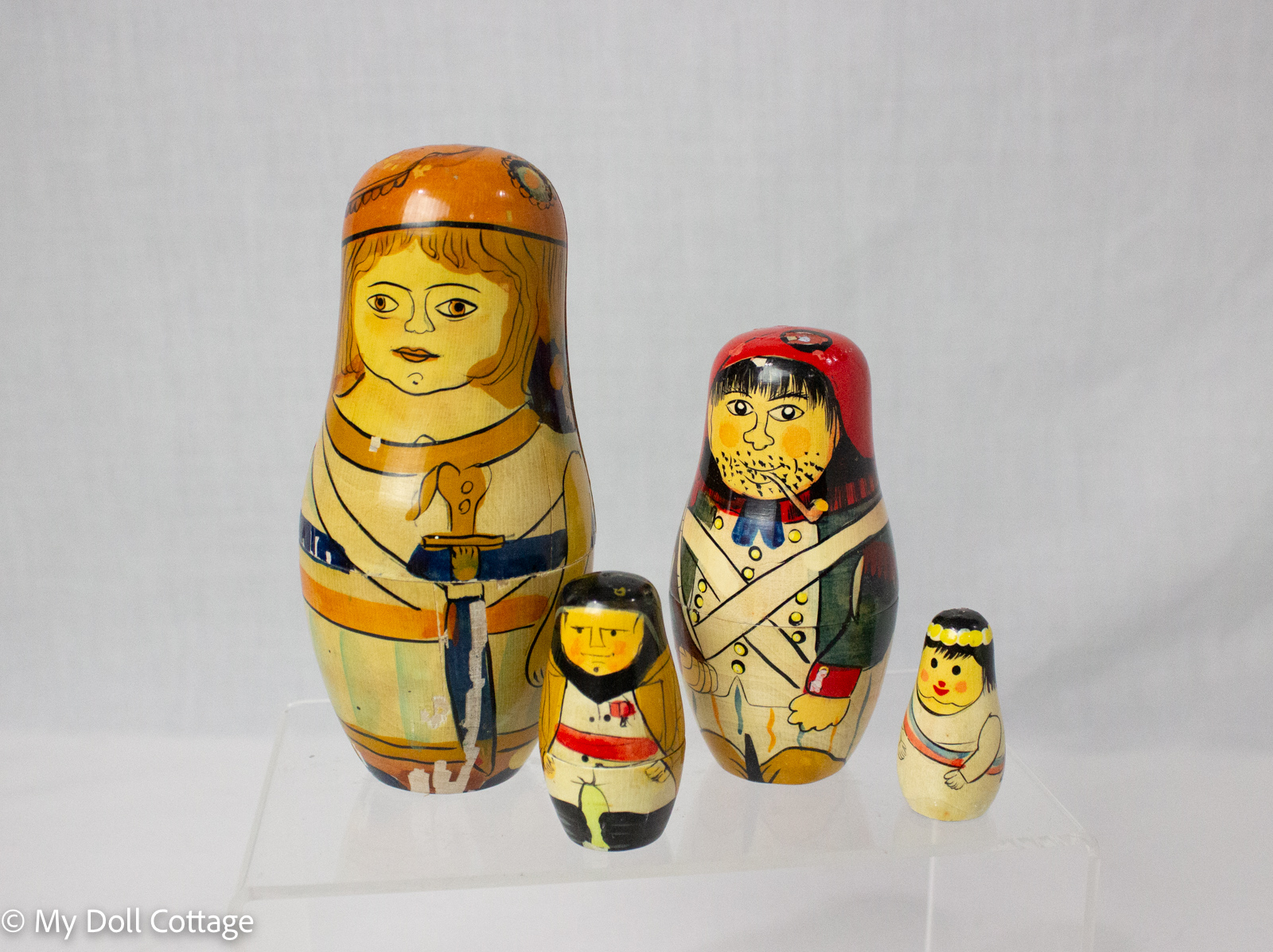
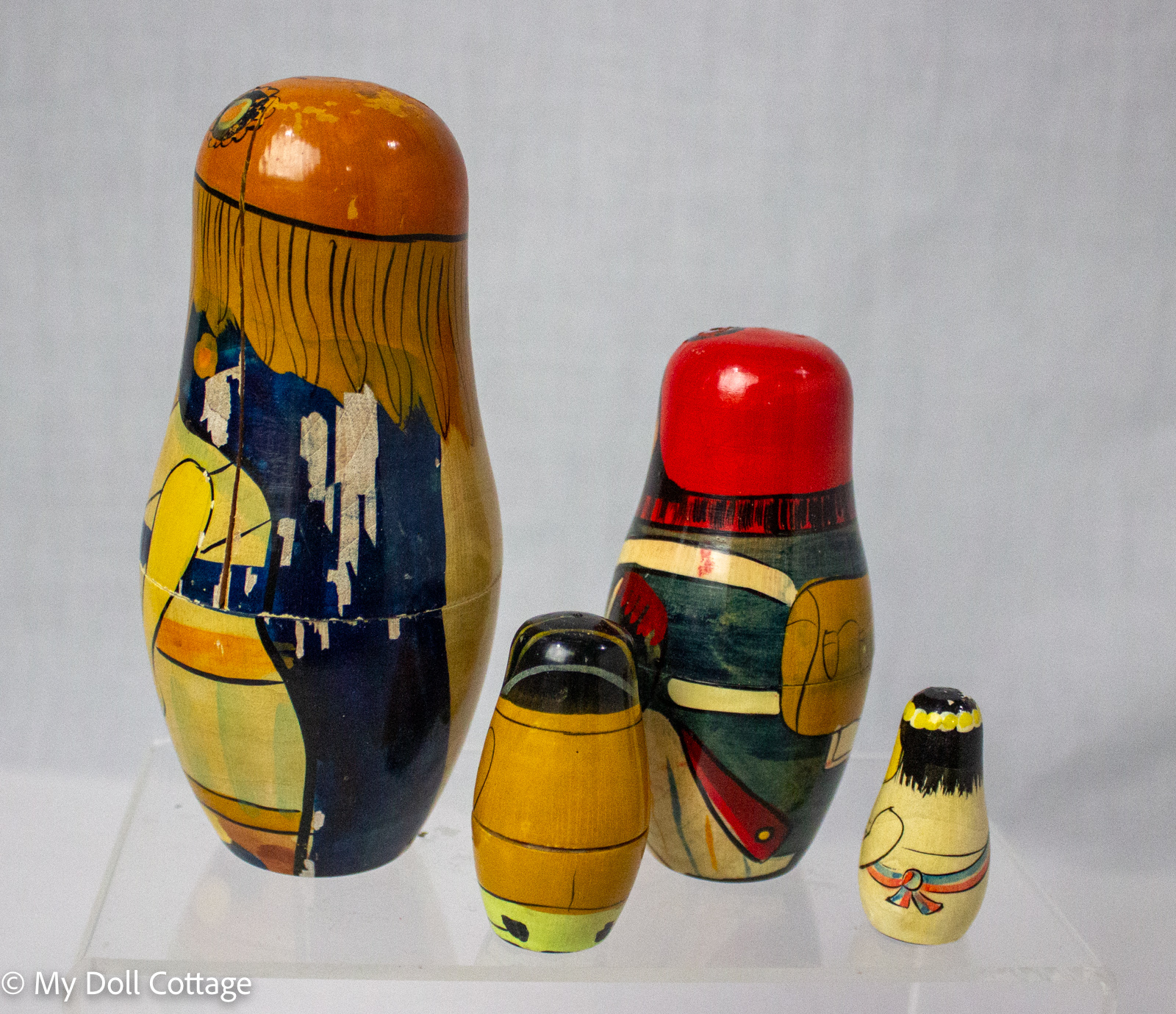
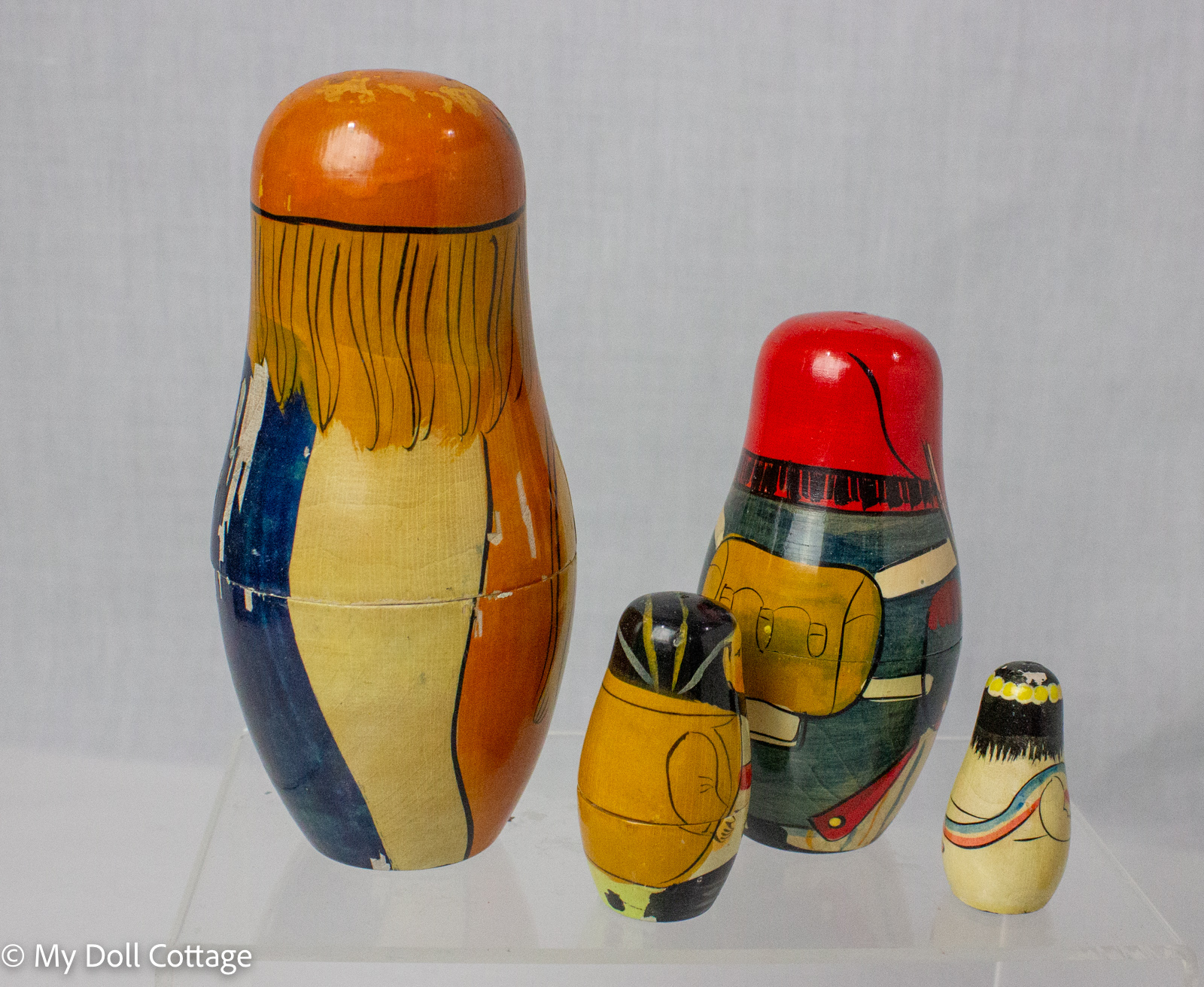
A vintage set of four hand-painted wooden matryoshka nesting dolls, probably made in the Soviet Union during the mid-20th century, depicting a colourful group of historical or military-style characters.
This colourful set comprises four graduated wooden nesting dolls, each turned from wood and individually hand-painted with a different human character.
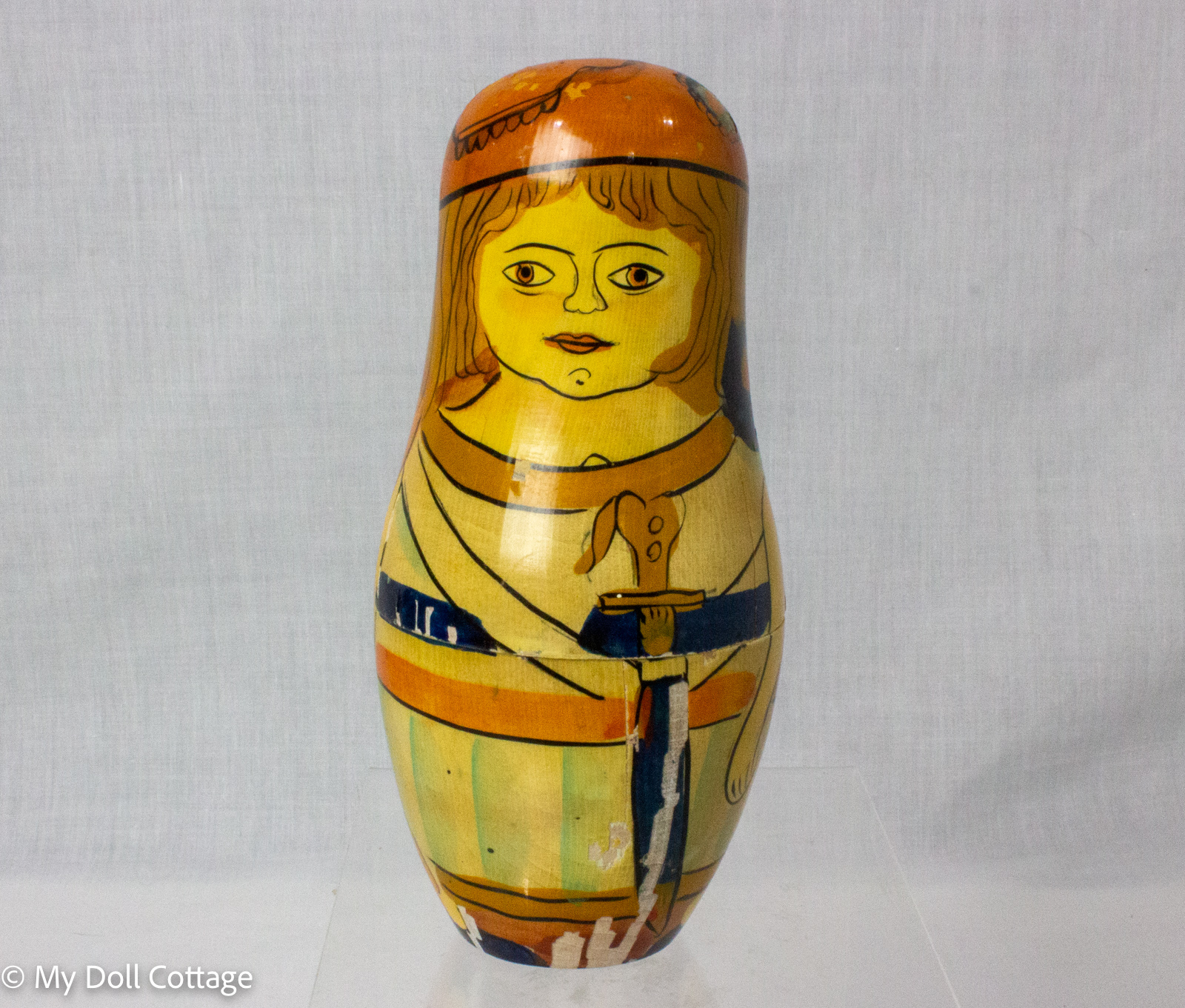
The largest doll measures approximately 140 mm high × 70 mm diameter and depicts a long-haired figure wearing a decorated head covering and historical-style costume, with a large sword painted across the front. The clothing is rendered predominantly in ochre, yellow, blue and orange, with strong black outlining.
The second-largest doll, approximately 110 × 50 mm, depicts a bearded or stubbled male figure wearing a red cap and dark military-style coat with prominent white cross-belts. A pipe or similar object projects from his mouth, while equipment is painted across his back. The third doll measures approximately 60 × 35 mm and depicts another male figure in a dark cap and ochre-coloured clothing. The smallest, measuring approximately 45 × 30 mm, depicts a smiling female figure with dark hair and a decorative yellow headband.
Each of the three larger figures separates horizontally around the middle to contain the next figure, while the smallest is solid. This is the characteristic construction of the matryoshka, or Russian nesting doll, a form first developed in Russia around 1890 and subsequently produced in numerous Russian woodturning and folk-art centres.
Although traditional matryoshka sets commonly depicted women, children and family groups, Russian makers also produced sets based on fairy tales, folklore, historical figures, soldiers and other characters. The figures represented by this particular set have not yet been positively identified, although their costumes and military elements suggest a historical, folkloric or literary theme rather than an ordinary family group.
Based on the construction, painting style, subject matter and overall appearance, the set is probably Russian/Soviet and mid-20th century, with a provisional date of approximately c.1950s–1970s. Until a comparable documented example can be located, however, both the date and precise place of manufacture should remain an attribution rather than a confirmed identification.
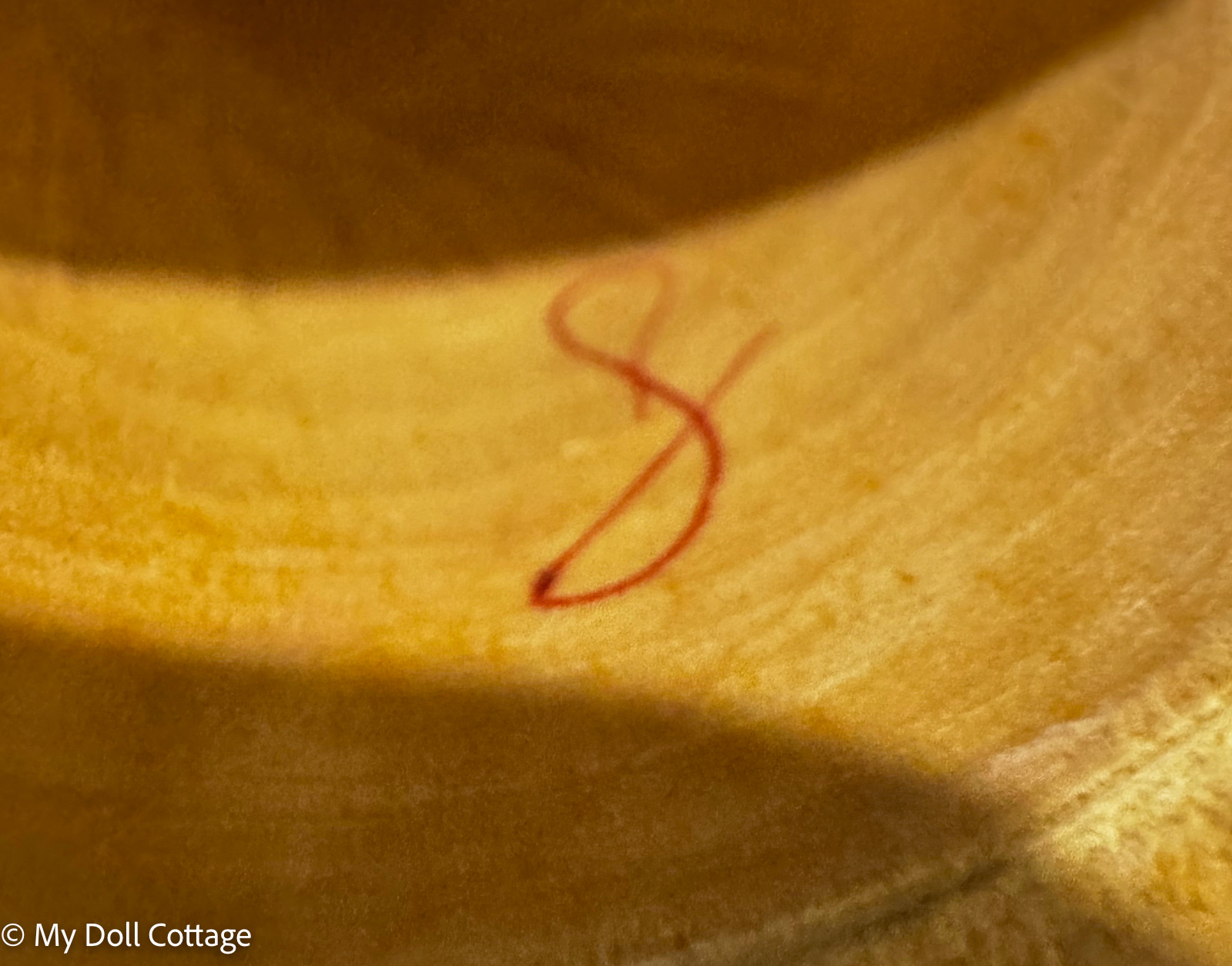
Of particular interest is a small red hand-painted mark inside the largest doll. The flowing symbol resembles a stylised monogram and may represent the individual painter, workshop or production group responsible for the set. It has not yet been identified and should be retained as an important part of the object's documentation, as comparison with other marked matryoshka sets may eventually allow the workshop or artist to be established.
The set is in fair condition, with noticeable paint and surface loss, particularly to the dark painted areas on the back and lower portions of the largest figure. The largest doll also has a crack, together with general scratches, chips and wear consistent with age and use. Despite this, all four nesting figures survive, preserving the complete character sequence and making the set an interesting example of character-based Russian/Soviet matryoshka production.
Features
Measurements: Largest: 140 × 70 mm, Second: 110 × 50 mm, Third: 60 × 35 mm, Smallest: 45 × 30 mm
Condition: Good - largest has a crack
Markings: Hand-painted red monogram to interior, formed from intertwined stylised letters; precise initials and artist presently unidentified.
Date Note: Date is an estimate based on available research and stylistic features. If you have additional information, please contact us to help update our records.
Made from the following materials
Wood in Dolls and Toys
Wood has a long and rich history in the creation of dolls and toys, valued for its durability, natural beauty, and versatility. As one of the oldest materials used in toy making, wood has played a significant role in various cultures around the world, offering endless possibilities for creativity and craftsmanship.
What is Wood?
Wood is a natural material sourced from trees, known for its strength, warmth, and unique grain patterns. Its availability and ease of manipulation have made it a favored choice for artisans and toy makers for centuries. From softwoods like pine and cedar to hardwoods like oak and maple, different types of wood offer varying characteristics that influence the design and functionality of toys.
Applications in Doll and Toy Making
Wood has been used to create a wide range of dolls and toys throughout history. Early wooden dolls often featured simple shapes and painted faces, serving as cherished companions for children. These dolls were crafted with care, sometimes adorned with fabric clothing or accessories made from other materials. The tactile nature of wood allows for a comforting feel, making wooden dolls especially appealing to young children.
In addition to dolls, wooden toys have a rich tradition that includes building blocks, puzzles, and cars. Wooden blocks, in particular, are celebrated for their educational value, encouraging creativity and imaginative play as children construct their own worlds. The durability of wood ensures that these toys can withstand the rigors of play, often becoming family heirlooms passed down through generations.
Cultural Significance
Wooden toys and dolls hold cultural significance in many societies. For example, traditional wooden dolls from countries like Germany and Scandinavia often reflect local customs, attire, and folklore. These handcrafted pieces not only serve as toys but also as representations of cultural heritage and craftsmanship.
Artistic Expression and Collectibility
With the rise of artisan craftsmanship, wooden dolls and toys have gained popularity among collectors and enthusiasts. Artisans often showcase their skills by creating beautifully detailed and intricately designed wooden toys that appeal to both children and adults. The natural beauty of wood, combined with unique craftsmanship, adds to the collectibility and charm of these items.

Additional Product Images
Related Dolls and Toys from our collection

