c.1970s Sarah Kay Style “Thank You” Cards in Original Retail Pack
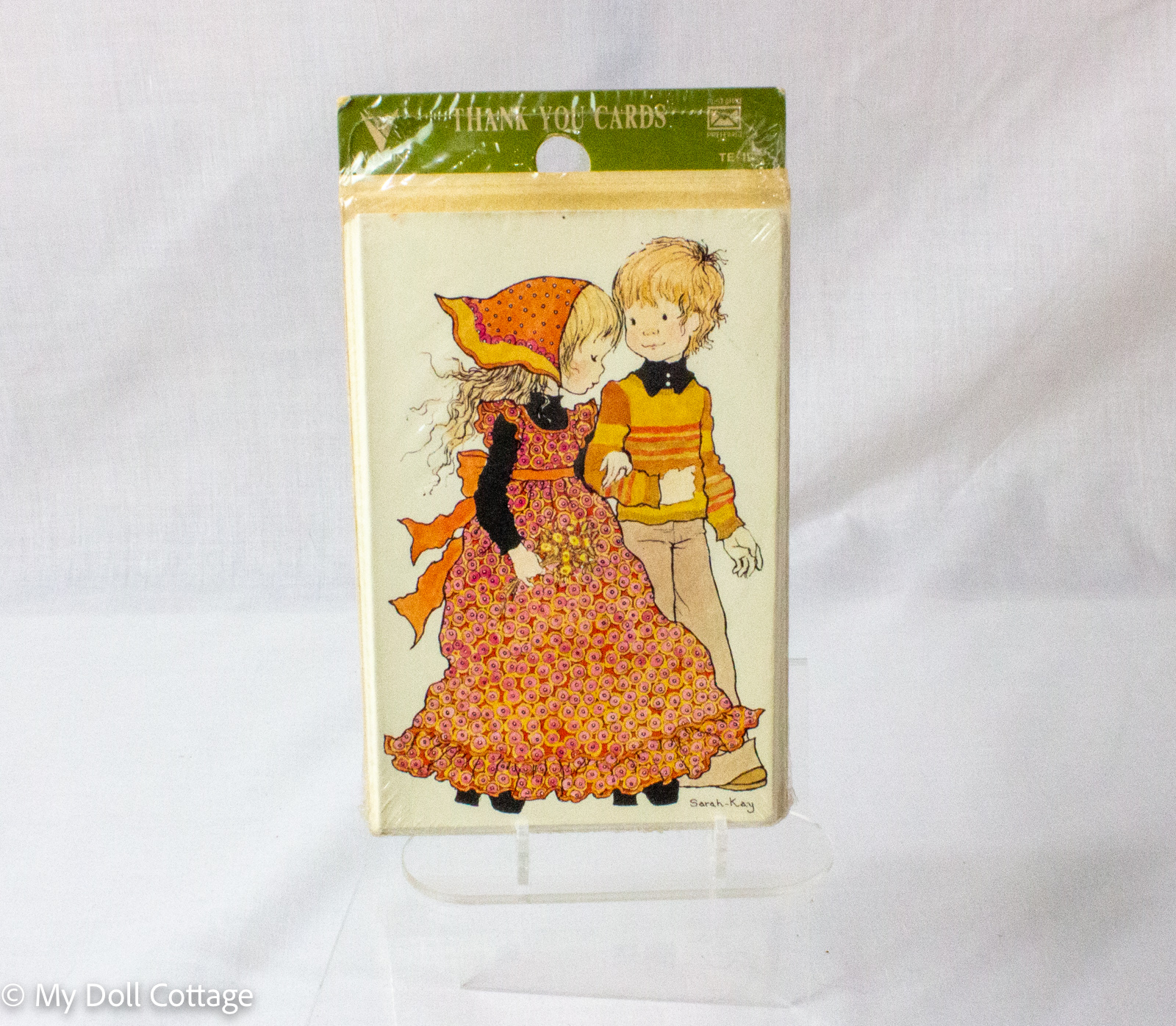
A sealed packet of illustrated “Thank You” cards featuring children in the popular Sarah Kay style, retaining original retail packaging and point-of-sale presentation.
This vintage packet of “Thank You” cards remains sealed in its original retail wrapping and features an illustration in the highly recognisable Sarah Kay style. The front depicts two children in detailed country-inspiredclothing, rendered in soft linework and warm earthy tones typical of 1970snostalgic children’s illustration. The packaging header reads “Thank You Cards” and includes retail display punch-hole formatting associated with point-of-sale merchandising.
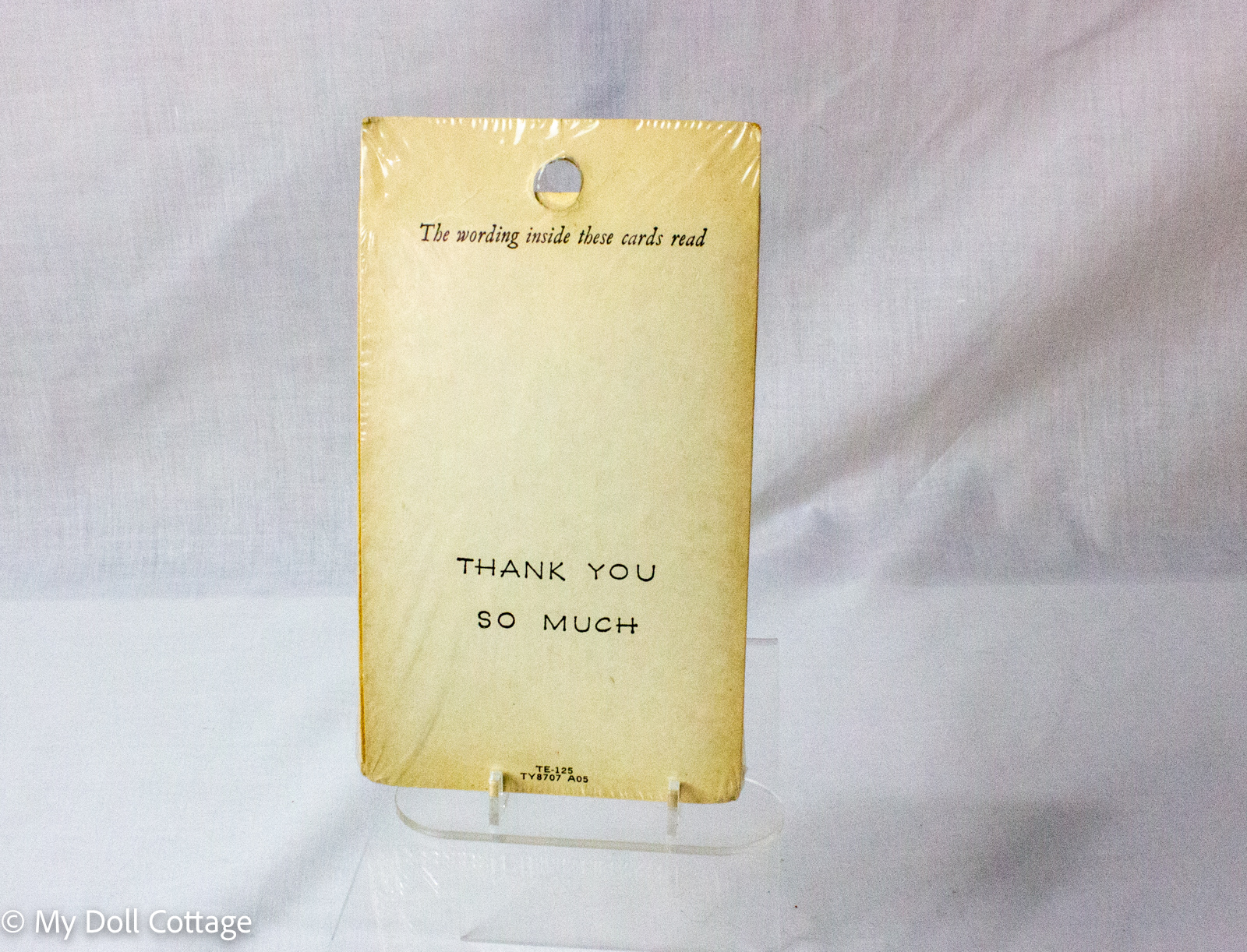
Although not directly marked as official Sarah Kay merchandise, the illustration strongly reflects the aesthetic popularised by Australian artist Vivien Kubbos, creator of the Sarah Kay brand during the late 1960s and 1970s. During this period, greeting cards, stationery, paper dolls, and schoolaccessories inspired by sentimental childhood imagery became extremely popularinternationally. The wording on the reverse states the internal message simplyreads “THANK YOU SO MUCH,” and the pack carries production markings “TE-125” and “TY8707 A05.”
The gentle rural styling and nostalgic childhood imagery associated with Sarah Kay became especially fashionable during the 1970s, influencing greeting cards and children’s stationery across multiple manufacturers. Surviving unopened stationery packs from this era are increasingly collected for their graphic design, social nostalgia, and association with childhood ephemera.
Features
Measurements: 160mm x 90mm x 10mm wide
Condition: Excellent
Markings: Sarah Kay style illustration TE-125 and TY8707 A05
Date Note: Date is an estimate based on available research and stylistic features. If you have additional information, please contact us to help update our records.
Made from the following materials
Paper and paper mache have long been utilized in the creation of dolls and toys, serving as versatile and accessible materials that allow for creative expression and intricate designs. These materials have a rich history and are particularly valued for their lightweight nature, ease of manipulation, and potential for detailed craftsmanship.
Paper has been used in doll and toy-making for centuries, often in the form of printed paper dolls or as a component in various toys. Traditional paper dolls are typically flat figures made from cardboard or heavy paper, adorned with clothing and accessories that can be cut out and dressed. This interactive play encourages creativity and storytelling, as children can design their own outfits and scenarios.
In addition to flat dolls, paper has been used to create three-dimensional figures, such as origami toys or pop-up toys that spring to life with the pull of a tab. The versatility of paper allows for intricate designs, colorful illustrations, and imaginative characters, making it a favored choice for toy makers throughout history. Moreover, the ability to print vibrant images on paper has enabled the production of themed dolls and toys that resonate with popular culture and children's interests.
Paper Mache
Paper mache, derived from the French term "pâte à papier," involves the crafting of objects using a mixture of paper strips and adhesive, typically flour and water or glue. This technique allows for the creation of lightweight, durable figures that can be molded into a variety of shapes. The process often involves layering strips of paper over a form, allowing each layer to dry before adding more, which creates a strong structure.
Historically, paper mache has been used to create decorative dolls, masks, and toys, especially in cultures where resources were limited. Its affordability and ease of use made it a popular choice among artisans, allowing for the creation of intricate and colorful designs. Many traditional cultures have developed their unique styles of paper mache, incorporating local motifs, patterns, and cultural significance into their creations.
Today, paper and paper mache continue to be celebrated in the toy industry, appealing to both children and artists alike. Many contemporary crafters and educators use these materials to engage children in hands-on learning and creative expression. Workshops and classes focusing on paper mache techniques allow participants to explore their creativity while learning about this timeless craft.
At our museum, we showcase the beauty and innovation of paper and paper mache in dolls and toys, highlighting their historical significance and the artistry involved in their creation. Each piece tells a story of imagination and craftsmanship, connecting generations through the shared joy of play and creativity.

Additional Product Images
Related Dolls and Toys from our collection