1920s Gong Bell Mfg. Co. “Playphone” Candlestick Telephone Toy

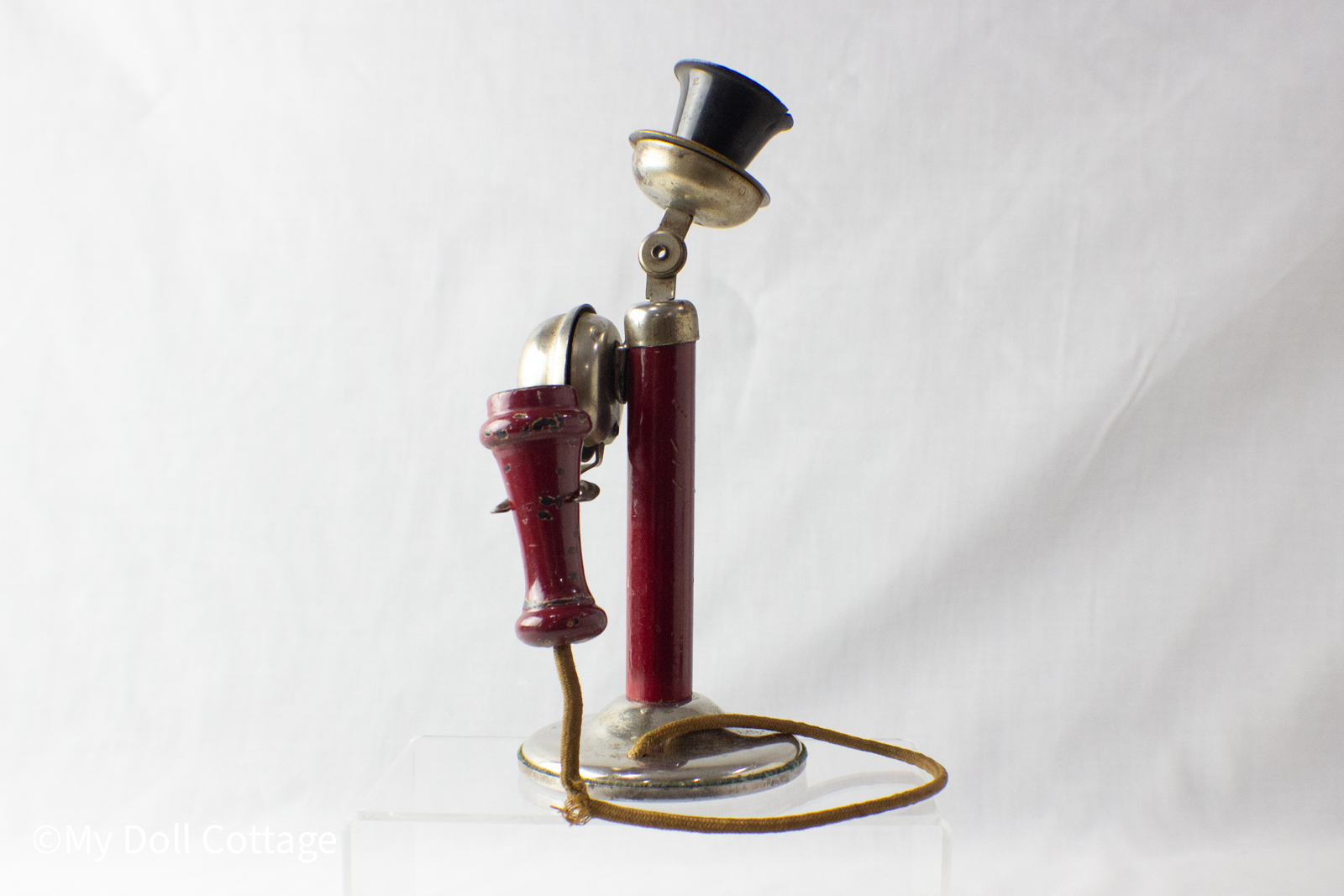
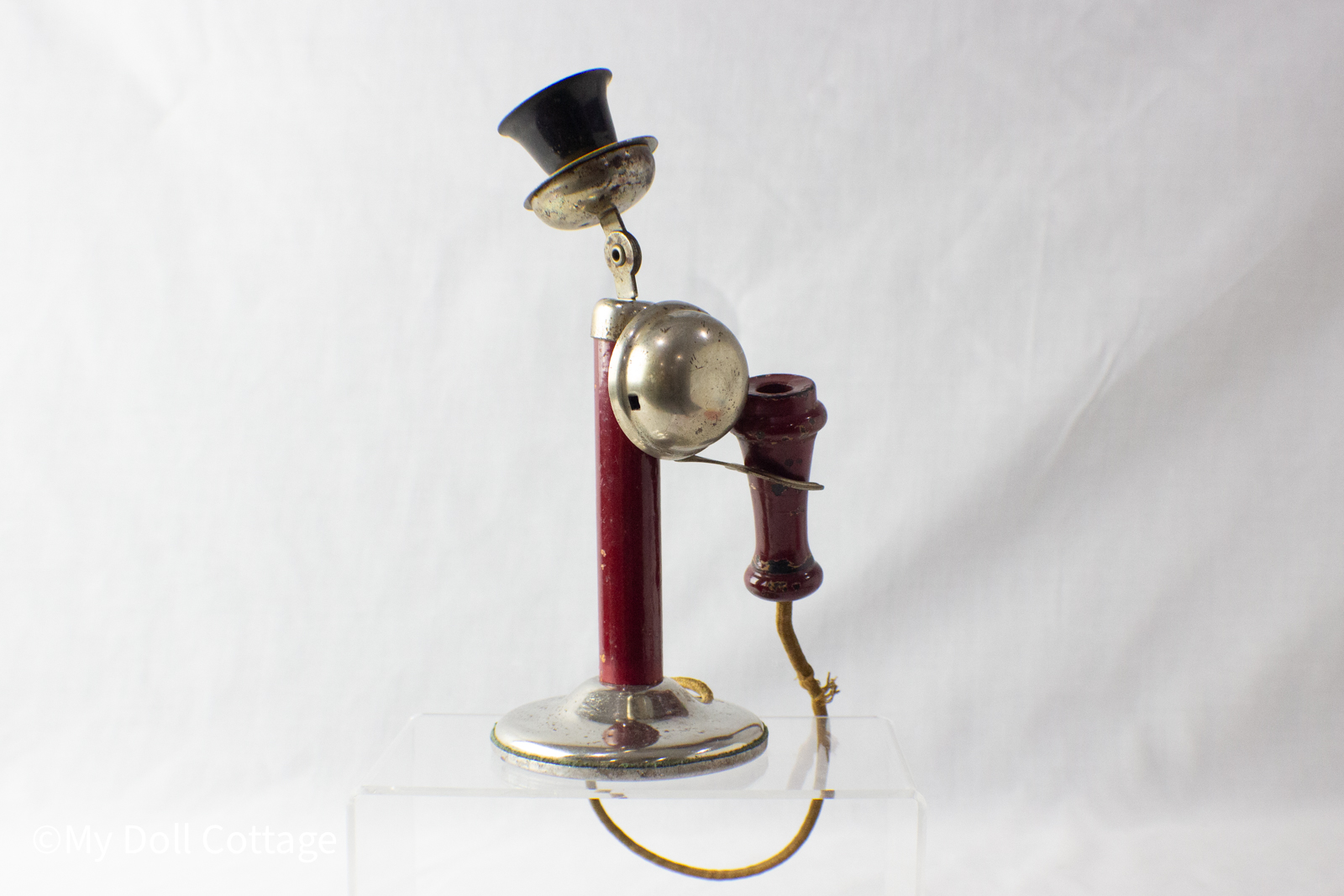
A colourful 1920s tin-and-wood candlestick toy telephone by the Gong Bell Manufacturing Co., featuring the early “Playphone” trademark and classic red-and-silver styling.
This charming 1920s children’s candlestick telephone was produced by the Gong Bell Manufacturing Co. of East Hampton, Connecticut, one of America’s earliest makers of metal toys and novelty sound devices. The toy is built in classic candlestick style, reflecting the real telephones used in homes and offices of the era. Its red wooden column, silver-painted base, and polished bell housing capture the bright, playful aesthetic Gong Bell was known for, while the black flared mouthpiece adds authenticity to the miniature design.
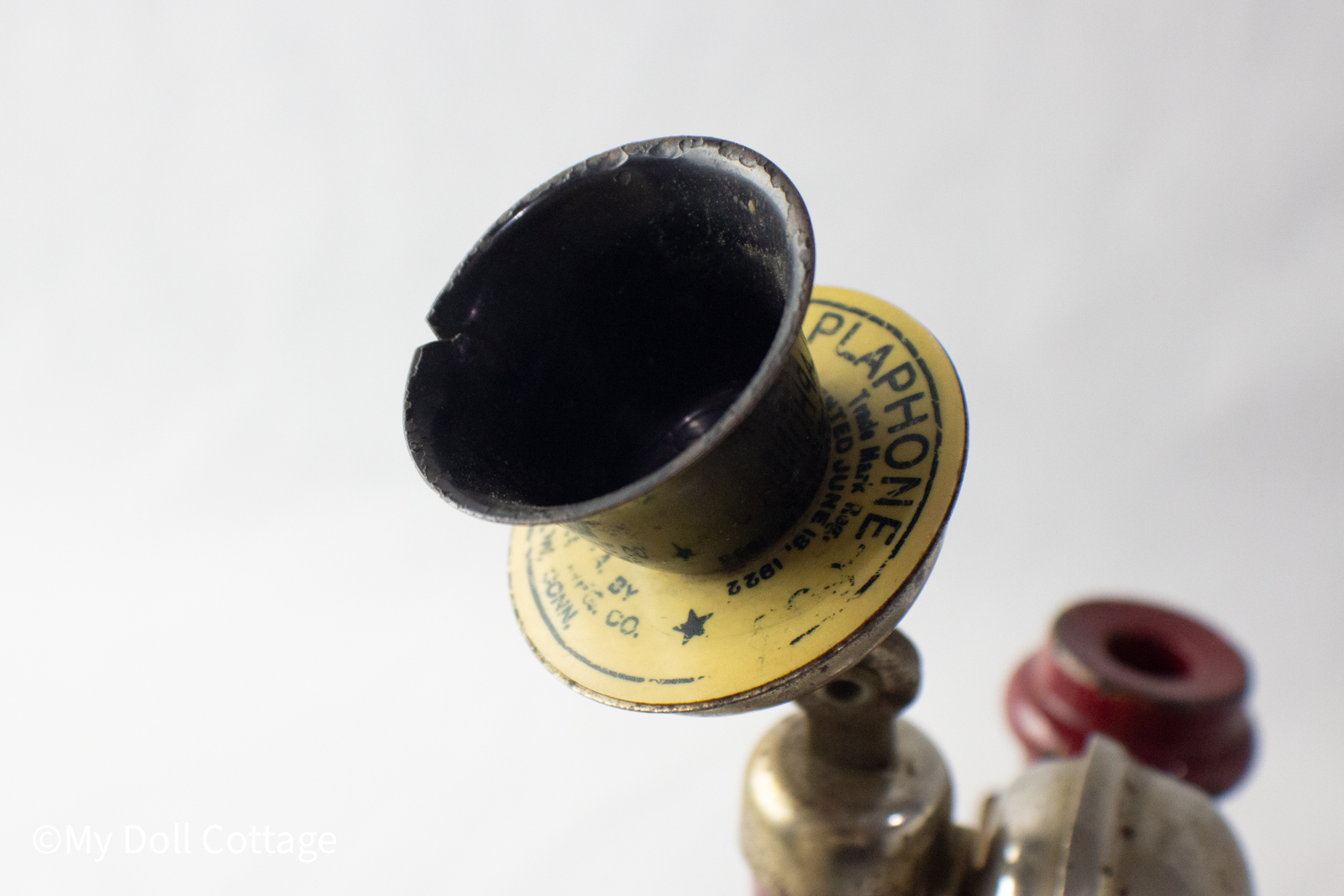
Constructed from tin, wood and painted metal, the “Playphone” includes its original early cord and is clearly marked with the registered trademark: “PLAYPHONE Trade Mark Reg. Patented June 18 1922 – Made in U.S.A. by Gong Bell Mfg. Co.” This patent date corresponds to Gong Bell’s improvements in mechanical ringer toys, helping confirm a manufacturing window of 1922 to the late 1920s. The example shows typical age-related wear, including tarnish to the metal, some loss of paint, and fraying to the cord, all consistent with genuine early 20th-century play use.
Highly recognisable and widely collected, Gong Bell’s toy telephones remain an important part of American toy history. Their candlestick models, in particular, were designed to mirror the technology children saw in their everyday world, making them both educational tools and cherished playthings. Surviving examples such as this one offer a wonderful glimpse into early mechanical toy design and the craftsmanship of one of the country’s most influential early toy manufacturers.
Features
Measurements: 100 mm round x 230 mm high
Condition: Good - tarnish to the metal, some loss of paint, and fraying to the cord, all consistent with genuine early 20th-century play use.
Markings: “PLAYPHONE Trade Mark Reg. Patented June 18 1922 – Made in U.S.A. by Gong Bell Mfg. Co.”
Date Note: Date is an estimate based on available research and stylistic features. If you have additional information, please contact us to help update our records.
Made from the following materials
Metal has played a significant role in the history of dolls and toys, with materials like cast iron, tin, and brass being used for centuries to create durable and appealing playthings. Each type of metal has distinct characteristics that have influenced its application in the toy industry, leading to a variety of designs and styles.
Cast Iron
Cast iron was one of the first metals used in toy manufacturing, particularly during the 19th century. Its strength and durability made it ideal for creating toys that could withstand the rigors of play. Cast iron toys were often made using molds, allowing for mass production and the creation of intricate designs. Popular cast iron toys included figurines, toy cars, and trains, many of which featured detailed craftsmanship and decorative paintwork. These toys were not only popular with children but also became collectible items over time, cherished for their historical significance and nostalgic appeal.
Tin
Tin, often used in the form of tinplate, became a favored material for toy manufacturing in the late 19th and early 20th centuries. Tin toys were lightweight, affordable, and could be produced in large quantities, making them accessible to a wide audience. Tinplate was often stamped or lithographed with colorful designs, bringing characters and scenes to life. Classic examples of tin toys include wind-up cars, robots, and playful animals, many of which featured moving parts that delighted children. Tin toys remain popular among collectors today, valued for their charm and the artistry involved in their design.
Brass
Brass, an alloy of copper and zinc, has been used in toy making for its attractive appearance and durability. It is particularly well-suited for creating smaller components, such as gears and mechanisms in wind-up toys. The shiny, golden hue of brass gives toys a sense of elegance and sophistication, often seen in decorative pieces and collectibles. While brass dolls are less common than those made from other materials, some artisans have crafted beautiful dolls with brass accents, adding a touch of luxury to their designs.
Throughout history, the use of metal in dolls and toys has allowed for a diverse range of creations, each reflecting the technological advancements and artistic trends of their time. The durability of metal ensures that many of these toys have stood the test of time, allowing them to be enjoyed by new generations of children and collectors alike.
At our museum, we celebrate the legacy of metal dolls and toys, highlighting their role in the evolution of play and the craftsmanship that goes into creating these timeless treasures. From the strength of cast iron to the whimsical designs of tin and the elegance of brass, these materials tell a rich story of creativity and innovation in the world of toys.
Wood in Dolls and Toys
Wood has a long and rich history in the creation of dolls and toys, valued for its durability, natural beauty, and versatility. As one of the oldest materials used in toy making, wood has played a significant role in various cultures around the world, offering endless possibilities for creativity and craftsmanship.
What is Wood?
Wood is a natural material sourced from trees, known for its strength, warmth, and unique grain patterns. Its availability and ease of manipulation have made it a favored choice for artisans and toy makers for centuries. From softwoods like pine and cedar to hardwoods like oak and maple, different types of wood offer varying characteristics that influence the design and functionality of toys.
Applications in Doll and Toy Making
Wood has been used to create a wide range of dolls and toys throughout history. Early wooden dolls often featured simple shapes and painted faces, serving as cherished companions for children. These dolls were crafted with care, sometimes adorned with fabric clothing or accessories made from other materials. The tactile nature of wood allows for a comforting feel, making wooden dolls especially appealing to young children.
In addition to dolls, wooden toys have a rich tradition that includes building blocks, puzzles, and cars. Wooden blocks, in particular, are celebrated for their educational value, encouraging creativity and imaginative play as children construct their own worlds. The durability of wood ensures that these toys can withstand the rigors of play, often becoming family heirlooms passed down through generations.
Cultural Significance
Wooden toys and dolls hold cultural significance in many societies. For example, traditional wooden dolls from countries like Germany and Scandinavia often reflect local customs, attire, and folklore. These handcrafted pieces not only serve as toys but also as representations of cultural heritage and craftsmanship.
Artistic Expression and Collectibility
With the rise of artisan craftsmanship, wooden dolls and toys have gained popularity among collectors and enthusiasts. Artisans often showcase their skills by creating beautifully detailed and intricately designed wooden toys that appeal to both children and adults. The natural beauty of wood, combined with unique craftsmanship, adds to the collectibility and charm of these items.

Additional Product Images


Related Dolls and Toys from our collection