1982 Set of Two Purnell Playmates Sooty Books
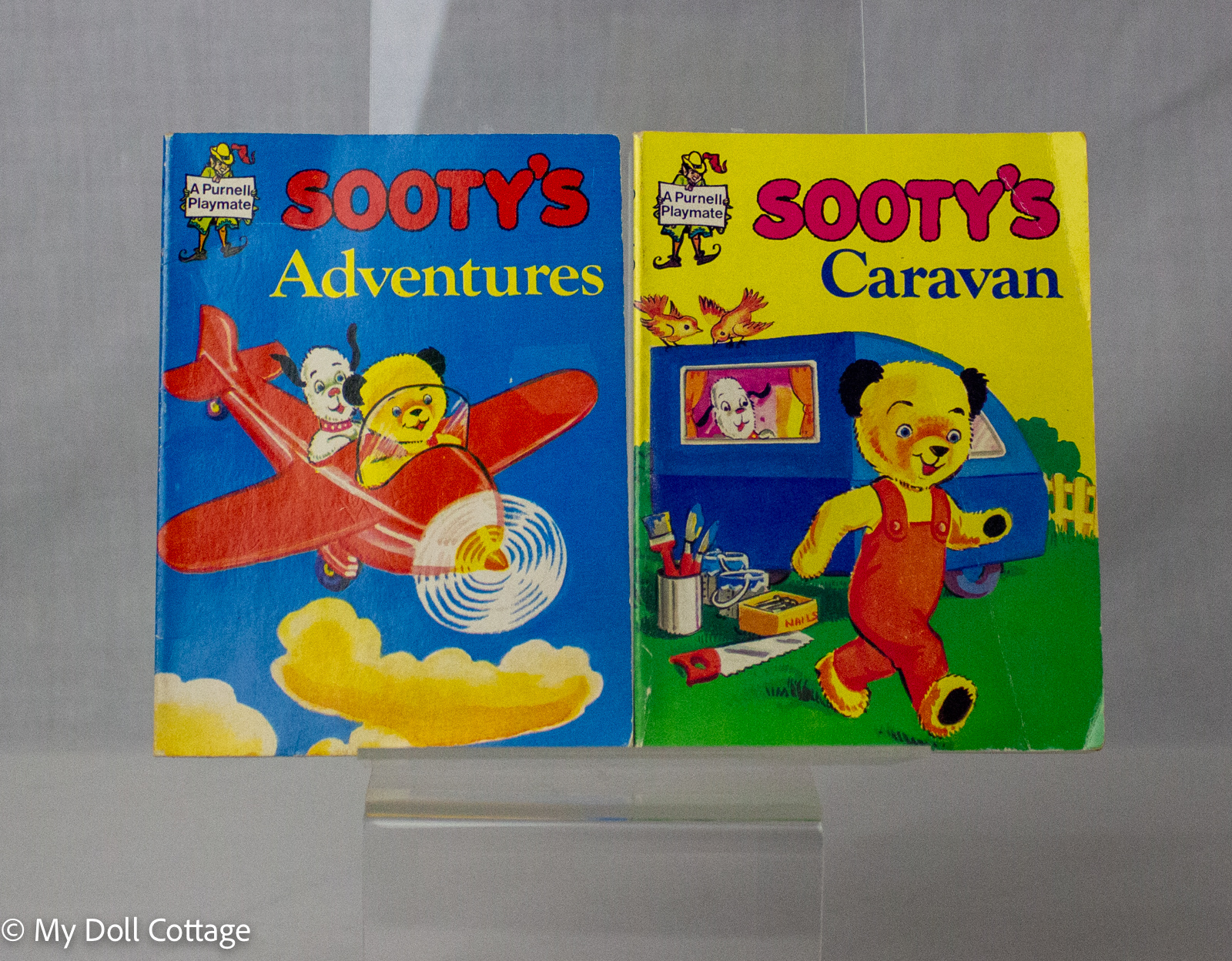
A set of two 1982 Purnell Playmates children’s books featuring Sooty, Sweep and their friends, published in Great Britain under licence from Sooty Concessions Limited.
This set consists of two small-format children’s storybooks, Sooty’s Adventures and Sooty’s Caravan, published by Purnell Books in 1982 as part of its Purnell Playmates range.
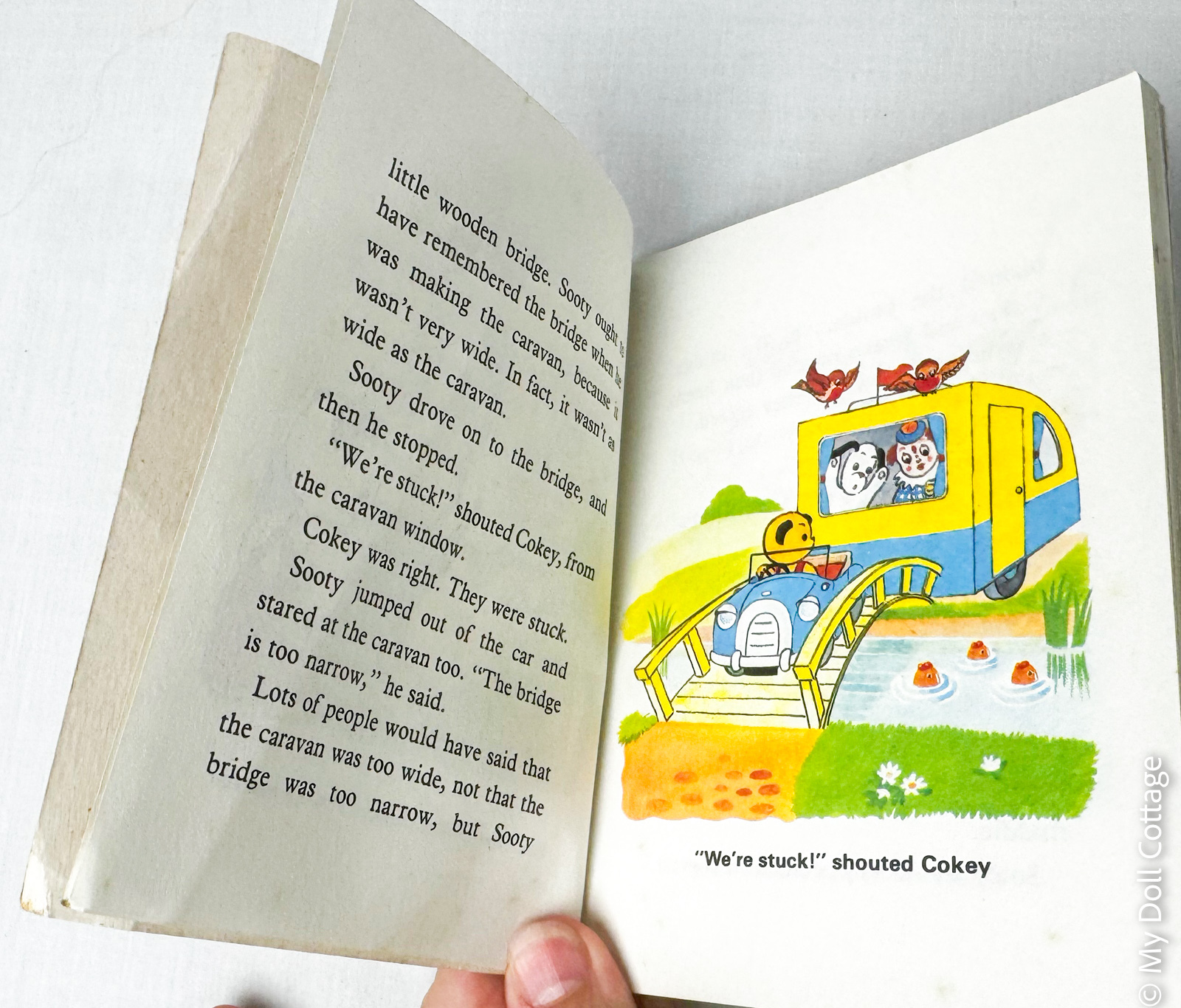
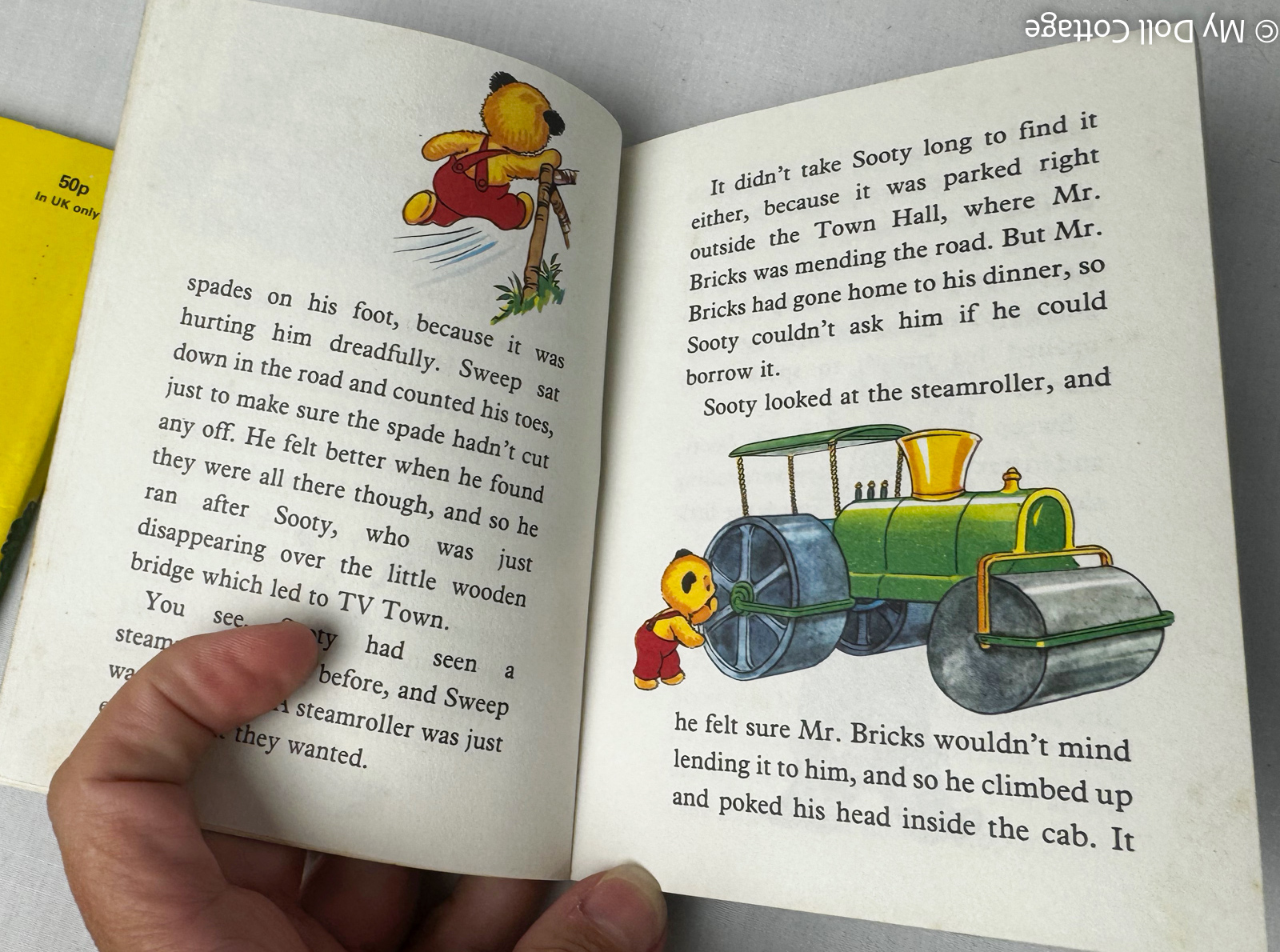
The books feature Sooty, the famous British television bear created by Harry Corbett, together with familiar characters including Sweep, Soo and Matthew Corbett. Brightly coloured illustrations accompany the stories throughout, reflecting the appearance of the television characters during the early 1980s.
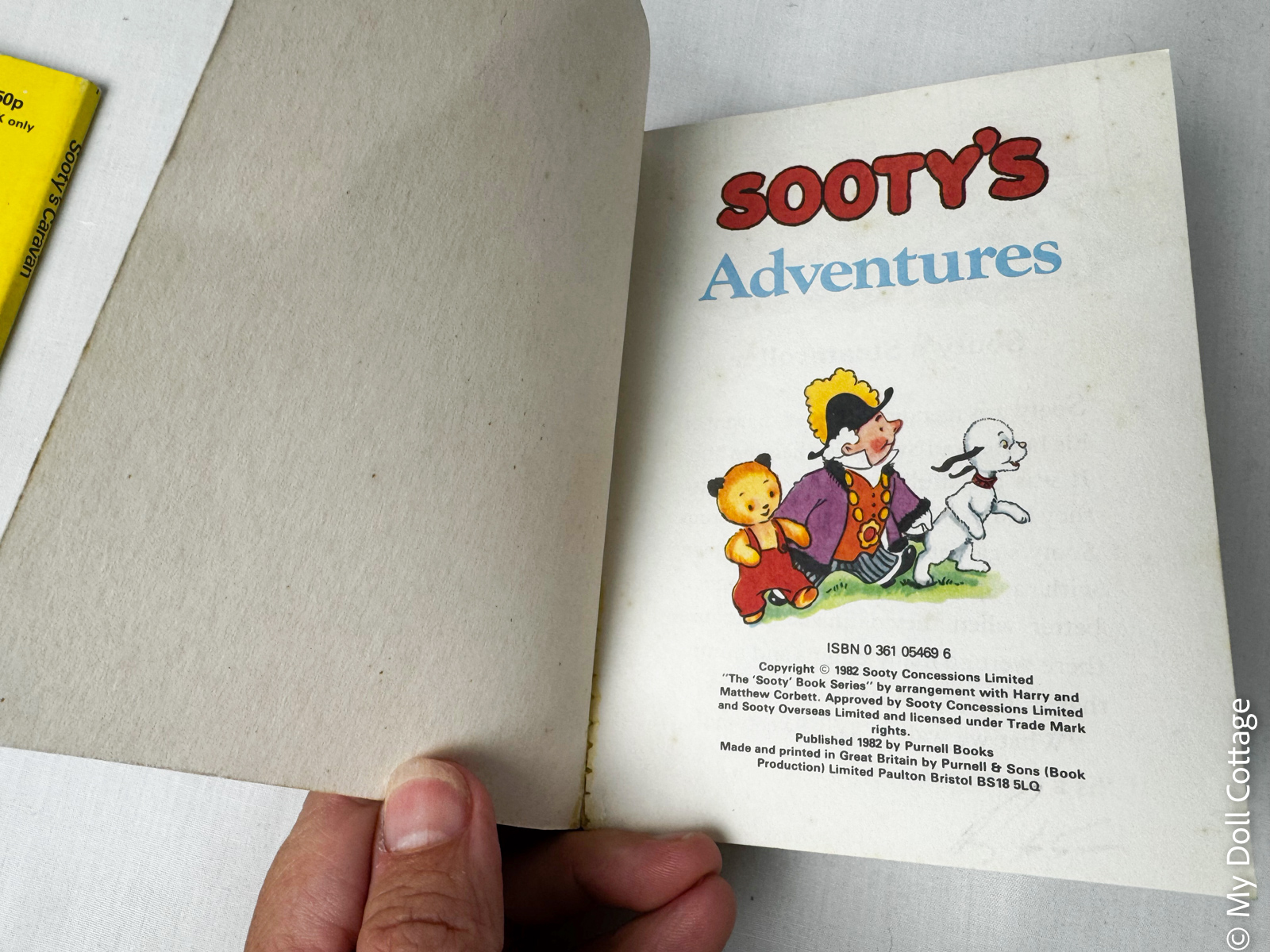
Publication details printed inside the books state that the Sooty Book Series was produced by arrangement with Harry and Matthew Corbett, approved by Sooty Concessions Limited and licensed under trade mark and Sooty Overseas Limited rights. The books were made and printed in Great Britain by Purnell & Sons (Book Production) Limited at Paulton, Bristol.
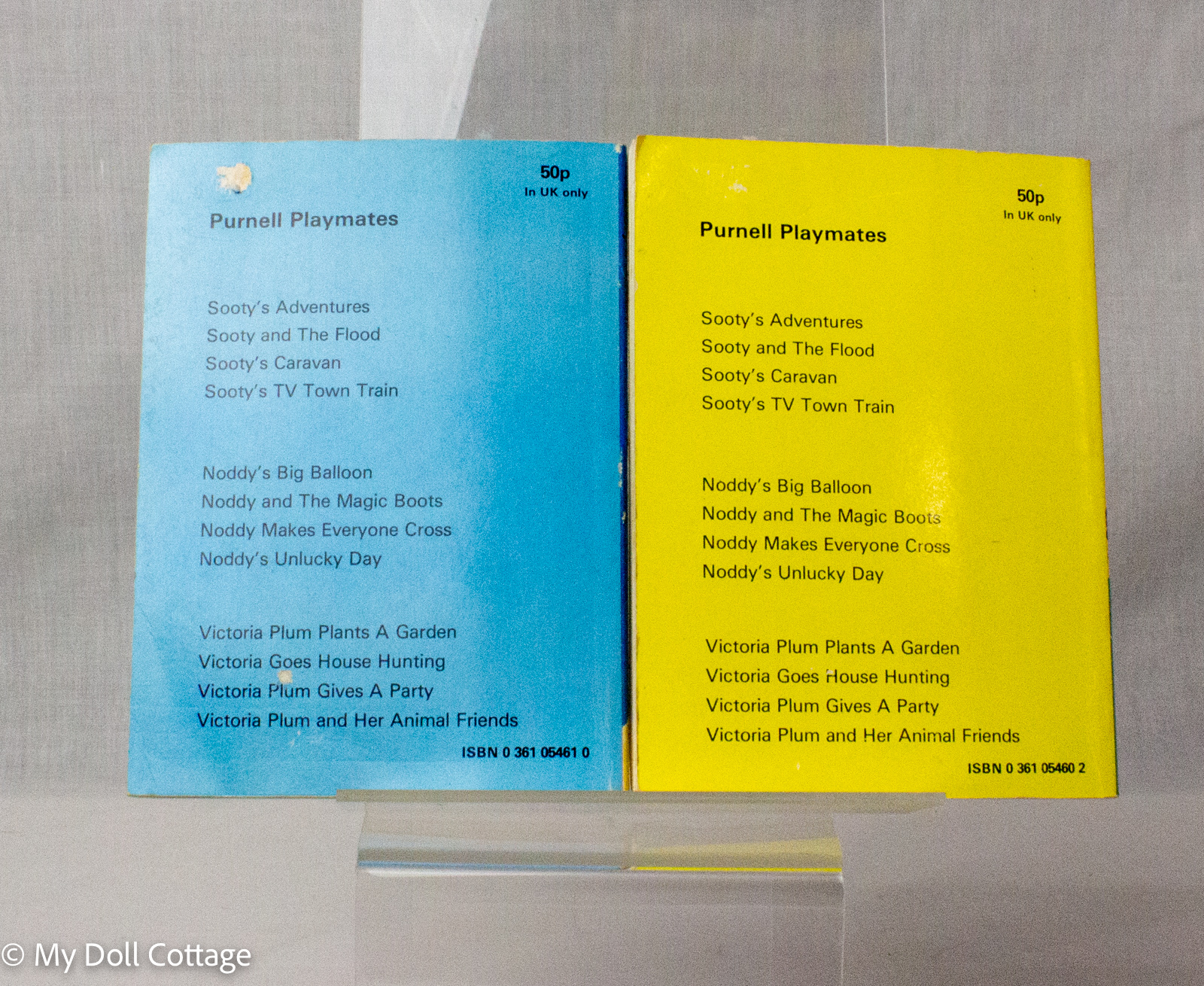
Sooty’s Caravan carries ISBN 0 361 05460 2, which independently confirms its publication by Purnell in Bristol in 1982. (OBNB) Sooty’s Adventures carries the consecutive ISBN 0 361 05461 0. Both originally retailed for 50p in the United Kingdom.
The backcovers advertise other Purnell Playmates titles available at the time, including Sooty and the Flood, Sooty’s TV Town Train, several Noddy stories and Victoria Plum titles. This places the books within a broader inexpensive children’s publishing range intended to bring popular television and storybook characters into small, accessible storybooks.
The books are an example of early-1980s licensed Sooty merchandise and illustrate the continuing popularity of the character some three decades after Sooty first appeared on British television.
Features
Measurements: 145mm high × 110 mm wide × 10 mm deep each
Condition: Good - Used age appropriate wear and tear
Markings: See Photos
Date Note: Date is an estimate based on available research and stylistic features. If you have additional information, please contact us to help update our records.
Made from the following materials
Paper and paper mache have long been utilized in the creation of dolls and toys, serving as versatile and accessible materials that allow for creative expression and intricate designs. These materials have a rich history and are particularly valued for their lightweight nature, ease of manipulation, and potential for detailed craftsmanship.
Paper has been used in doll and toy-making for centuries, often in the form of printed paper dolls or as a component in various toys. Traditional paper dolls are typically flat figures made from cardboard or heavy paper, adorned with clothing and accessories that can be cut out and dressed. This interactive play encourages creativity and storytelling, as children can design their own outfits and scenarios.
In addition to flat dolls, paper has been used to create three-dimensional figures, such as origami toys or pop-up toys that spring to life with the pull of a tab. The versatility of paper allows for intricate designs, colorful illustrations, and imaginative characters, making it a favored choice for toy makers throughout history. Moreover, the ability to print vibrant images on paper has enabled the production of themed dolls and toys that resonate with popular culture and children's interests.
Paper Mache
Paper mache, derived from the French term "pâte à papier," involves the crafting of objects using a mixture of paper strips and adhesive, typically flour and water or glue. This technique allows for the creation of lightweight, durable figures that can be molded into a variety of shapes. The process often involves layering strips of paper over a form, allowing each layer to dry before adding more, which creates a strong structure.
Historically, paper mache has been used to create decorative dolls, masks, and toys, especially in cultures where resources were limited. Its affordability and ease of use made it a popular choice among artisans, allowing for the creation of intricate and colorful designs. Many traditional cultures have developed their unique styles of paper mache, incorporating local motifs, patterns, and cultural significance into their creations.
Today, paper and paper mache continue to be celebrated in the toy industry, appealing to both children and artists alike. Many contemporary crafters and educators use these materials to engage children in hands-on learning and creative expression. Workshops and classes focusing on paper mache techniques allow participants to explore their creativity while learning about this timeless craft.
At our museum, we showcase the beauty and innovation of paper and paper mache in dolls and toys, highlighting their historical significance and the artistry involved in their creation. Each piece tells a story of imagination and craftsmanship, connecting generations through the shared joy of play and creativity.

Additional Product Images

Related Dolls and Toys from our collection