c.1930s–1940s Japanese – Full Wax Jointed Baby Doll in Pink Crochet Outfit

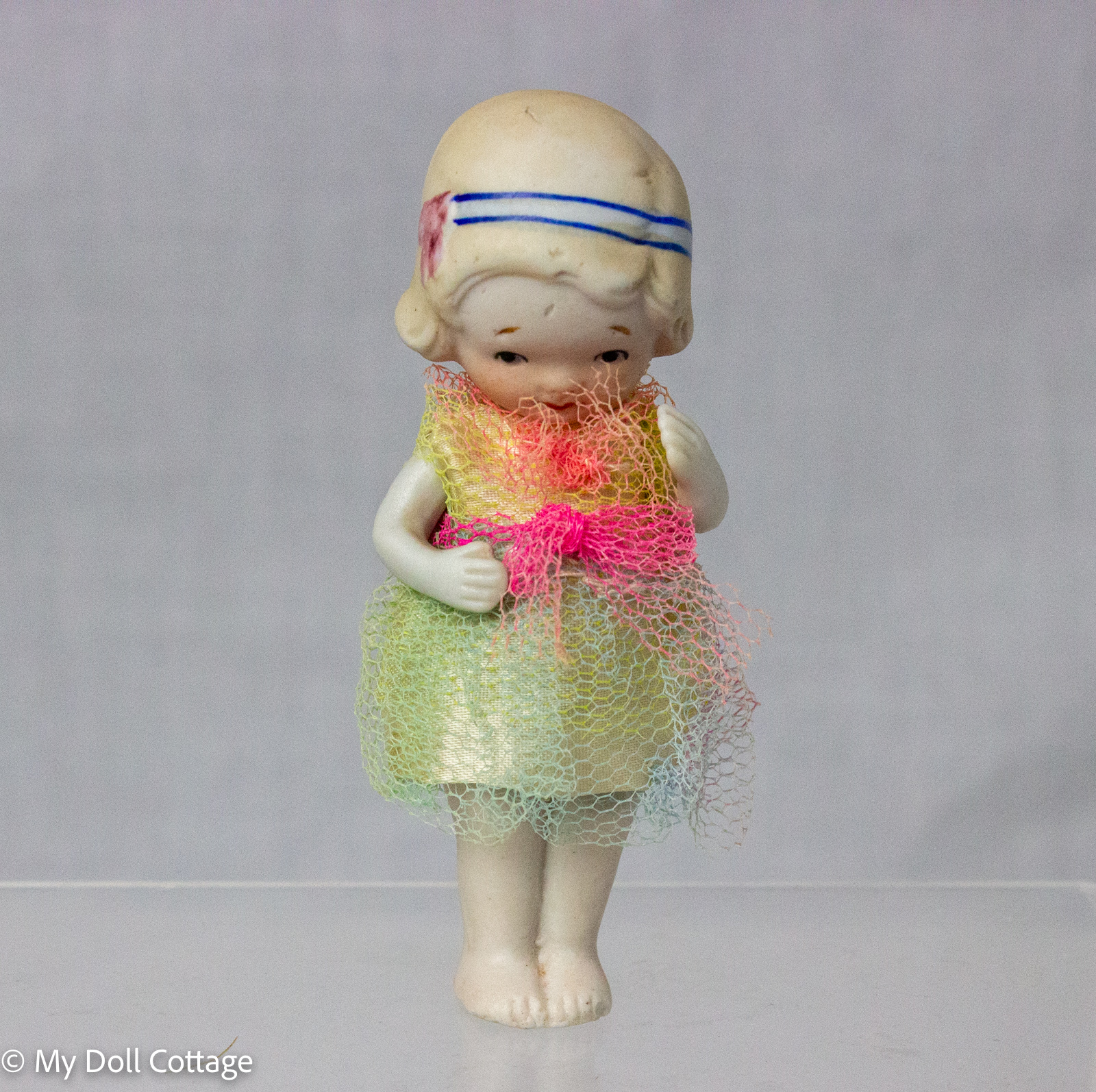
A small full wax jointed baby doll dressed in a finely crocheted pink outfit, featuring elastic jointing and delicate painted facial details.
This miniature baby doll is constructed entirely from wax with simple elastic-jointed limbs allowing gentle movement of the arms and legs. The doll features painted facial details including fine brows, blue eyes, and red lips, with moulded hair painted in a soft brown tone. The body has a smooth creamy wax finish typical of small novelty and souvenir dolls produced during the early to mid-20th century.
The doll is dressed in an elaborate hand-crocheted pink outfit consisting of a bonnet, dress, booties, and matching soft felt-style nappy or undergarment. Miniature dolls of this type were often sold as keepsakes, dollhouse accessories, souvenir pieces, or gift dolls. Similar examples were commonly produced in Germany before World War II and later in Japan during the post-war export period, although many remain unmarked or carry only simple factory symbols.
The faint geometric marking visible on the body suggests small-scale workshop or export production rather than a major branded manufacturer. The soft wax construction and petite proportions reflect the popularity of tiny decorative dolls intended for display rather than heavy play.
Features
Measurements: 110mm x 50mm x 50mm wide
Condition: Excellent
Markings: see images
Date Note: Date is an estimate based on available research and stylistic features. If you have additional information, please contact us to help update our records.
Made from the following materials
Wax has been a notable material in the production of dolls and toys for centuries, valued for its malleability, durability, and aesthetic appeal. Historically, wax has played a significant role in the creation of both decorative and functional playthings, as well as in the crafting of lifelike dolls that capture the imagination.
What is Wax?
Wax is a natural or synthetic substance that is typically soft, pliable, and can be molded into various shapes. Natural waxes, such as beeswax, have been used for thousands of years, while synthetic waxes, including paraffin and microcrystalline wax, have become more common in modern production. The unique properties of wax, including its ability to hold shape and retain fine details, make it an ideal material for doll and toy making.
Applications in Doll Making
In the realm of doll-making, wax has been used to create lifelike features and detailed expressions. Wax dolls, often crafted with a solid core and a wax exterior, can be molded to exhibit intricate facial features, realistic skin textures, and beautiful painted details. This technique allows for a degree of customization and personalization, making wax dolls especially cherished by collectors.
Historically, wax dolls were popular in the 19th century as educational tools for children, serving as examples of fashion and society. They were often used in schools to teach young girls about proper attire and manners. The ability to dress and style these dolls further enhanced their appeal, as children could engage in imaginative play while learning about their cultural context.
Toys and Figurines
In addition to dolls, wax has been used to create a variety of toys and figurines. Wax was commonly employed in the production of toy soldiers, animals, and other play figures. The ability to easily mold and color wax made it an attractive choice for manufacturers seeking to produce colorful and durable toys.
Artistic Expression and Collectibility
Wax has also been embraced by artists and crafters who seek to explore its potential for artistic expression. Wax sculptures and figures can be created with exquisite detail, leading to the production of limited-edition collectible dolls and toys. Many contemporary artists experiment with wax in their work, creating unique pieces that showcase the material's versatility and beauty.

Additional Product Images


Related Dolls and Toys from our collection