During our assessment for our first trip to the doll doctor, this large 36-inch early walker doll required careful attention. Dolls of this size were never intended to be purely decorative. They were designed to move, to be pulled, guided, and walked alongside a child, and that purpose is evident in every aspect of her construction.
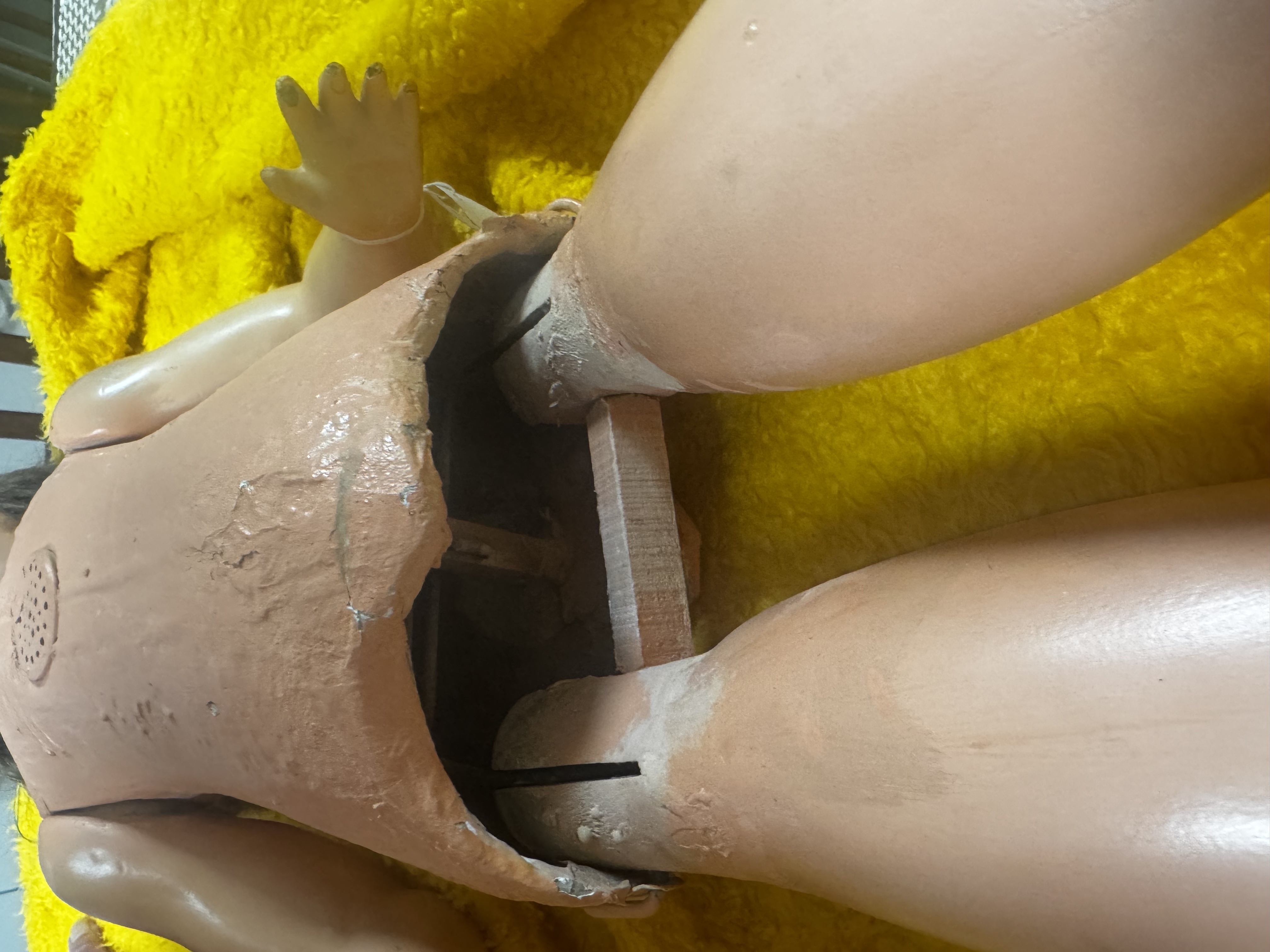
Her scale, proportions, and internal wooden walker mechanism all point to an early period of manufacture, when movement and durability were prioritised over refinement. The body shows clear signs of composition construction, now displaying age-related cracking, suThe rface fatigue, and material stress consistent with decades of use.
What stands out immediately, however, is evidence of extensive repair work carried out at some point in her life.
The body has been heavily rebuilt using thick filler and structural additions that are not original to the doll. The work is uneven and has altered how the body bears weight and how the limbs sit within the torso. By modern conservation standards, this would be considered inappropriate repair — but that is not the lens through which we view it.
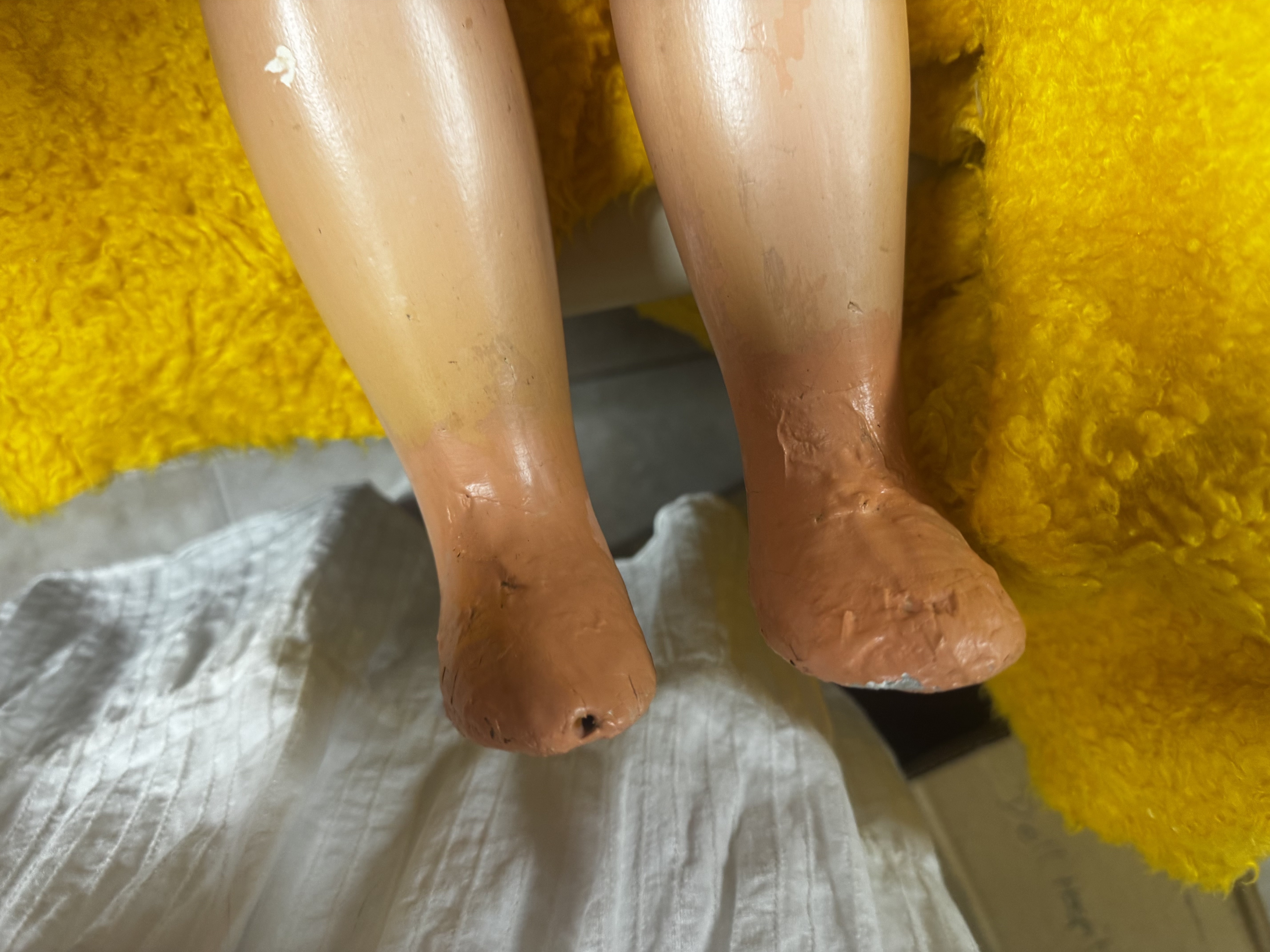
Repairs like these were often acts of necessity and care. Families worked with the materials available to them at the time, aiming to keep a cherished doll usable rather than historically accurate. These repairs may have been done decades ago, possibly when professional restoration was inaccessible or unheard of. Inthat context, the work becomes part of the doll’s lived history.
Unfortunately, time has not been kind to those materials. The repair compounds have hardened and cracked, placing strain on surrounding original areas. In several places,the repair itself is now contributing to further damage rather than preventing it.
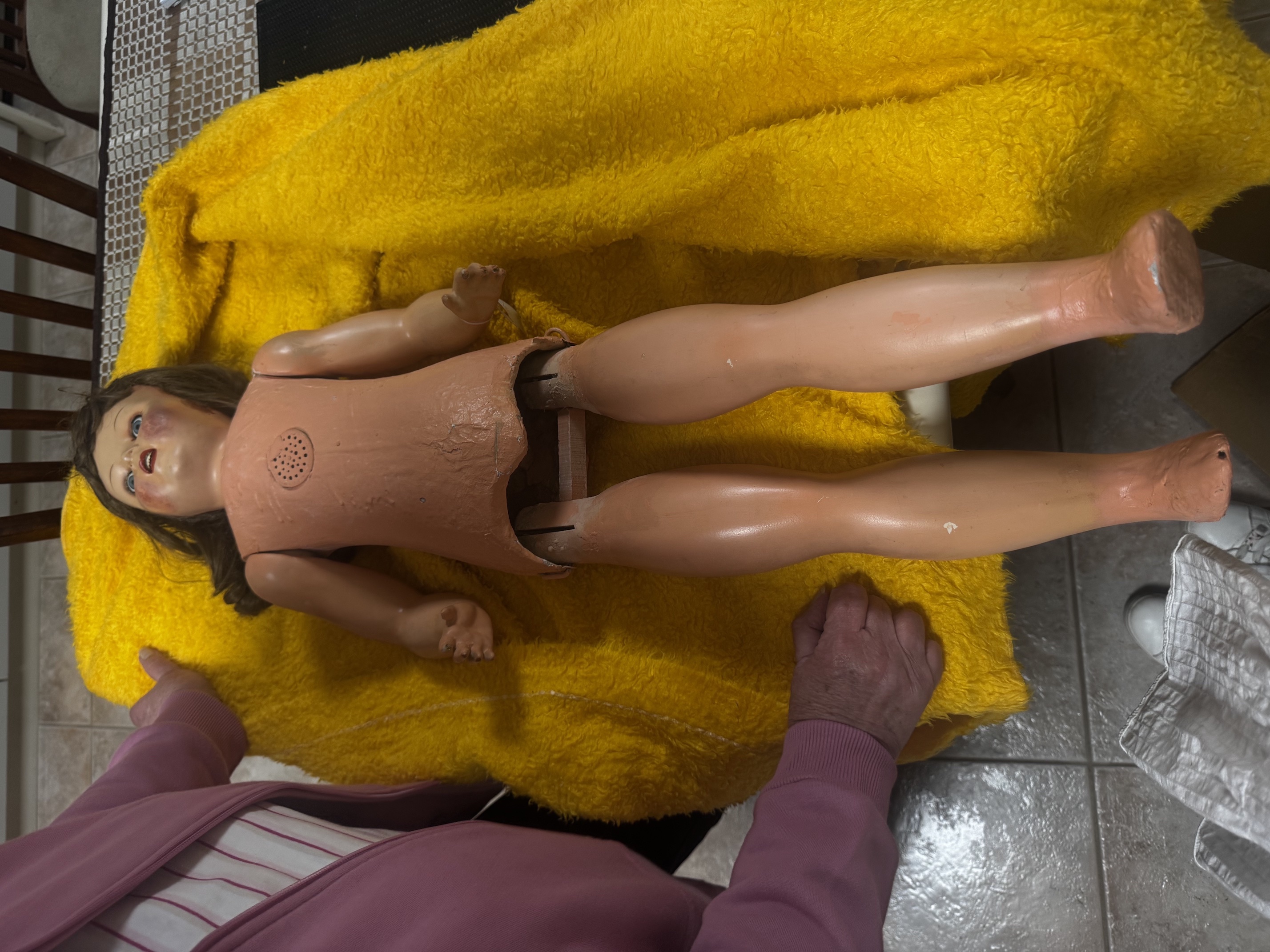
Everycrack, join, and surface alteration has been documented. The original materials have been identified where possible, and the internal structure assessed todetermine what is stable and what is at risk. Decisions about conservation willfocus on stabilisation and preservation rather than cosmetic perfection.
This doll reminds us that museum conservation is not about returning objects to an imagined original state. It is about respecting their full journey — play, repair, survival, and age — while ensuring they can safely exist for future generations.
The decision was made after consultation with the doll doctor to restring her upper limbs. This will allow us to pose when she is ready to be displayed. After research we have identified her as 1890-1910 Joanne Walker doll, she now just waits for a new outfit. When she is dressed I will update the photos.
With love
Shyloh
Tales from the youngest daughter of a doll collector — raised on Milo, Vegemite, and more antiques than a country op shop.
Read More: Visit to the Doll Doctor