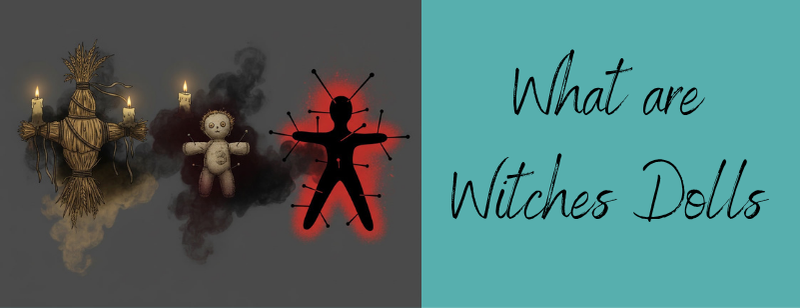
Some where nearby is a witch, and somewhere else an unfortunate victim is suddenly clutching the corresponding part of their body in pain.
It is one of the most recognisable images of magic in popular culture.
We often call it a “voodoo doll”.
But the real history of these strange little human figures is much older, much broader— and considerably more complicated.
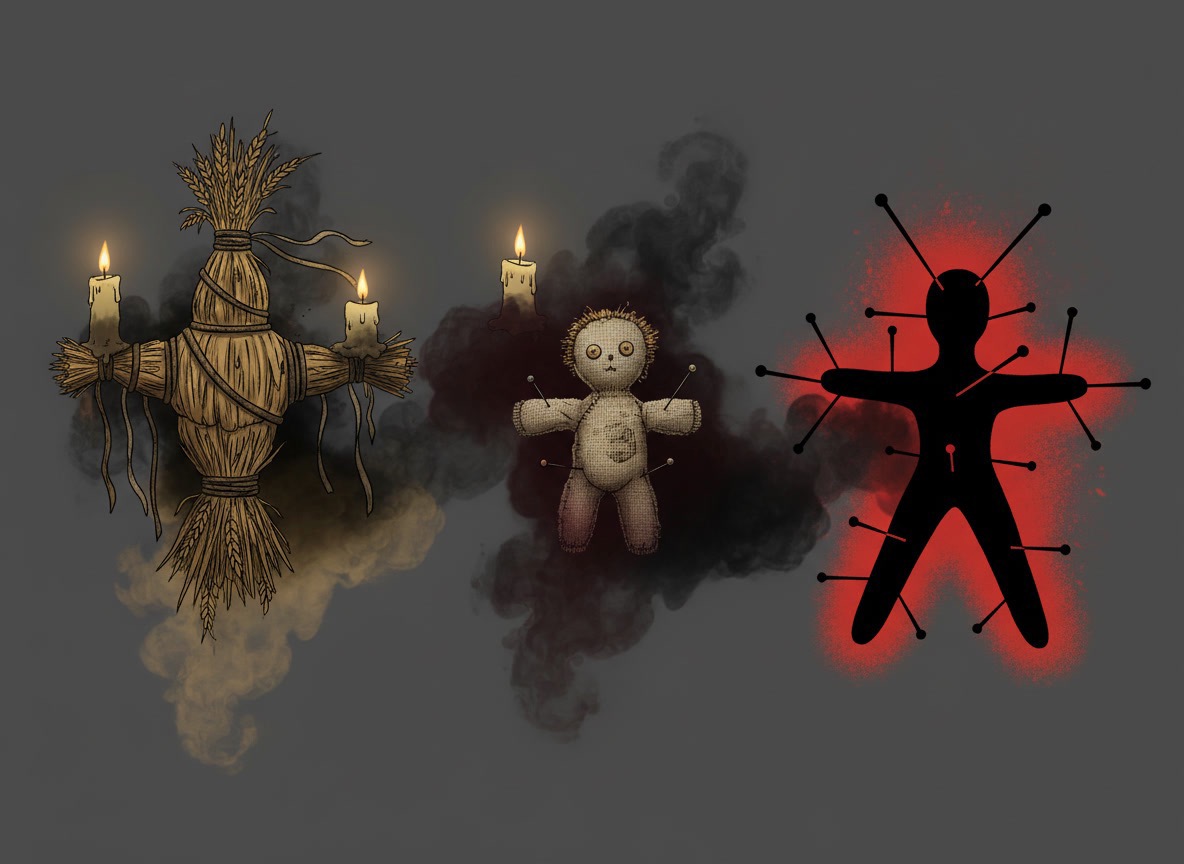
For centuries, people have created small representations of the human body for purposes other than play.
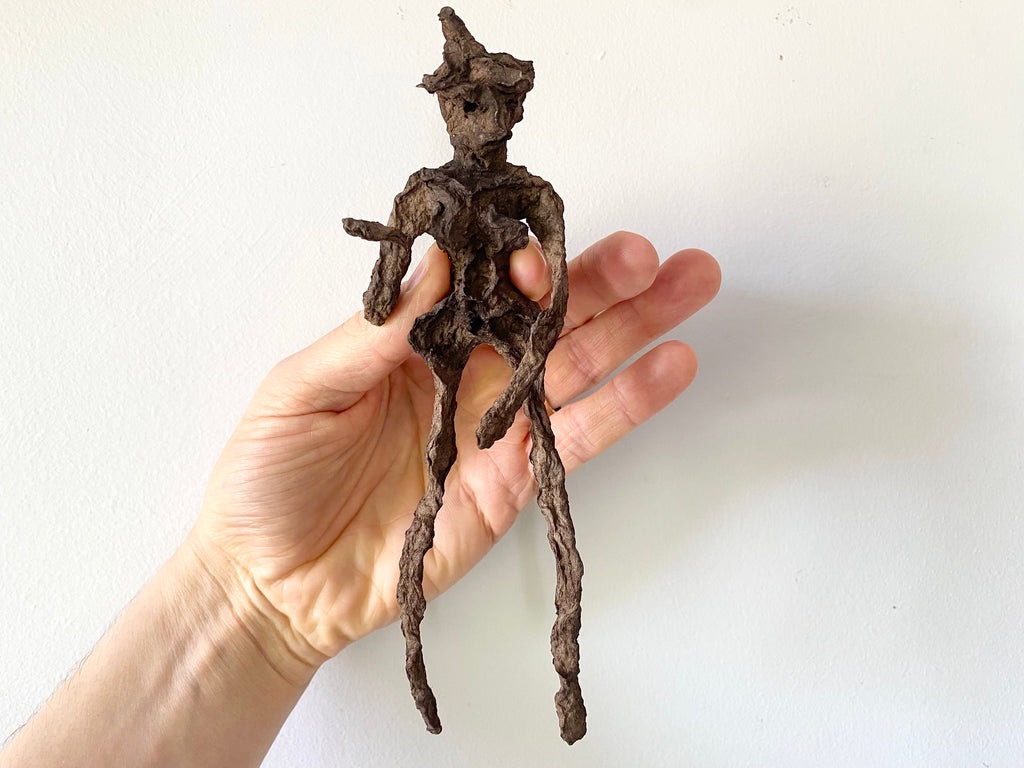
In Britain and Europe, one form became known as a poppet. Unlike the carefully manufactured dolls given to children, poppets could be remarkably simple. They were made from whatever was available: wax, clay, cloth, string, wood and, in more recent times, even putty.
What mattered was not how beautiful the figure looked, but whom it represented.
A name might be written on it. A photograph or piece of paper could be attached. Hair, clothing or another personal item might be incorporated into the figure.
The idea behind this is often called sympathetic or image magic — the belief that an object representing a person could somehow be connected to that person.
And that connection was not always intended to cause harm.
This is where our modern Halloween image becomes a little misleading.
A pin pushed into a poppet did not necessarily represent someone being stabbed or injured.
The Museum of Witchcraft and Magic in Cornwall holds wax poppets associated with healing. A pin might be used symbolically to lance a boil, for example, while ointmentcould be rubbed onto the corresponding part of the wax figure in an attempt to heal someone who was elsewhere.
Other figures were associated with protection, love, health or good fortune.
One wax poppet in the museum's collection, believed to have been made for healing or protection, even contains rose petals placed inside a cavity in its back.
The little figure itself was therefore neither good nor evil.
Its meaning came from what somebody intended to do with it.
Of course, not everyone was trying to heal their neighbour.
Historical records also contain accusations of human figures being made specifically to harm another person.
During the seventeenth century, such accusations sometimes appeared in witchcraft trials.
One fascinating example comes from Scotland in 1677.
John Stewart was accused of participating in an attempt to harm Sir George Maxwell of Pollok using figures made from wax or clay. According to surviving records, the figures were allegedly pierced with pins and heated in a fire.
Even more dramatically, a wax image containing pins was reportedly discovered hidden amongst the straw of Stewart's bed.
Related witchcraft cases from the same period contain similar allegations of images being made, pierced and heated in an attempt to cause suffering.
These records do not prove that magic actually harmed anyone. What they do show us is something equally interesting: people genuinely feared that it could.

The idea even appears in records from one of history's most infamous witchcraft episodes— the Salem witch trials of 1692.
During the examination of Abigail Hobbs, references were made to wooden images, poppets, thorns and pins.
Hobbsclaimed that an apparition had brought her a poppet and a thorn and that she had used them against Ann Putnam.
As with all testimony from witch trials, these statements need to be treated cautiously. Accusations, fear, pressure and the extraordinary circumstances surrounding the trials all influenced what was recorded.
Neverheless, the documents provide remarkable evidence that the idea of harming someone through a little representation of their body was already familiar more than 300 years ago.

There was no standard design.
Some surviving examples look vaguely like dolls. Others barely resemble a person a tall.
Wax could be moulded into a crude human shape. Clay figures might be pierced with nails. Fabric could be stitched into a simple body. String could be knotted and bound until it vaguely resembled a person.
Some figures were pierced through particular parts of the body. Others were bound, heated or partially melted.
And this is where they become particularly fascinating from the perspective of a doll museum.
A child's doll, a religious figure, a mannequin, an effigy and a magical poppet may all represent the human body, yet their purposes are completely different.
One exists for play.
Another for devotion.
Another for display.
And another because somebody believed that what happened to the figure might some how happen to the person it represented.
This is perhaps the biggest myth of all.
The pin-covered figure we commonly call a “voodoo doll” should not simply be regarded as a traditional object of Haitian Vodou.
Vodou is areligion with roots in West and Central African spiritual traditions that developed in Haiti alongside influences including Roman Catholicism. Reducing that complex religion to dolls, pins and curses is largely the result of later Western stereotypes.
The Museum of Witchcraft and Magic points out that human figures used for image magic existed within British and European traditions long before the familiar modern “voodoo doll” became part of popular culture.
Over time, stories, entertainment and popular imagery increasingly attached the frightening little pin-covered doll to the word “voodoo”.
It was a wonderfully simple image for storytellers.
A doll represents a person.
A pin enters the doll.
Something terrible happens to the victim.
No lengthy explanation required.
Unfortunately, that simple horror device also helped turn a complicated living religious tradition into a sinister stereotype.
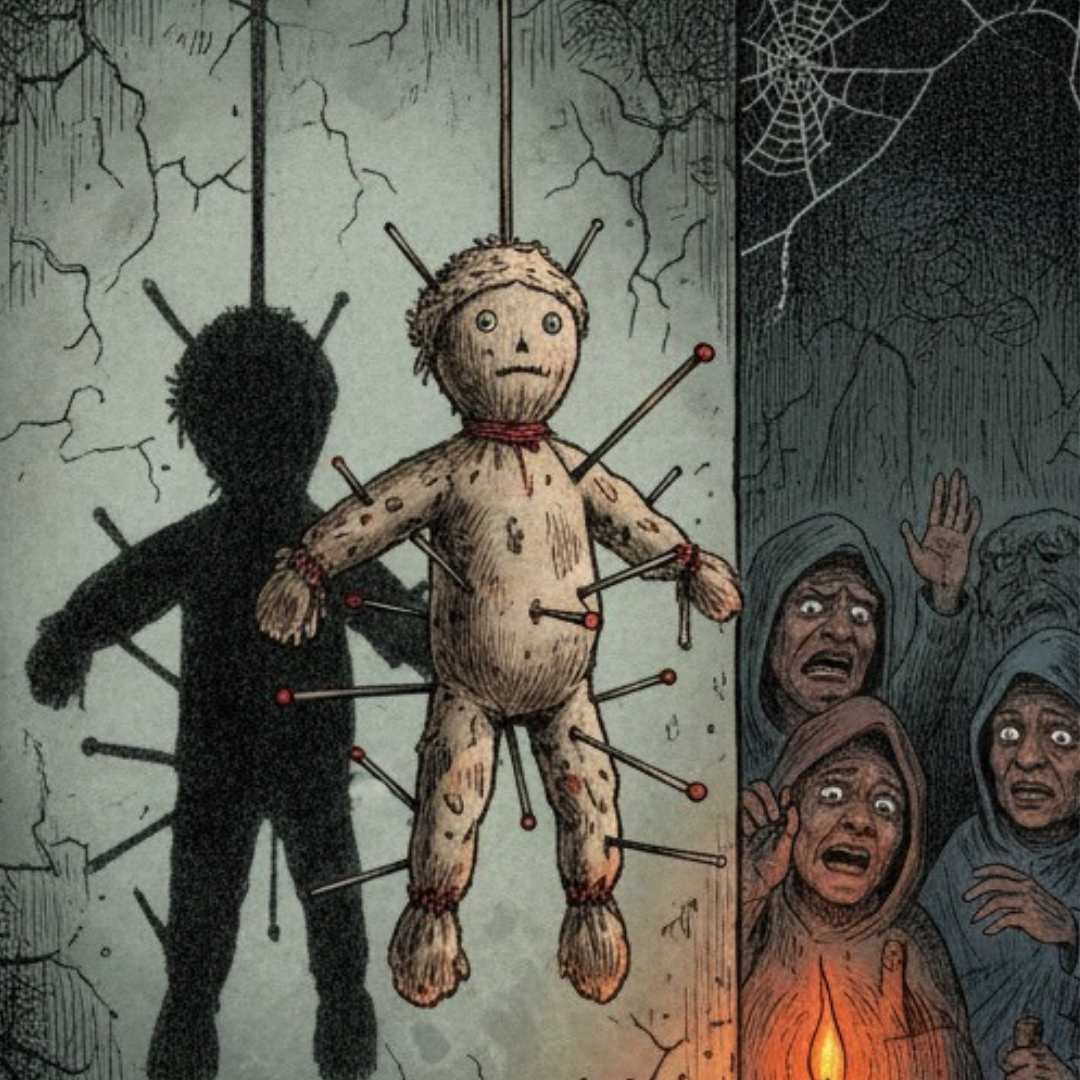
Perhaps the strangest part of the story is what happened next.
The object supposedly associated with dangerous magic eventually became something people could buy for fun.
Commercial “voodoo dolls” and novelty poppets appeared, sometimes designed for humorous revenge rather than anything genuinely frightening. Some allowed the owner to attach a photograph of their unfortunate victim or insert pins while wishing minor disasters upon them.
Things such as bounced cheques, bad luck — and even fleas.
The feared magical figure had completed a remarkable transformation.
It had moved from folk belief and accusations of witchcraft, through literature and popular entertainment, and eventually into the world of novelty toys and Halloween decorations.
Even the poppet itself is only one chapter in a much longer story.
Long before the witch trials of Europe, ancient cultures were creating human figures that represented other people.
Archaeologists have discovered ancient Greek curse figures that were bound, pierced or otherwise manipulated as part of what scholars call binding magic.
The belief that something done to an image might affect the person it represented therefore stretches back thousands of years.
The materials changed.
The names changed.
The beliefs changed.
But the little human figure remained.
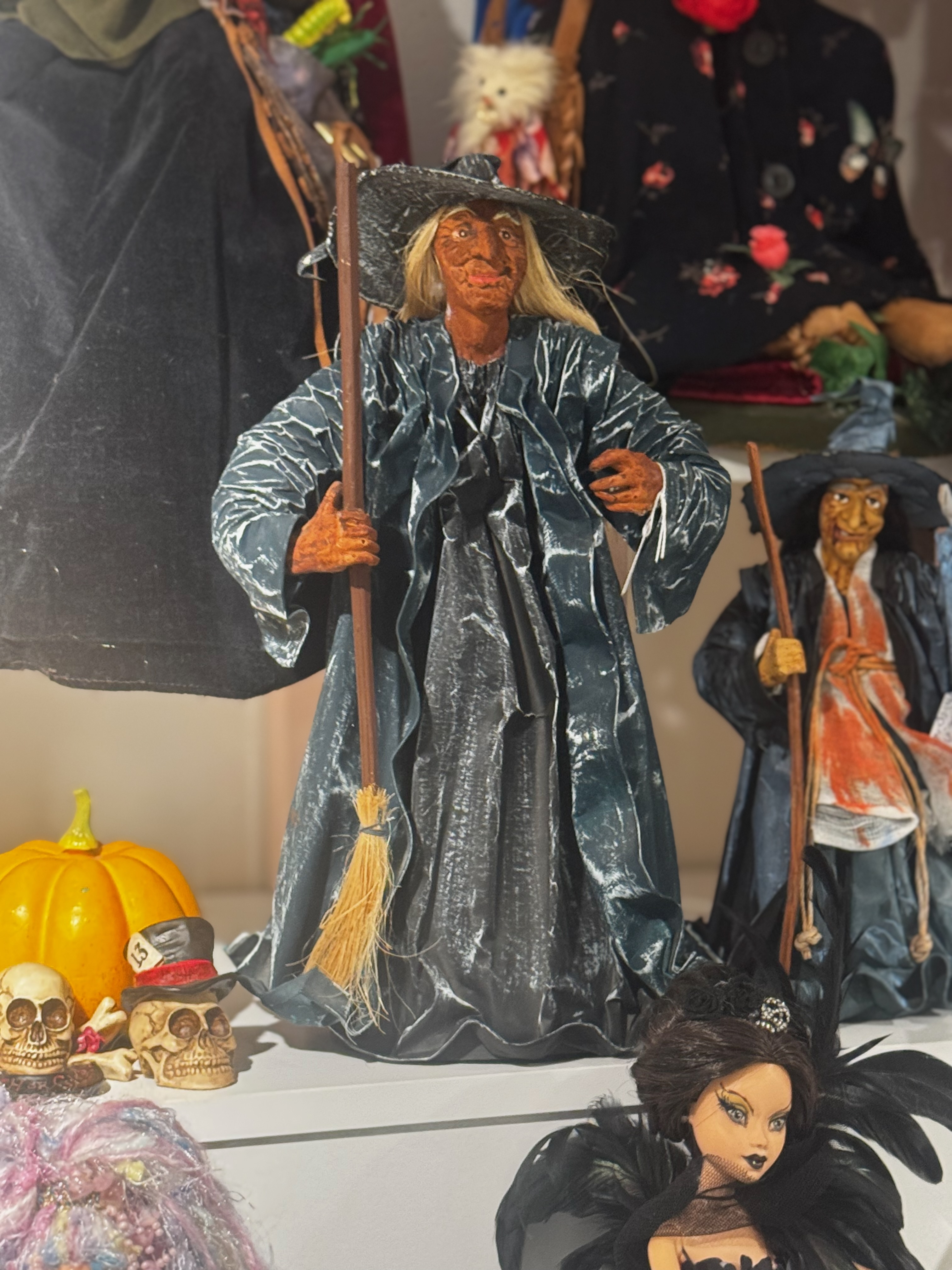
Perhaps not.
The objectwe recognise today as the witch's pin-covered doll is really a mixture of many different histories: ancient image magic, European folk practices, healing traditions, accusations of witchcraft, religious misunderstanding, horror stories and eventually popular culture.
Some figures were intended to harm.
Others were intended to heal.
And many ofthe little dolls sold today were never intended to do anything more sinister than make somebody laugh — or provide a suitably creepy Halloween decoration.
Yet there is something remarkable about the image that has survived.
Place an ordinary little doll on a table and it is simply a doll.
Push a handful of pins into it, and suddenly almost everyone knows exactly what it is supposed to mean.
Perhaps that is the real magic of the witch's doll.
More than three centuries after poppets appeared in witch-trial records — and thousands of years after people first began making human images for magical purposes — weare still telling their stories.
With love
Shyloh
Tales from the youngest daughter of a doll collector — raised on Milo, Vegemite, and more antiques than a country op shop.