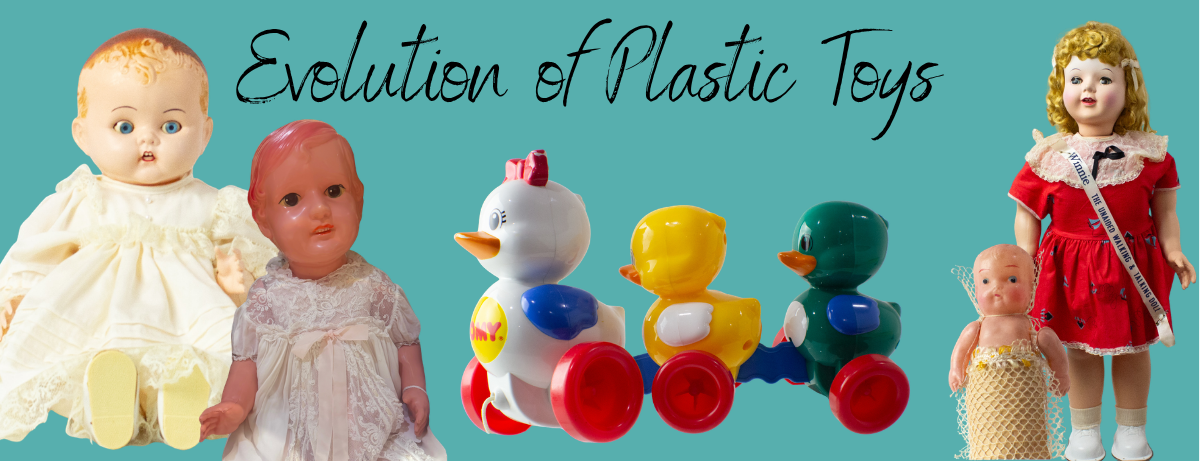

Before vinyl babies, hard-plastic dolls and brightly coloured modern toys, there was celluloid.
Celluloid was one of the earliest commercially successful plastics and played an important role in changing how dolls and toys were manufactured. Lightweight, mouldable and relatively inexpensive, it offered manufacturers an alternative to traditional materials such as wood, wax, composition and porcelain.

For several decades, celluloid helped make dolls and toys lighter and more affordable. Yet the same material that represented innovation also presented serious problems. Celluloid was highly flammable, chemically unstable and vulnerable to deterioration.
Today, surviving celluloid toys provide an important link between traditional doll making and the modern plastics industry.
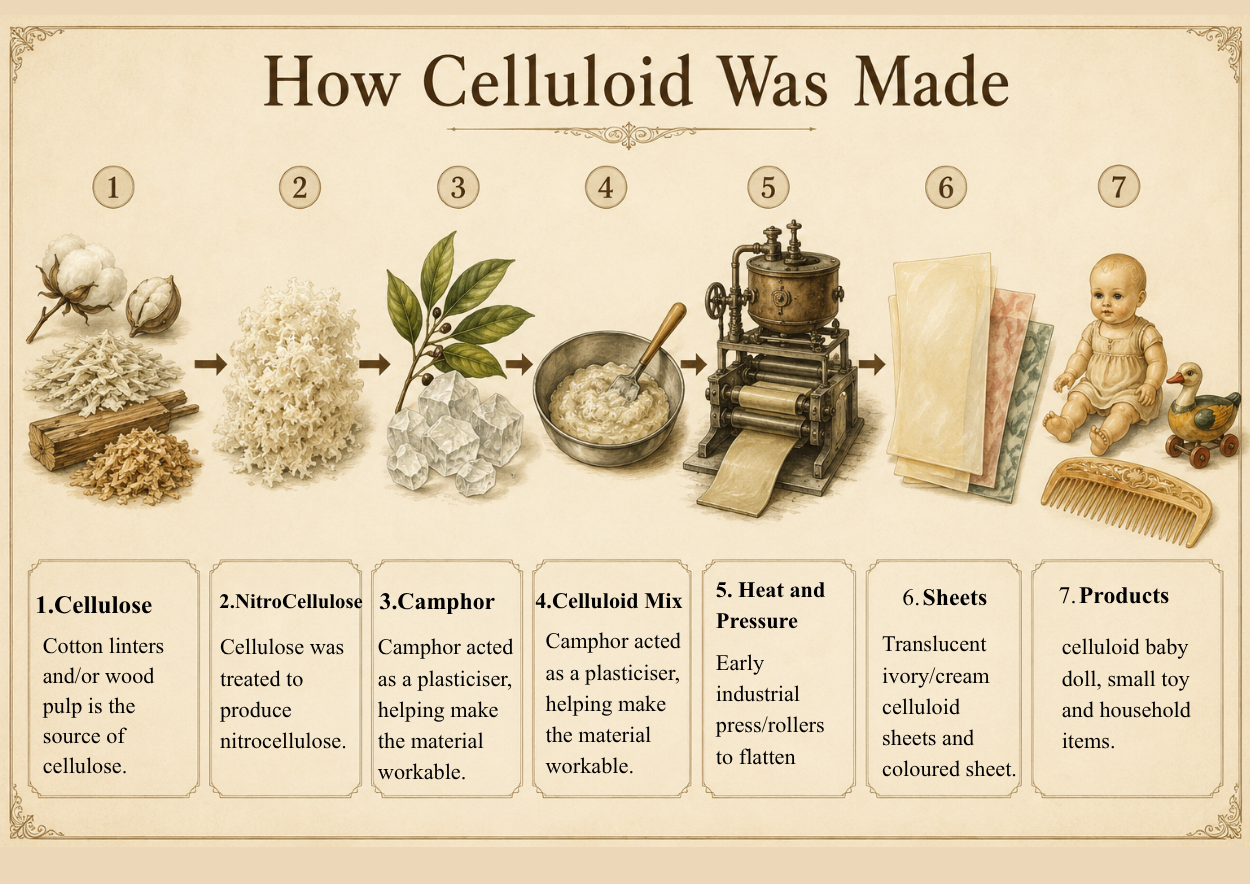
Celluloid is made primarily from nitro cellulose and camphor. Nitro cellulose is produced from cellulose, a natural plant-based material, while camphor acts as a plasticiser that makes the material easier to shape.
The development of celluloid was not the work of a single inventor.
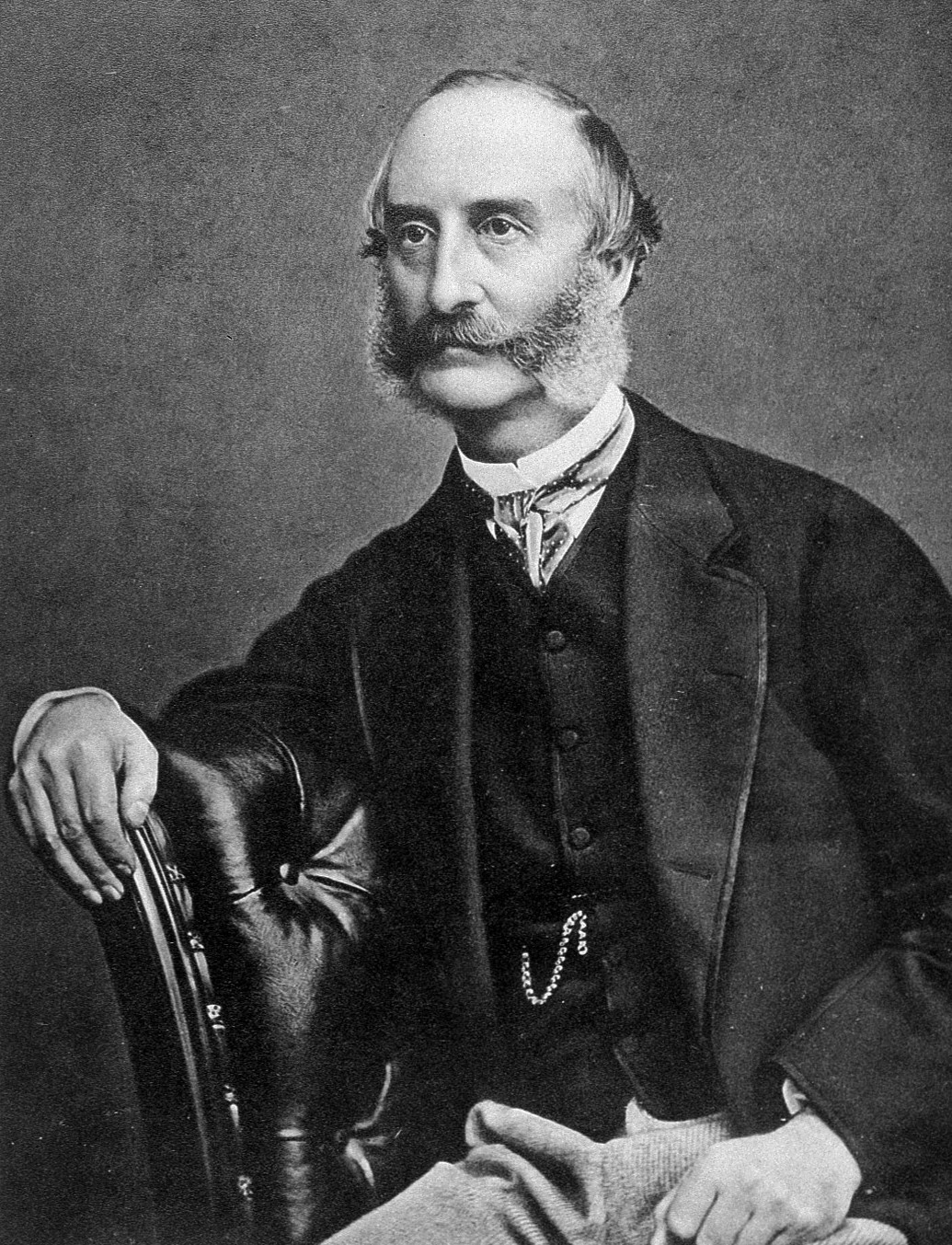
In Britain, Alexander Parkes demonstrated an early cellulose-based material called Parkesine in the 1860s. In the United States, brothers John Wesley Hyatt and Isaiah Hyatt subsequently developed improved manufacturing processes for similar materials. By the late nineteenth century, the name celluloid had become associated with one of the world's first commercially successful plastics.
It could be coloured, moulded and manufactured into an enormous range of products, including combs, buttons, decorative objects, photographic and motion-picture film—and toys.
For doll manufacturers, celluloid offered exciting possibilities.
A porcelain or bisque doll could be beautiful, but its head was vulnerable to being cracked or shattered. Celluloid was extraordinarily light by comparison and could be moulded into detailed shapes.
Manufacturers could produce doll heads, limbs and eventually complete hollow dolls using the new material.
Celluloid also lent itself particularly well to smaller toys and novelty figures. Babies, miniature dolls, animals, rattles and other inexpensive toys could be produced in large quantities.
By the late nineteenth and early twentieth centuries, celluloid toys were being manufactured in several countries, with Germany, France and Japan becoming particularly important producers.

Celluloid began appearing in dolls during the late nineteenth century and became particularly important during the first half of the twentieth century.
Early examples could combine celluloid heads or limbs with bodies made from cloth orother materials. As manufacturing techniques developed, completely moulded celluloid dolls became possible.
One of the most famous manufacturers was the German company Rheinische Gummi- und Celluloid-Fabrik, whose turtle trademark later became closely associated with Schildkröt dolls. France also developed an important celluloid doll industry, while Japan became a major producer of inexpensive celluloid toys and novelty figures for export.
The material helped create a new type of toy: light enough for small children tocarry easily and in expensive enough to reach a much broader market.
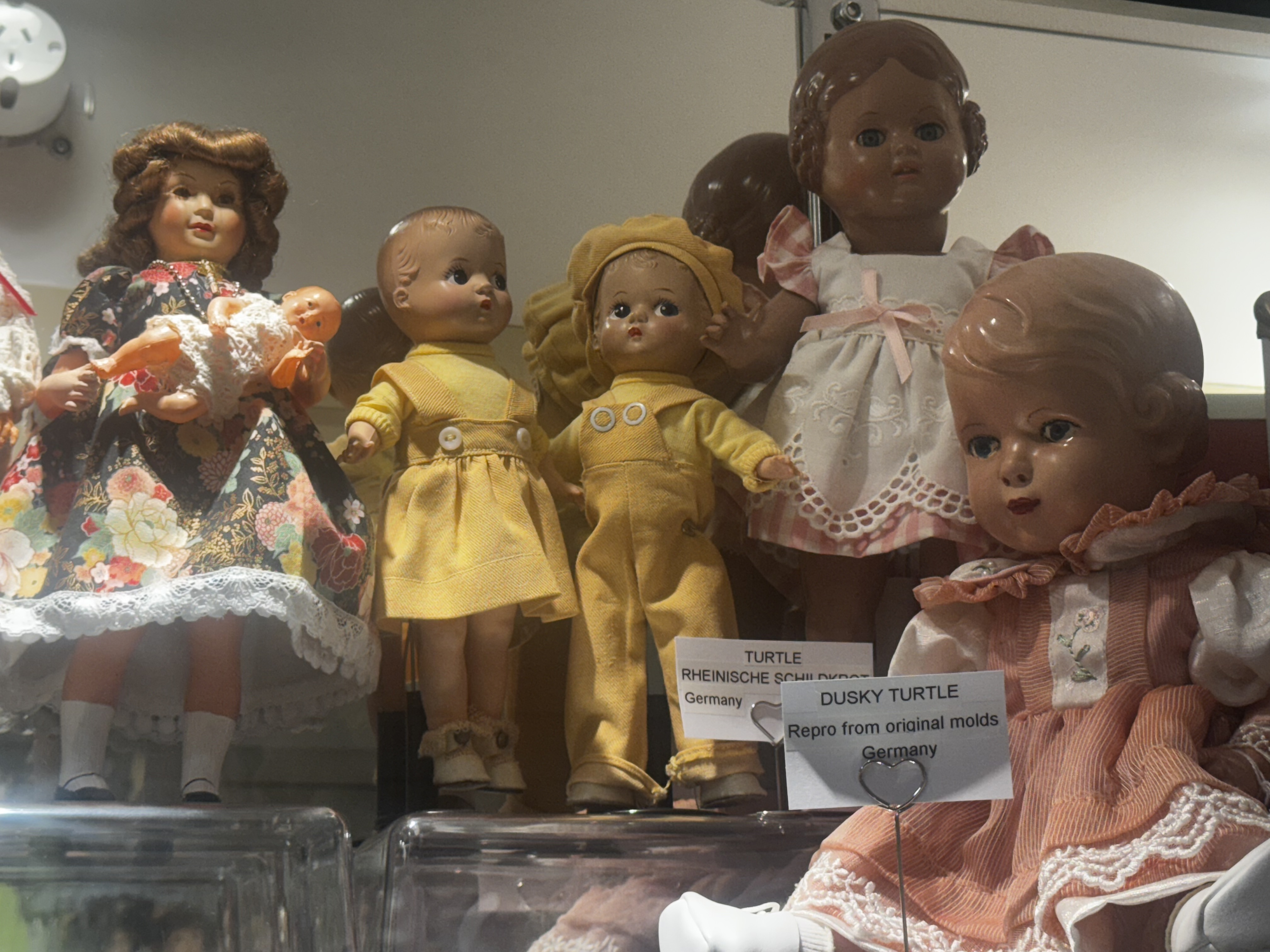
Identifying an early plastic is not always straight forward, particularly because several materials can look remarkably similar.
Celluloid dolls and toys are often:
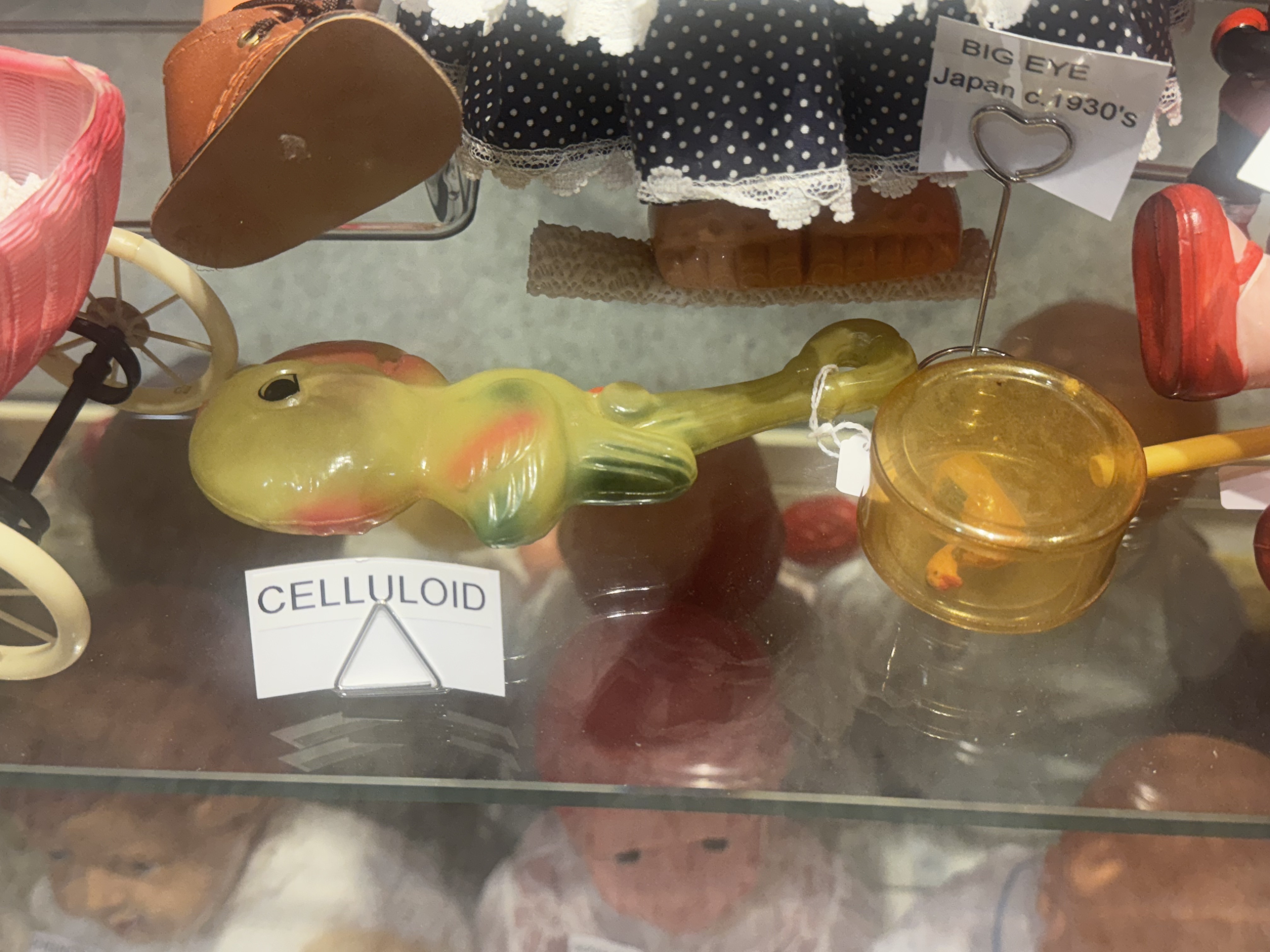
Celluloid was used for baby dolls, character dolls, miniature dolls, animals, rattles and countless novelty toys.
Manufacturer's marks can be particularly valuable when identifying celluloid. Where possible, collectors should use markings, known manufacturing dates and documented examples rather than relying on appearance alone.
Celluloid's advantages came with one particularly serious disadvantage.
Fire
Nitrocellulose makes celluloid highly flammable.
Once ignited, celluloid can burn extremely rapidly. The danger became increasingly apparent as the material was used in everything from toys to motion-picture film.
Concerns about fire safety contributed to manufacturers moving towards safer materials as new plastics became available.
Celluloid also presents a very different problem for museums and collectors today.
It is chemically unstable.
As it deteriorates, celluloid may:

Severely deteriorating celluloid can therefore become a conservation concern not only for the object itself but potentially for nearby collection items.
Heat, high humidity and exposure to light can accelerate deterioration.
For museums, recognising celluloid is therefore about more than correctly identifying an object's material—it can be important to its long-term preservation.
Celluloid arrived during a period when toy manufacturing itself was changing.
Nineteenth-century industrialisation had already transformed the production of toys. Factories, moulding processes and international trade allowed manufacturers to produce increasingly large quantities for expanding consumer markets.
Celluloid fitted perfectly into this changing world.
Rather than carving every component individually or firing fragile ceramic heads, manufacturers could mould lightweight components repeatedly from prepared material.
It did notreplace traditional materials overnight. Bisque, composition, wood, cloth and celluloid existed alongside one another for decades.
Instead, celluloid became another important step towards the mass-produced plastic toys that would dominate childhood during the twentieth century.
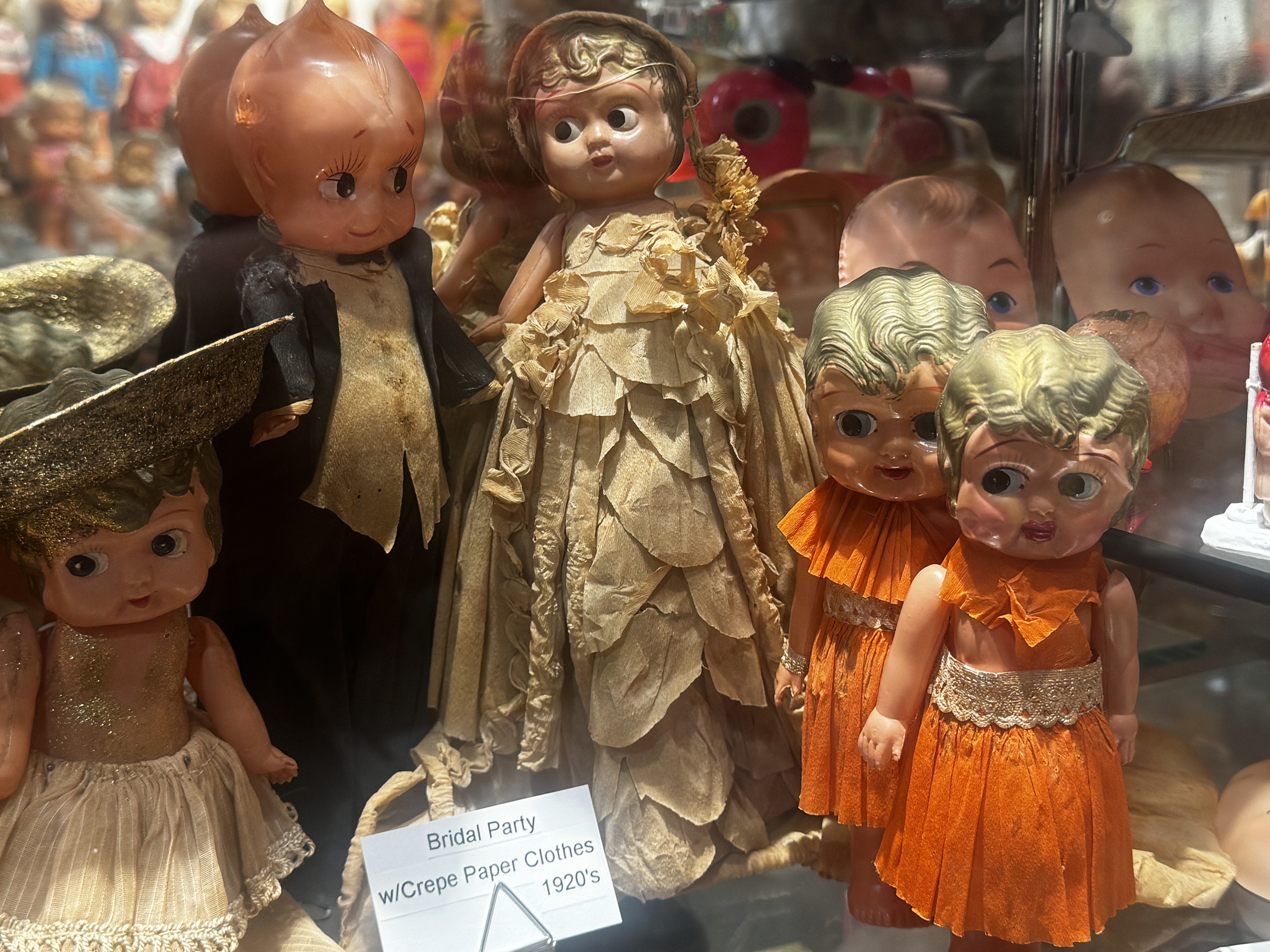
Celluloid's dominance could not last.
Its flammability and instability were significant disadvantages, while advances in polymer science provided manufacturers with safer and more versatile alternatives.
Materials including cellulose acetate began replacing nitrate-based celluloid in some applications. During the twentieth century, manufacturers gained access to an expanding family of synthetic plastics, including polystyrene, polyethylene and PVC.
Toy manufacturing changed again.
By the middle decades of the twentieth century, celluloid was increasingly being replaced by newer materials, although production did not cease everywhere at exactly the same time.
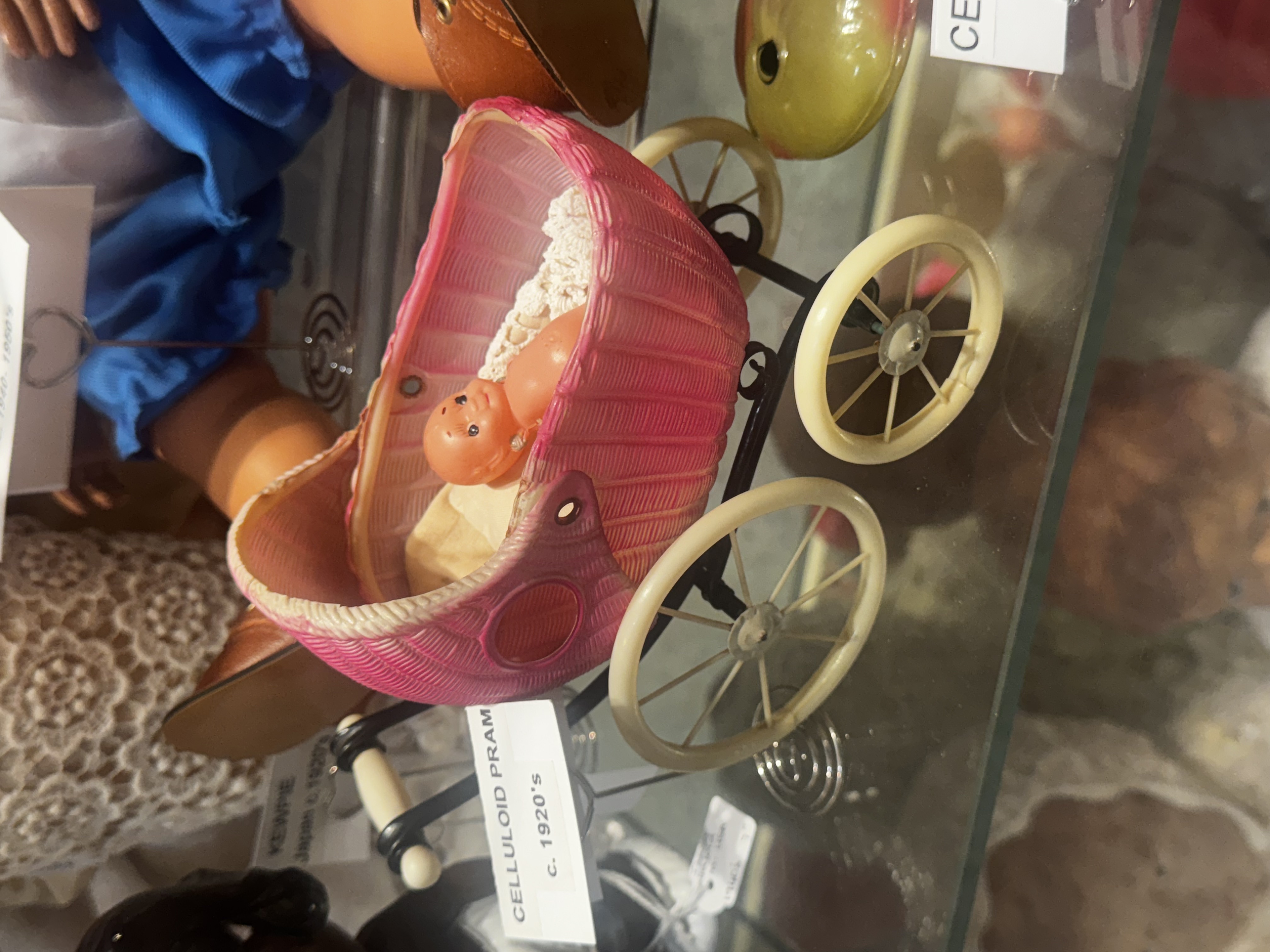
Celluloid occupies a fascinating position in the history of toys.
It belongs to the period between traditional materials and the plastics that would eventually transform almost every aspect of toy manufacturing.
For collectors, identifying celluloid can help establish when and where an object was manufactured. For museums, understanding the material is essential because its deterioration requires careful monitoring and appropriate storage.
But perhap sits greatest importance is what it tells us about innovation.
Manufacturers were searching for ways to make toys lighter, less fragile, easier to manufacture and accessible to more families. Celluloid provided an early answer—even if it ultimately created problems of its own.
At My Doll Cottage Museum, surviving celluloid dolls and toys help preserve this important stage in the evolution of play.
They may be extraordinarily lightweight, but historically, celluloid carries considerable weight.
With love
Shyloh
Tales from the youngest daughter of adoll collector — raised on Milo, Vegemite, and more antiques than a country op shop.