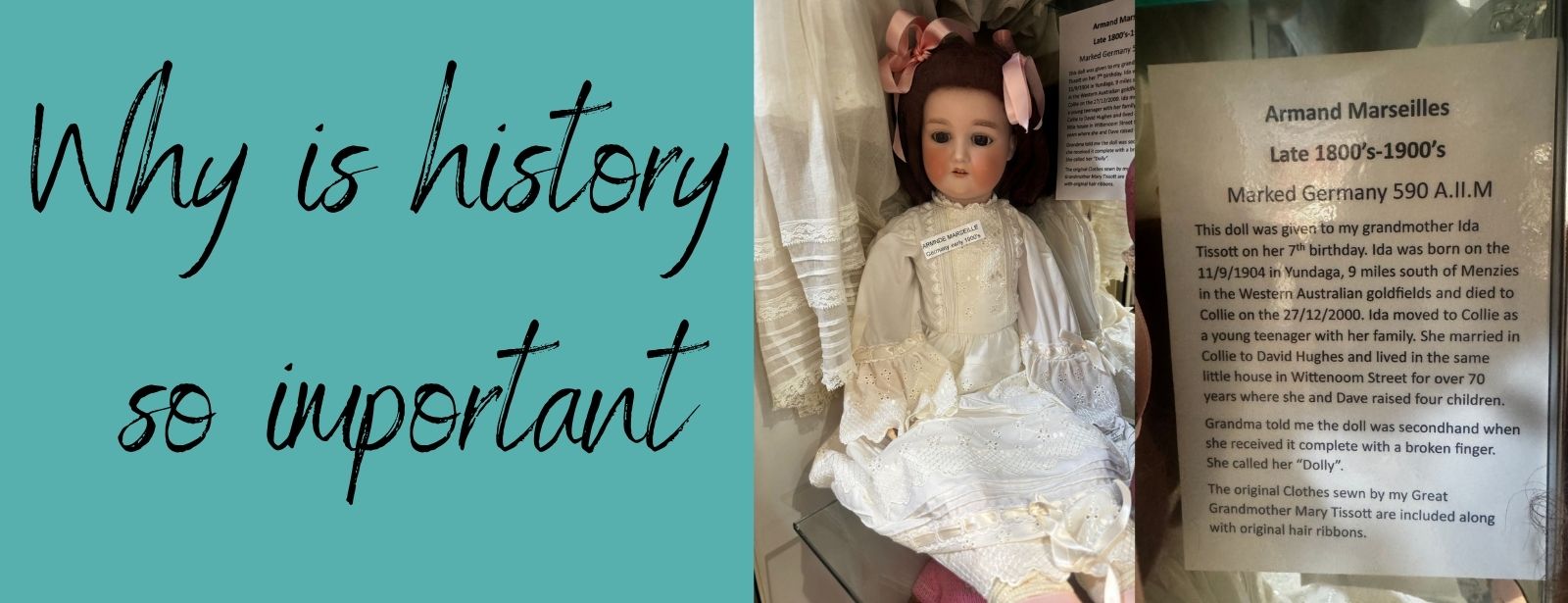
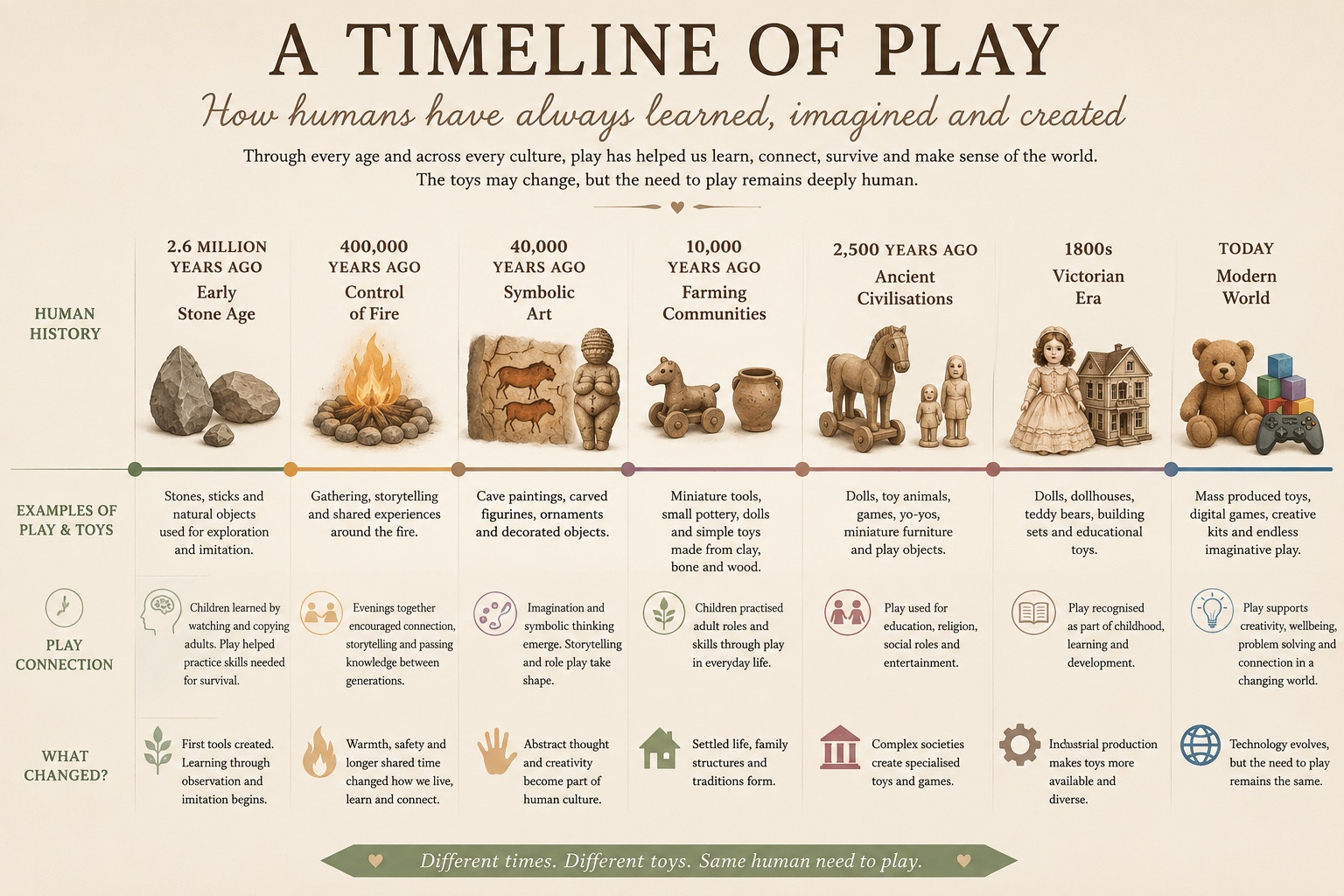
From ancient ritual objects to modern toys, this timeline shows that while materials and technology have changed, the way humans play, learn and imagine has remained remarkably the same.
For thousands of years, children and adults alike have created small versions of the world around them—animals, people, tools and homes. Whether carved from wood, shaped from clay, stitched from fabric or moulded from plastic, these objects were never just toys. They were a way to understand life, practise important skills, tell stories and connect with others.
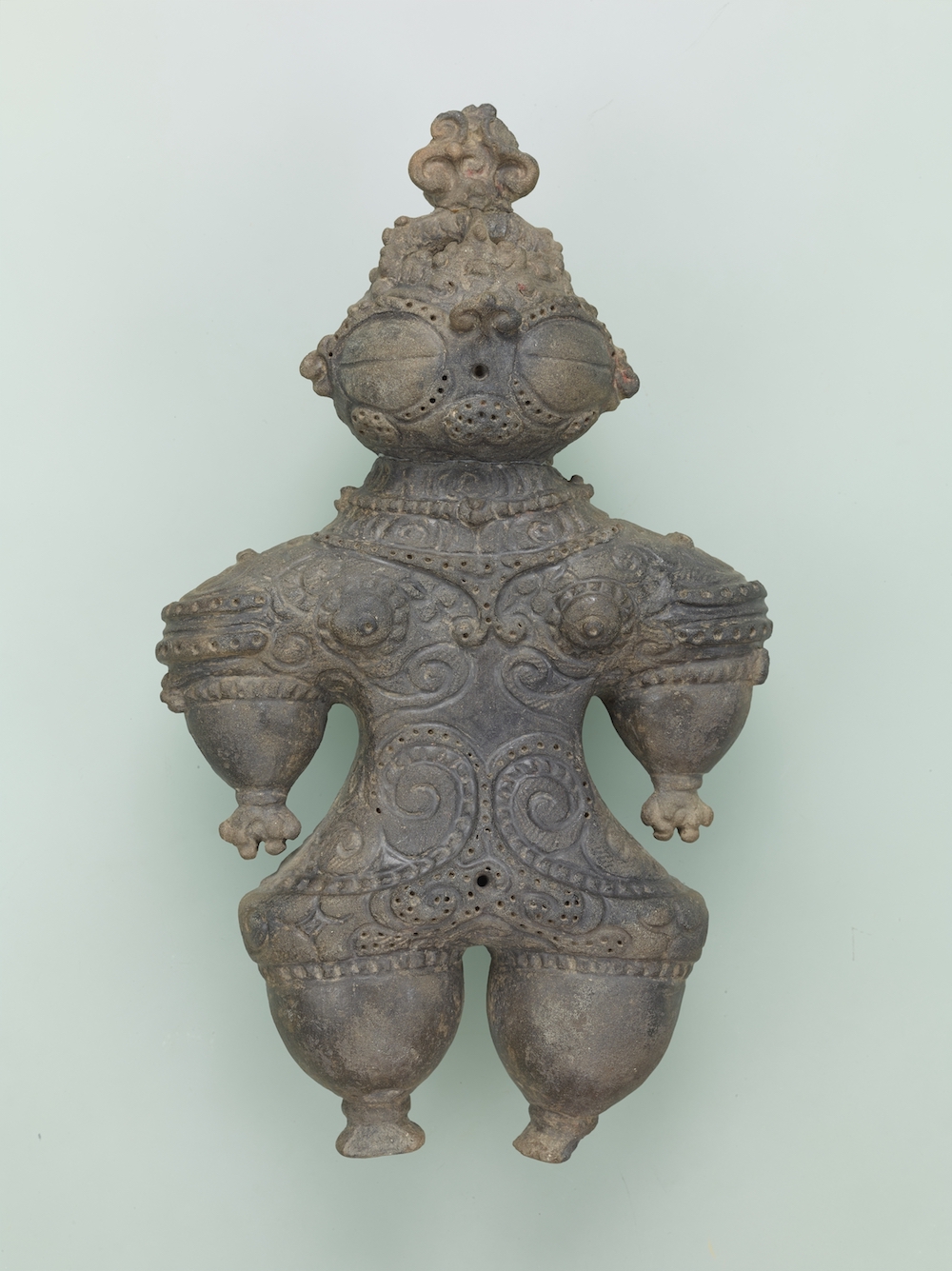
Modern research suggests that play is far older than civilisation itself. Long before humans built cities or wrote stories, our ancestors learnt by watching, experimenting and imitating those around them. Young children copied the actions of adults, practised using tools, explored their surroundings and developed social relationships through playful interaction. These behaviours helped prepare them for the challenges of adult life and strengthened the bonds that held communities together.
Play is not unique to humans. Many mammals and birds engage in playful behaviour, using it to develop coordination, communication and problem-solving skills. What makes humans different is the extraordinary way we transformed play into culture. Through imagination, storytelling, creativity and symbolic thinking, simple games evolved into traditions, education and eventually the toys and games we recognise today.
What changes across time is not the instinct to play, but the materials available and the meaning we place on it. Early objects were often connected to ritual, belief or survival. As societies became more complex, play increasingly reflected family life, occupations, religion and social values. By the nineteenth and twentieth centuries, childhood itself was recognised as a distinct stage of life, giving rise to specialised toys, educational games and an entire industry devoted to children's play.
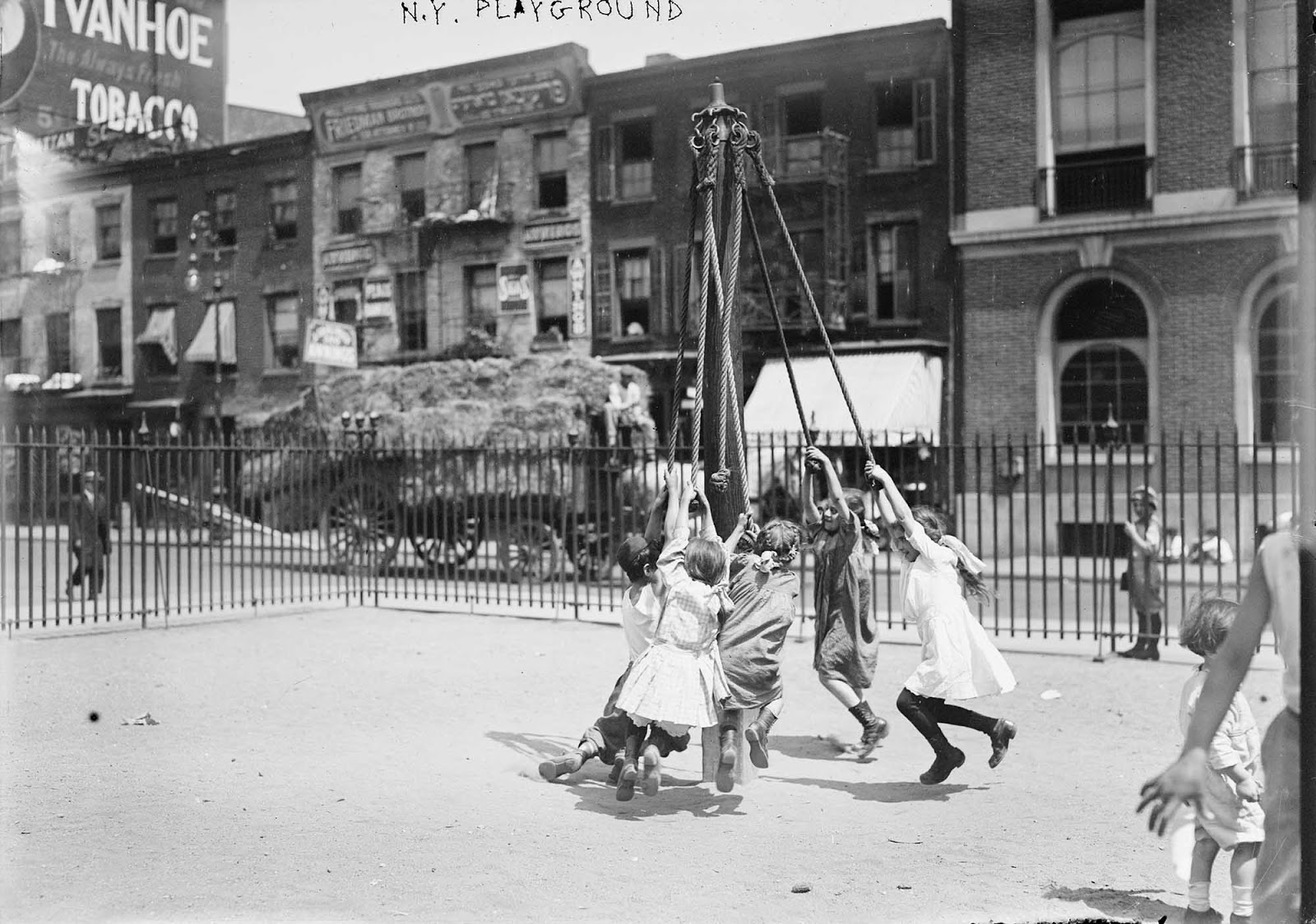
Our timeline is more than a history of toys. It is a journey through human development, showing how changes in technology, culture and society influenced the way children learnt and played. Each milestone reminds us that while the objects themselves have changed, the curiosity, creativity and imagination behind them remain deeply human.
c. 2.6 million years ago– Early Stone Tools
Why it matters: The earliest stone tools demonstrate that early humans were making and using technology. Archaeological and experimental research suggests that these skills were learned through social transmission, including observation, imitation and teaching. For young members of these communities, watching and practising adult skills would have been an important part of learning.
Further Reading
Smithsonian Human Origins Program – Early Stone Age tools
Experimental research showing imitation, gestures and teaching improve learning ofstone-tool making.
c. 400,000 years ago –Control of Fire
Why it matters: Regular control of fire changed daily life. It provided warmth, protection and opportunities for groups to spend more time together after dark. Anthropologists suggest these shared evenings encouraged conversation, teaching, storytelling and the passing of knowledge between generations.
Evidence
Oxford Academic overview of early human cognition and fire control.
Richard Wrangham's book Catching Fire
c. 40,000 years ago –Symbolic Art
Why it matters: Cave paintings, carvings and personal ornaments reveal increasingly sophisticated symbolic thinking and imagination. These abilities underpin storytelling, artistic expression and the creation of miniature objects—skills that would later be reflected in dolls, toys and other forms of imaginative play.
Evidence
Oxford Academic discussion of symbolic reasoning and planning.
Archaeological evidence for ornaments and symbolic behaviour in the Upper Palaeolithic.
c. 10,000 years ago – Farming Communities
Why it matters: As people settled into permanent communities, children increasingly learnt through everyday participation in family and community life. Miniature tools, small pottery vessels and simple toys found at archaeological sites suggest that play helped children practise the skills they would need as adults.
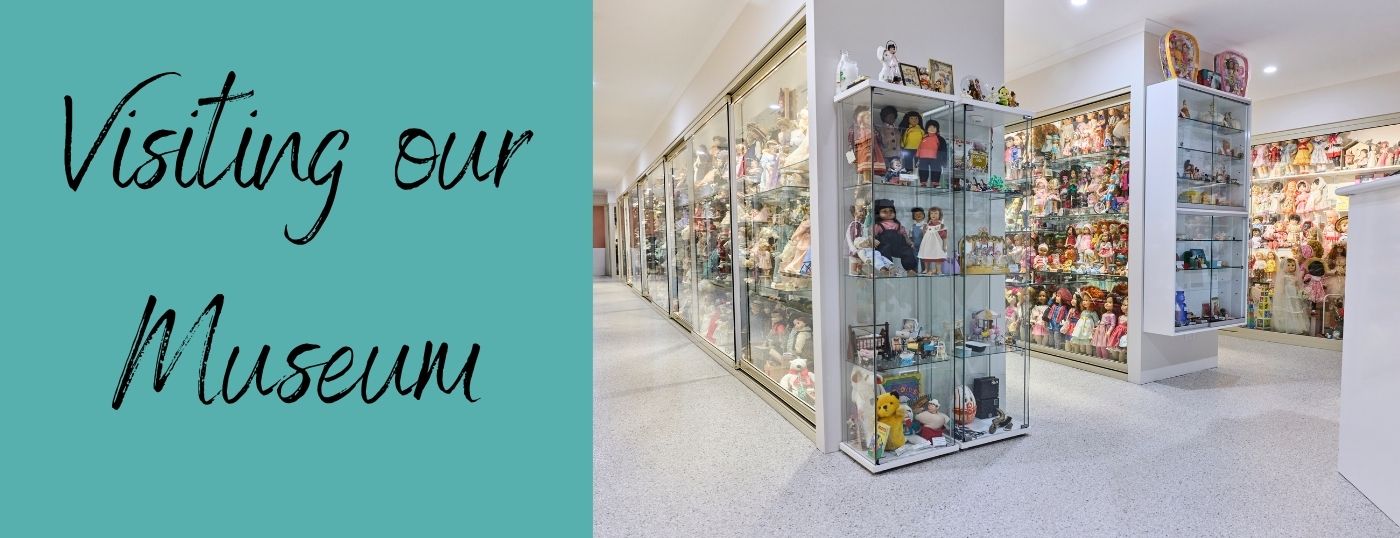
At My Doll Cottage Museum, every doll, toy and miniature object represents one small chapter in this much longer story. Together they remind us that play is not simply entertainment—it is one of humanity's oldest and most enduring ways of learning, creating and understanding the world.
With love
Shyloh
Tales from the youngest daughter of a doll collector — raised on Milo, Vegemite, and more antiques than a country op shop.