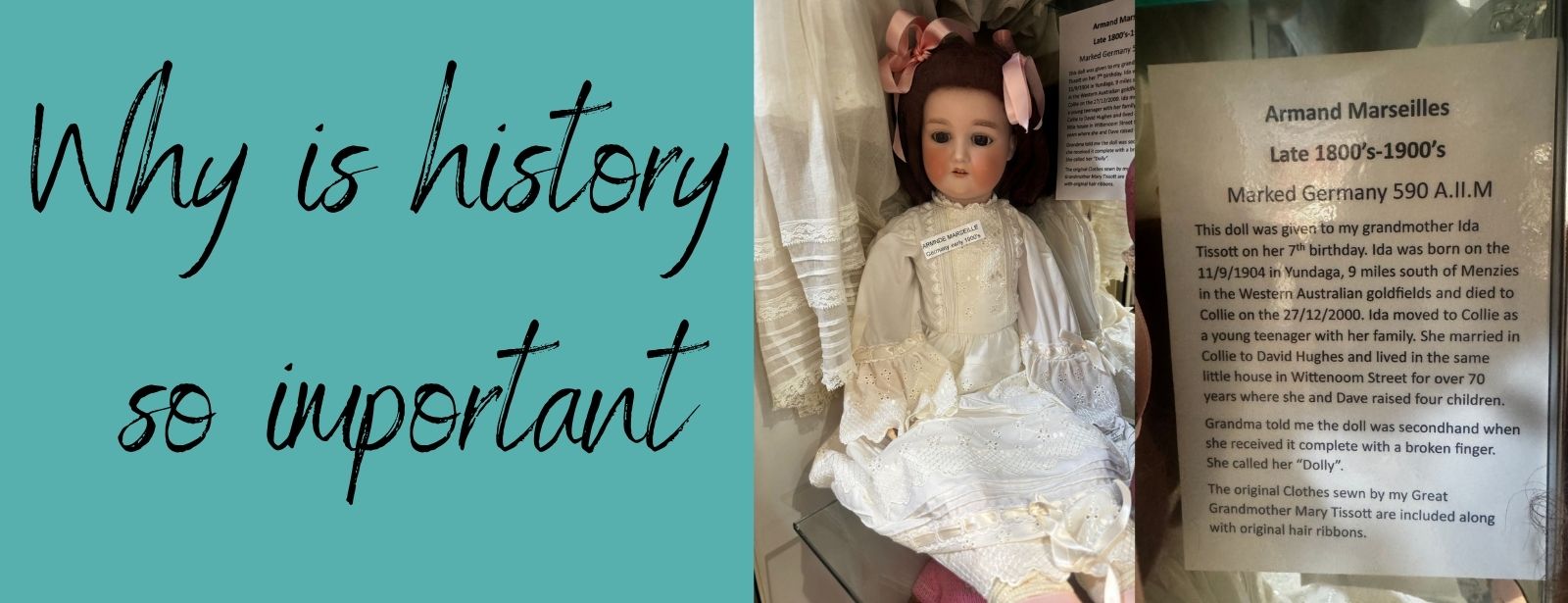
Who originally owned it? Where did it come from? Was it purchased in Australia, brought here from overseas or passed down through generations of a family?
These might seem like simple questions, but the answers can be extremely valuable to our research.
At My Doll Cottage Museum, we believe the value of an artefact is not measured solely by its age, rarity, condition or monetary worth. Its history, the people who owned it and the journey it has taken can be equally important.
In some cases, that history may be the only survivingclues about where and when an item was made.
Provenance is the history of an object's origin, ownership and journey over time.
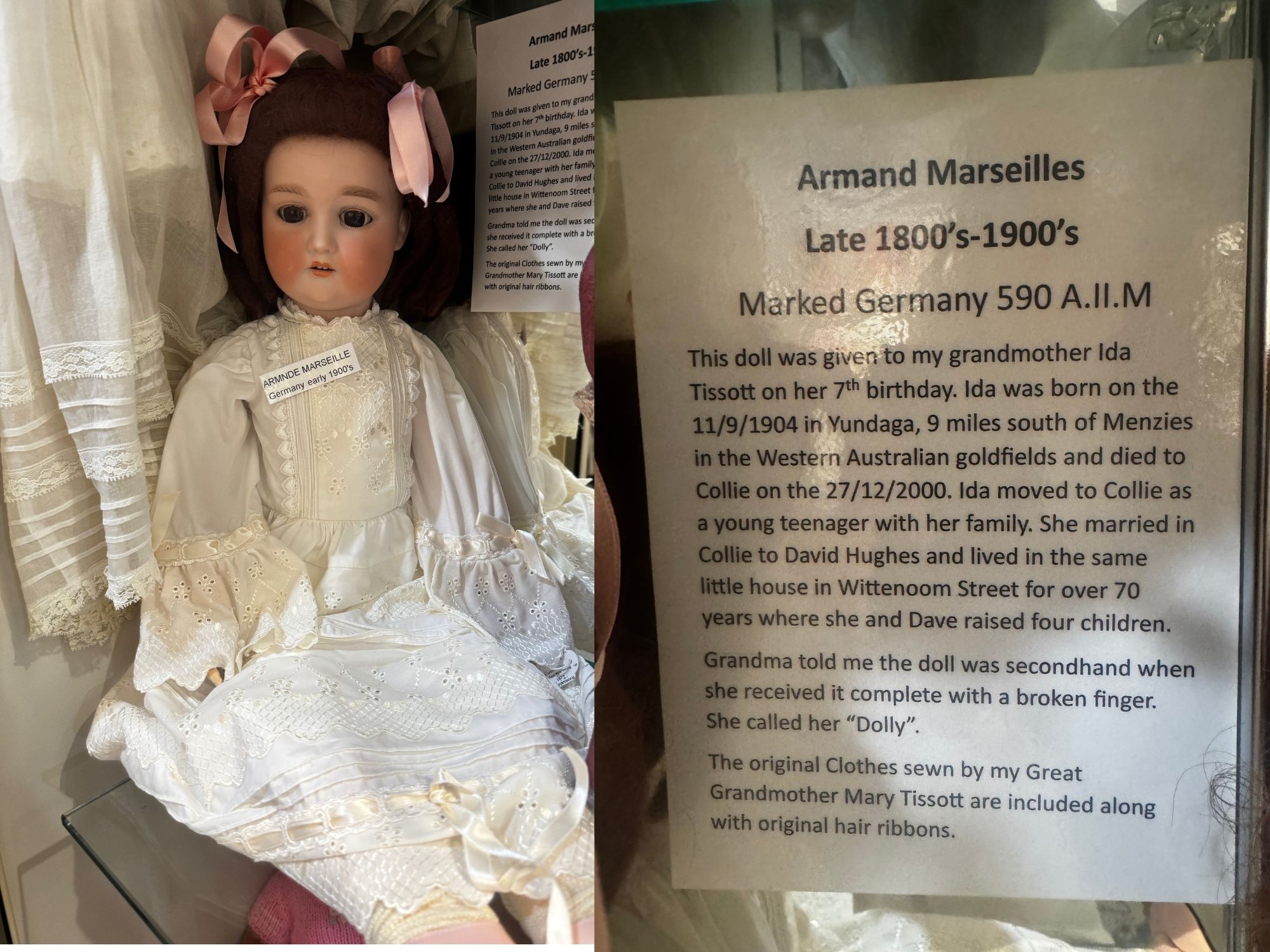
For a doll or toy, this might include who originally owned it, where it was purchased, when it entered a family and how it was passed from one generation to another.
Sometimes this information is supported by photographs, letters, receipts, advertisements or original packaging. Other times, it comes from memories shared by family members.
Even when these memories cannot be independently verified, they can provide important clues and starting points for further research.
Today, we are accustomed to finding manufacturers' names, country-of-origin labels, trademarks and product information on almost everything we purchase.
Historically, this was not always the case.
Many early dolls and toys were produced without permanent identifying marks. Others carried paper labels, printed stamps, stickers or markings on packaging that have since disappeared.
As a result, identifying an early artefact can be particularly challenging.
A doll may have no manufacturer's name, mould number or country-of-origin marking. Its clothing may have been replaced, its original box discarded and its appearance altered through years of use.
This is where provenance becomes especially valuable.
If we know a doll belonged to a child born in 1885, was received as a Christmas gift around 1892 and remained in the same family, we have a useful starting point for establishing its age.
If we also know where the family lived or where the doll was purchased, we may be able to investigate local retailers, advertisements and historical trade records.
These details do not necessarily establish the manufacturer, but they can help narrow down the possibilities.
Not every historically significant doll or toy is rare or expensive.
A mass-produced doll may have little monetary value, yet its documented history could tell us something important about Australian childhood, family life or retail history.
For example, knowing that a doll was purchased from a particular country-town shop in the 1920s may help establish what products were available in regional Australia.
Knowing that a toy was repaired by a parent during the Depression may provide insight into how families cared for and reused possessions.
A photograph of a child holding a doll can sometimes help establish its age, identify its original clothing or confirm that it belonged to a particular family.
These details help us understand not only the object itself but also the people and communities associated with it.
An object's historical significance and its commercial value are not always the same thing.
When completing our Artefact Enquiry Form, we encourage you to provide whatever history you know about your item.
Useful information might include:
You don't need to have all this information.
Even something as simple as 'It belonged to my grandmother, who was born in 1912 and grew up in Collie' gives us a useful starting point.
If you're uncertain about a detail, please tell us. We would much rather receive an approximate date or an unconfirmed family recollection than have potentially valuable information omitted.
Unfortunately, the history of many dolls and toys is lost as they change hands.
An item may pass through several generations before being sold, donated or discovered in a second-hand shop.
Without documentation, the names of its owners, where it was purchased and the memories associated with it can disappear.
Once lost, these details may be impossible to recover.
This is why we encourage families to record the history of their treasured possessions, even if they have no intention of selling or donating them.
A simple written note, together with photographs and the names of previous owners, may become valuable historical documentation for future generations.
When My Doll Cottage Museum requests an item's history, we are not simply asking out of curiosity.
We are gathering information that may help us identify the object, investigate its origins, understand its significance and preserve its story.
For items offered for donation or sale, this information also helps us assess how the object may relate to our existing collection and research.
For research enquiries, provenance can provide clues that are not visible in photographs or manufacturer's markings.
Not every enquiry will lead to a definite identification, but the more reliable information we have, the better our starting point.
So, when we ask about the history of your doll or toy, please don't feel that the information is unimportant simply because the item is common, damaged or of little monetary value.
Sometimes the smallest detail provides the missing piece of a much larger historical puzzle.
Read: How to Photograph Your Dolls and Toys for Museum Enquiries
Download Our Artefact Enquiry Form
Thank you for helping My Doll Cottage Museum preserve not only the objects of childhood, but also the memories, stories and history that make them meaningful.
With love
Shyloh
Tales from the youngest daughter of adoll collector — raised on Milo, Vegemite, and more antiques than a country op shop.