
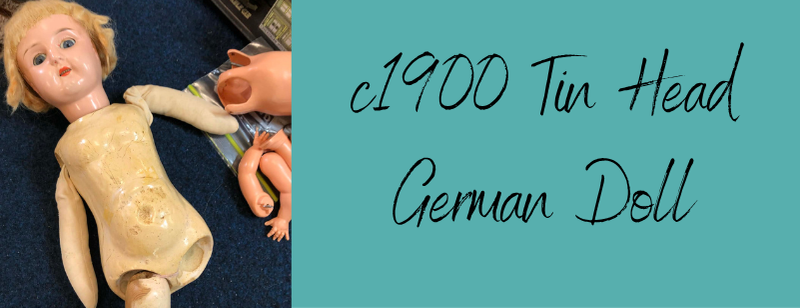
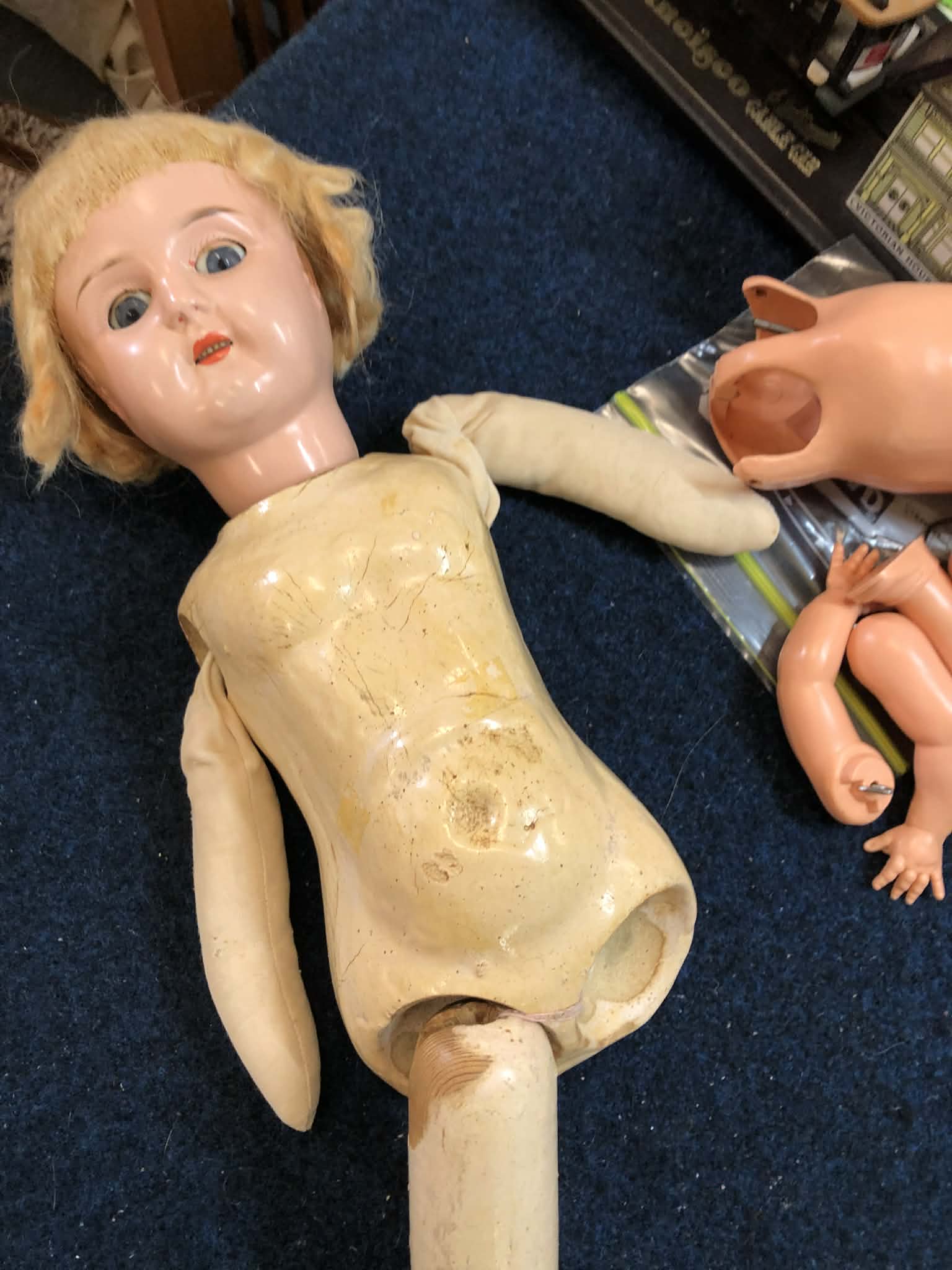
At first glance, it is the head that draws attention. Made from thin stamped metal and painted with delicately rendered facial features, the tin head reflects a period when manufacturers were experimenting with materials that could be produced efficiently while still offering expressive character. The softly modelled cheeks, painted lips, and sleeping eyes are typical of German production at the turn of the century.
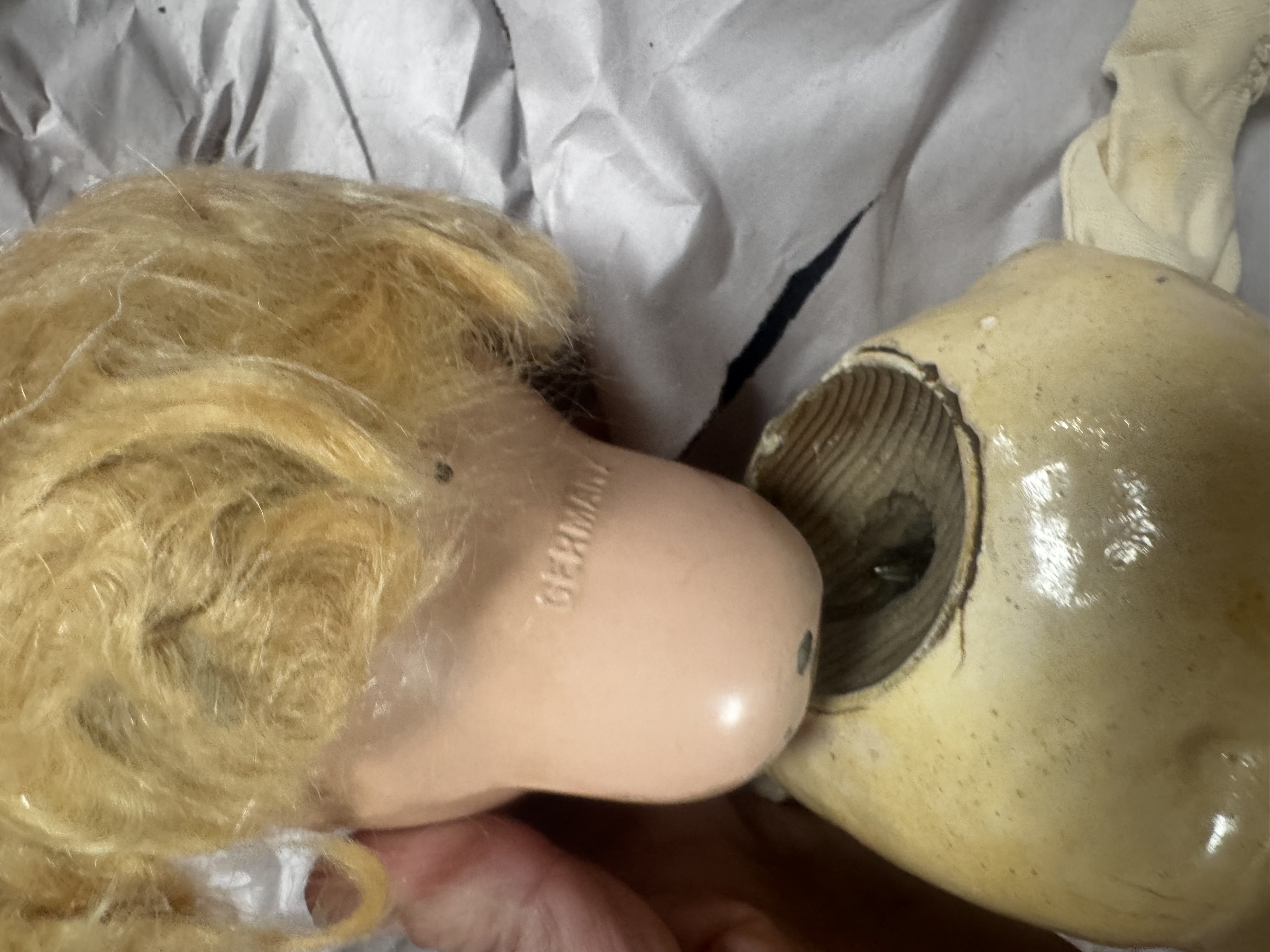
The head is marked “Germany”, placing it firmly within the export period when German dollmakers dominated the international market.
What makes this doll especially poignant is what is missing.
The original arms and legs are no longer present, and the body shows clear evidence of having once supported limb attachments. The remaining torso construction suggests that this doll would originally have had a wooden or composition body, possibly with jointed wooden limbs or early composite arms and legs. Over time, those parts were either lost, damaged beyond repair, or removed during earlier attempts to keep the doll usable.
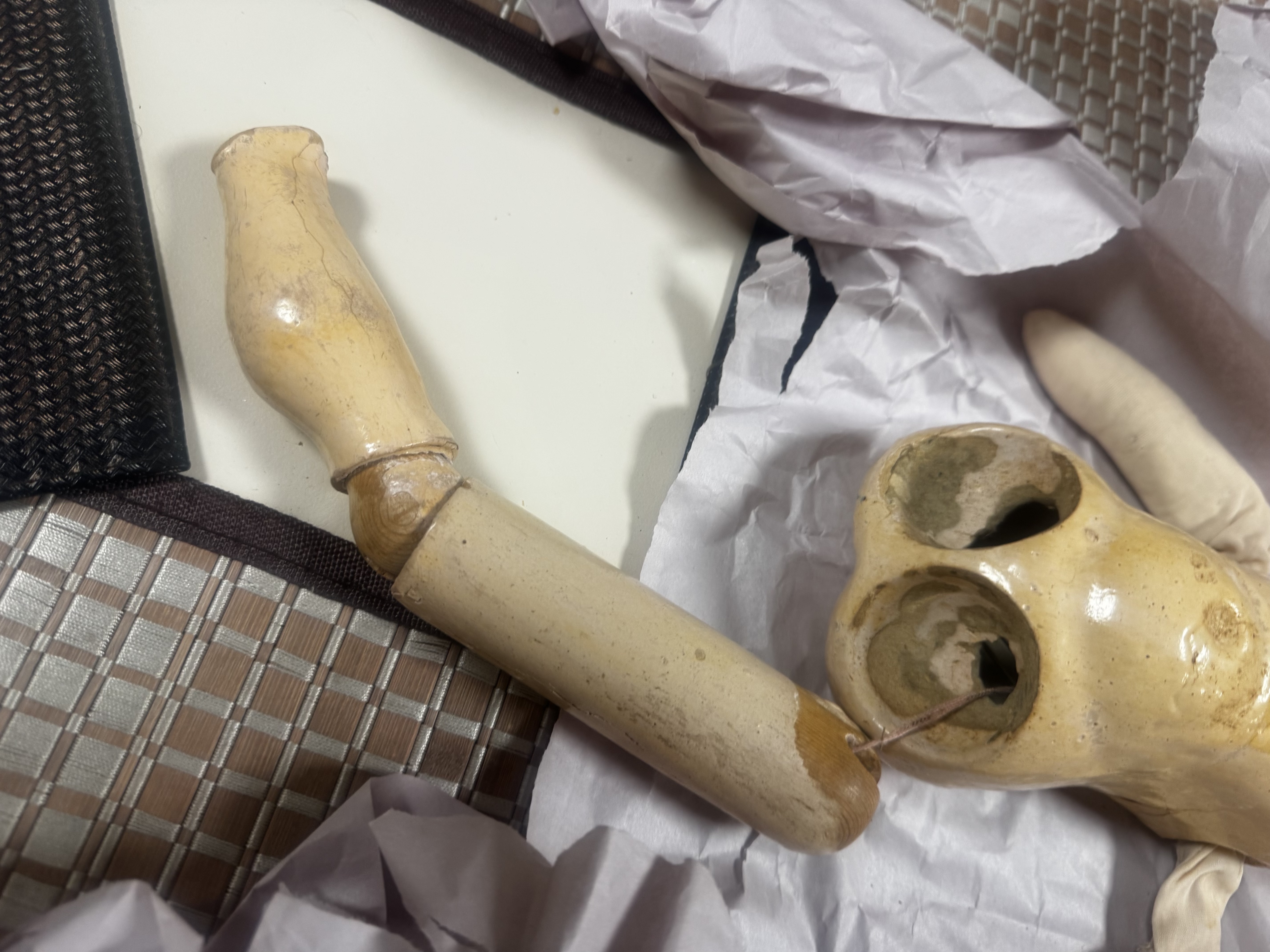
The interior of the body shows wear patterns and cord channels consistent with early stringing methods. These details help confirm the age and original construction, even in the absence of complete limbs.
Rather than diminishing the doll, this absence tells its own story.
With love
Shyloh
Tales from the youngest daughter of a doll collector — raised on Milo, Vegemite, and more antiques than a country op shop.
Read More: Visit to the Doll Doctor