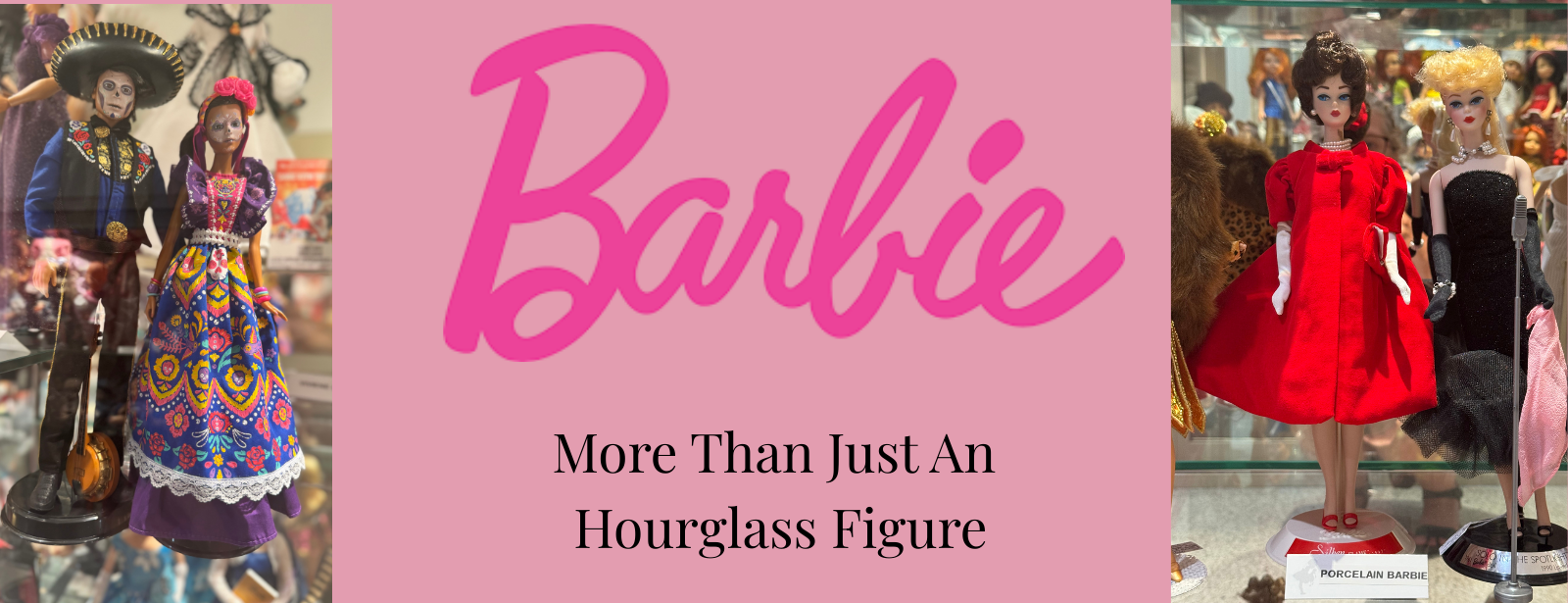
For decades, Barbie has sparked debate. Critics point to her proportions. Supporters point to her possibilities. But when we step back and look at her through the lens of toy history, something more nuanced appears.
When Barbie was introduced by Mattel in 1959, she disrupted the nursery. Until then, most dolls were babies. Girls practised nurturing. They played “mother.” Barbie shifted the narrative. She was not an infant to be cared for — she was an adult with her own wardrobe, income, ambitions and social life.
Yes, she had a permanent boyfriend. But she never married.
Yes, she cared for her younger sisters. But she rarely had children of her own.
Instead, she built careers.

As children, we were shown that there were endless possibilities because Barbie seemed to do them all. Nothing was too hard. It did not matter how she looked when she was piloting a plane or running a business. Through play, she quietly suggested that we could be whoever we wanted to be.
We also need to remember something important: a child does not see her body, blonde hair or figure as sexualised. It is adults who later attach those meanings. As a child, you simply see that she is pretty, has an amazing wardrobe and can do anything.
After being played with, her hair is no longer perfect. Her clothes are creased. She often no longer has matching shoes. And yet, she is still perfect in the way that matters — she can still do anything.
Over the years, Barbie has been a doctor, pilot, astronaut, veterinarian, architect, presidential candidate and business executive. Long before many of these professions were common for women in the real world, Barbie was already there in miniature form, quietly telling children they could do anything they dreamed.
That is not insignificant.
While her physical appearance drew criticism — influencing later changes such as the post-2000 Fashionistas line — her professional independence shaped play patterns for generations. Children did not just dress her for a date. They sent her to work. They placed her in offices. They launched rockets. They built laboratories. She cared for animals and even “fixed” other dolls.
This video from Beauty in a Box looks at her over 250 careers.
Barbie expanded imaginative rehearsal beyond domestic life. She allowed children to imagine a future in a world that often suggested limits based on sex, geography, finance or class.
This does not erase the cultural debates surrounding beauty standards. Those conversations remain valid and important. But within the context of play and imagination, Barbie represented something broader: autonomy.
She earned money.
She owned property.
She maintained long-term relationships without traditional expectations.
She functioned independently.
In many households, Barbie was the first female “adult” figure children controlled who was not defined by motherhood.
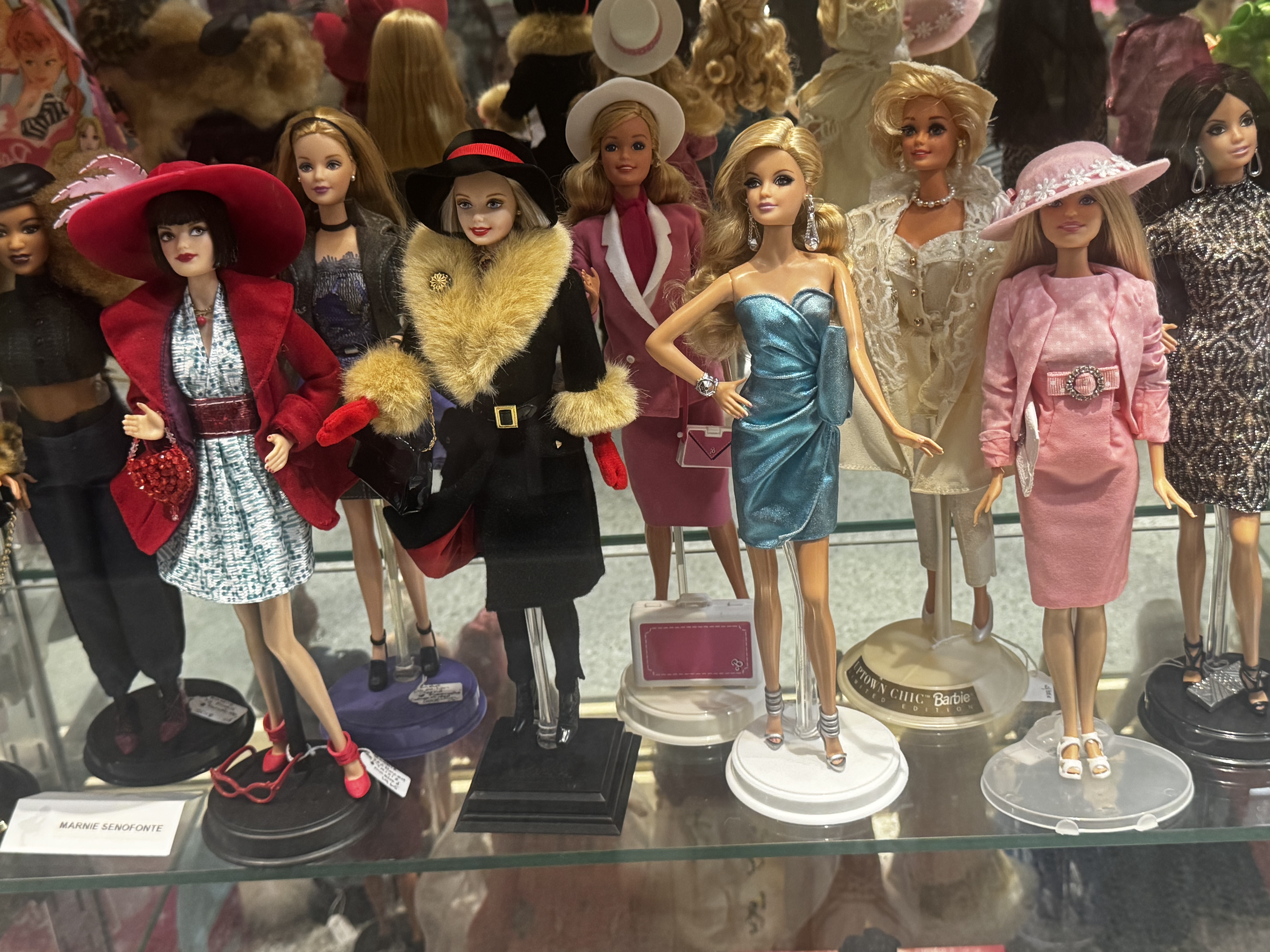
At My Doll Cottage, our collection showcases Barbie’s careers and style through the decades. From early classics to limited editions, famous icons and fantasy designs — along side the dolls many of us grew up playing with — the display reflects how she evolved along side society. Ken stands beside her, along with her friends, pets and sisters — Skipper, Kelly and Stacie — forming a world that extended far beyond the original fashion model.
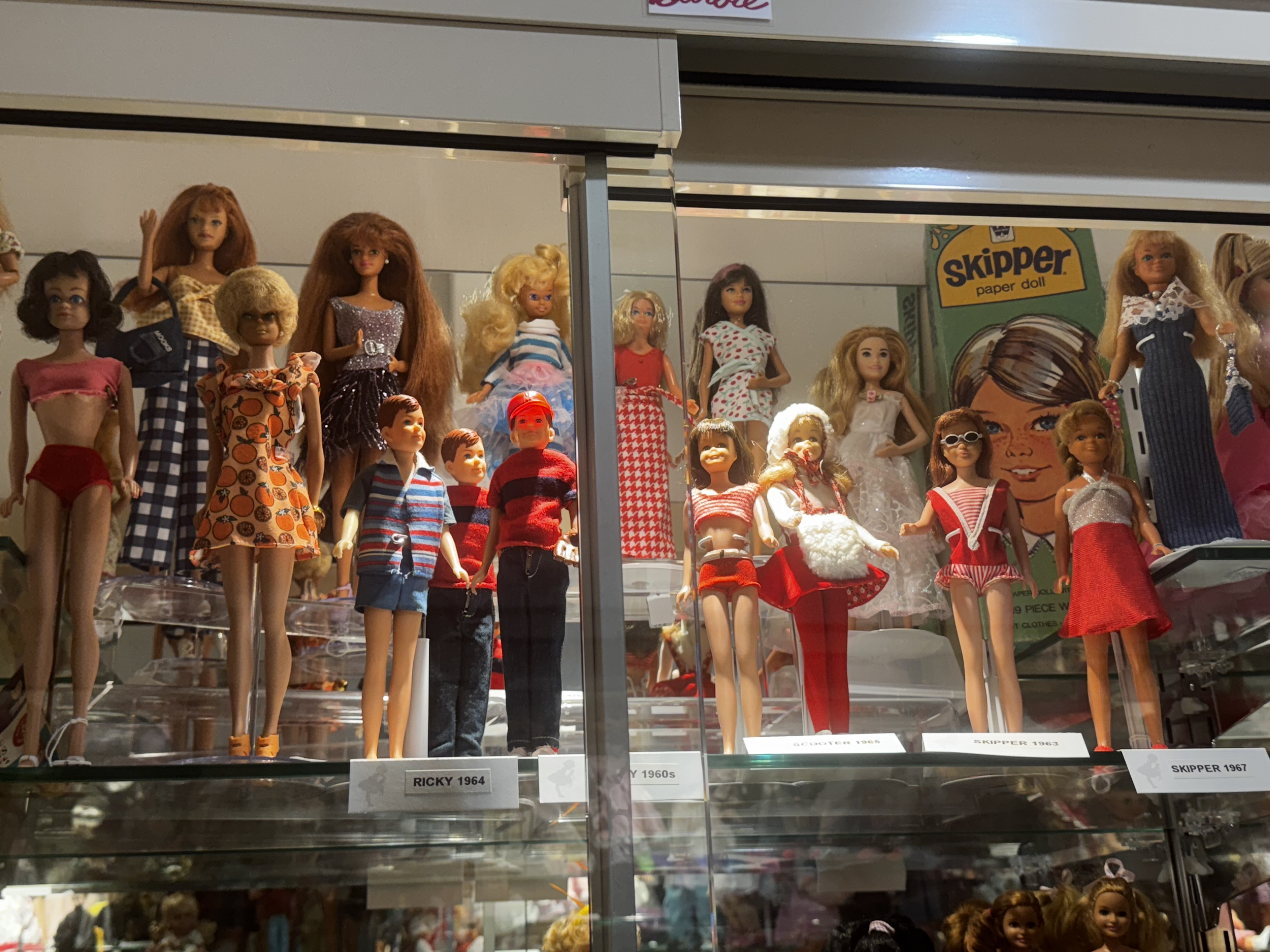
Play evolved from nurturing to becoming.
Barbie did not replace traditional roles. She added options.
And for many children, that made all the difference.
With love
Shyloh
Tales from the youngest daughter of a doll collector — raised on Milo, Vegemite, and more antiques than a country op shop.