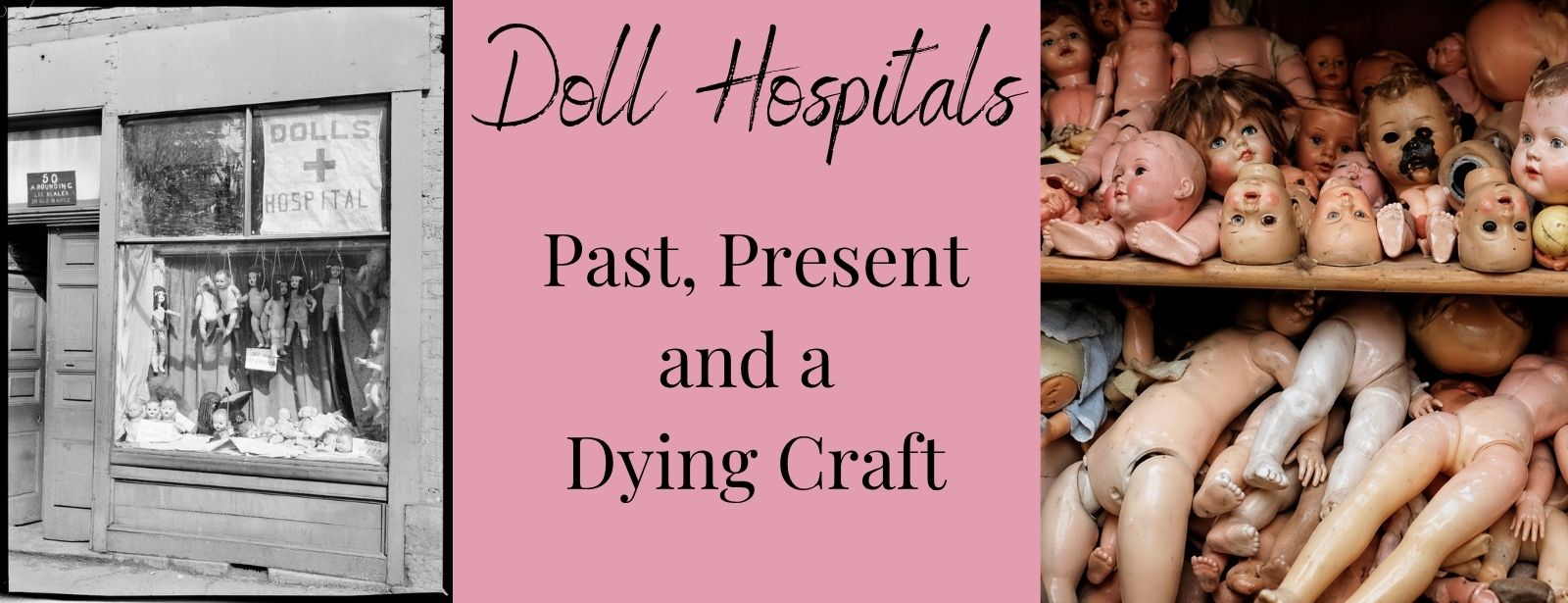
While much attention is given to how dolls were made, far less is recorded about how they were cared for once they were damaged or worn through use. This blog explores the role of doll hospitals, their historical significance, and why these specialised repair services remain important today—particularly as many of these traditional skills begin to disappear.
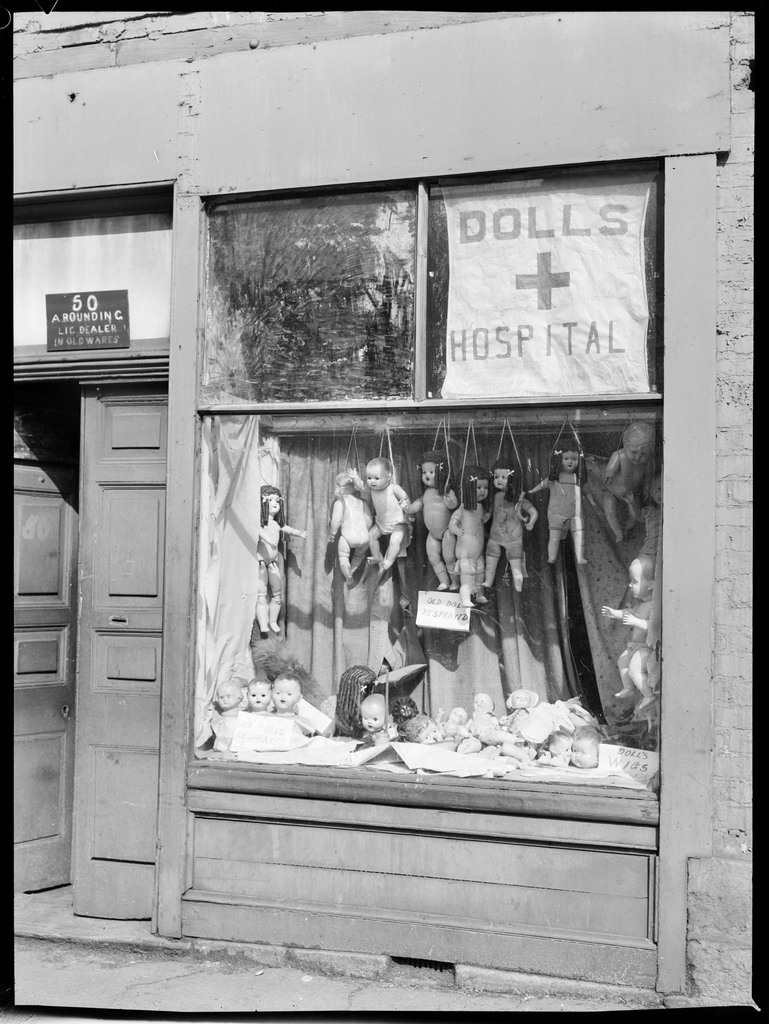
Doll hospitals have existed since the late 19th and early 20th centuries, emerging along side the rise of mass-produced dolls and toys. These early repair institutions recognised that dolls were more than playthings—they were companions, comfort objects, and deeply sentimental items.
In Australia, doll hospitals appeared in major cities such as Melbourne and Sydney in the early 1900s. Families would bring damaged dolls to be repaired by skilled crafts people who understood bisque, composition, leather bodies, cloth stuffing, and early mechanical features. These services ensured beloved toys could continue their lives rather than be discarded.
Doll hospitals reflected a broader culture of repair, care, and craftsmanship—long before conservation became a formal discipline. Their work laid early foundations for how we now approach preservation of childhood artefacts in museum collections.
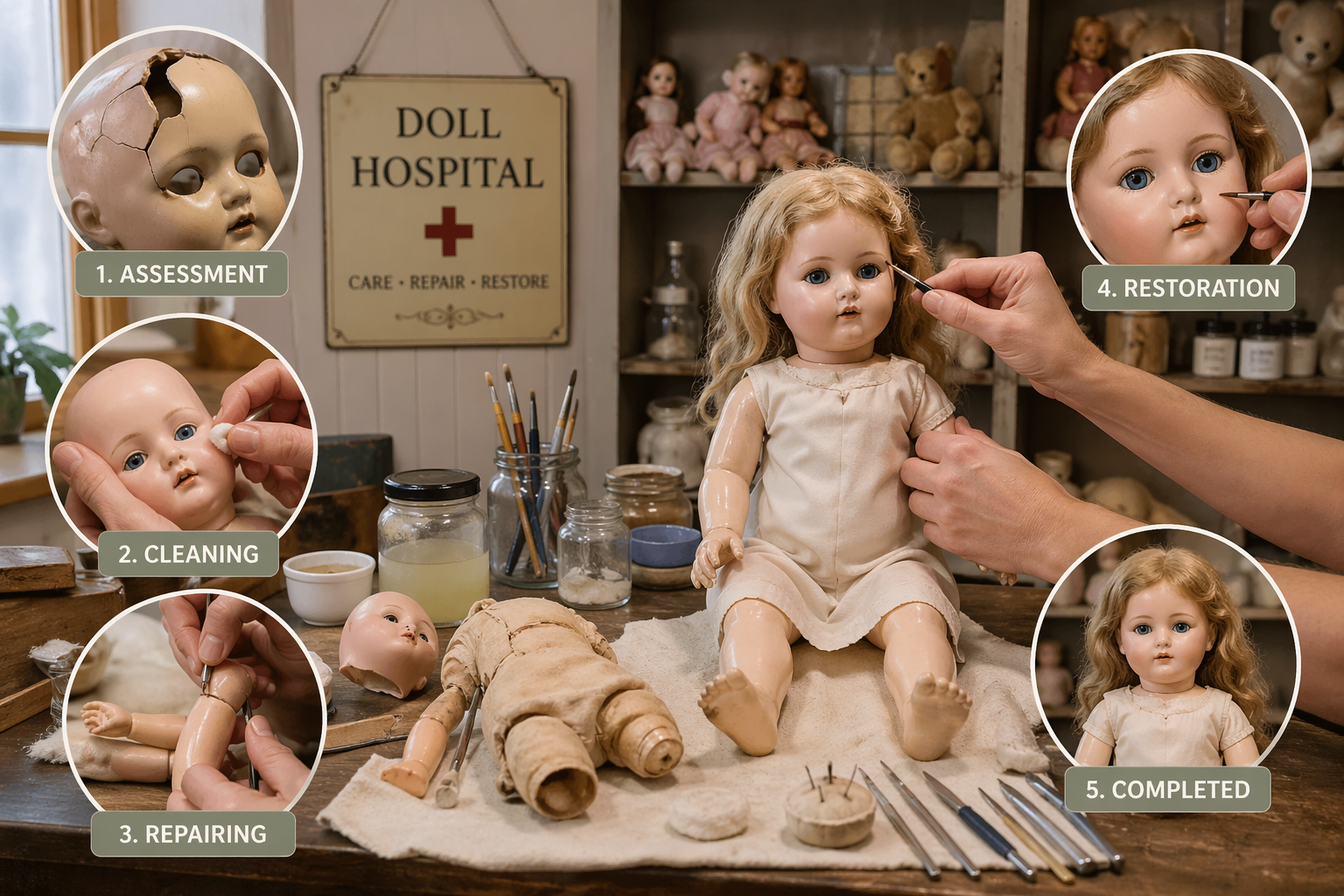
A doll hospital is a specialised workshop dedicated to assessing, stabilising, and repairing dolls and toys using historically appropriate and conservation-aware techniques.
Unlike general toy repairs, doll hospitals work across a wide range of materials including bisque, china, composition, papier-mâché, early plastics such as celluloid, leather and cloth bodies, straw or sawdust filling, and mechanical features like crier mechanisms and walking systems.
Today, doll hospitals play an important role for collectors, families, and museums. They help preserve originality, maintain historical integrity, and ensure repairs do not cause long-term damage. For museums in particular, doll hospitals provide expertise that bridges practical repair and conservation standards.
In an era of disposable products, doll hospitals remind us that cherished objects can be cared for, respected, and preserved for future generations.
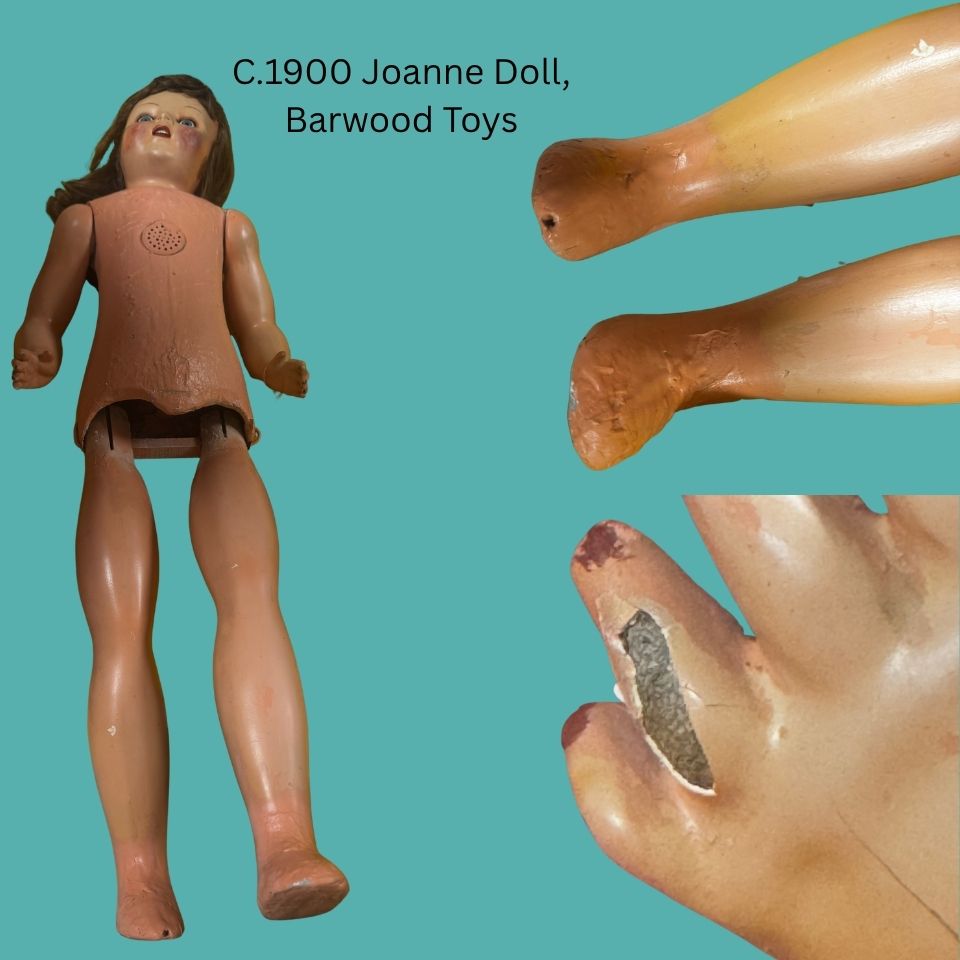
The image above shows the “before” condition of a c.1900's 36-inch Joanne doll by Barwood Toys, Melbourne. This walking doll has a wooden internal mechanism and had undergone earlier repairs prior to coming into the museum’s care.
We took her to a Perth-based doll hospital to seek advice on her condition. The existing surface repairs appear to be consistent with early to mid-1900s repair methods, when dolls were often fixed at home or by unskilled repairers. Due to the materials used in dolls of this age—typically a combination of composition and papier-mâché—it was recommended that, although the earlier repairs appear rough, they are stable. Attempting to remove them could risk further damage to the original structure.
For this reason, the approach focused on stabilisation rather than replacement. The damaged finger was carefully repaired, and the loose arm joints were tightened to allow the doll to be safely handled and displayed.
Once dressed, the earlier surface repairs are not visible. She is now awaiting a new outfit before being added to the display alongside the later hard plastic Joanne dolls in the collection.
The skills required to repair antique dolls are becoming increasingly rare. Many traditional techniques—such as straw stuffing, papier-mâché construction, early plastic repair, and mechanical doll restoration—are no longer widely taught.
Modern dolls are often in expensive and designed to be replaced rather than repaired, reducing demand for specialist skills. As a result, many experienced doll repairers now work part-time or have retired, with limited opportunities for apprenticeships or formal training.

In Western Australia, The Dolly Doctor in Perth is recognised as one of the few remaining full-time doll hospitals, continuing a broad range of traditional repair techniques. While other skilled repairers exist in the region, many operate on a limited or part-time basis.
A recent restoration highlights the level of skill involved in this work. The image above shows the before and after of a repaint carried out by Colin at The Doll Doctor. When the doll first came into our care, it had previously been repainted; however, the work was not stable and the paint had begun to flake away.
By carefully examining the doll, Colin was able to locate an original section of paint hidden beneath the neck join. This allowed him to accurately match the original colour and finish. At the time of drop-off, we had not been able to confirm the maker, as the original tag was extremely faded, with only a faint impression remaining.
Through the restoration process, Colin also assisted with identification. The doll has now been confirmed as a 1921 Jackie Coogan doll by Horsman Dolls, still retaining its original clothing.
“Jackie” has since been redressed and returned to display, now preserved for many more generations to enjoy.
The decline of this trade places heritage dolls at risk. Without skilled repairers, unique dolls and toys may deteriorate beyond recovery. Preserving these skills is essential—not only to save the objects themselves, but to keep alive the craftsmanship and cultural knowledge behind them.
With love
Shyloh
Tales from the youngest daughter of a doll collector — raised on Milo, Vegemite, and more antiques than a country op shop.