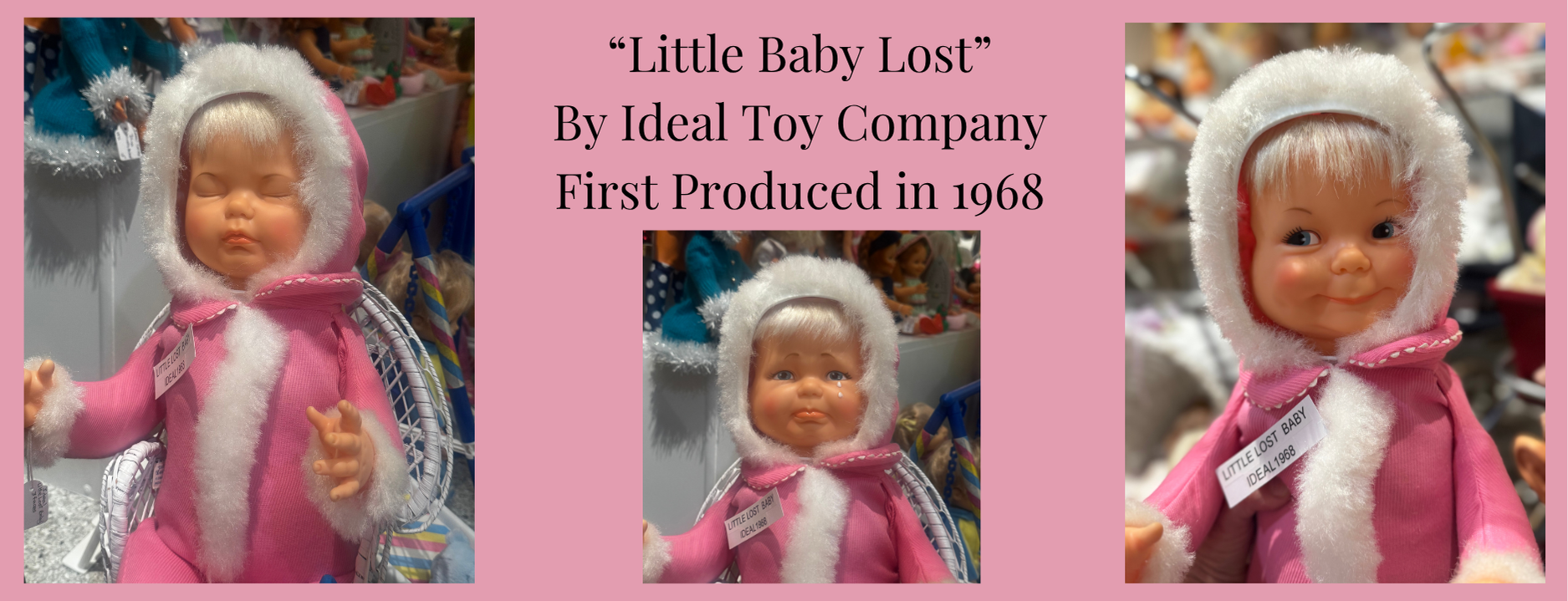
Throughout history, most dolls were designed with serene or neutral expressions—a blank canvas for a child’s imagination. But by the mid-20th century, manufacturers began experimenting with moulds that portrayed distinct emotions. A single collection might include a smiling child, a crying baby, or a sleepy toddler, each sculpted to evoke empathy and realism.
This shift reflected the changing view of childhood: play wasn’t just about beauty or perfection, but about nurturing and caring. Dolls that could “cry,” “sleep,” or look “lost” helped children explore empathy through pretend play.
In the museum’s video display on YouTube you can see us demostrating these dolls below:
• Little Lost Baby by Ideal Toy Company (USA, circa 1960s):
This doll’s sad, tearful face captures the heartbreak of being “lost.” With downturned lips and sorrowful eyes, it was designed to stir protective instincts. Ideal, a major American toy manufacturer, was known for blending realism with play value—creating dolls that looked and felt like real children.
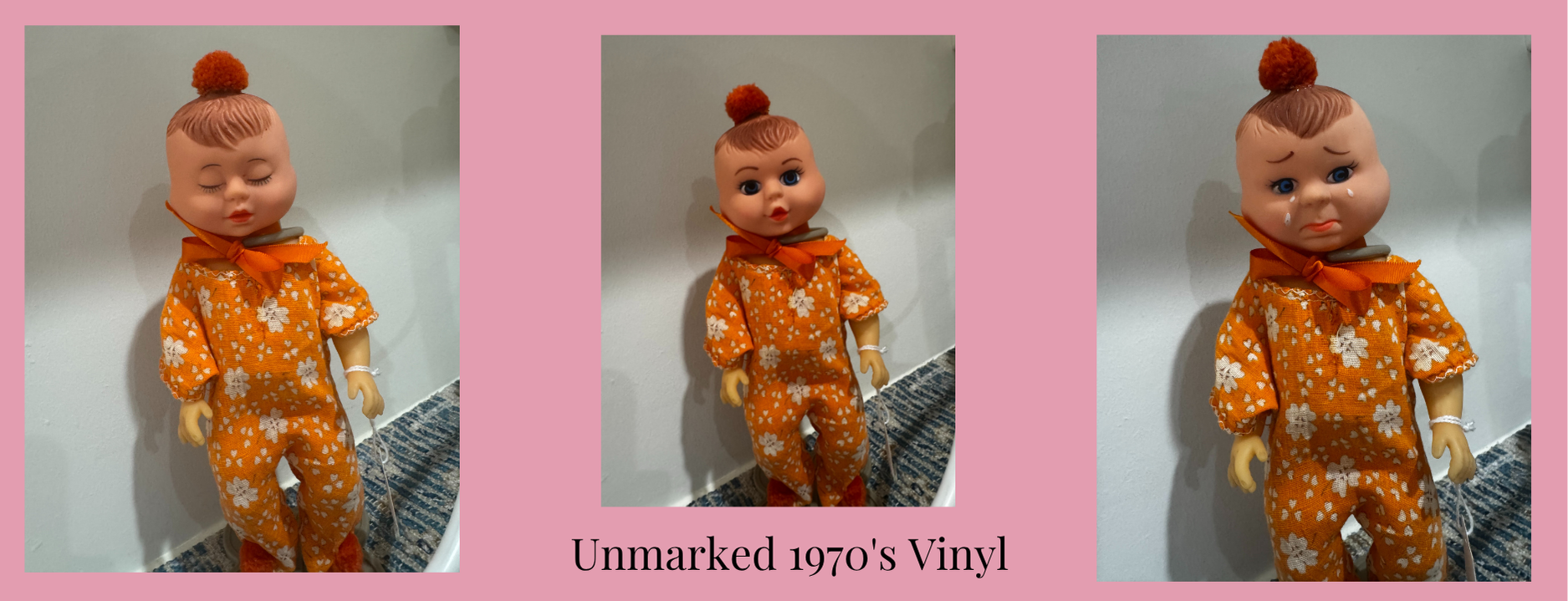
• Two Unmarked Plastic Dolls (Mid-20th Century):
Though their makers are unknown, these dolls showcase the same expressive artistry that defined mid-century design. One may have been made as a companion doll for a baby range, while another appears more stylised, with hand-painted features. Their anonymity adds intrigue—many smaller manufacturers in the 1950s and 60s produced similar dolls for department stores or regional distributors, often without branding.
• Porcelain Expression Doll (Late 20th Century):
A later addition to the collection, this porcelain doll continues the tradition of emotional expression. Its delicate hand-painted features, made possible by fine porcelain casting, reveal a lifelike tenderness that connects it to both antique and modern traditions.
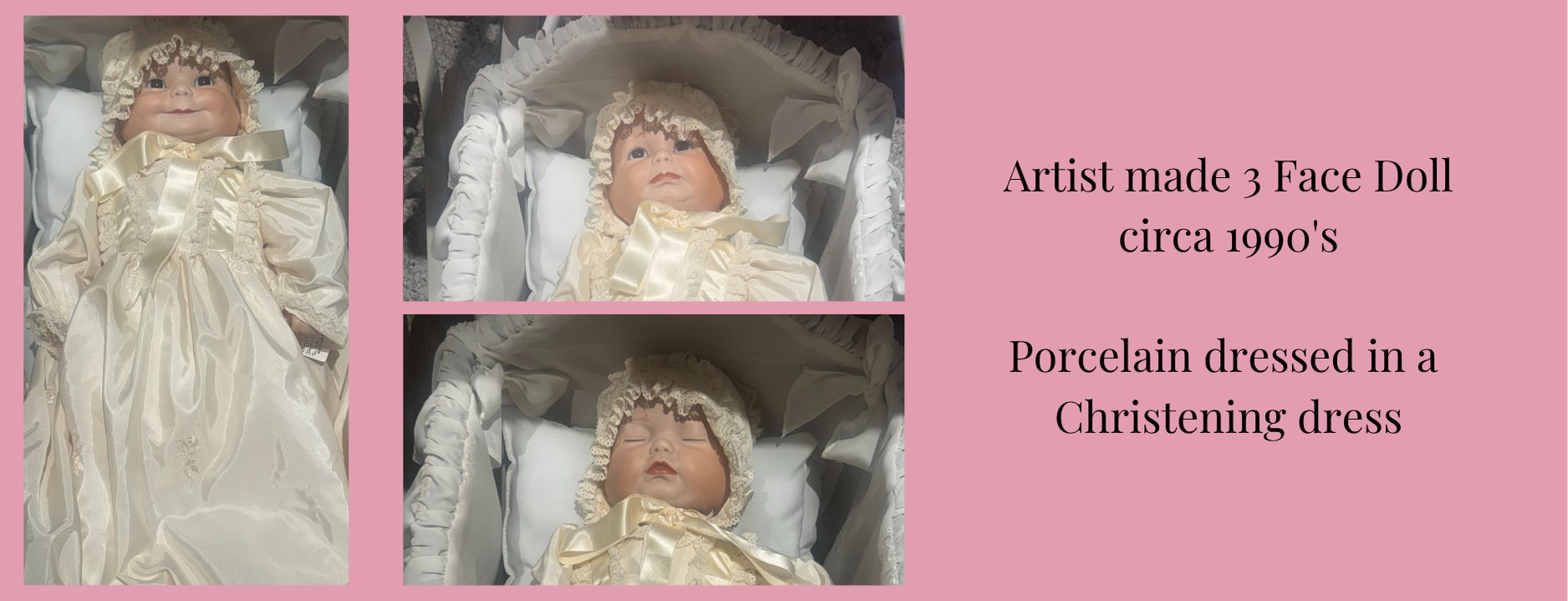
Emotional realism in dolls reflects both art and psychology. For a child, a doll’s face offers a mirror—someone to comfort, scold, or care for. For collectors, these faces tell the story of evolving cultural values and manufacturing techniques:
Each of these faces reminds us that dolls were—and still are—emotional companions as much as toys.
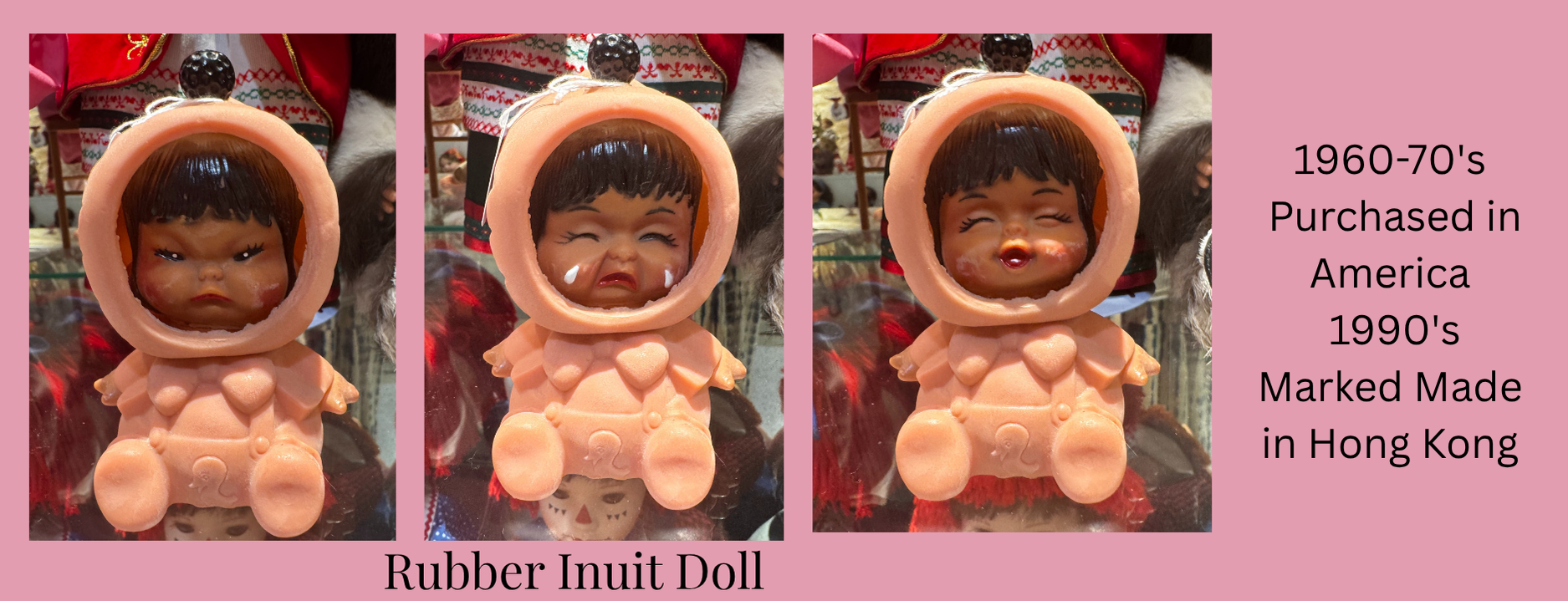
The “Dolls with Different Faces” on display at My Doll Cottage celebrates the artistry behind expression. Whether factory-made or hand-finished, named or anonymous, each face captures a moment in the long history of empathy through play. These dolls invite us to see beyond the surface—to recognise emotion, care, and the quiet stories written in every sculpted smile and tear.
With love
Shyloh
Tales from the youngest daughter of a doll collector — raised on Milo, Vegemite, and more antiques than a country opshop.