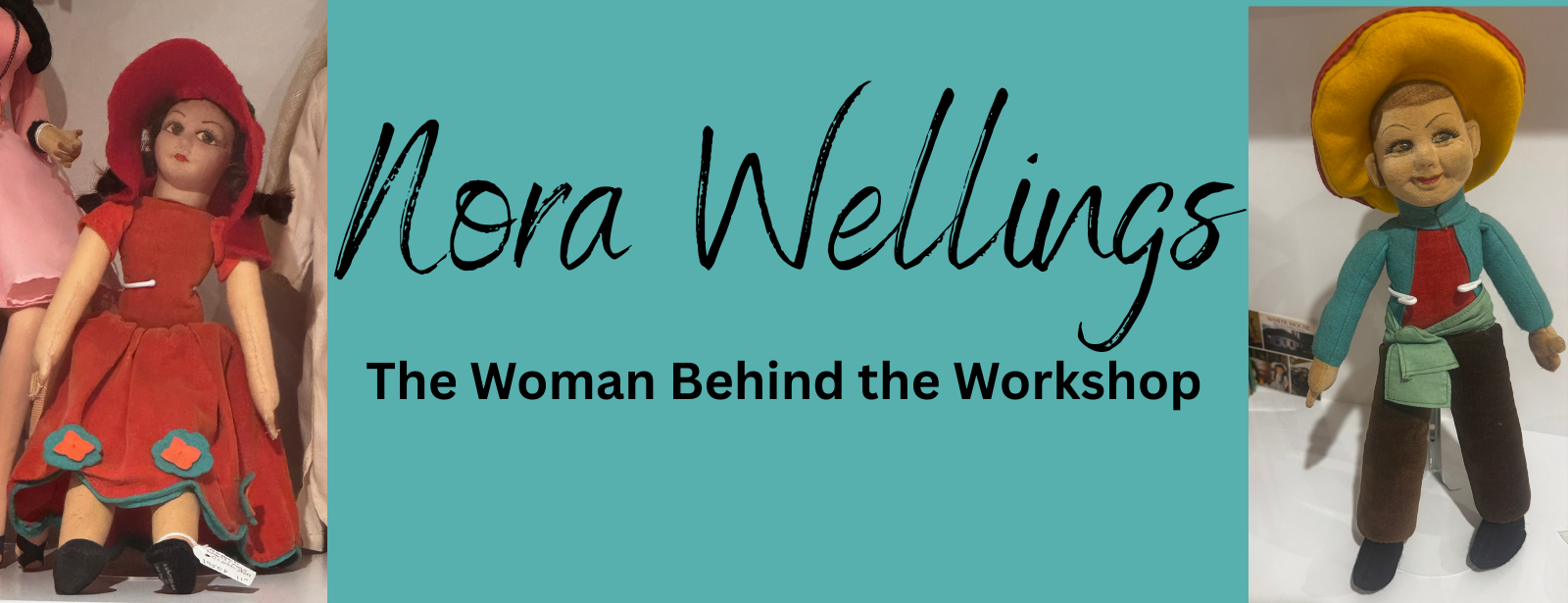
There are few British doll makers whose work became so recognisable that the dolls outlived the designer’s public identity. Norah Wellings is one of them.
Active between the 1920s and 1950s, Norah Wellings built a textile doll empire from a modest factory in Wellington, Shropshire. Today, her sailor dolls are among the most collected novelty dolls of the interwar period — yet surprisingly little is widely known about the woman herself.

From Chad Valley toVictoria Toy Works
Norah Wellings began her career in 1919 working with Chad Valley Co. Ltd., one of Britain’s most respected toy manufacturers. By 1926, she and her brother Leonard had established their own factory: Victoria Toy Works.
The company began with just a handful of employees — largely family members and local workers — but quickly grew. In 1927, Norah presented a doll named “Cora” to Queen Mary during a royal visit to Shropshire. The same year, her work was displayed at the British Industries Fair in London, where trade publications described her dolls as commercially promising and suitable for high-class retail.
It was clear early on that Norah Wellings was not simply making toys — she was building a brand.
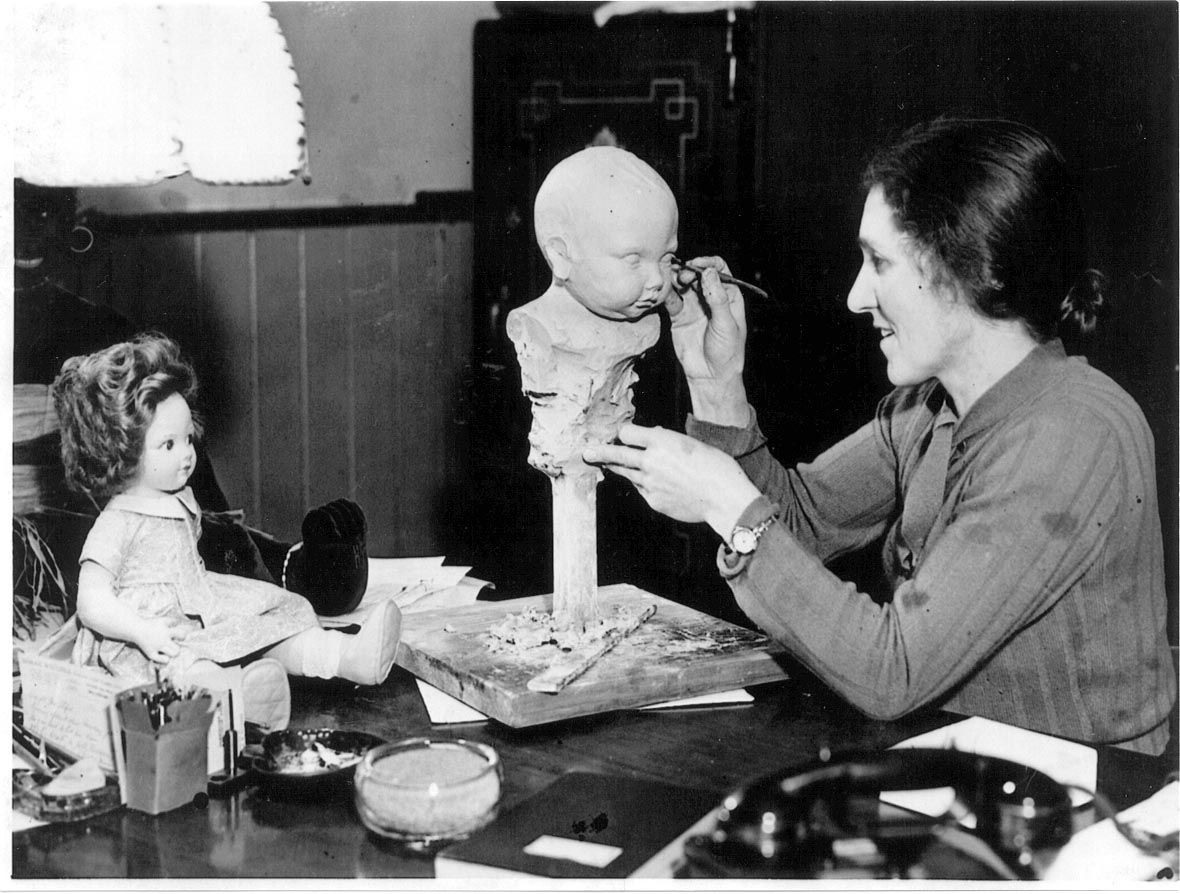
The historic photograph of Norah Wellings at work shows her sculpting a doll head by hand — shaping personality before fabric and thread brought it to life. It is a reminder that toys do not simply appear on shelves. They are imagined, modelled and refined by real designers.
Cloth, Character and Construction
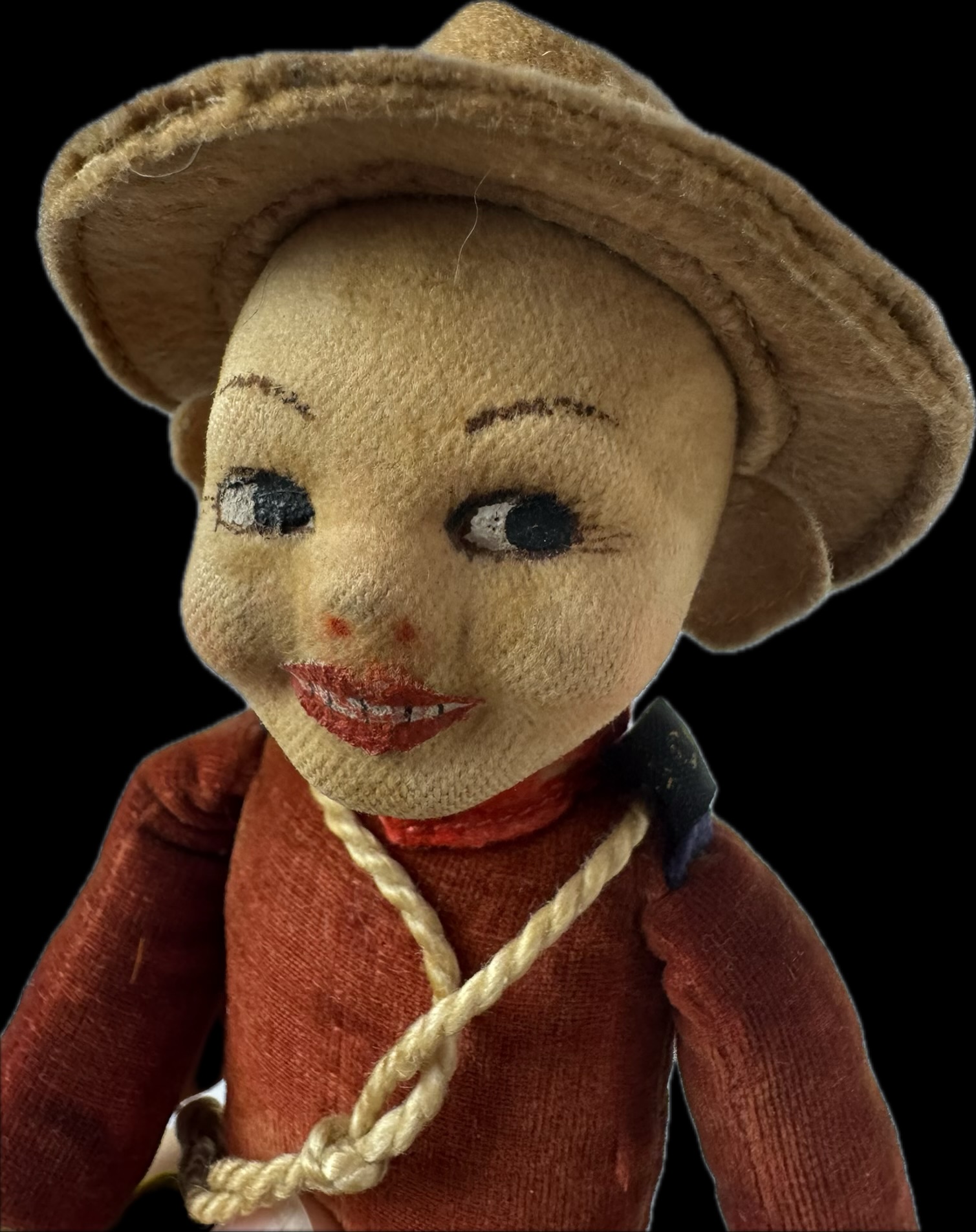
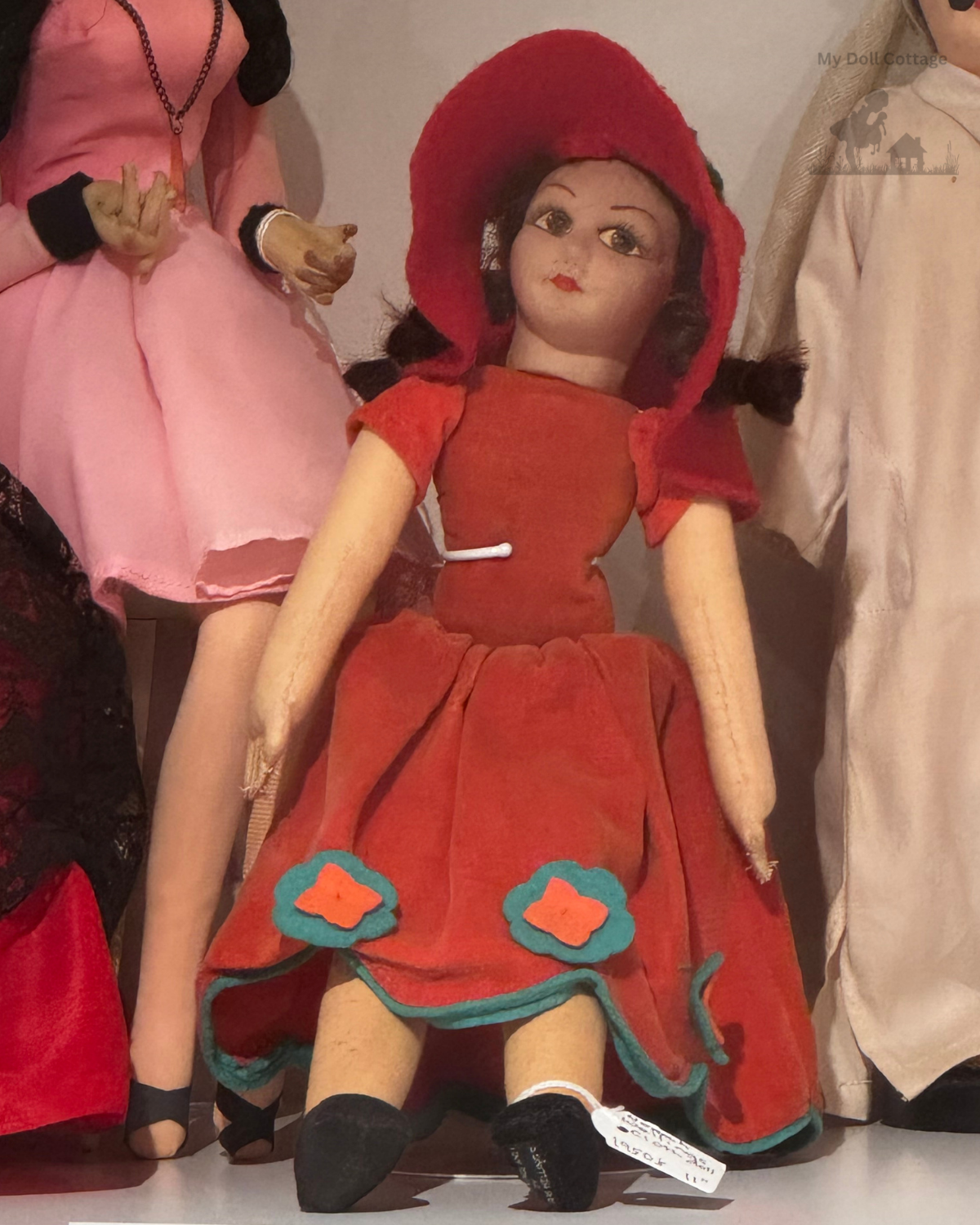
Unlike porcelain or composition dolls of the era, Norah Wellings dolls were constructed entirely of cloth — felt, plush, velvet and occasionally cotton.
They featured:
– Stitched joints
– Hand-painted faces
– Sealed finishes for washability
– Distinctive moulded facial expressions
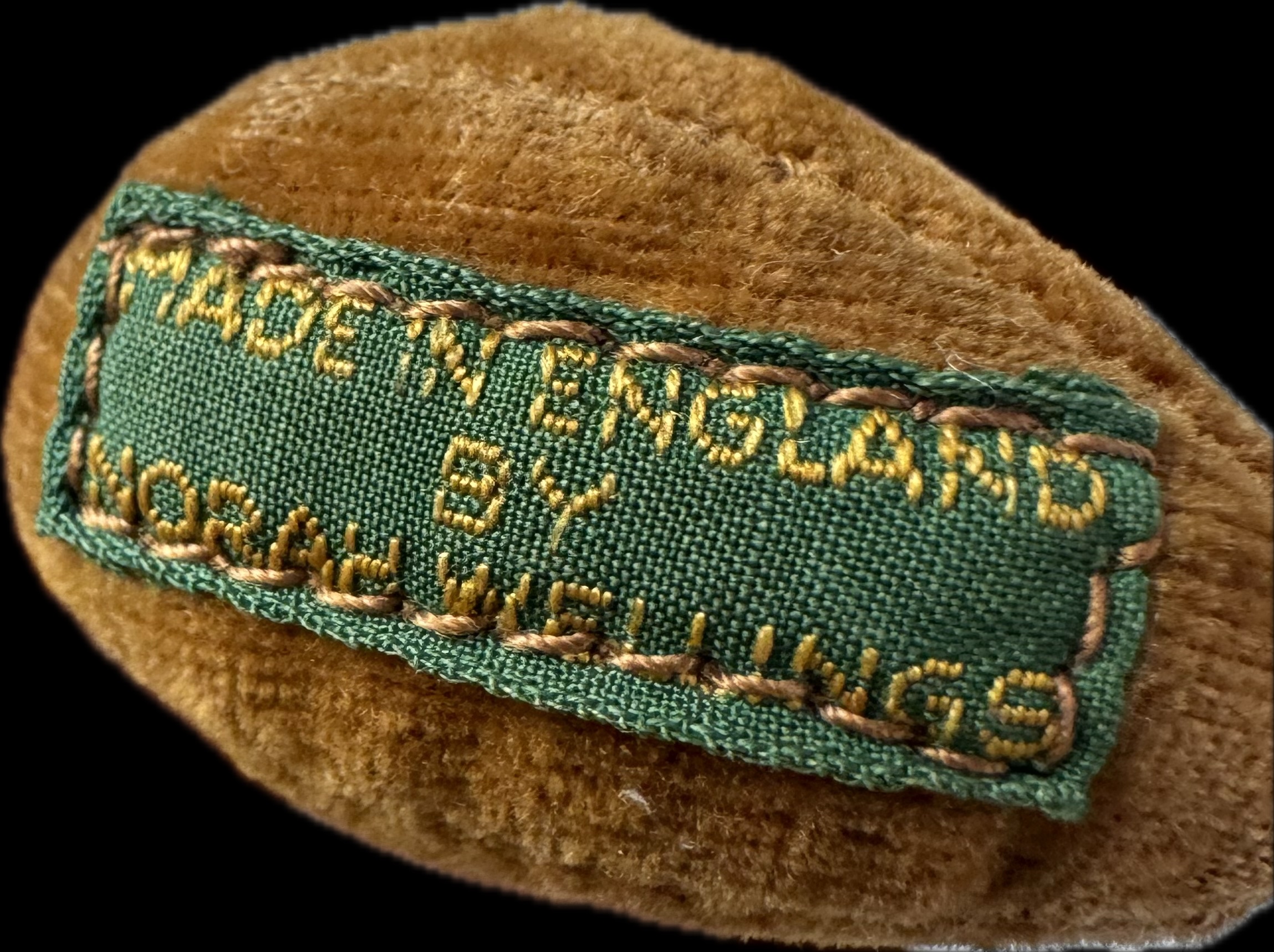
Most importantly, Norah insisted her dolls be clearly marked. Authentic examples typically carry a sewn label reading:
“Made in England by Norah Wellings”.
This commitment to marking would later become essential for collectors distinguishing originals from imitations.
The Sailor Dolls and Ocean Liner Culture
In 1929, Norah introduced what would become her most iconic line: the sailor dolls.
The first model, No. 140 “Jolly boy,” featured a velvet head, bright wig, painted smile and a white sailor hat bearing the name of a naval vessel or ocean liner. Over time, hundreds of variations were produced.
The timing was perfect.
The interwar years saw a boom in trans atlantic travel. Ocean liners became symbols of prestige and adventure. Shipping companies sold Norah Wellings sailor dolls onboard as branded souvenirs. For many passengers, purchasing a named sailor doll marked the completion of their journey.
Her novelty range expanded to include Canadian Mounties, Scottish figures and islander characters, but the sailor dolls remained the most commercially successful.
By 1941, approximately 70 percent of production was exported to the United States, Canada, Australia and Egypt.
Quality Over Quantity
At its height, Victoria Toy Works employed around 250 workers. Despite this growth, Norah maintained control over design. Her philosophy — often described as “Quality not quantity” — positioned her dolls in higher-end department stores, including Harrods, which commissioned exclusive Christmas window designs.
Even during the Second World War, when parts of the factory were repurposed for wartime storage and textile production, doll making continued.
Closure and Legacy
Victoria Toy Works closed in September 1959 after more than three decades of operation. Rather than sell her patterns or designs, Norah reportedly destroyed her tools and unfinished stock. Finished dolls were donated to institutions.
Following her retirement, shipping lines such as Cunard commissioned sailor dolls from other makers, including Peggy Nisbet. Later companies produced similar sailor figures, and distinguishing originals from later versions remains an important part of collecting today.
Norah Wellings died in 1975.
For many years, rag dolls were overlooked by collectors in favour of bisque or composition dolls. Today, however, Norah Wellings dolls are recognised as significant examples of British interwar textile manufacturing and maritime souvenir culture.
With love
Shyloh
Tales from the youngest daughter of adoll collector — raised on Milo, Vegemite, and more antiques than a country op shop.