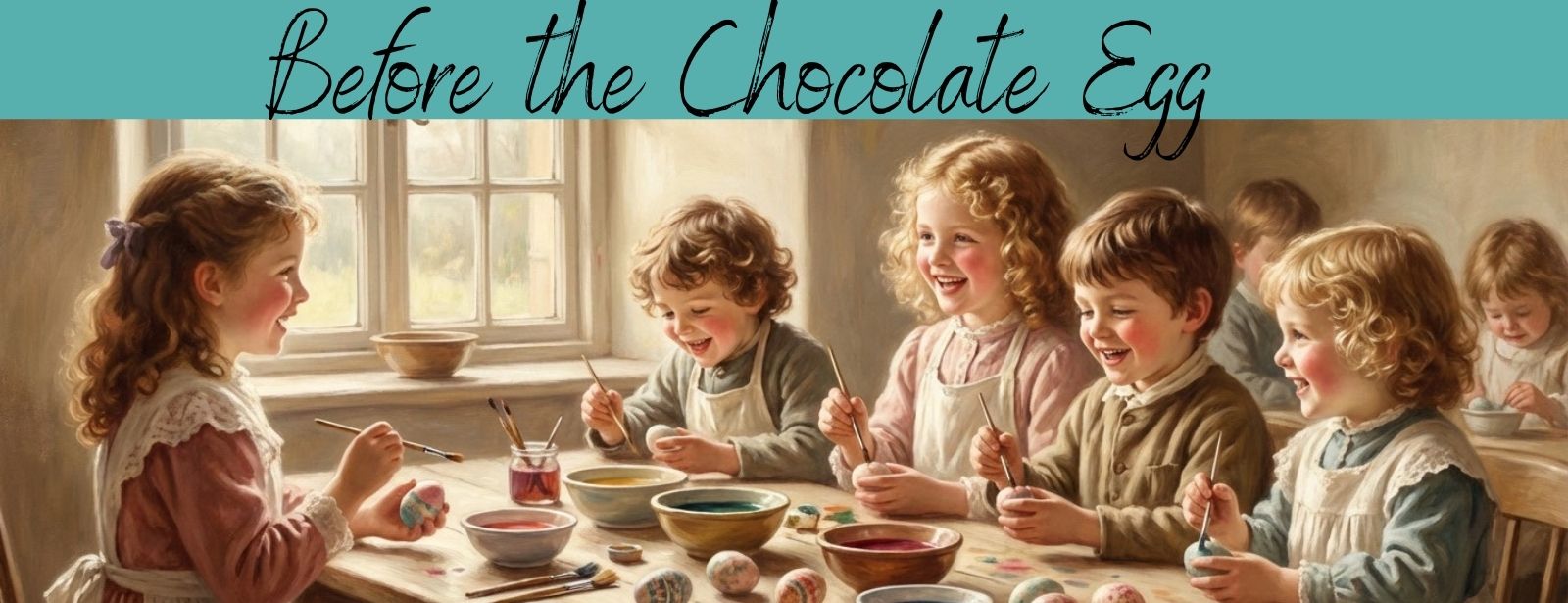
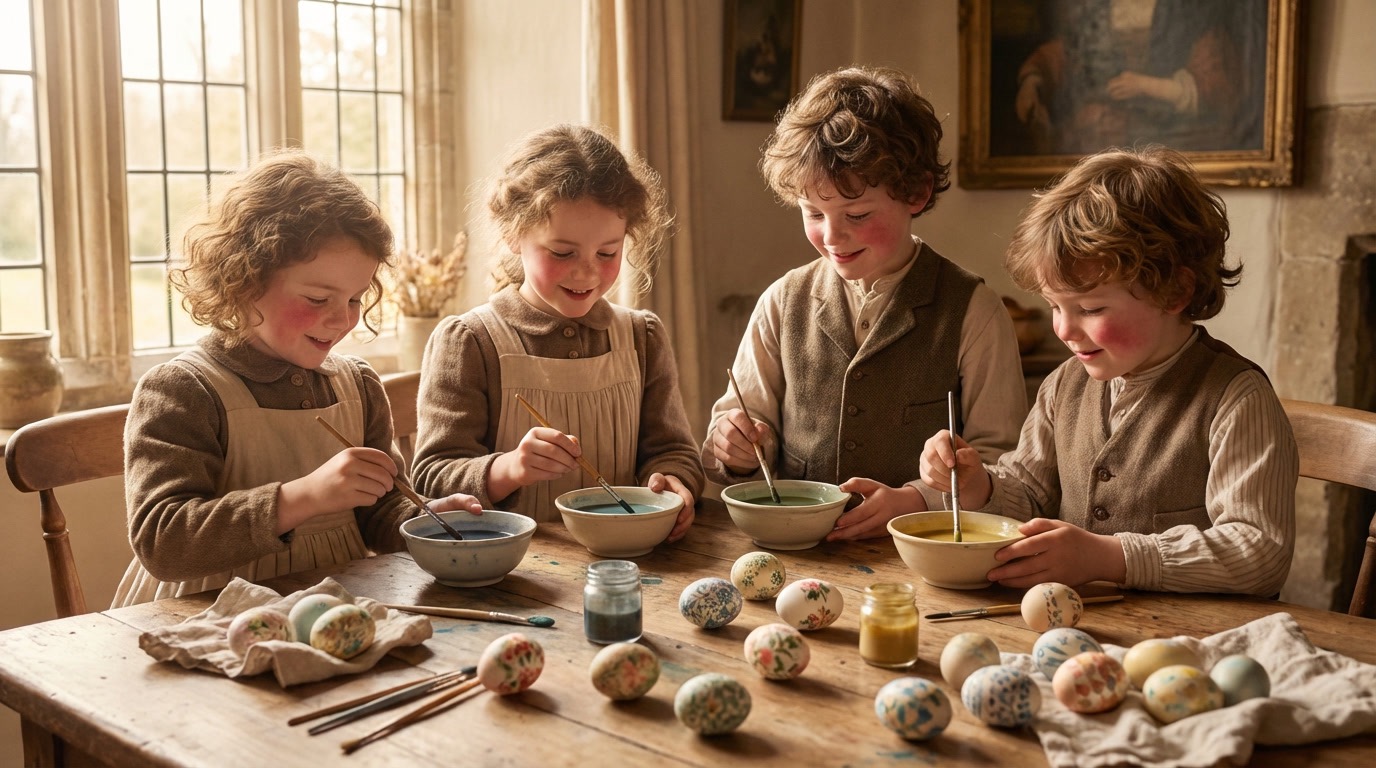
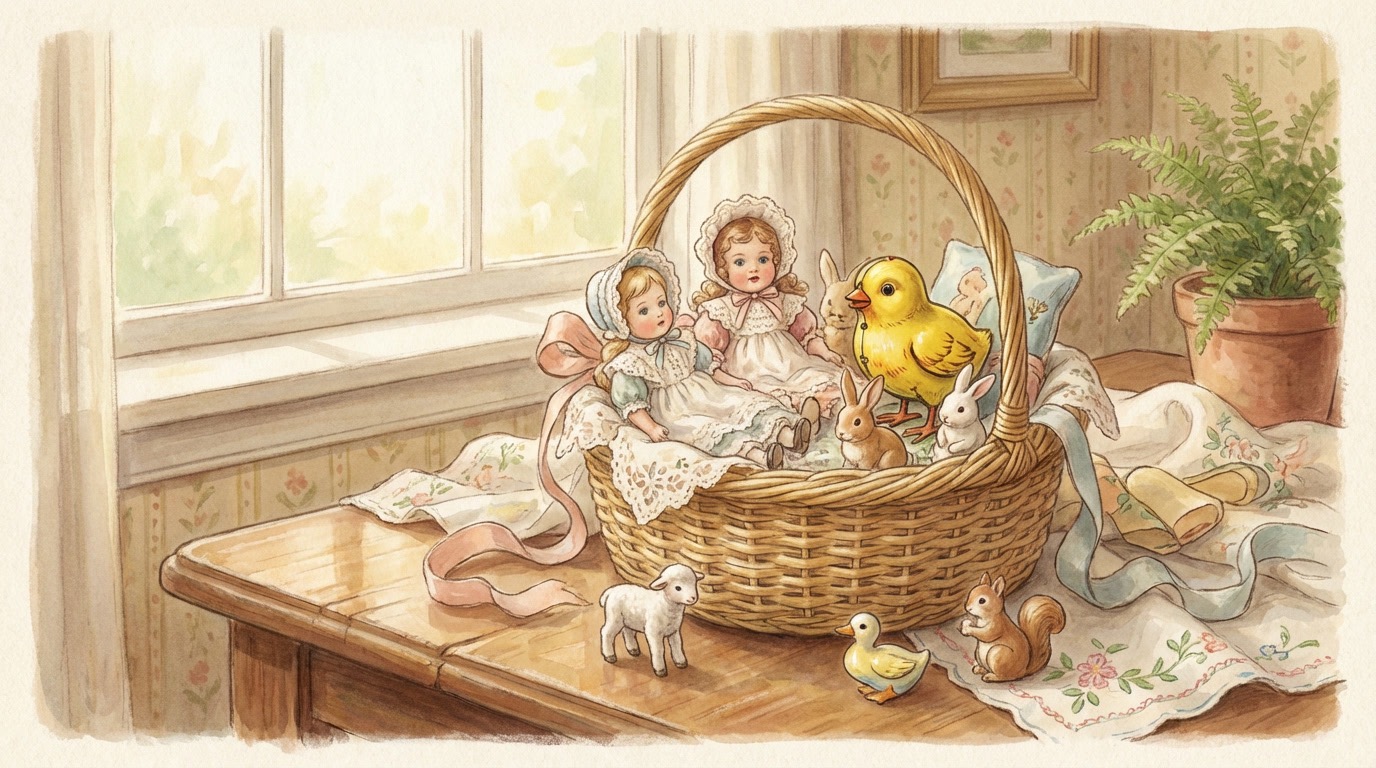
However, eggs were often accompanied by other small surprises placed in Easter baskets.
Children might receive:
• miniature dolls
• small books
• porcelain animal figurines
• wooden toys
• decorative keepsakes
These items were often modest but meaningful, creating the excitement of discovery on Easter morning.
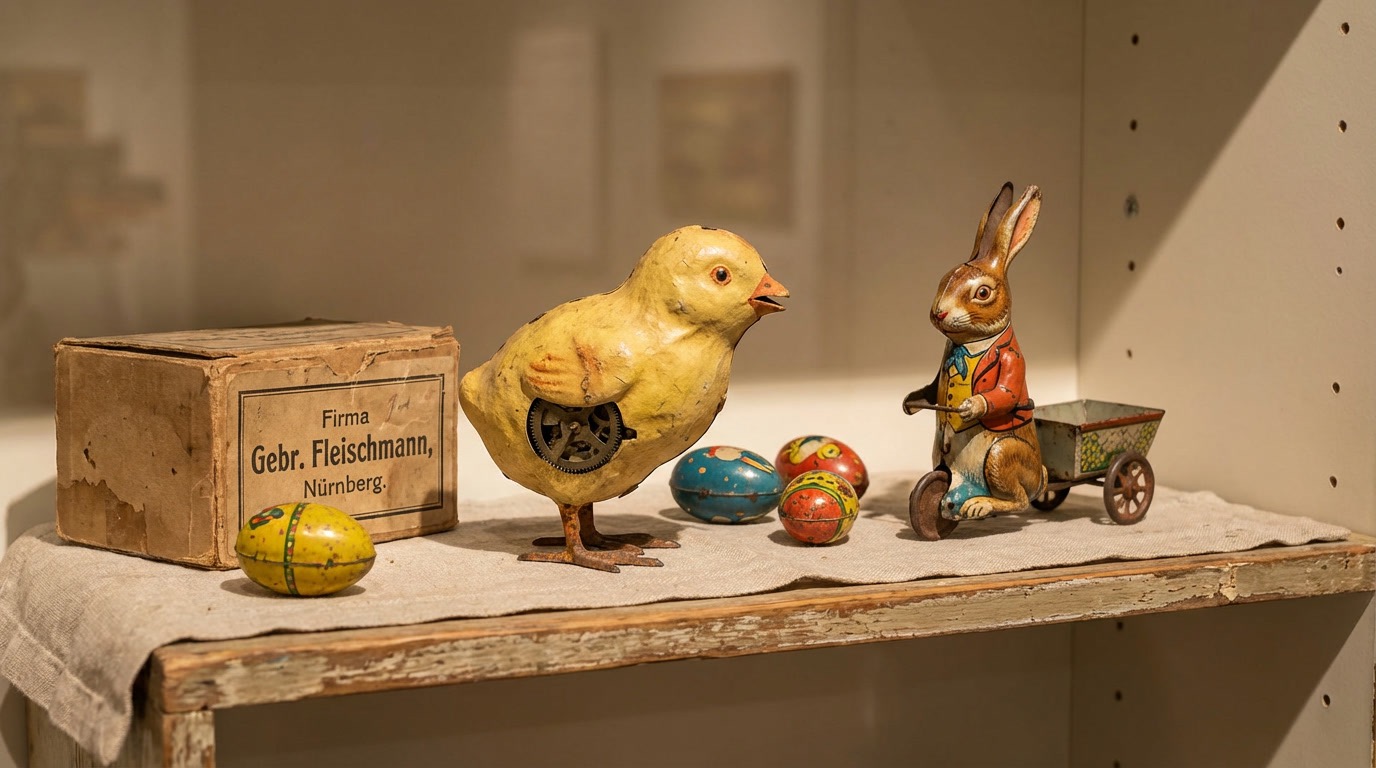
By the late 1800s, toy makers began producing objects specifically designed for Easter celebrations. These included toys featuring animals associated with spring and renewal.
Common Easter toys included:
• wind-up chicks
• toy rabbits
• miniature baskets
• small plush animals
• porcelain chicks and bunnies
Clock worktoys were particularly popular. Some mechanical chicks would hop across the table when wound, while others pecked at the ground in a life like way. These playful objects were often placed in Easter baskets or hidden for children to find during Easter egg hunts.
Many early Easter toys were produced in Germany, which was one of the world’s major toy manufacturing centres during the nineteenth century. German workshops produced beautifully detailed toys made from materials such as tin, papier-mâché, wood and porcelain.
Popular items included:
• mechanical chicks
• decorative rabbits
• candy containers shaped like animals
• miniature spring decorations
These toys were exported throughout Europe, Britain, America and Australia, helping to spread the visual traditions of rabbits and chicks that are still associated with Easter today.
During the Victorian era new advances in chocolate production began to change Easter traditions. The introduction of hollow chocolate eggs in the 1870s gradually shifted Easter gifts toward confectionery rather than toys. By the early twentieth century chocolate eggs had become the dominant Easter treat. While toys did not disappear entirely, they became less common as chocolate took centre stage. – Next week we will look into the history of the commercial chocolate egg.
Vintage Easter toys provide a fascinating glimpse into how children once celebrated the holiday. Before brightly wrapped chocolate eggs filled shop displays, Easter baskets often held small toys and delicate keepsakes instead. Today collectors still treasure antique Easter toys, especially clockwork chicks, miniature rabbits and decorative spring ornaments. These charming objects remind us that Easter celebrations once centred on imagination, craftsmanship and the simple joy of discovery.
With love
Shyloh
Tales from the youngest daughter of a doll collector — raised on Milo, Vegemite, and more antiques than a country op shop.