
Whether it was the adventure of The Famous Five, the team work of The Secret Seven, the magic of The Faraway Tree, or the gentle routine of Noddy, her writing formed part of everyday childhood life.
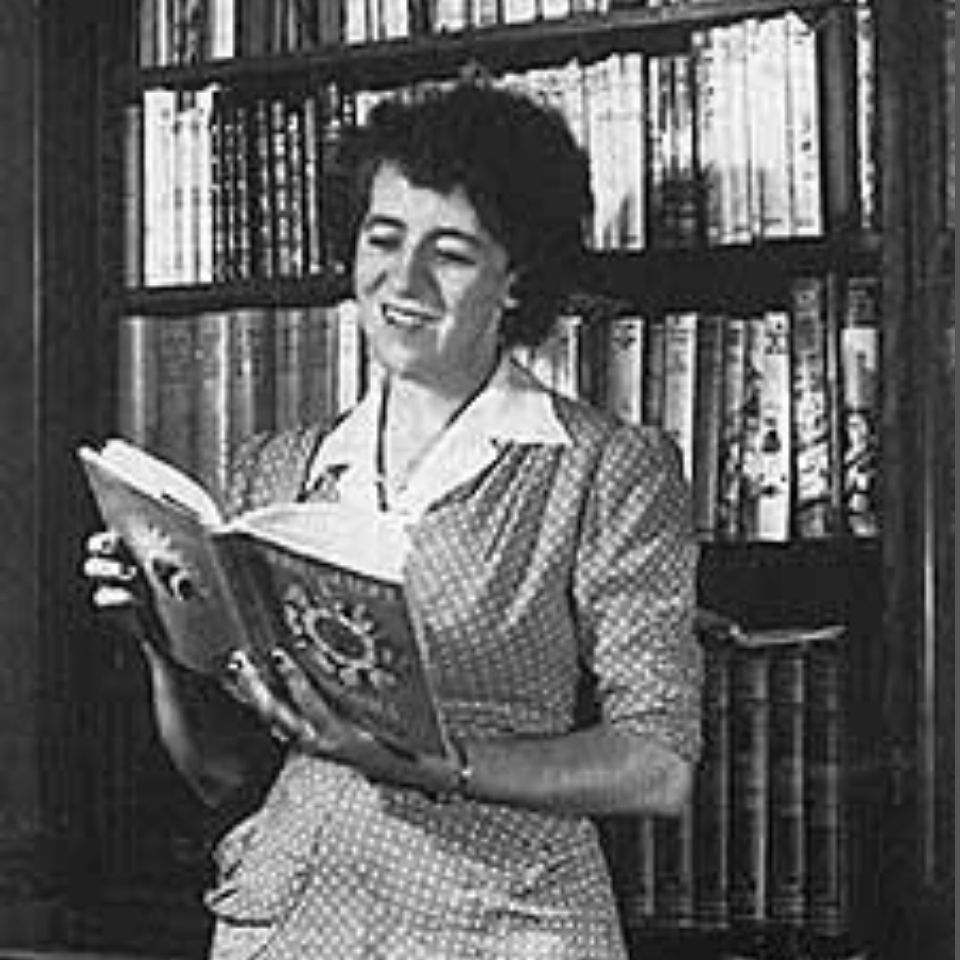
Born in London in 1897, Blyton began her career as a teacher before turning to writing in the early 1920s. From that point, her output was extraordinary. She produced hundreds of books, poems, and short stories, becoming one of the most widely read children’s authors of the 20th century.
Her creative process was famously instinctive. She described it as watching a “movie in her mind” and simply writing what she saw, often without structured planning. This resulted in stories that felt immediate and engaging, with simple vocabulary, short sentences, and fast-moving plots. Her work was accessible to young readers, yet rich enough to build lasting emotional connections.
At the core of Blyton’s writing are consistent themes: independence, friendship, adventure, and a clear sense of right and wrong. These themes translated easily beyond the page, moving into play, imagination, and the objects children interacted with daily.

Among Blyton’s creations, Noddy stands as one of the earliest and most successful examples of a character moving seamlessly between literature and material culture.
• Origin (1949): The character was developed through a collaboration between Blyton and Dutch illustrator Harmsen van derBeek, under the publisher Sampson, Low, Marston and Company.
• The Books: Beginning with Noddy Goes toToyland (1949), the series expanded rapidly, including titles such as Hurrah for Little Noddy (1950) and Noddy and His Car (1951), continuing throughto 1963.
• Characters: The world of Toyland included recognisable figures such as BigEars, Mr. Plod, Tessie Bear, and Dina Doll—each designed with clear personalities that translated easily into toys.
What made Noddy particularly significant was not just the stories, but how quickly the character moved into physical form.Toy cars, figurines, games, puzzles, and boxed play sets were produced to mirror the world of Toyland. These items allowed children to recreate the stories in their own environments, effectively extending the narrative intoplay.
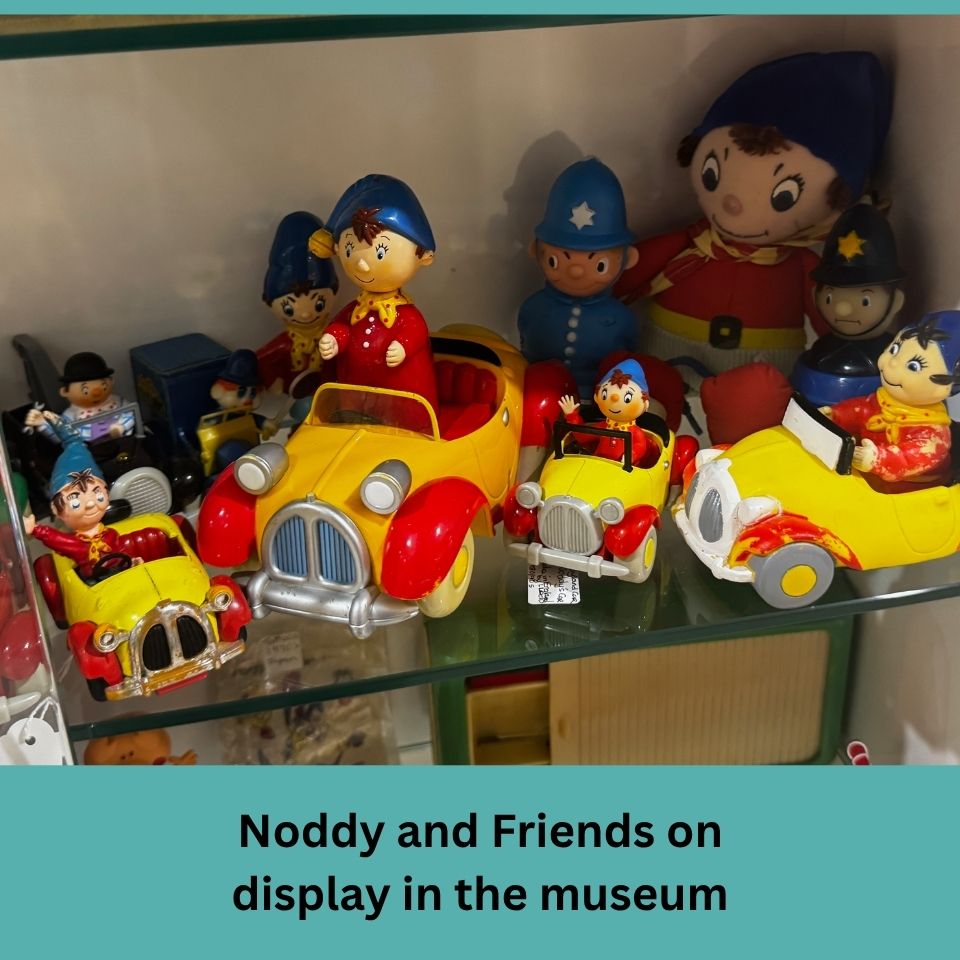
The Noddy car, in particular, became one of the most recognisable toy forms associated with the series. Its simple, bright design made it ideal for reproduction across multiple materials and price points, from tin and plastic toys to boxed sets and promotional items.
Noddy’s popularity extended into early television, first appearing on British TV in 1955. You can watch the 1955 episode on youtube here. The character has since been reimagined across multiple generations, including Make Way for Noddy (2002) and Noddy, Toyland Detective (2016).
Watch Episodes here
As with much mid-20th century literature, Blyton’s work has been re-examined over time. Some original content, particularly involving Golliwog characters and gender roles, has been revised or removed in later editions. These updates reflect changing social standards while allowing the stories to remain accessible to modern audiences.
Blyton’s work represents a key moment in the evolution of children’s culture, where storytelling, illustration, and manufacturing began to intersect more deliberately. Characters were no longer confined to books—they became part of everyday life through toys and objects.
At My Doll Cottage, this connection is clearly visible. Noddy toy cars, boxed sets, and related childhood items provide physical evidence of how stories moved into play. These objects are not only nostalgic; they are part of a broader history of early character merchandising and childhood experience.
From a collection and database perspective, Noddy items also offer useful markers for dating and classification. Variations in materials, manufacturing techniques, branding, and packaging reflect shifts in production across the 1950s and 1960s, making them valuable reference points within a structured catalogue.
Enid Blyton passed away in 1968, but her influence remains. Her books continue to be published, adapted, and collected, while associated toys and objects are increasingly recognised as part of cultural history.
Her legacy sits not only in literature, but in the way children learned to imagine, play, and interact with the world around them. At My Doll Cottage, these stories and objects sit side by side—reminders that childhood has always beenshaped as much by what we hold in our hands as by what we read on the page.
With love
Shyloh
Tales from the youngest daughter of a doll collector — raised on Milo, Vegemite, and more antiques than a country op shop.