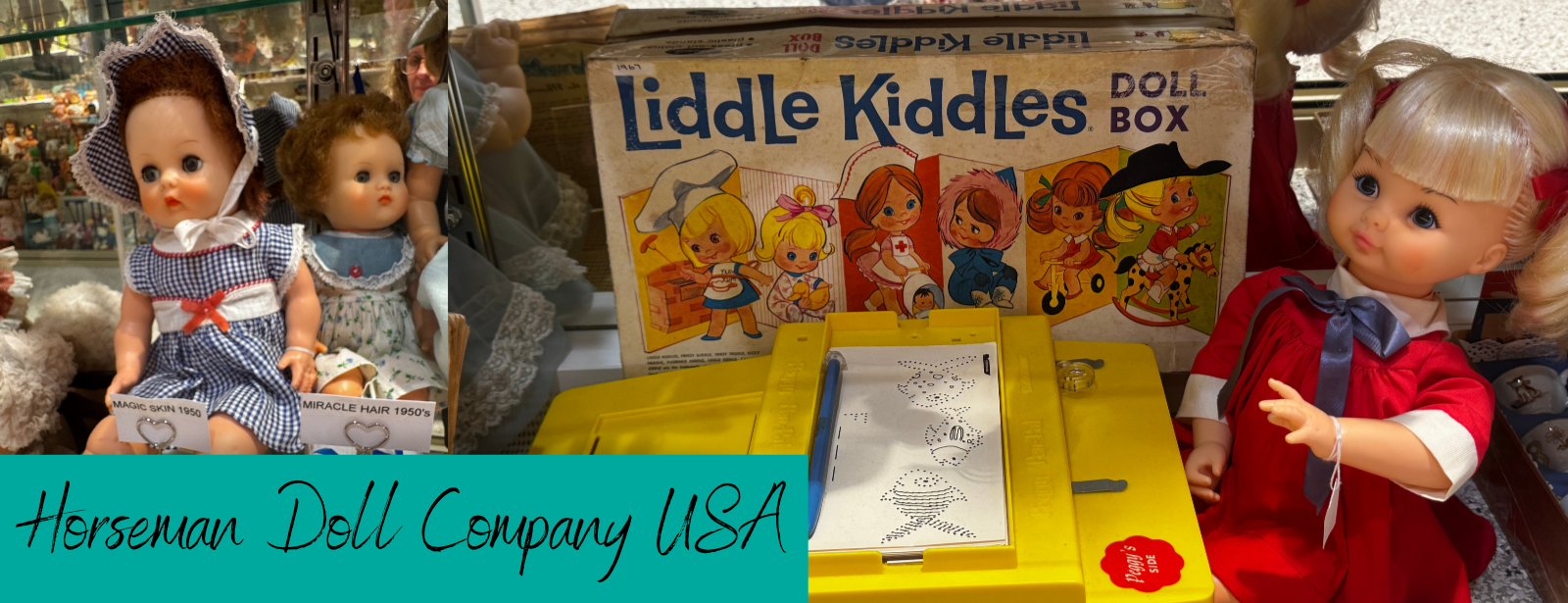
The Horsman Doll Company began its story when Edward Imeson Horsman (often written E. I. Horsman) founded a toy and games business in New York City in 1865. Initially the company dealt in games and sports goods, but by the 1870s Horsman began importing and then producing dolls, including German-made bisque-head dolls.
Over time, Horsman shifted its focus increasingly on doll manufacture. The company developed composition dolls (a molded paste of wood, glue and other materials) and cloth-bodied mother-and-baby types. For example, one doll dating to 1937 is described as a composite-headed Horsman doll with movable limbs and was part of the company’s “innovative manufacturing expertise”.

In the early 20th century, Horsman expanded its operations significantly. In the 1930s the company encountered financial trouble, but a turning point came when the rival Regal Doll Manufacturing Company (based in Manhattan) acquired Horsman in October 1933.
The manufacturing base moved (or expanded) to Trenton, New Jersey — specifically the Chambersburg neighbourhood — where the Horsman factory famously employed around 1,200 workers at its peak and was touted as the “largest toy factory in the United States.”
During this era, Horsman dolls became widely distributed, affordable yet well-made, and many American children would have grown up with a Horsman doll.


By the mid 20th century Horsman continued as a significant doll manufacturer. But like many toy companies it faced competition, changing materials and market trends (e.g., shift to vinyl/plastic, character licensing, global manufacturing). The brand name later transitioned: by the 1980s the Horsman name was sold to an Asian company and manufacturing shifted accordingly.
Today, Horsman dolls are valued by collectors. Vintage Horsman dolls — especially earlier composition or “sleep-eye” baby dolls — are sought after and often appear in listings of antique and collectible dolls.
.png)
In closing, The Horsman Doll Company represents more than a long-running toy brand—it reflects the evolution of doll-making itself. From early bisque influences through composition innovation and into the age of vinyl and plastic, Horsman adapted to changing technologies and childhood expectations for over a century. Its dolls capture shifts in materials, manufacturing, and social history, making them valuable not only as collectibles but as teaching pieces. Within a museum context, Horsman dolls help tell the broader story of American industry, family life, and the enduring desire to create toys that were meant to be loved, played with, and remembered.
With love
Shyloh
Tales from the youngest daughter of adoll collector — raised on Milo, Vegemite, and more antiques than a country op shop.

From 1865 to today, the Horsman Doll Company has brought generations of dolls to life 🧸🇺🇸
Once known for their “Can’t-Break-’Em” composition dolls, Horsman became an icon of American toy history—evolving from bisque and cloth to vinyl and beyond. Discover the fascinating legacy of Horsman dolls in this week’s museum blog!
#MyDollCottage #HorsmanDolls #VintageDolls #ToyHistory #AmericanMade #DollCollector #MuseumBlog #AntiqueToys