
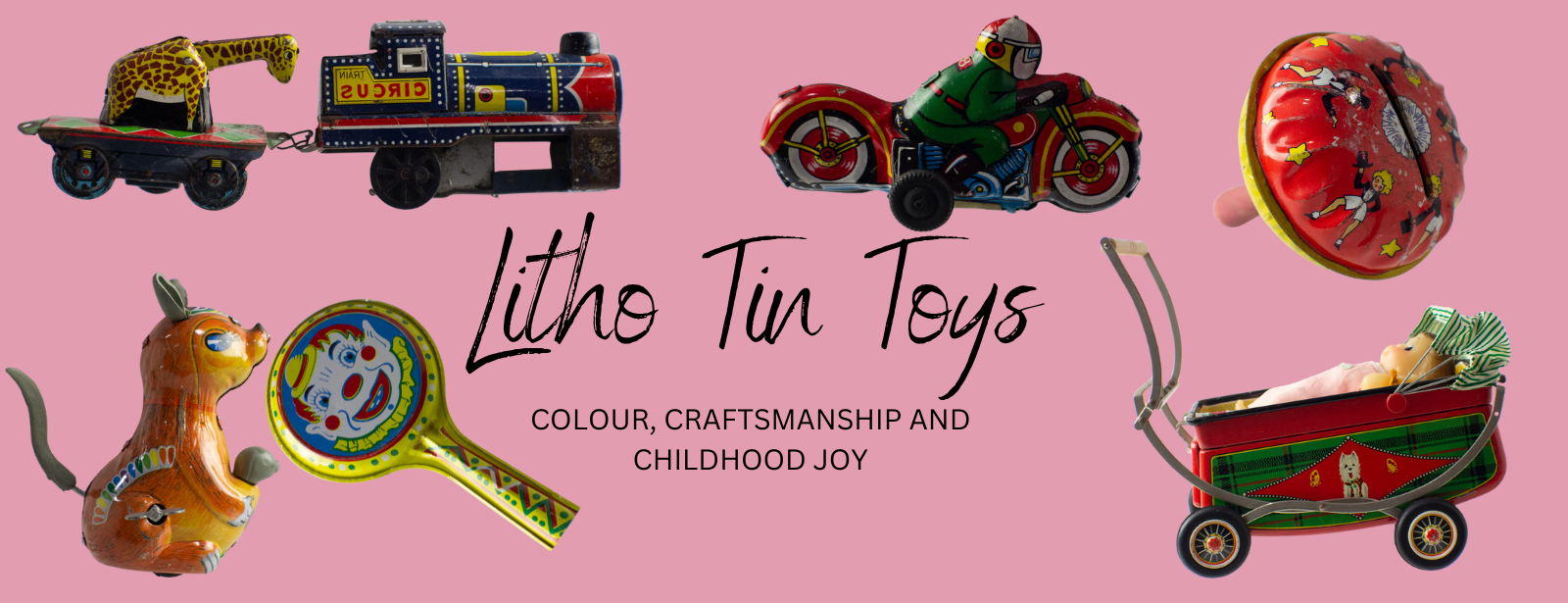
In the vibrant world of 1960s childhood, few toys capture the colour and creativity of the era quite like lithographed tin clackers and whistles made in Japan. These playful noisemakers weren’t just fun—they were miniature works of industrial art, representing Japan’s remarkable post-war recovery and its growing reputation for quality, innovation, and design.
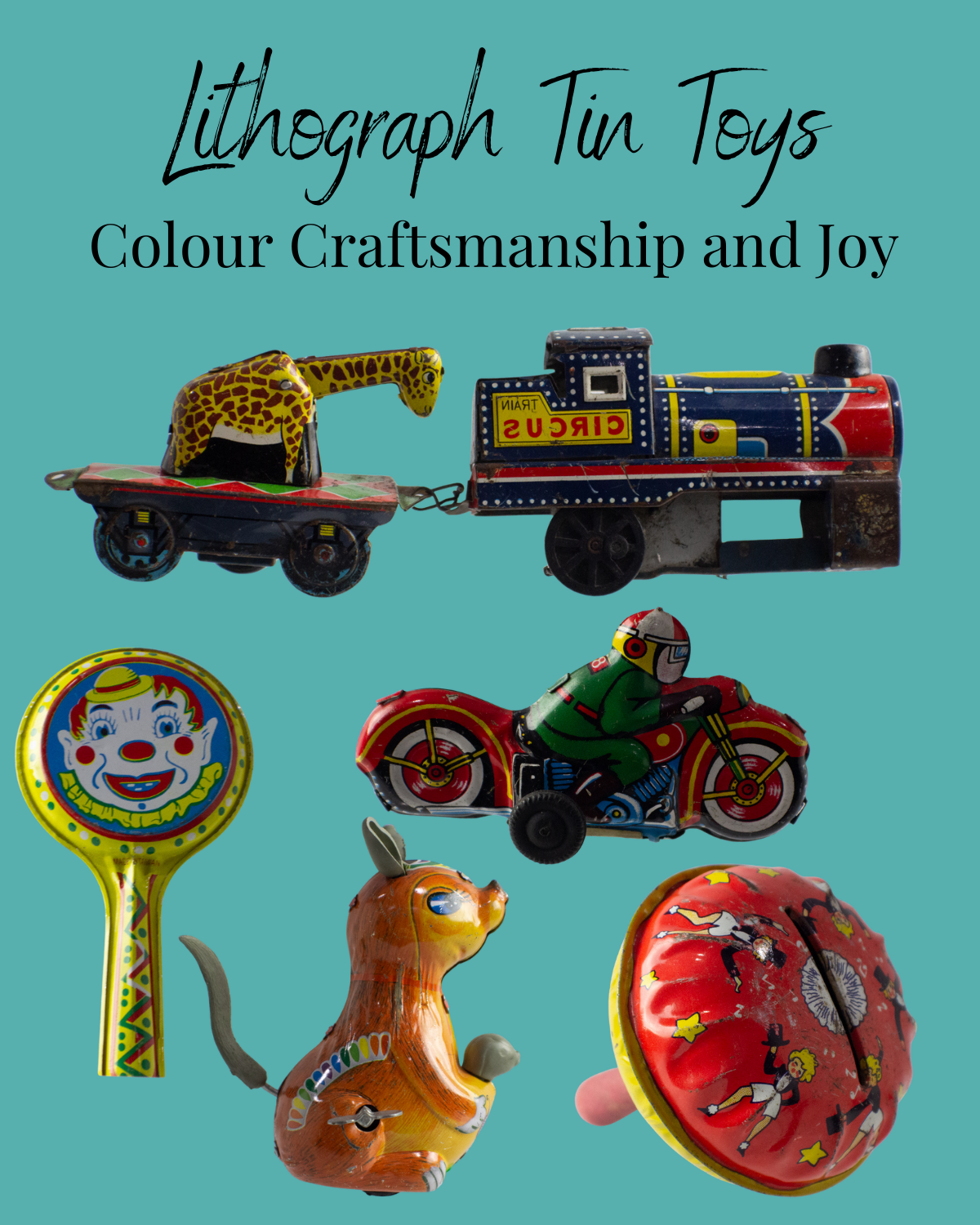
Before plastic toys dominated the shelves, many mid-century toys were made of tinplate—thin sheets of steel coated with tin to prevent rust. To decorate these metal surfaces, manufacturers used a printing process called lithography.
Lithography is a method of printing designs directly onto metal using oily inks and etched printing plates. Each colour was applied in layers, with careful alignment to create crisp, detailed images. This allowed factories to mass-produce tin toys with bright, durable, and intricate illustrations that wouldn’t peel or fade easily.
The result was a generation of toys that gleamed with charm: rockets and robots, animals and circus scenes, trains and tin cars—all printed in vibrant reds, blues, and yellows. Lithography gave each toy its personality, transforming simple metal into a canvas of imagination.

After World War II, Japan’s toy industry became a global leader in craftsmanship and innovation. Using affordable materials and advanced printing techniques, Japanese manufacturers produced a dazzling range of lithographed tin toys for export.
By the 1950s and 1960s, these toys—often marked “Made in Japan”—had become staples in households worldwide. Their quality and cheerful designs reflected the optimism of the era and helped reintroduce Japanese goods to international markets, especially in the United States, Britain, and Australia.
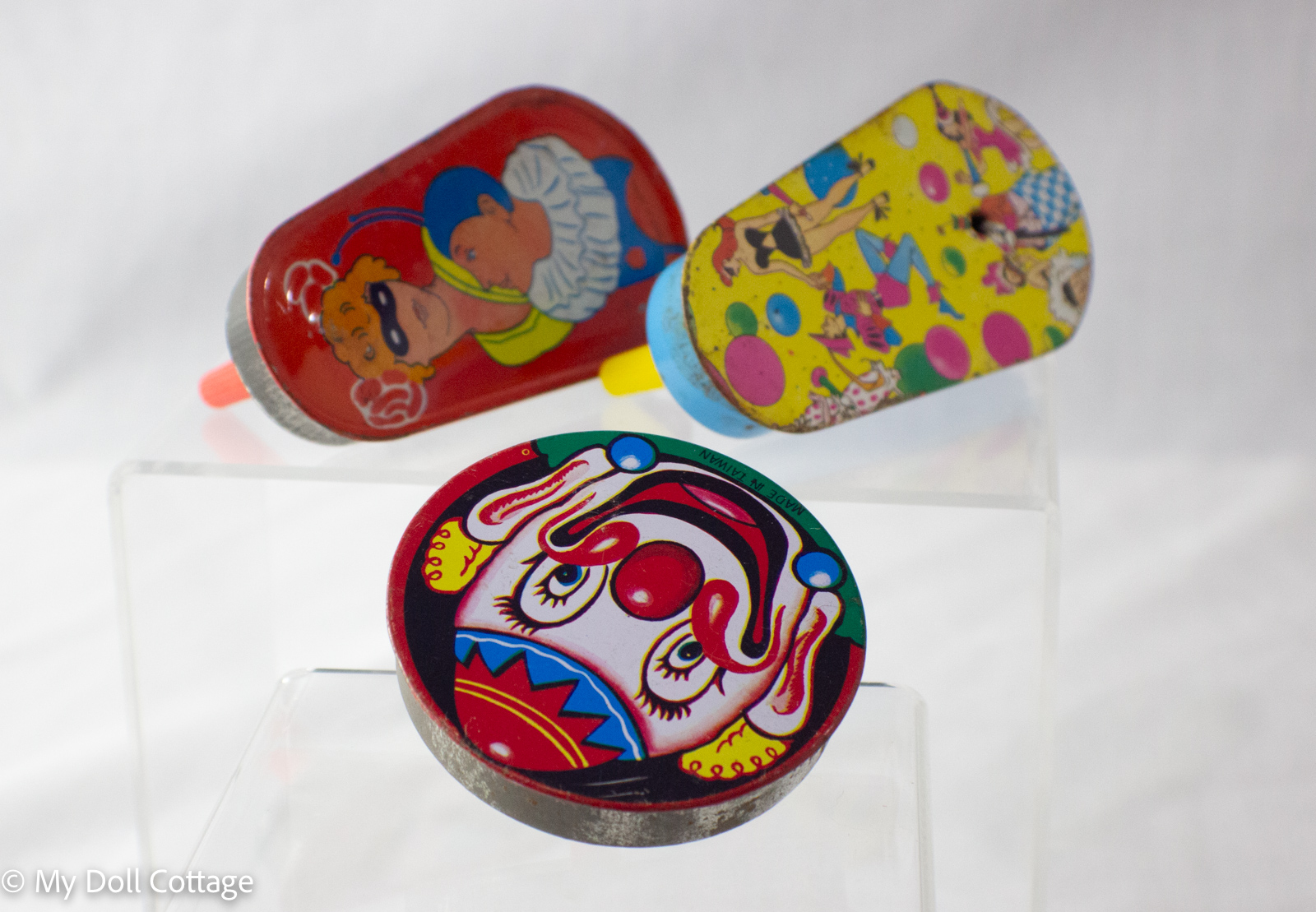
Among the most memorable toys of this period were tin clackers, sometimes called click-clacks or ker-bangers. Each consisted of a piece of lithographed tin folded over a wire or metal handle. When flicked back and forth, they produced a loud clack-clack sound that echoed through playgrounds, schoolyards, and showgrounds.
Their colourful artwork—often featuring cartoon characters, circus motifs, or animals—made them irresistible to children. The simple motion and satisfying sound made clackers one of the defining sensory experiences of 1960s play.

Japanese tin whistles from the same era came in an extraordinary variety of designs: birds, trains, animals, clowns, cars, and even rockets. Each whistle was hand-assembled and lithographed with bright, whimsical imagery.
Some reflected the world’s fascination with space exploration, featuring stars, astronauts, and rockets inspired by the Space Race. Others captured simple everyday joy—farm scenes, musical instruments, or smiling faces.
Every whistle was more than just a noisemaker—it was a piece of art, small enough to fit in a child’s pocket yet vibrant enough to catch the eye from across a room.
These Japanese tin toys were exported around the globe throughout the 1950s and 1960s. Sold in local toy shops, showbags, and corner stores, they were affordable yet beautifully made. Their charm transcended language and culture, making them beloved collectibles for children everywhere—from Tokyo to London to Sydney.
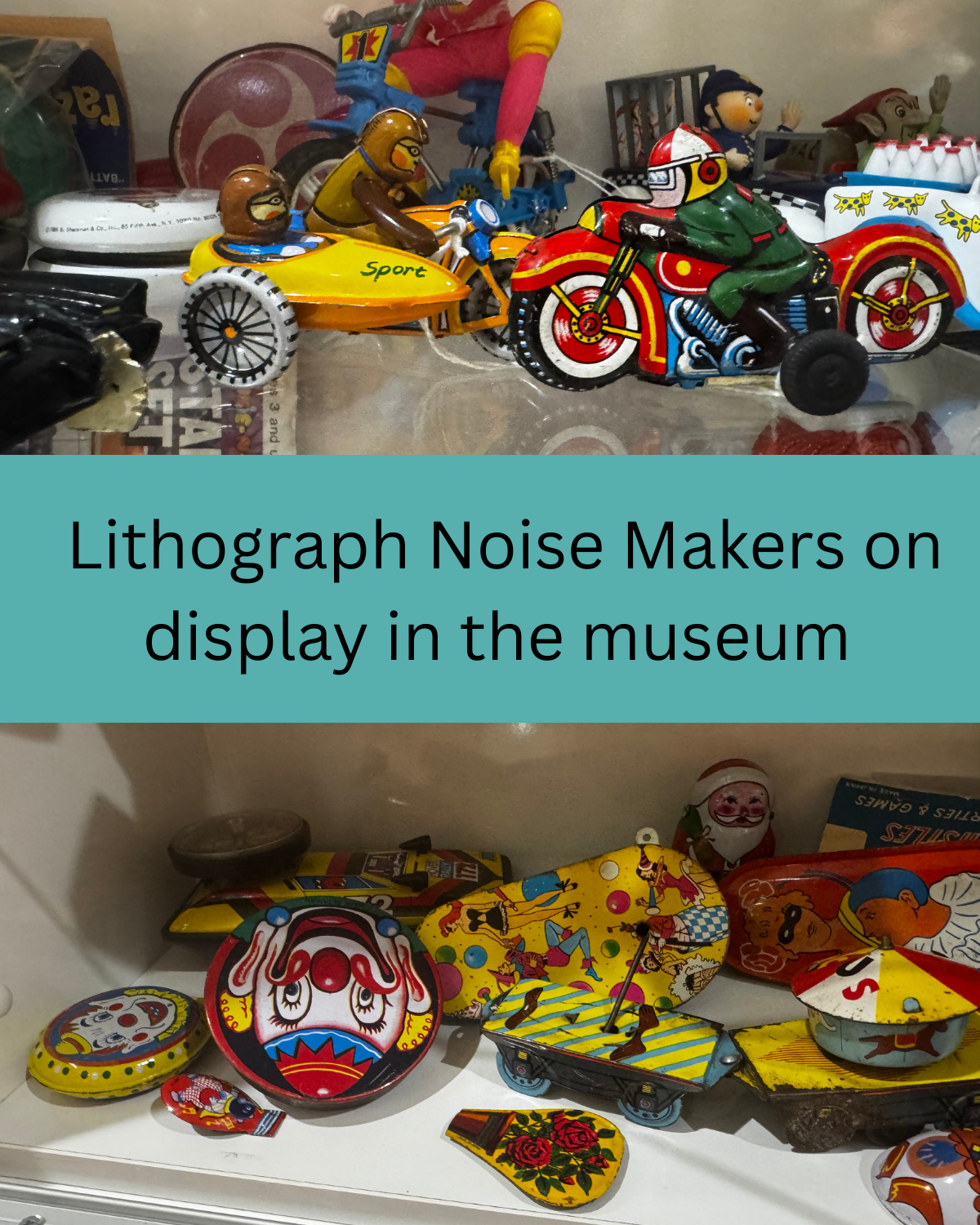
Today, lithographed tin clackers and whistles are treasured by collectors and museums alike. Their craftsmanship, playful spirit, and bold illustrations offer a window into mid-century life and post-war optimism.
Preserving these toys isn’t just about nostalgia—it’s about honouring a unique chapter in manufacturing history when art and play met in the palm of a child’s hand.
With love
Shyloh
Tales from the youngest daughter of a doll collector — raised on Milo, Vegemite, and more antiques than a country op shop.