
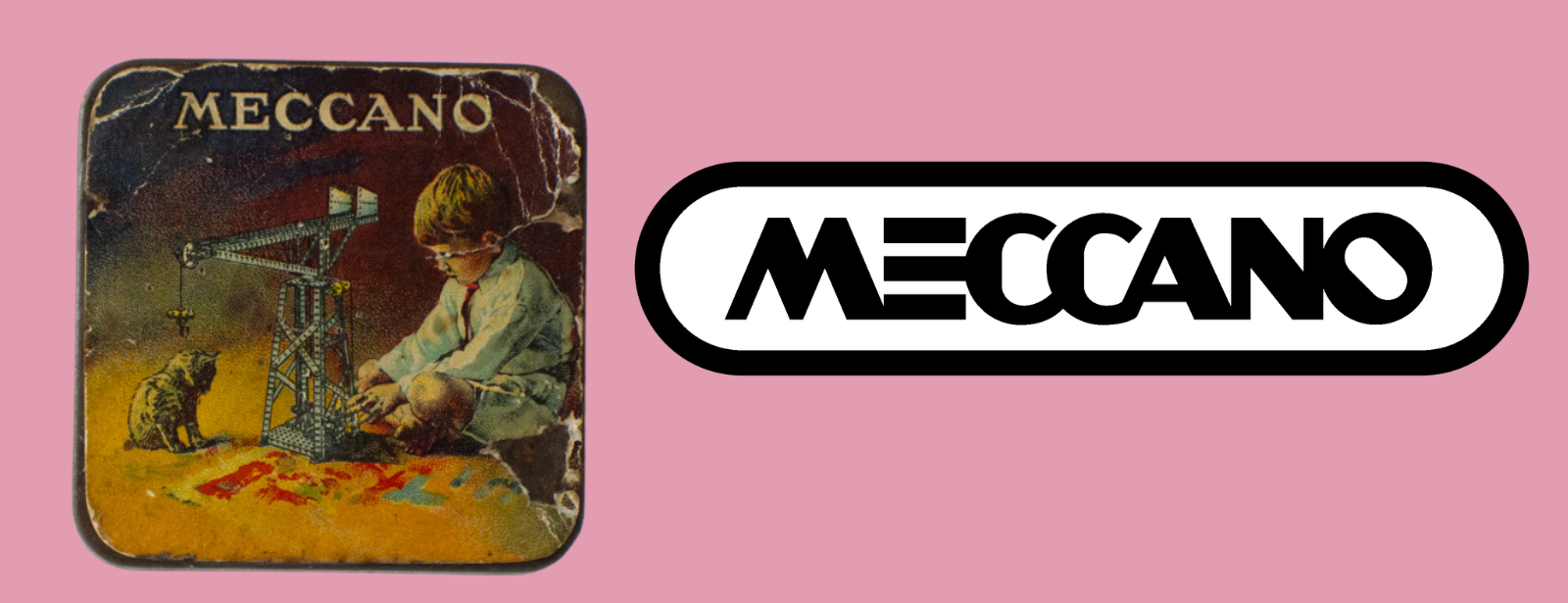
Meccano began in 1901 in Liverpool, England, with the invention by Frank Hornby of a construction toy he called Mechanics Made Easy. The system featured metal strips, plates, axles, wheels, gears and nuts & bolts — all reusable — enabling children (and ambitious adults) to build mechanical devices and moving models.
In 1908 Hornby established Meccano Ltd in the UK to manufacture and distribute his new toy sets.
By the 1910s and 1920s, the system had expanded internationally with factories in France, Spain and Argentina. Beyond being “just a toy,” Meccano encouraged understanding of mechanical engineering — levers, gears, motion — through hands-on play.

Throughout the 1920s and 1930s, Meccano enjoyed great popularity. Its system of perforated metal strips with evenly spaced holes for bolts and axles was pioneering. Clubs and organisations such as the Meccano Guild (founded in 1919) fostered communities of builders.
Designs evolved: colour schemes changed, more parts (gears, motors) were introduced. During WWII the factory switched to war production; afterwards Meccano resumed with new innovations. By the 1950s, sets labelled “Outfit 10” and others allowed ambitious makers to build both simple and complex models — cranes, vehicles, lifts.
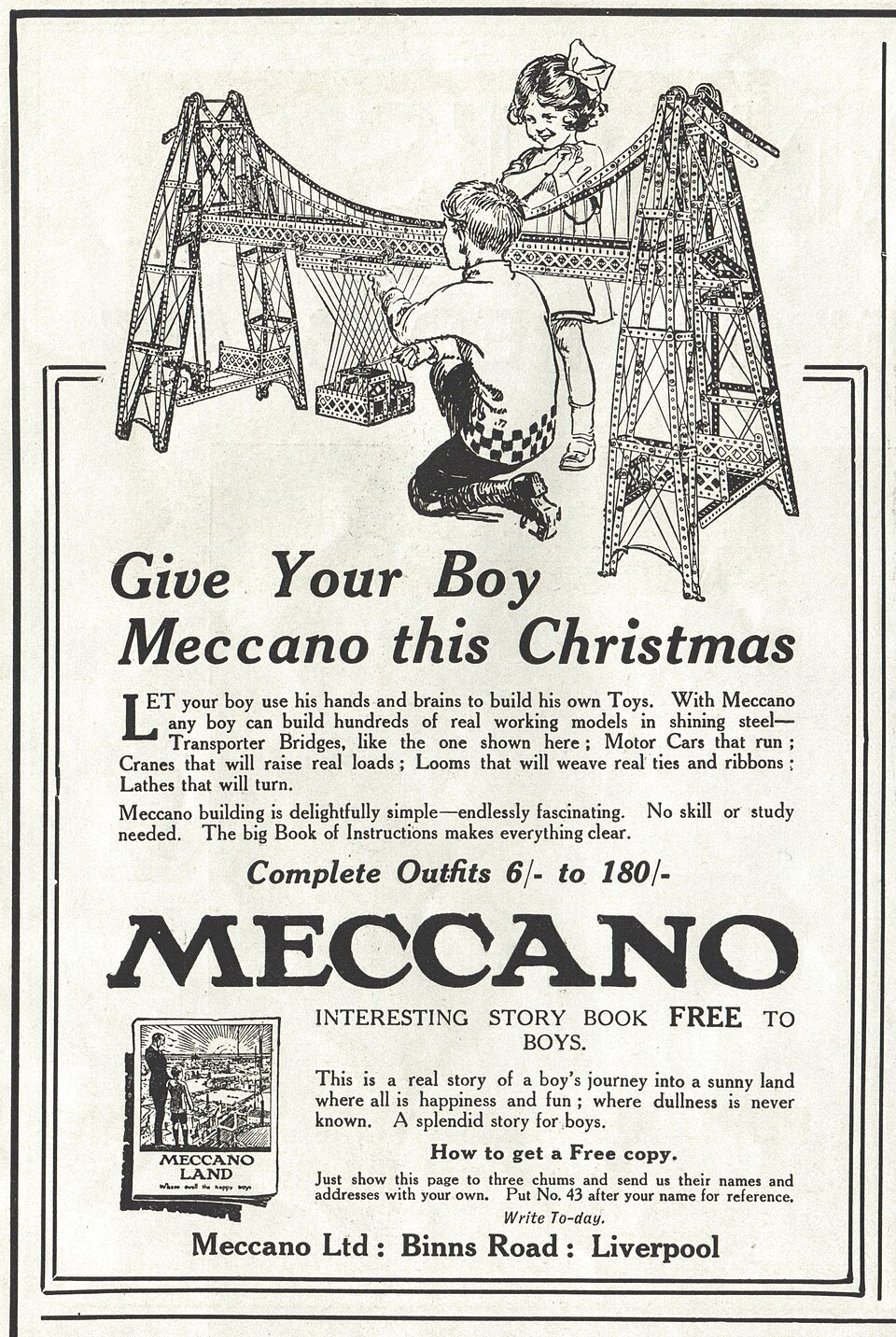
In the 1960s, Meccano Ltd faced financial difficulties and was bought by Lines Bros Ltd in 1964. Colour schemes changed (e.g., to yellow & black plates) and many changes in production and marketing followed. By the 1970s and 1980s manufacturing had shifted away from Britain; plastic parts began to replace some metal components; and the competitive toy market changed the landscape. In 1981, the US company General Mills acquired Meccano’s UK business and the company continued in France with new designs.

In 2000, Japanese toy manufacturer Nikko Toys purchased a major interest in Meccano and introduced modern sets with radio control and programmable electronics.
In 2013, Canadian company Spin Master acquired the Meccano brand outright. One of its notable products: the “Meccanoid” kit — a programmable robot built from Meccano parts with open-source coding. Despite changes, one enduring feature remains: compatibility of older and newer parts (holes spaced at ½ inch, same threading) enabling vintage and modern components to work together.

From its origins in a Liverpool office in 1901 to high-tech robotic kits today, Meccano has spanned over a century of change. It has evolved from simple metal strips and nuts into a sophisticated system that bridges play, education and engineering. Its ability to adapt while retaining core mechanical principles is part of its enduring appeal.
With love
Shyloh
Tales from the youngest daughter of adoll collector — raised on Milo, Vegemite, and more antiques than a country opshop.