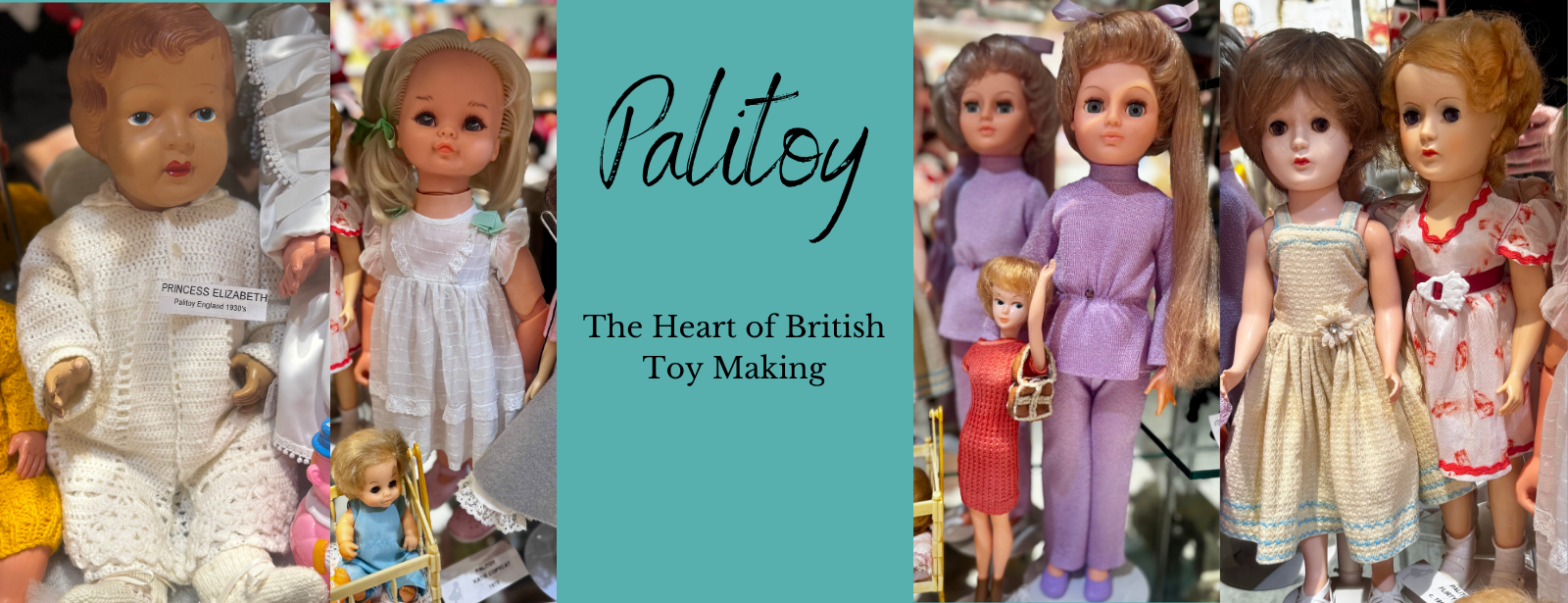
When people visit our museum and spot a Tressy doll, a Pippa doll, or an Action Man uniform that looks just like the one their brother had, something magical happens — their eyes light up. That reaction is a Palitoy reaction.
Palitoy wasn’t just a toy company. It was the heartbeat of British childhood from the 1950s through to the early 1980s, producing toys that were affordable, imaginative, and closely connected to the changing world around them.
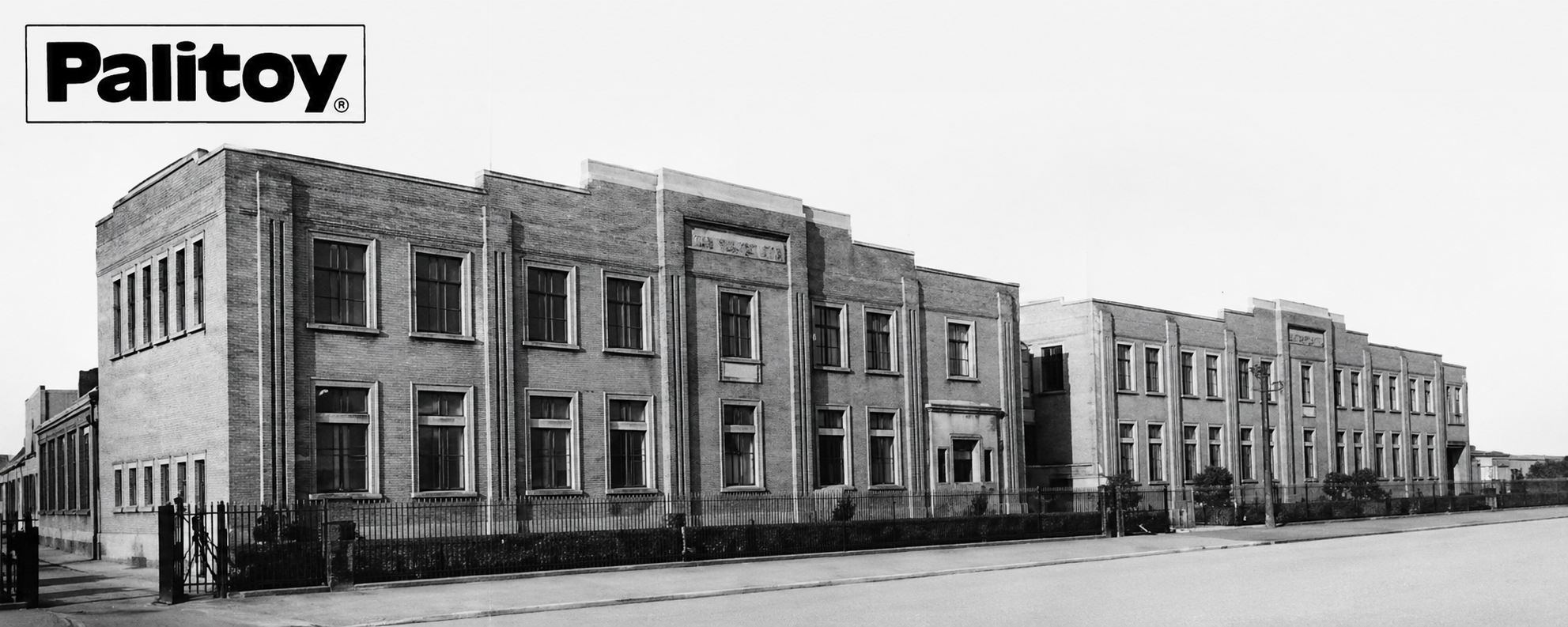
Palitoy was founded in 1919 by Alfred Edward Pallett in Leicester, England. Its name comes directly from his surname, a simple but lasting identity that would become one of the most recognisable in British toy history.
In its early years, the company focused on small goods and celluloid products, operating in a time when many toys were still imported. As manufacturing developed in Britain, Palitoy expanded into dolls and play items, establishing itself as part of a growing domestic toy industry.
This early phase reflects a broader shift — the move from reliance on imports to local production and identity in toys, particularly important in pre- and post-war Britain.
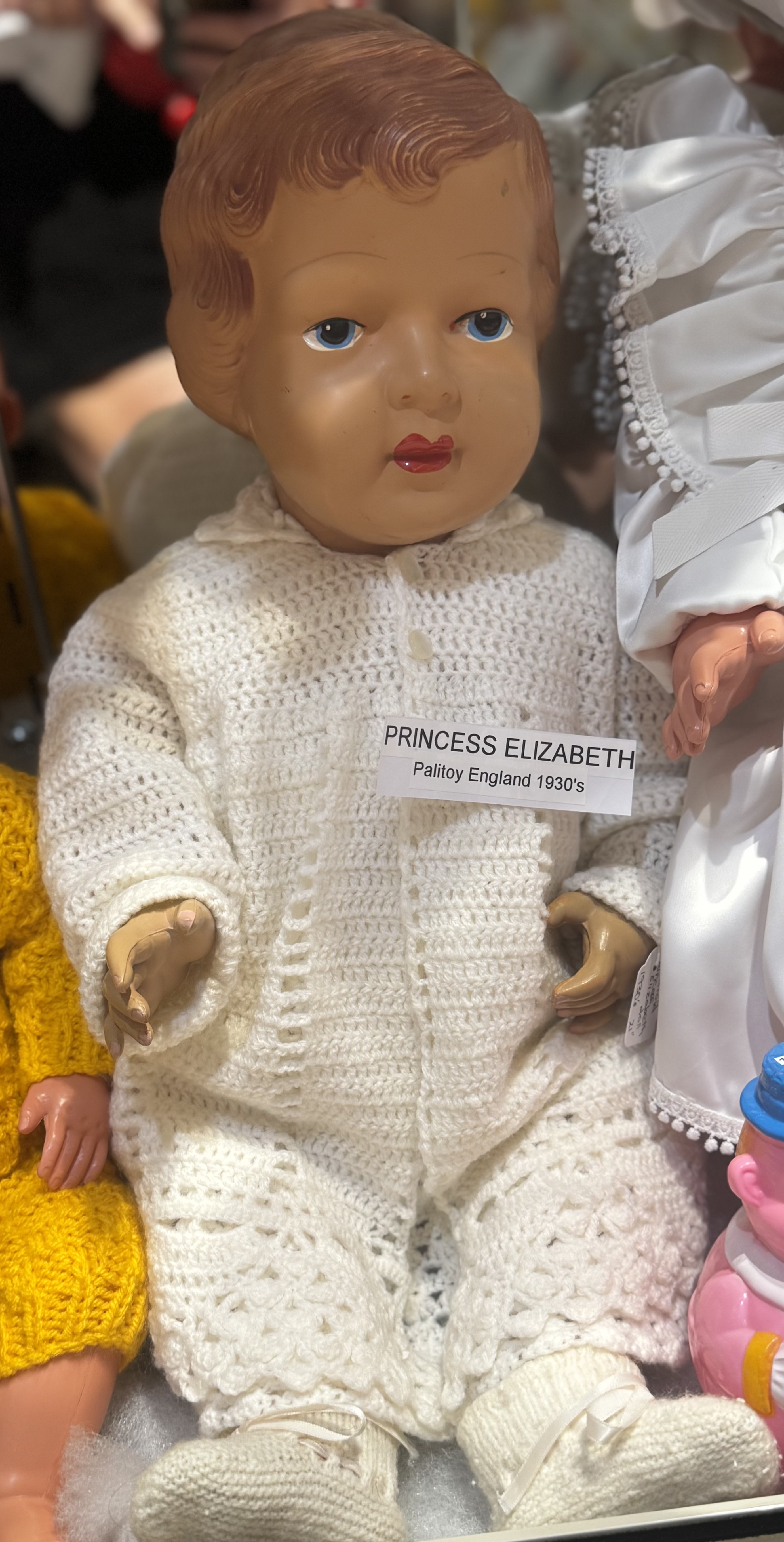
Following World War II, Palitoy entered a period of rapid growth. Like many manufacturers, it transitioned from earlier materials into plastics, allowing for greater scale, durability, and affordability.
During this time, the company expanded its range of dolls and playsets, helping shape everyday childhood in Britain. Toys became more accessible, and Palitoy was at the centre of that change.
One of its most recognisable doll lines includes:
· Pippa (1960s–1970s) – a distinctly British fashion doll, offering a local alternative to international brands
· Katie Kopycats (1970) - she draws and writes mirror image using her special desk.
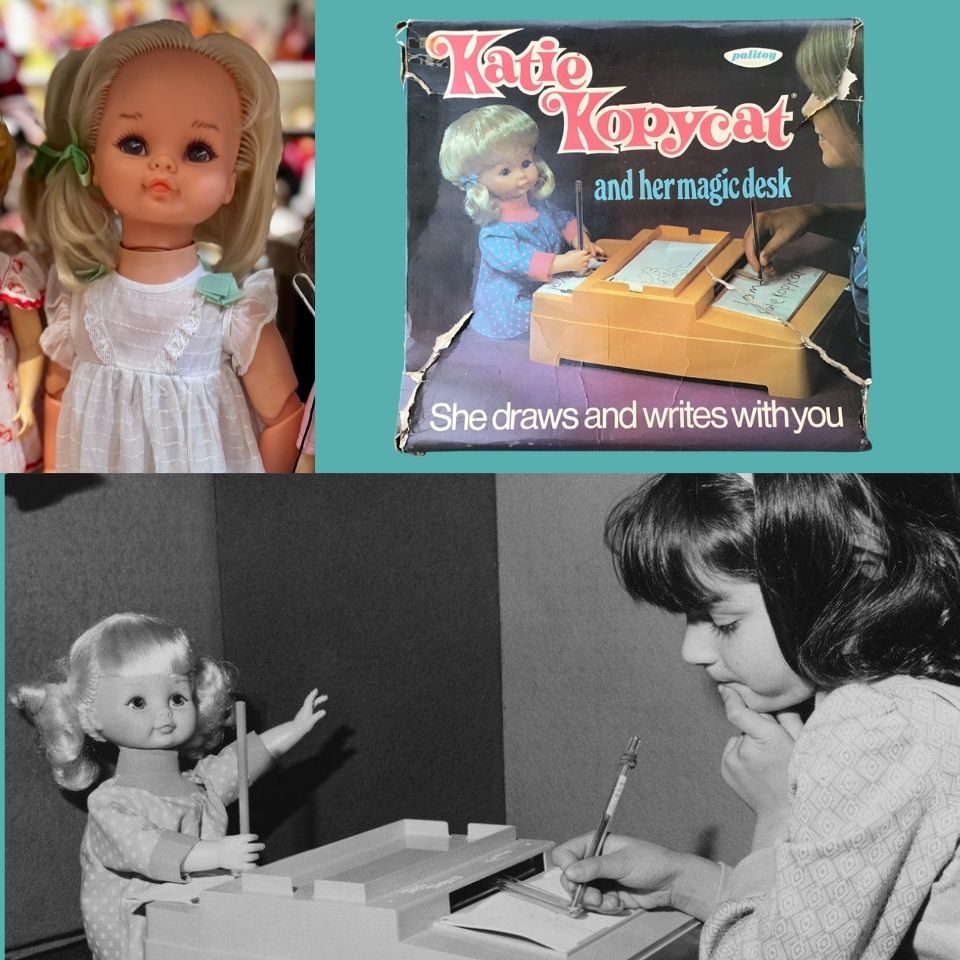
This period highlights a key transition in toy history — from simple, functional playthings to toys that reflected lifestyle, identity, and popular culture.
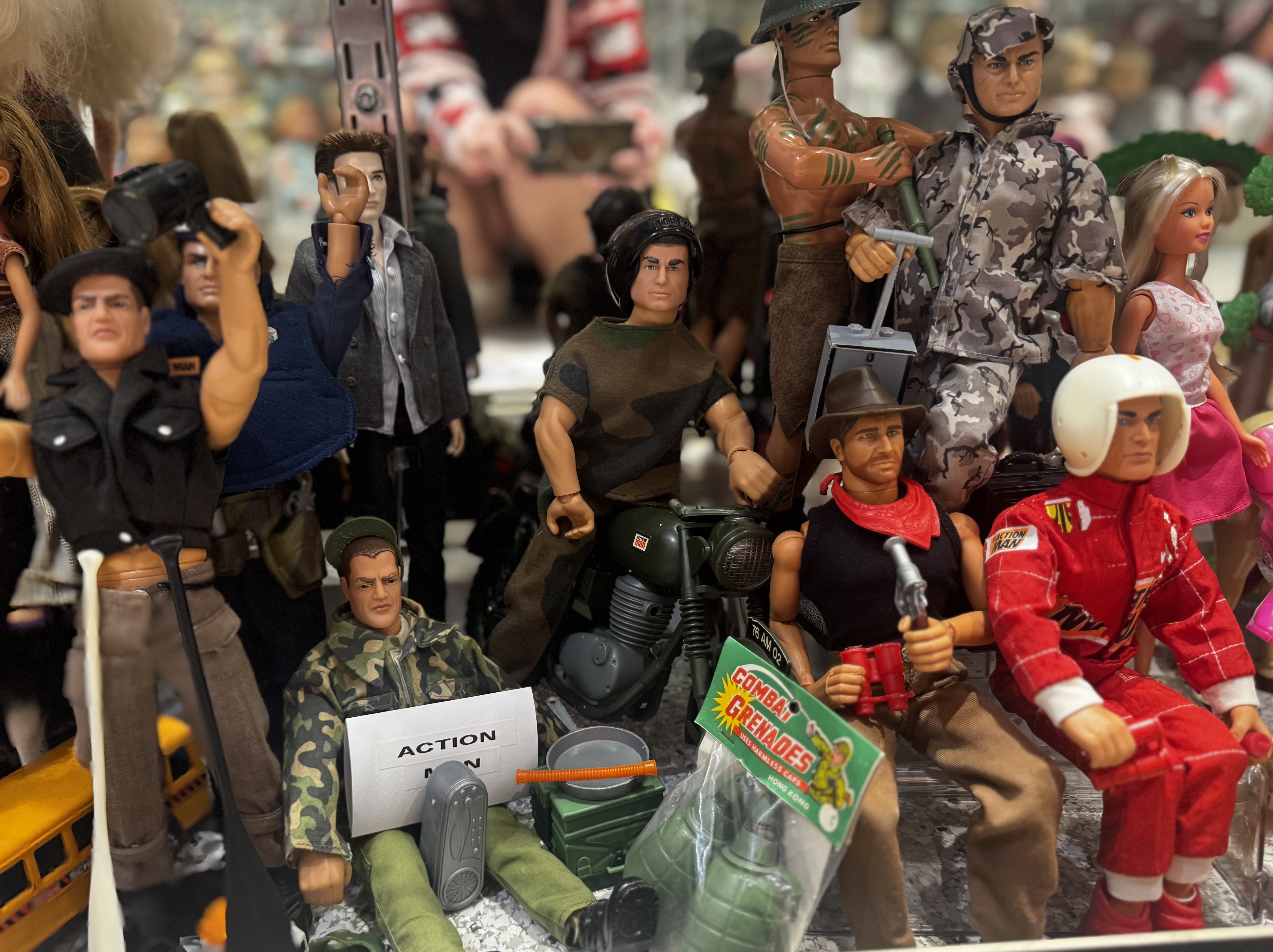
One of Palitoy’s most important contributions came with the introduction of Action Man in 1966, a licensed adaptation of Hasbro’s G.I. Joe.
Action Man was more than just a toy — it represented a shift in how boysengaged with play. Instead of static figures, children now had:
· Articulatedbodies
· Interchangeableoutfits
· Realisticaccessories and vehicles
Palitoy adapted the concept specifically for the British market, creating aversion that felt familiar and relevant. This marked a major step in the riseof the action figure as a dominant toy category.
In 1968, Palitoy was acquired by the American corporation General Mills. This was a turning point that connected the company to global licensing networks and dramatically expanded its reach.
Through this partnership, Palitoy became responsible for producing and distributing some of the most important toys of the late 20th century in the UK.
Most notably:
· Star Wars toys (late 1970s–early 1980s)
Produced under licence from Kenner, these figures and playsets brought theworld of film directly into children’s hands
· Tressy Dolls
Known for their growing hair feature, combining fashion play with simple mechanical innovation
This era reflects one of the most significant shifts in toy history — themove toward media-driven play, where toys and entertainmentbecame deeply connected.

Palitoy items are often identifiable through:
· Moulded or printed “Palitoy” branding
· “Made in England” markings on earlier pieces
· Distinctive packaging, particularly for licensed toys
· UK-specific card designs for items like Star Wars figures
Packaging is especially important for collectors, as Palitoy versions often differ from their American counter parts.
By the 1980s, the toy industry was changing rapidly. Increasing global competition, rising production costs, and the shift toward large multi national companies made it difficult for smaller manufacturers to survive independently.
Palitoy ceased operations in the mid-1980s, with its legacy absorbed into the broader corporate structure of its parent company.

Palitoy represents a key chapter in toy history, particularly in the United Kingdom.
Its story reflects major industry shifts:
· Importedtoys → domestic manufacturing
· Traditionalplay → character and identity-driven toys
· Standalonetoys → licensed, media-connected worlds
Where companies like Ideal helped shape early and mid-century play, Palitoy captures the moment when toys became part of a larger cultural landscape —influenced by television, film, and global branding.
Today, the pieces in our collection are more than nostalgic objects. They are part of a larger story — one that shows how childhood, culture, and imagination evolved together.
And judging by the reactions in our museum, that story is still very much alive.
With love
Shyloh
Tales from the youngest daughter of a doll collector — raised on Milo, Vegemite, and more antiques than a country op shop.