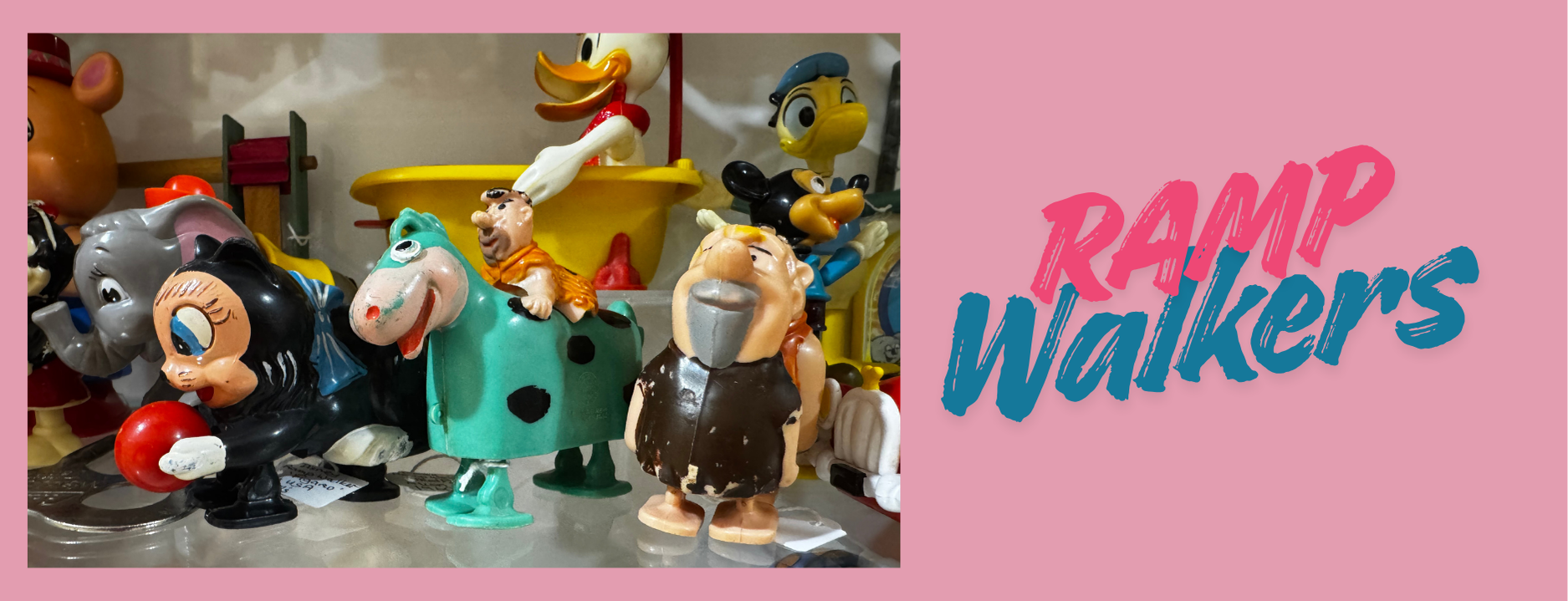
What is a Ramp Walker?
A ramp walker is a mechanical toy designed to “walk” down a gentle slope without any batteries, wind-up keys, or electronics. Inside each figure is a linked-leg mechanism and a careful balance of weight. When placed on a ramp, gravity does the work — giving the illusion that the character is walking step by step.
Children loved racing them, lining them up side by side, or simply watching them shuffle along. It was low-tech entertainment at its best. Chgeck out this video to see one of the Marx Toy Companies first range. Marx Ramp Walker Toys
A Brief History
Ramp walkers rose to popularity in the 1950s and 1960s, during a period when toy companies were looking for affordable ways to bring character toys to the mass market. The invention and rise of injection-moulded plastic played a major role in making ramp walkers possible. Bright colours, lightweight parts and durable shapes suddenly allowed companies to produce recognisable characters with accurate details.
The most famous makers were:
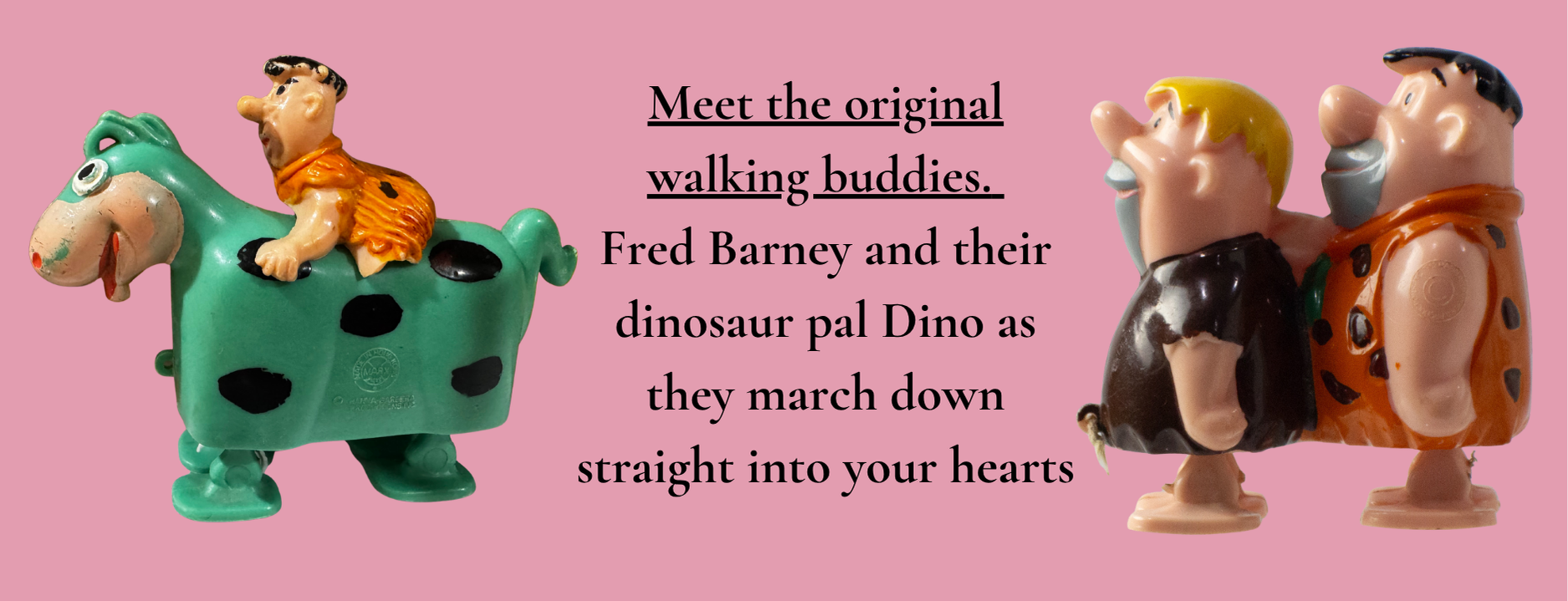
• Louis Marx & Co. – Produced many of the best-known walkers, including Fred Flintstone, Barney Rubble, Donald Duck, Yogi Bear, and countless animals.
• Kohner Bros. – Known for Disney characters, circus walkers,and clever twin-walker sets.
• Hong Kong factories (1970s–80s) – Produced mass-marketversions, often as novelties in toy shops, showbags, and even cereal boxes.
Ramp walkers evolved from early tin and celluloid examples into brighter, safer, and more detailed plastic versions thanks to the rise of modern plastics in the 1960s.
Why This Shift Mattered
Toy manufacturing was changing rapidly. Companies were moving away from metal and fragile celluloid to durable moulded plastics. Ramp walkers became one of the best examples of this transition — affordable for families, appealing to children, and easy for toy companies to license with major cartoon studios.
This era also saw the explosion of character-based marketing. Because injection-moulded plastic could replicate faces and shapes accurately, cartoon characters finally looked like themselves. That’s why walkers featuring The Flintstones, The Jetsons, Disney characters and other TV favourites became so popular.
Why Ramp Walkers Are Collectible Today
Collectors love ramp walkers because they:
• represent an iconic moment in toy engineering
• showcase early plastic characters from film and television
• are colourful, display beautifully, and bring instant nostalgia
• link directly to the post-war plastic revolution
• were often played with — so finding good condition examples is rare
Original ropes, bright paint, intact legs and working mechanisms all increase value. Marx and Kohner licensed characters remain the most sought-after, followed by unusual animal versions and early tin examples.
Ramp Walkers at My Doll Cottage
Our collection includes a sweet mix of character and animal walkers — from the classic Marx Fred & Barney to beautifully moulded animals and circus figures. Each one captures the joy of a pre-digital childhood, where a simple slope could keep kids entertained for hours.
Ramp walkers aren’t just toys. They represent ingenuity, design history, and the power of imagination — walking themselves straight into the heart of toy culture.
With love
Shyloh
Tales from the youngest daughter of a doll collector — raised on Milo, Vegemite, and more antiques than a country op shop.