
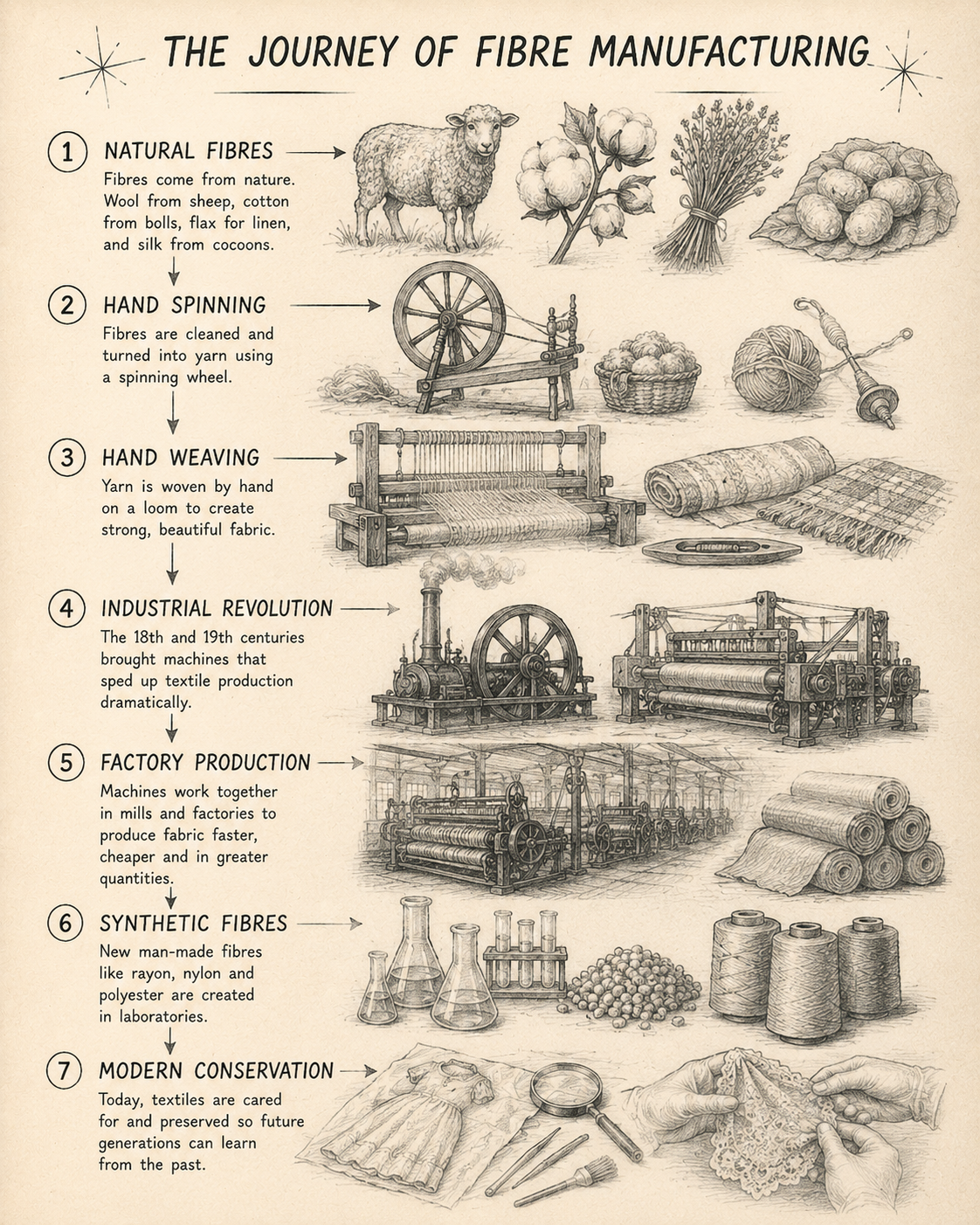
Early techniques included spinning, weaving, felting, and stitching, with methods and materials shaped by climate, geography, and cultural tradition. Textiles were not only practical but also deeply symbolic, often reflecting social status, regional identity, and technological skill.
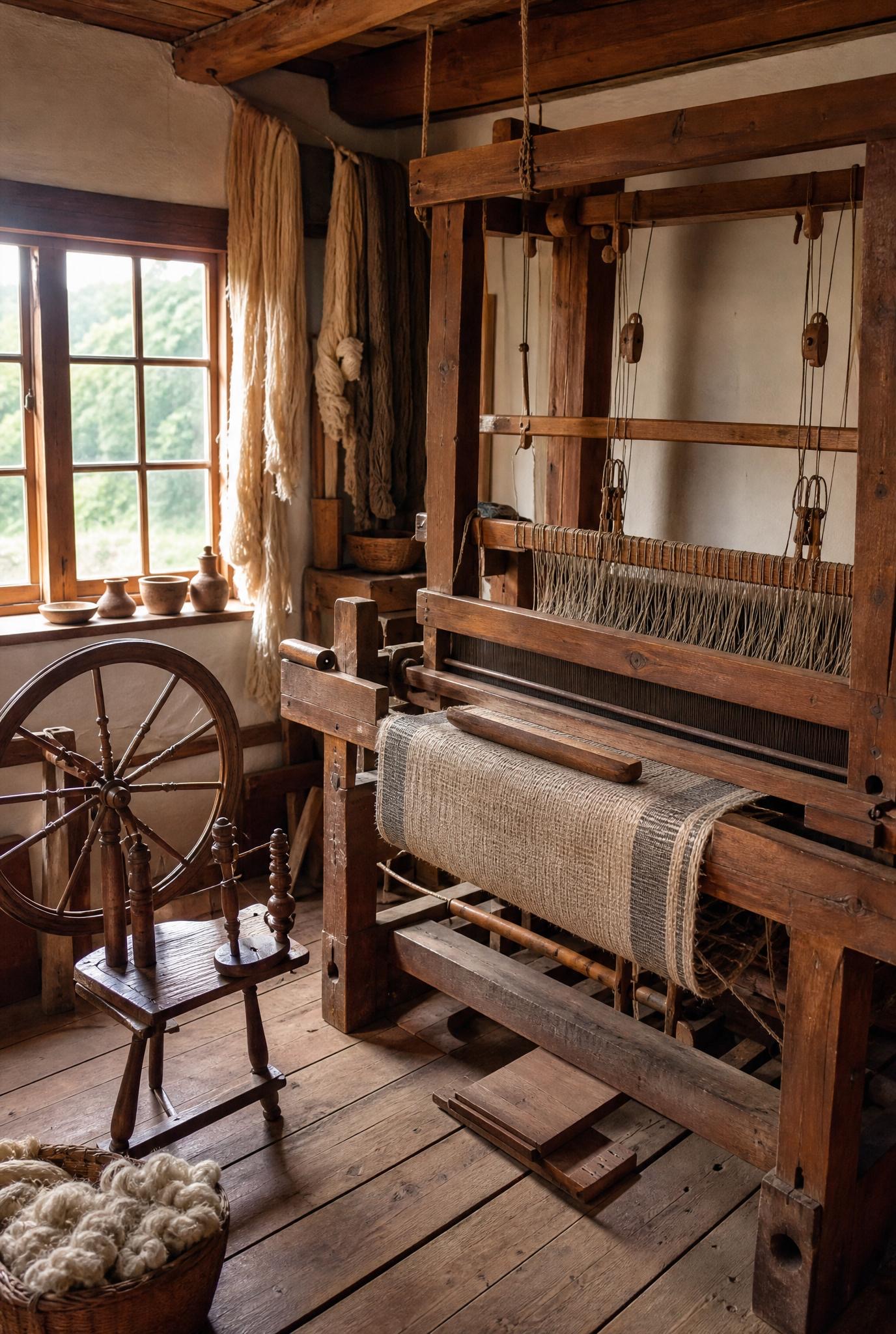
As societies developed, textile production became increasingly sophisticated. The Industrial Revolution marked a major turning point, introducing mechanised looms, factory production, and improved dyeing processes. This shift allowed textiles to be produced more efficiently and at greater scale, making fabric-based goods more accessible to a wider population. At the same time, it created greater consistency in materials, patterns, and finishes, which is particularly evident in clothing, household items, and toys from the 19th and early 20th centuries.

In the world of dolls and toys, textiles hold special significance. Cloth dolls, fabric bodies, and hand-sewn garments were common in earlier periods, often made at home or by small workshops. As toy manufacturing expanded, specialised textiles such as plush, felt, and mohair became popular for soft toys due to their durability and comforting tactile qualities. These materials allowed toys to be expressive, cuddly, and long-lasting, strengthening the emotional bond between children and their playthings. Textile clothing on dolls also mirrored contemporary fashion, offering insight into everyday dress, gender roles, and domestic life of the time.
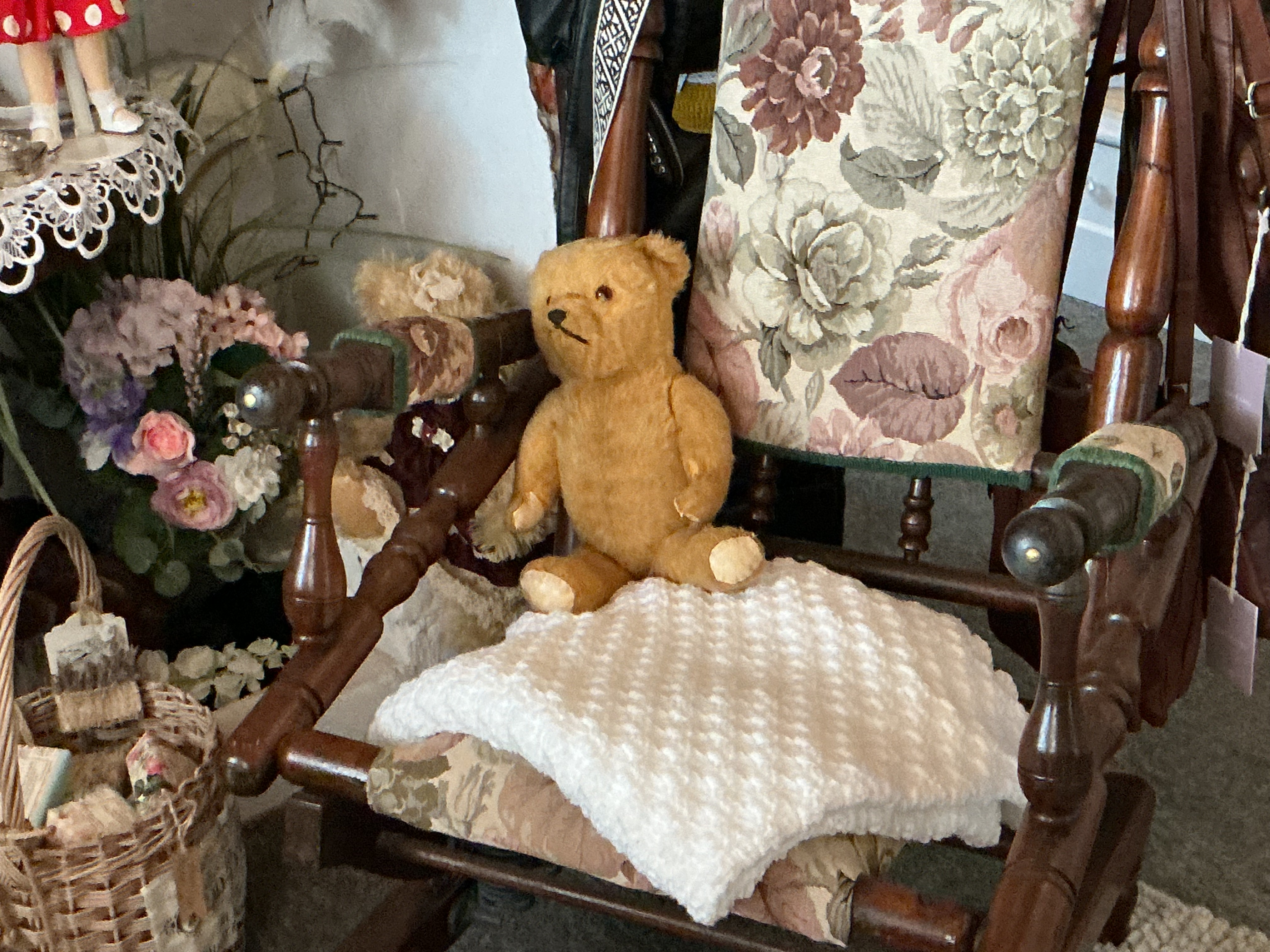
By the mid-20th century, synthetic fibres such as rayon, nylon, and polyester were increasingly introduced into textile production. These materials were cheaper to manufacture, more uniform, and easier to care for, making them ideal for mass-produced toys and accessories. While synthetics changed the look and feel of textile objects, they also reflect broader social and industrial changes, including post-war manufacturing growth and global trade.
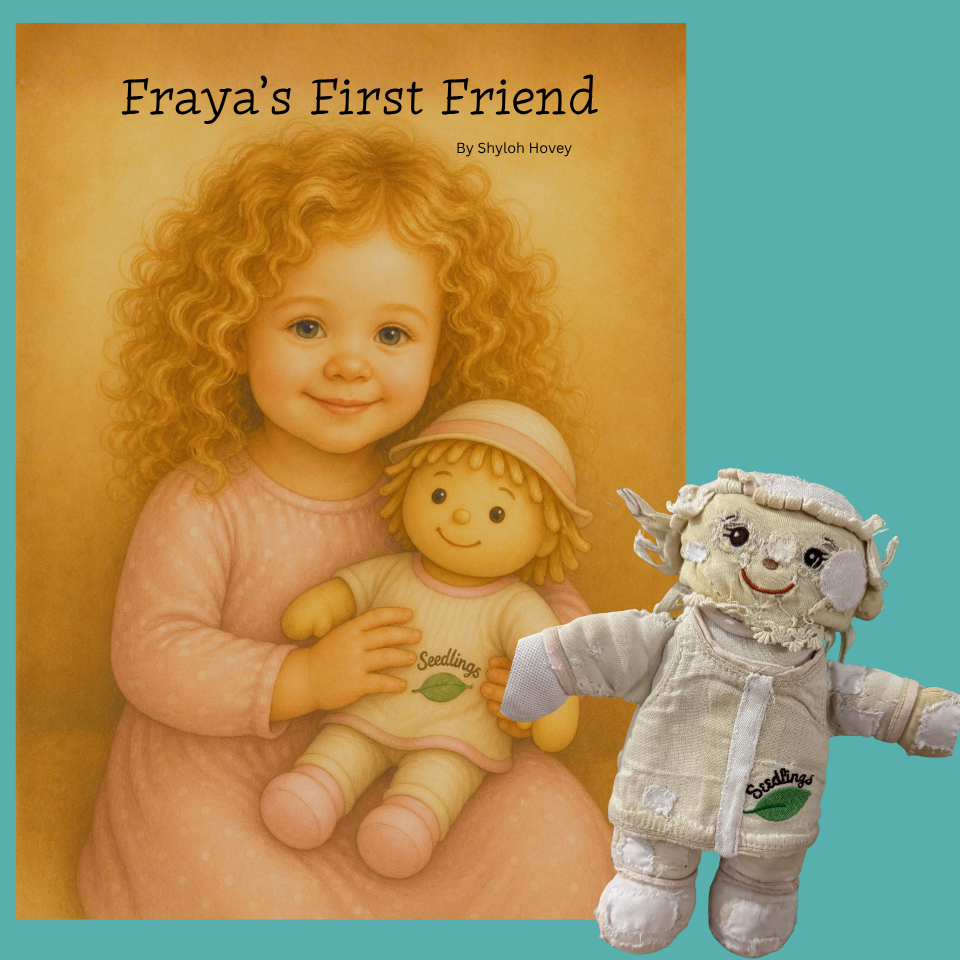
Today, historical textiles found in dolls, toys, and related objects are valuable research tools. Fibre types, weave structures, construction techniques, and signs of wear all help historians and collectors understand how an item was made, where it originated, and how it was used. Within a museum context, textiles provide a tangible connection to pastlives, industries, and childhood experiences, making them an essential material category in documenting and preserving social history.
With love
Shyloh
Tales from the youngest daughter of a doll collector — raised on Milo, Vegemite, and more antiques than a country op shop.