
Long before plastic and factory production, dolls were lovingly handmade from scraps of fabric, yarn, and buttons. These rag dolls were often created by mothers and grandmothers, stitched from whatever materials were available — old dresses, curtains, or bits of cloth too worn to repair.
Each doll was unique, with hand-sewn smiles, simple embroidered features, and clothing made from off cuts of family garments. They were cherished companions rather than commercial products, and their creation reflected a time when toys were made with care, creativity, and resourceful ness.
As mass-produced dolls took over the market in the 20th century, rag dolls quietly faded from many homes. Yet today, they’re making a gentle come back — both as nostalgic collectibles and as part of a renewed focus on sustainable play. Modern artisans are reviving the craft using organic fabrics, plant-based dyes, and hand-stitching techniques that celebrate slow, mindful making.
In a world filled with digital distractions, these simple, soft dolls remind us of a time when play was personal, and every stitch told a story. Below is a great example of Handmade Australian dolls sold on Etsy.

Rag dolls are among the oldest known children’s toys in human history. Because they were made from fabric and other perishable materials, very few early examples have survived — but archaeological discoveries show that cloth dolls date back over 2,000 years.
Ancient Beginnings:
The oldest known rag doll was discovered in Thebes, Egypt, dating from around 2000 BC. Made of linen stuffed with papyrus and decorated with with strands of thread for hair, this simple figure represents one of the earliest examples of a toy made purely for comfort and play. It now resides in the British Museum.
Children in ancient Greece and Rome also played with soft dolls made of cloth or wool. These were often treasured until a girl reached adulthood, when the doll might be offered to a temple as a symbolic farewell to childhood.
Medieval to Early Modern Europe:
Throughout the medieval period, homemade cloth dolls were a staple of childhood across Europe. Simple to make and endlessly repairable, they were created from worn clothing, filled with straw, wool, or rags, and passed down through generations.
18th to19th Centuries:
By the 1700s, rag dolls were a familiar sight in both European and American households. Many were handmade, though small-scale commercial production soon began. During the Industrial Revolution, sewing machines and textile mills made it easier to produce dolls for sale, often stuffed with cotton or saw dust and dressed in hand-sewn garments.
Ancient Beginnings: Dolls of Cloth and Thread
These two remarkable textile dolls show how the art of making soft toys spans cultures and centuries.
The first doll, dating from Ancient Rome (100–500 BC), is a rare early example of a hand-stitched figure. Created from woven cloth and simple natural fibers, her form and construction show the ingenuity of Roman craft traditions. Though time worn, she still carries a quiet humanity — a reminder that children’s play things have always been shaped by the materials of everyday life.
The second doll, discovered by archaeologist Flinders Petrie at Hawara, Egypt, dates to around 350–360 BC. Made from dyed wool and flax, with strands of real human hair, she reflects both the artistry and affection given to childhood belongings over 2,000 years ago. Her survival through the ages provides an extraordinary link between ancient Egyptian childhood and our own enduring fascination with dolls.

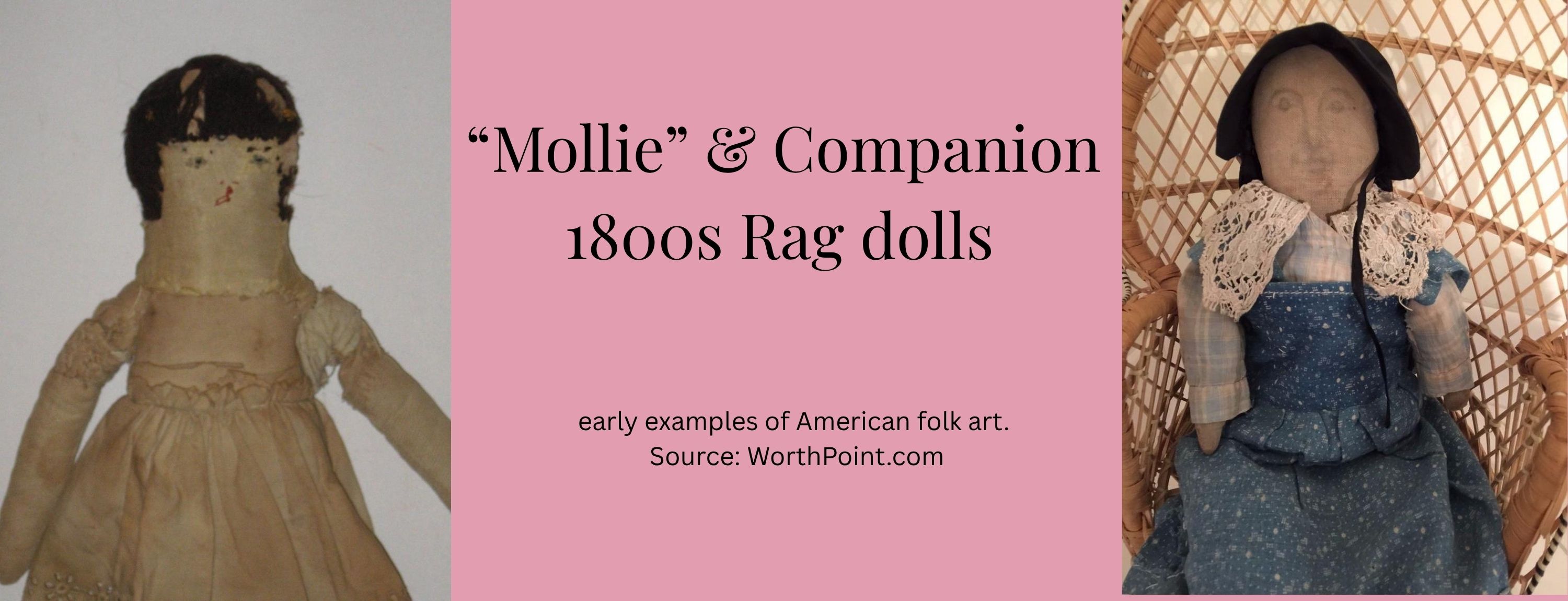
19th-century American rag dolls
These two remarkable 19th-century American rag dolls, shared via WorthPoint, capture the heartfelt simplicity of pioneer-era toy making. The first, affectionately known as “Mollie,” features a softly faded pencil-drawn face, homespun clothing, and mitten-shaped hands — said to have been gifted to a young Nebraska girl named Sarah as her very first doll. Stuffed with horsehair and lovingly worn, Mollie embodies the resilience and tenderness of life on the frontier. The second doll, just 9½ inches tall, reflects the same handmade charm, dressed in her original dainty cotton dress and showing gentle signs of play. Together, they offer a touching glimpse into 1800s American folk art and the enduring spirit of handmade childhood treasures.
The 20thCentury and Beyond:
Rag dolls entered popular culture in the early 1900s with Raggedy Ann,patented in 1915 by American illustrator Johnny Gruelle. Her simplered-yarn hair and stitched smile made her an enduring symbol of comfort andkindness during the century’s early years.
Today, the rag doll has returned to prominence — not as a mass-market item, but as asymbol of craftsmanship, nostalgia, and sustainability. Artisans and collectorsalike celebrate these dolls for what they have always represented: the artistryof love expressed through fabric and thread.
With love
Shyloh
Tales from the youngest daughter of adoll collector — raised on Milo, Vegemite, and more antiques than a country opshop.