
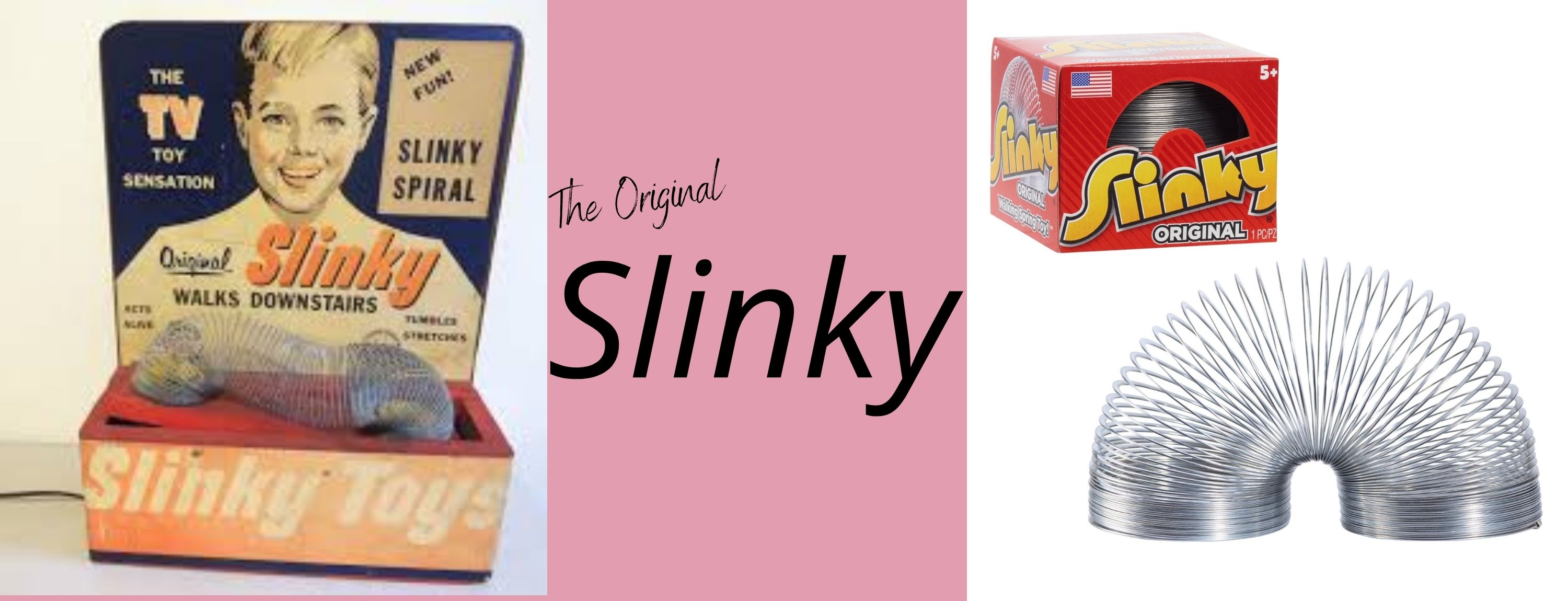
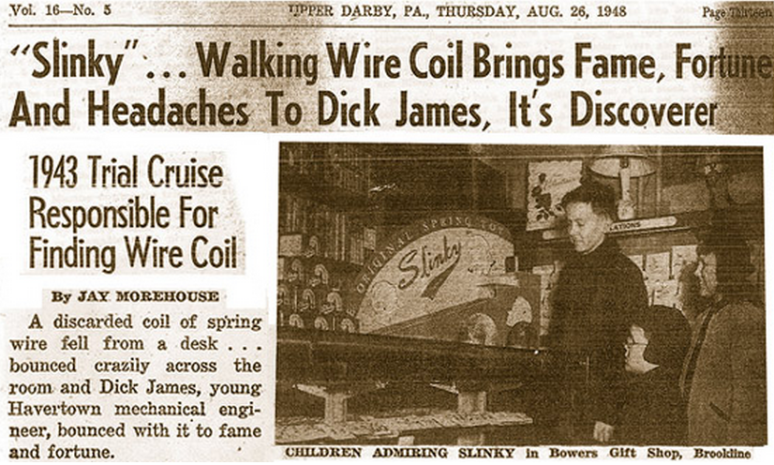
The story began in 1943, when Richard James, a naval mechanical engineer from Philadelphia, accidentally knocked a tension spring from his workbench. To his surprise, the spring didn’t simply fall — it gracefully “walked” across the floor. Fascinated, he took the spring home and showed it to his wife, Betty James, who immediately saw its potential as a toy.
Together, they spent two years perfecting the design and searching for the right steel coil that could move smoothly. In 1945, they demonstrated the first Slinky at Gimbels Department Store in Philadelphia. The display was an instant success — all 400 Slinkys sold out within 90 minutes.
Priced at just $1, the Slinky captured the spirit of post-war optimism. It was simple, affordable, and endlessly entertaining — everything a recovering nation needed. Children loved watching it “walk” down steps, while adults were captivated by the elegance of its movement.
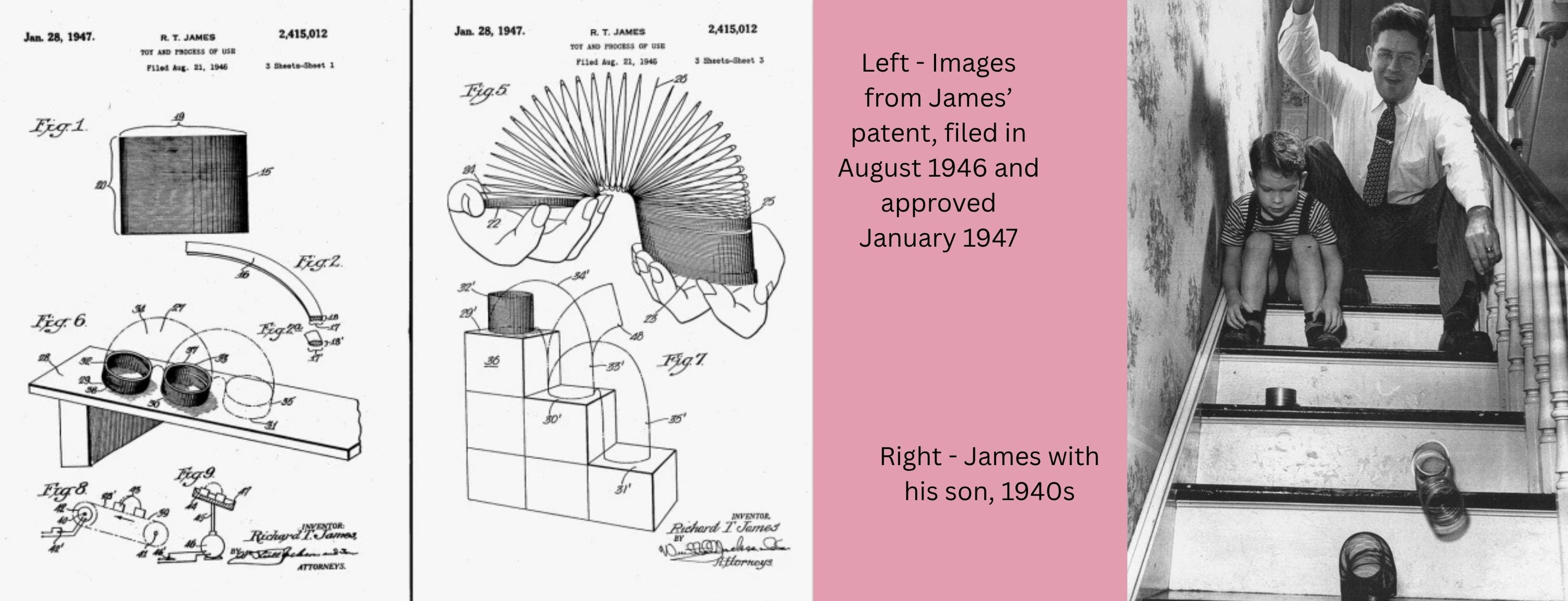
Richard James Original A Family Business with a Twist
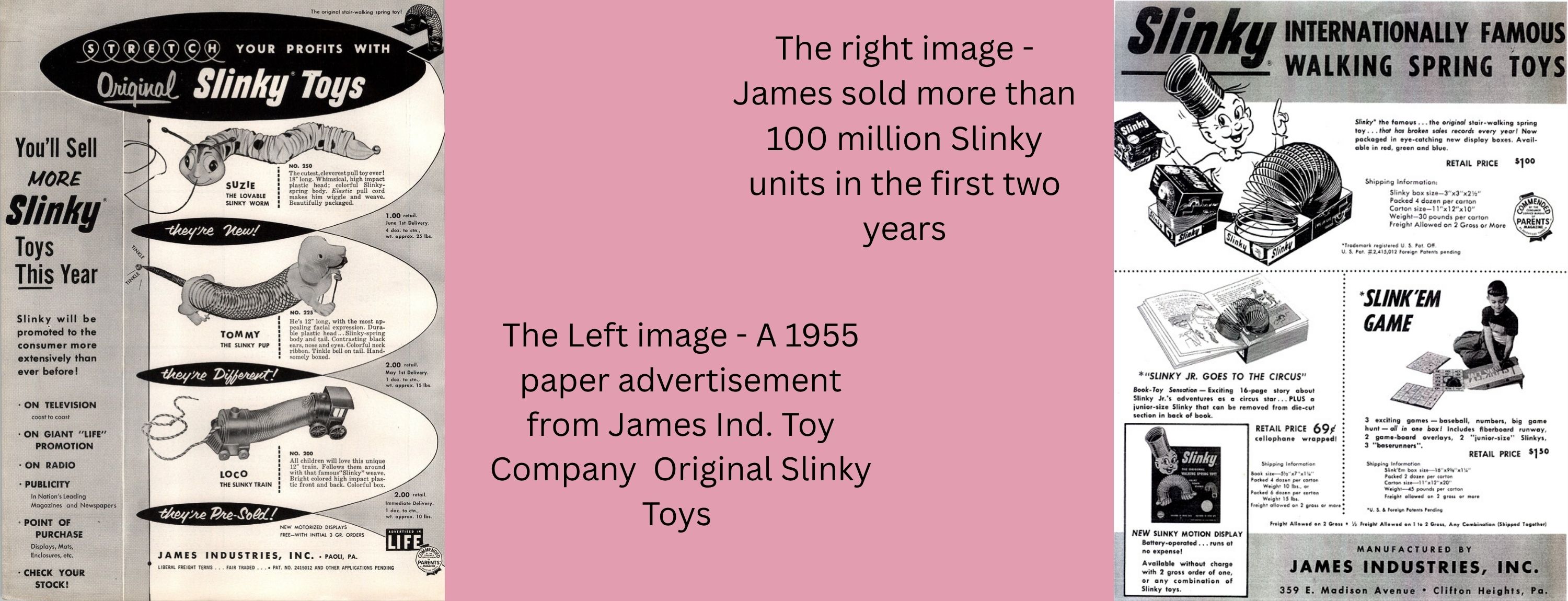
While Richard James was the inventor, it was Betty James who ensured the Slinky’s survival and legacy. When Richard left the business and moved overseas in the early 1960s, Betty took over James Industries. She revitalised production, introduced the iconic red-and-blue packaging, and spear headed a successful marketing campaign that made “It’s Slinky!” one of the most recognisable jingles in toy history.
Under Betty’s leadership, the Slinky became a true American classic, appearing in classrooms, science labs, and toy boxes across the world. Her business acumen earned her a place in the Toy Industry Hall of Fame in 2001.
Slinky in Science and Space
The Slinky’s fame wasn’t limited to play time. Its unique physics made it a popular educational tool. Teachers used it to demonstrate waves, gravity, and kinetic energy, showing how potential energy transforms into motion as thespring “walks.”
In later years, NASA took the Slinky even further — literally. Astronauts brought Slinkys aboard space shuttle missions to study how they be have in zero gravity. Without the pull of Earth’s gravity, the toy didn’t “walk” as it does on stairs but instead oscillated and floated in mesmerizing slow motion, providing scientists (and children watching back home) with an unforgettable demonstration of motion in space.
An Enduring Icon of Play and Discovery
From a discarded spring on a work bench to a toy that travelled beyond Earth, the Slinky remains a timeless symbol of curiosity, creativity, and joy. It reminds us that some of the best inventions come from accidents — and that play can be thefirst step toward discovery.
With love
Shyloh
Tales from the youngest daughter of adoll collector — raised on Milo, Vegemite, and more antiques than a country opshop.