
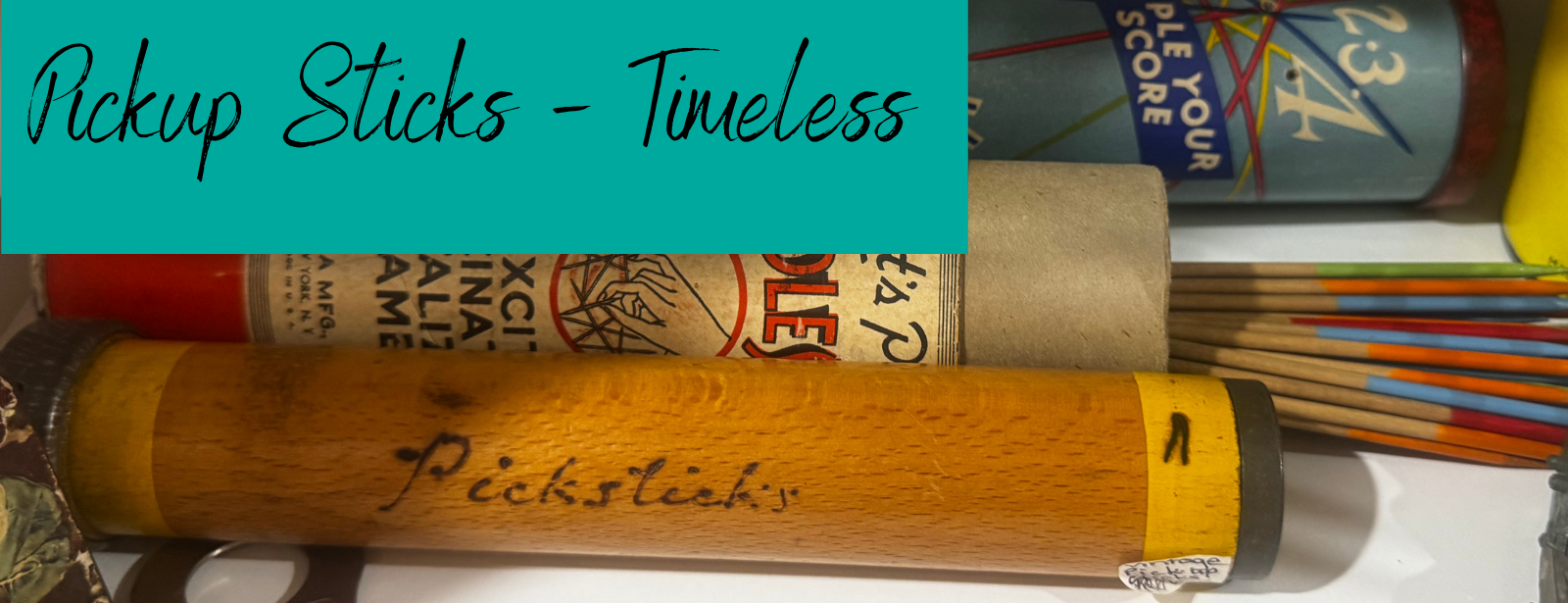
Before screens and digital entertainment, family fun often came in the form of simple, hands-on games that challenged skill, patience, and a steady hand. Among these classics, few have stood the test of time quite like Pick-Up Sticks — a game whose roots reach back thousands of years and whose charm continues to captivate players today.
The earliest forms of Pick-Up Sticks can be traced to ancient China, where people played similar games using sticks, straws, or small bones. These early versions were sometimes called “Chopsticks” or “Spilikins”, depending on the region. The concept was simple yet universal: remove one object from a pile without disturbing the others.
As trade and cultural exchange spread across Asia and Europe, variations of the game appeared under different names. In Japan, it evolved into Mikado, a term referring to the Emperor — a nod to the highest-scoring stick in the game. By the 1700s and 1800s, the game was well established across Europe, made from materials such as ivory, wood, or bone, and often found in elegant parlour sets used for both play and display.
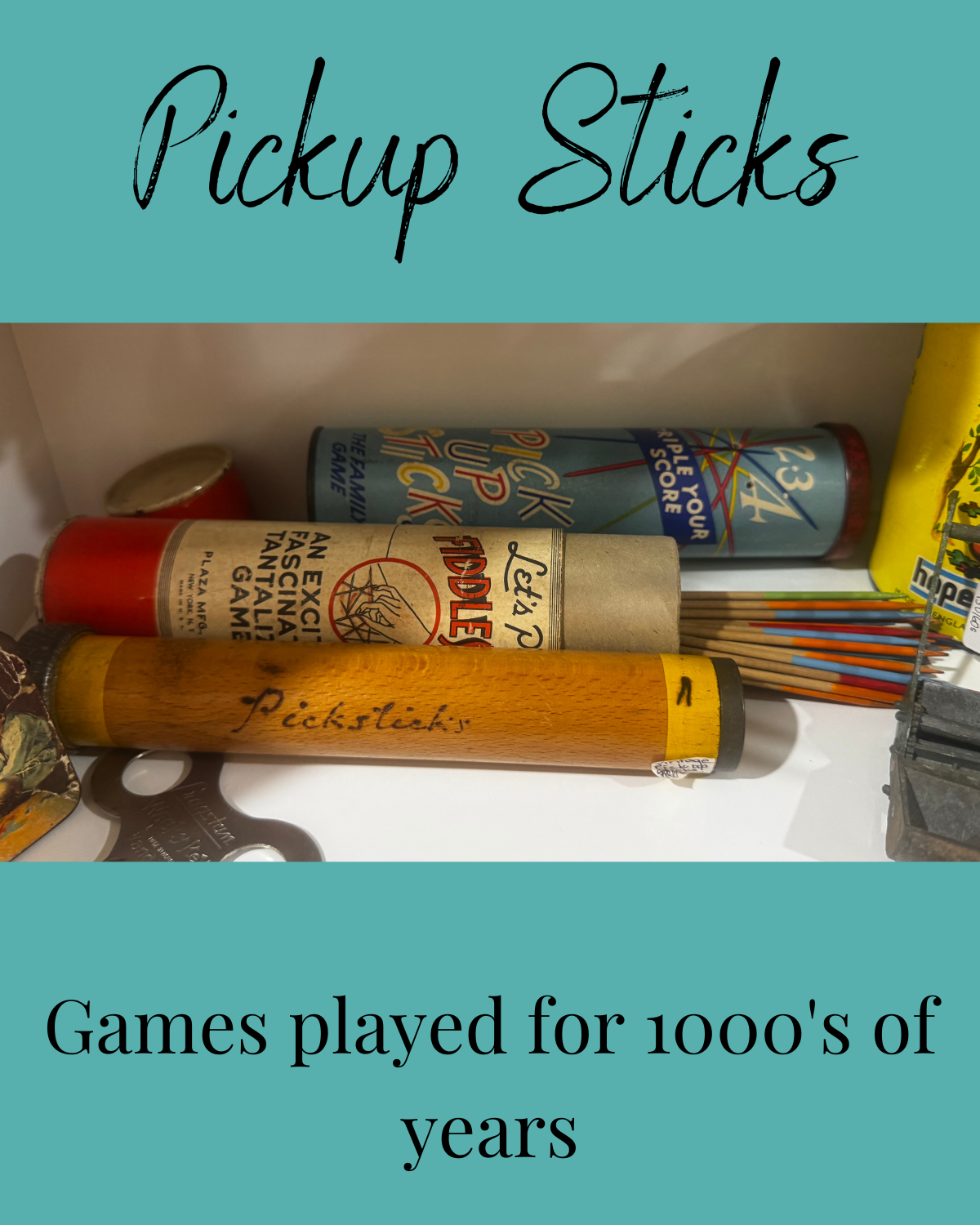
During the 19th century, Pick-Up Sticks became a favorite pastime among Victorian families. Known as Spillikins in England, it was a popular drawing-room game played after dinner or during social gatherings. Sets were crafted with fine detail — sticks painted in various colors or tipped with metal — and sold in ornate wooden boxes.
The game’s appeal lay not only in competition but also in the finesse it required. Steady hands and focus were prized skills, and it became a metaphor for refinement and gentility in polite society.
By the mid-20th century, the game had transitioned from upper-class parlour tables to family living rooms and playgrounds around the world. The introduction of plastic manufacturing after World War II made it affordable and accessible to everyone.
In Australia during the 1950s and 1960s, companies like Thomas Hore Australian Plastic Toys and other local manufacturers produced colorful, durable sets of Pick-Up Sticks. They were often packaged in cylindrical cardboard tubes with metal end caps, featuring bright, eye-catching graphics and simple printed instructions.
For many Australian children, Pick-Up Sticks were a staple in showbags, toy chests, and school recesses — a game shared between siblings, friends, and families.
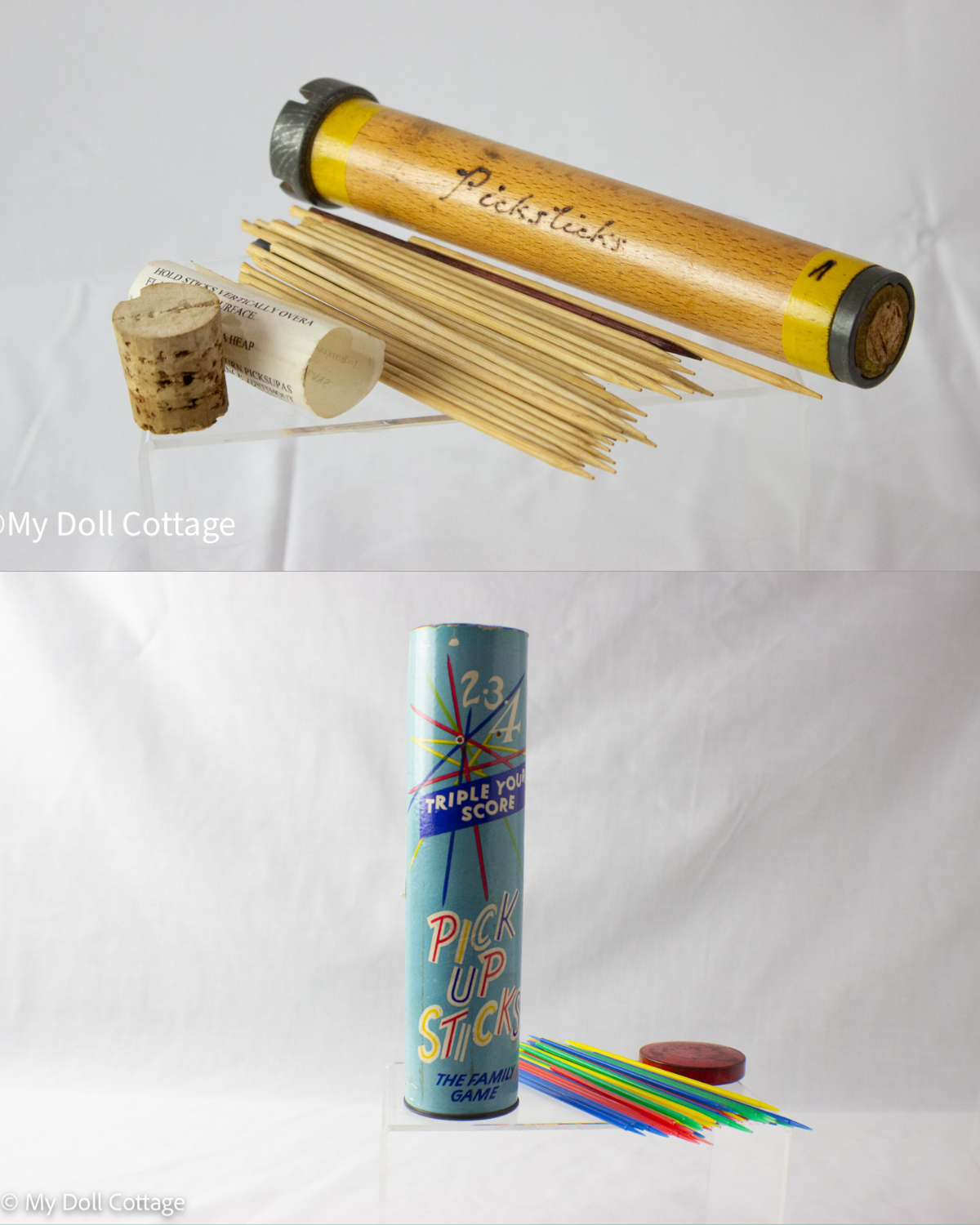
The rules have hardly changed over the centuries:
The beauty of Pick-Up Sticks lies in its simplicity: no batteries, no technology — just patience, precision, and a bit of strategy.
Pick-Up Sticks remains more than just a test of dexterity; it’s a symbol of timeless play. Generations have passed down the game as a lesson in patience and control, and it continues to appear in classrooms, therapy sessions, and family gatherings.
Today, Pick-Up Sticks are made from plastic, bamboo, or wood, and while the designs have changed, the essence of the game remains untouched. It’s a beautiful reminder that sometimes, the simplest games last the longest — connecting us to centuries of shared human joy and challenge.
With love
Shyloh
Tales from the youngest daughter of adoll collector — raised on Milo, Vegemite, and more antiques than a country opshop.