
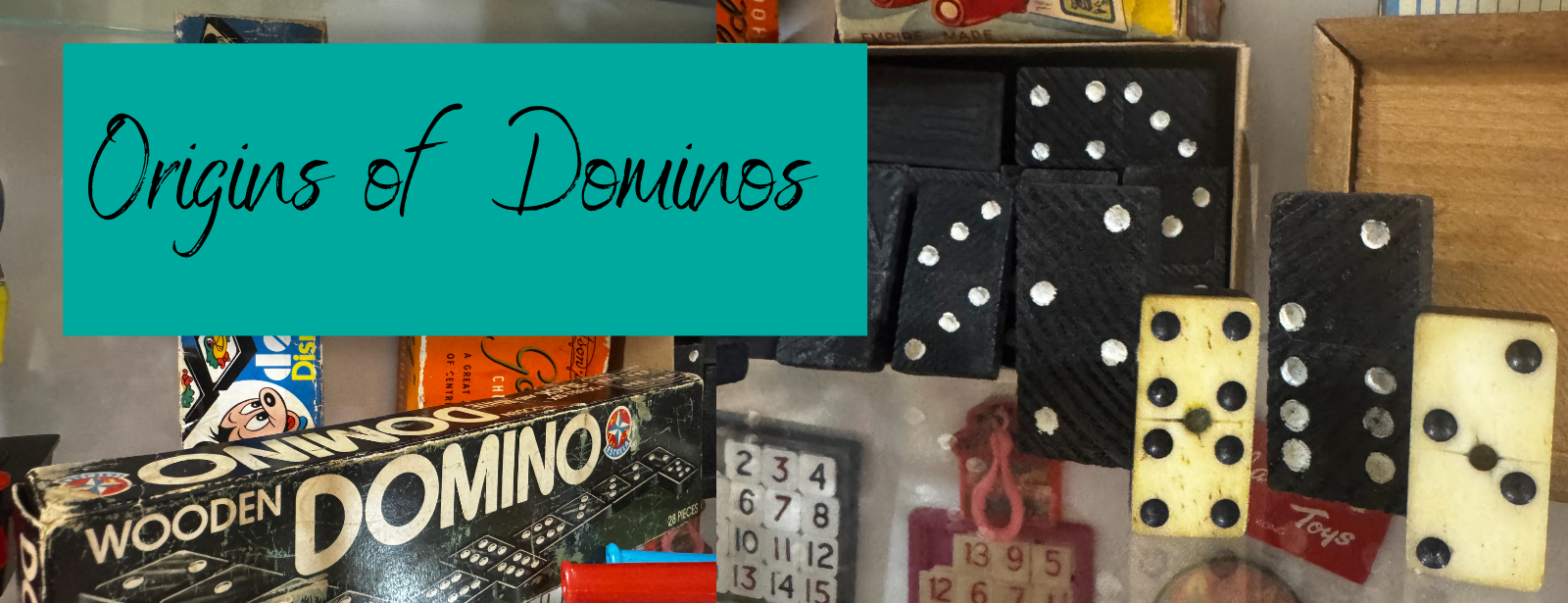
The game we now recognise as dominoes has its roots deep in Chinese history. The earliest written references to domino-type gaming tiles date to China during the Song dynasty (12th–13th century). Historical records describe street vendors selling tiles known as pupai — literally translated as “gamblingplaques” or “tiles” — alongside dice as early as the 1100s.
These early Pupai sets were not identical to modern dominoes, but they shared a key concept: rectangular tiles marked with combinations representing the outcomes of throwing two six-sided dice. Unlike Western dominoes, Chinese sets often included duplicate tiles and structured groupings, reflecting the preferences and gaming culture of the time.

Pupai is widely regarded as a foundational ancestor not only of dominoes, but also of Mahjong, which later developed into one of the world’s most widely played tile-based games. While Mahjong emerged centuries later as a more complex, suit-based system, both games share deep roots in Chinese tile traditions and probability play.
Despite legends suggesting Egyptian or European monastic origins, most credible scholarship points to China as the earliest documented home of domino-style tile games.
Domino-style games arrived in Europe during the 18th century, with records showing play in Italy and France by the mid-1700s. The name “domino” is believed to come from the French word for a hooded black-and-white cloak worn at masquerades — a visual nod to the appearance of early European tiles.
As the gamespread, it became increasingly standardised. The familiar 28-tile double-sixset emerged, mirroring the possible combinations of two dice values fromzero to six. From Europe, dominoes travelled to England, North America, the Caribbean, and Latin America, where local playing styles and cultural traditonal play, reflecting both craftsmanship and social status.
With industrialisation in the 20th century, dominoes became more accessible. Materials such as Bakelite, phenolic resins, and later synthetic plastics allowed for mass production, bringing dominoes into everyday homes around the world. Today, sets range from practical plastic versions to decorative, collectible, and luxury designs.
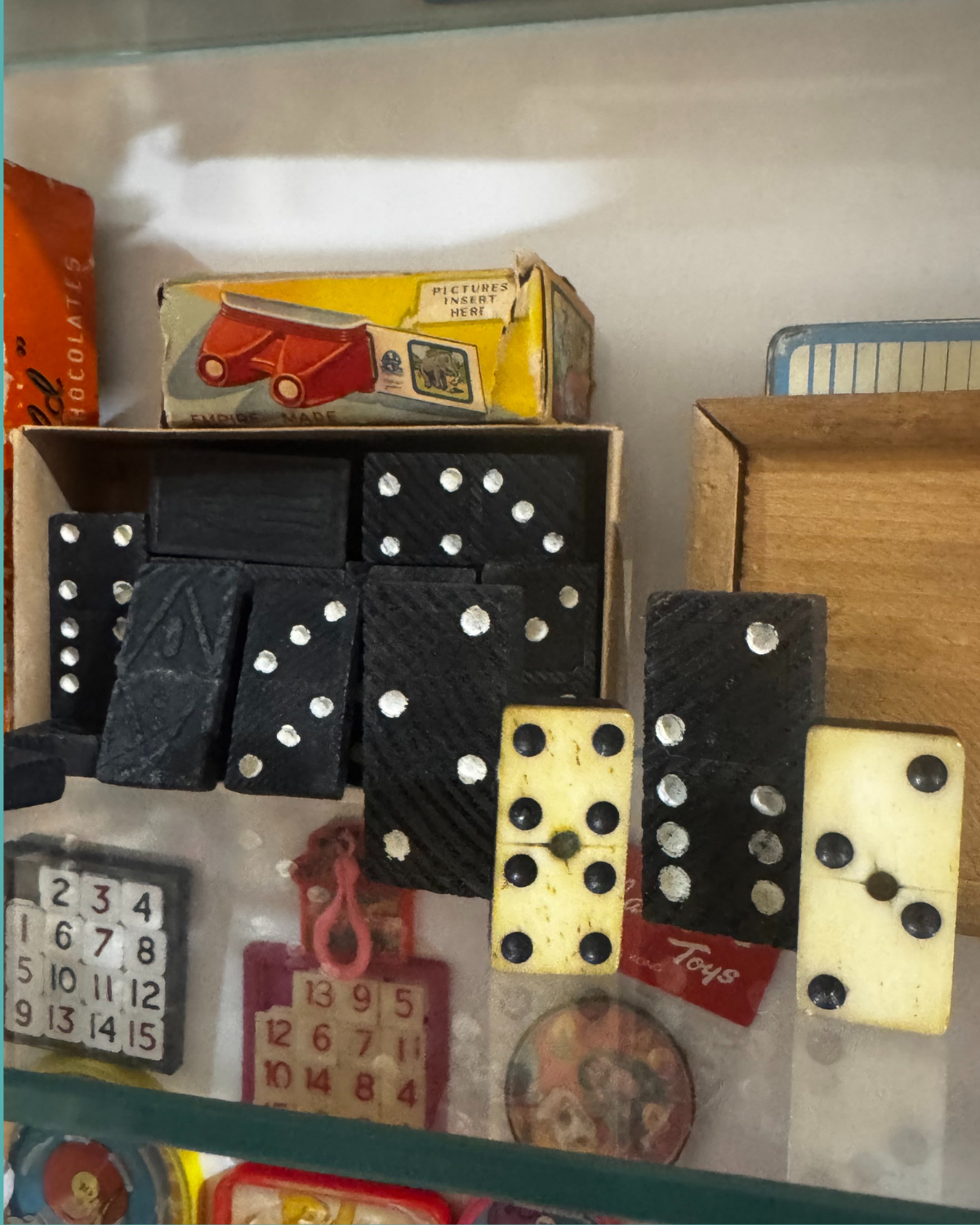
At its core, dominoes is straight forward: players place tiles so that matching ends touch. Basic games focus on emptying one’s hand or blocking opponents, but the real richness lies in its variations.
Popular styles include:
• Blocking games
• Scoring games such as Fives and Threes (common in Britain)
• Modern variations like Mexican Train and Chicken Foot, developed in the late 20th century
Meanwhile, Mahjong, which evolved from earlier Chinese tile traditions including Pupai, became a complex, strategic game played globally, particularly across Asia. Today, Mahjong is recognised as one of the world’s most enduring and socially significant tile games.
Cultural Significance & Global Reach
Dominoes is more than a pastime — it is deeply embedded in social life across many cultures. In the Caribbean, for example, games are loud, communal, and fiercely competitive, while else where dominoes is associated with cafés, pubs, familytables, and inter generational play.
Both dominoes and Mahjong have inspired clubs, tournaments, strategy guides, and competitive leagues, demonstrating their lasting appeal and adaptability across cultures and generations.
Within the museum’s broader toy and game narrative, dominoes represent both material history and social play.
Our collection includes:
• Early domino examples reflecting traditional craftsmanship in bone or ivory
• Two Disney-themed domino sets — one wooden and one plastic — illustrating 20th-century licensed design
• A complete modern promotional set collected by one of our grandchildren, who spent countless hours completing it through supermarket collectables
While a full domino set is not currently on display, these pieces help tell a broaderstory of how games evolve, adapt, and become part of family memory and childhood experience.

Dominoes continues to captivate because it is:
• Universal — easy to learn, yet strategically rich
• Variable — offering countless versions and rule sets
• Social — designed to be played together
• Material — reflecting shifts from bone to plastic to designer collectibles
• Cultural — bridging ancient China and the modern world
From humble Pupai tiles sold by street vendors in 12th-century China to mass-produced plastic sets and luxury designer versions today, dominoes has changed in formbut not in spirit. It remains a powerful reminder that the most enduring games are those built on simplicity, skill, and shared experience.
Within amuseum setting, dominoes offers a perfect narrative arc — from ancient originsand material evolution to global spread and cultural significance — provingthat even the smallest rectangular tile can carry centuries of history.
With love
Shyloh
Tales from the youngest daughter of adoll collector — raised on Milo, Vegemite, and more antiques than a country opshop.