Split-Head Wax Dolls: A Beautiful Quirk of 1800s Doll Making

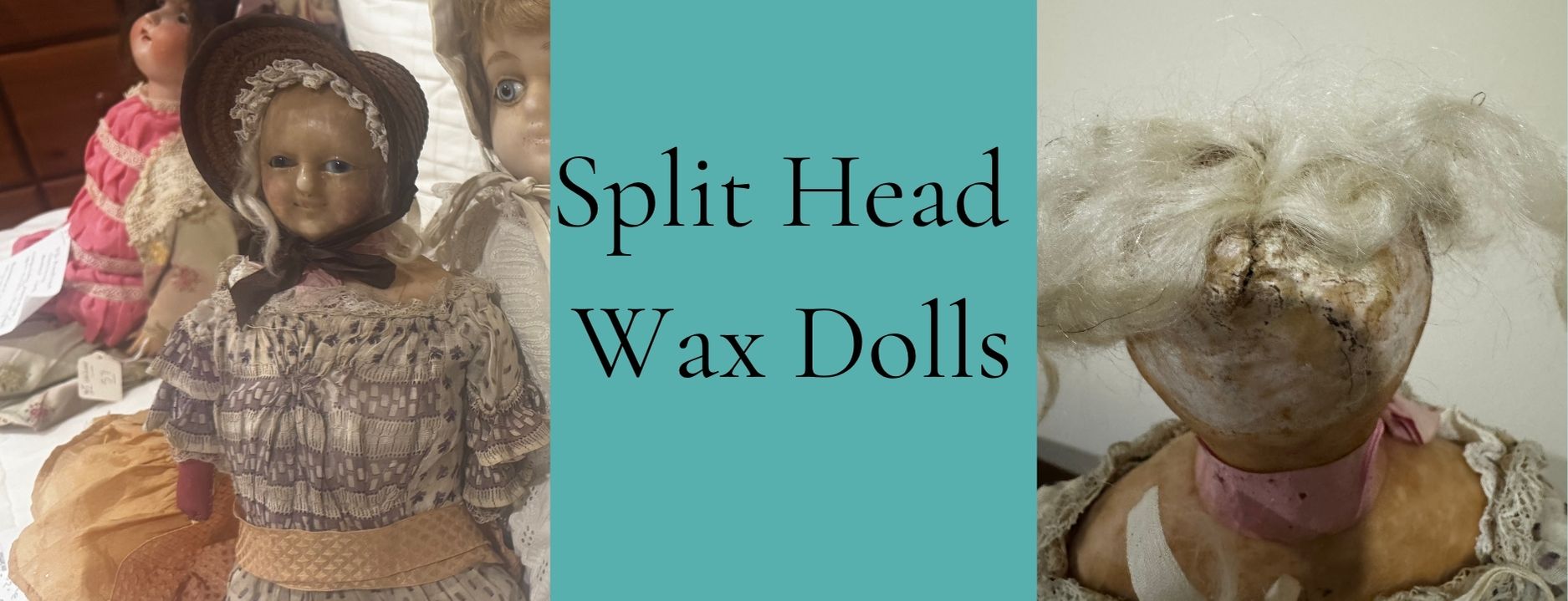
What might look like a crack across the scalp of an antique wax doll is often not damage at all—but a fascinating clue to its early 19th-century origins. English makers like Madame Montanari and Lucy Peck crafted these dolls by pouring hot wax into two moulds and fusing them together, leaving a smooth join line across the crown. This seam was an intentional part of the process, not a flaw. Collectors sometimes mistake the seam for a crack and attempt repairs that actually remove its authenticity. Knowing the difference helps preserve both the doll’s value and its story. In truth, a “split-head” wax doll isn’t broken—it’s history, showing the craftsmanship of a bygone era.

At first glance, a visible line or “split” running across the scalp of an antique waxdoll might look like a serious flaw. But in some early dolls—especially from the early 1800s—it’s exactly how they were made.

Let’s unravel this misunderstood detail and celebrate the artistry behind it.

1840's 22" Split head Wax head doll in original clothes - England

Why Some Wax Dolls Have a Split in the Head

In the early 19th century, English doll makers like Madame Montanari and Lucy Peck pioneered poured wax doll techniques. To achieve delicate features, they poured hot wax into two separate moulds—one for the front of the head and one for the back.

These halves were then carefully fused together, leaving a join line—a visibleseam around the crown or scalp.

Over time,that join may become more pronounced as the wax naturally shrinks or dries. But it was always there. It’s not damage—it’s a sign of authenticity.
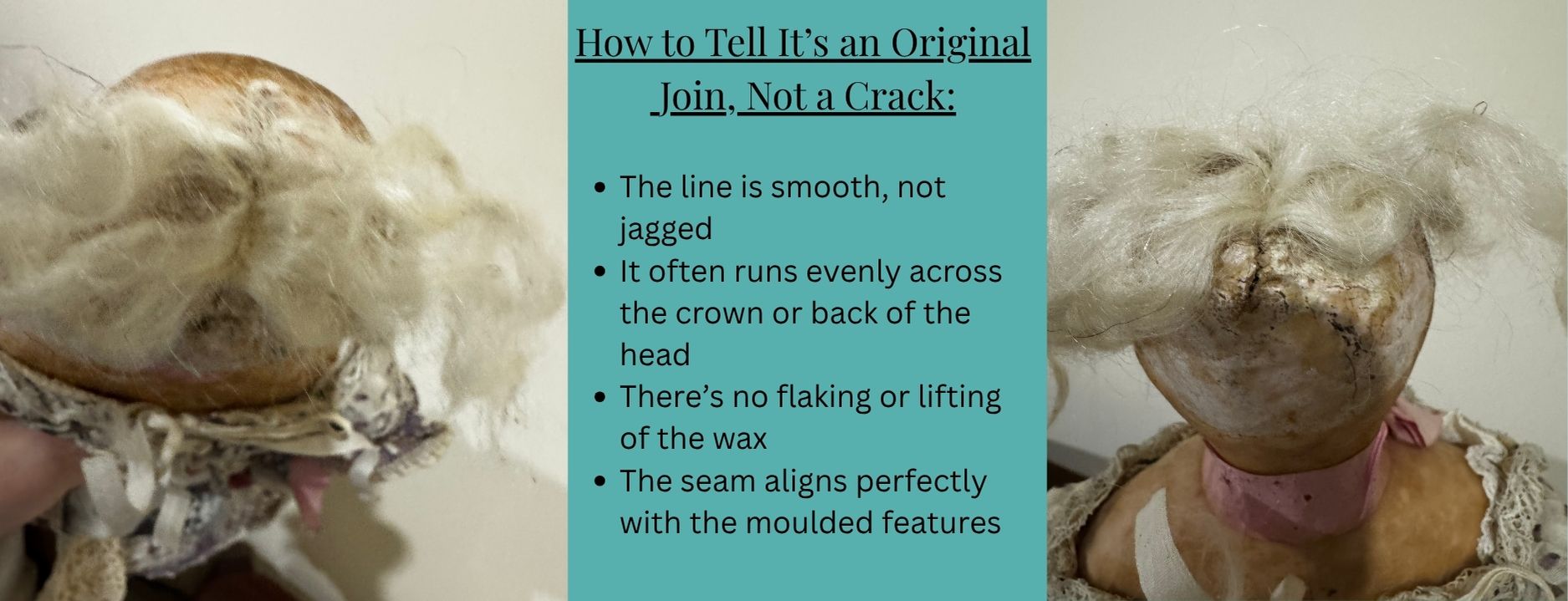
How to Tell It’s an Original Join, Not a Crack:

  • The line is smooth, not jagged
  • It often runs evenly across the crown or back of the head
  • There’s no flaking or lifting of the wax
  • The seam aligns perfectly with the moulded features

Some dolls were made with solid poured wax; others were hollow. But both types sometimes featured these construction seams, particularly in English-made dolls from 1820–1850.

Why It Matters:

Collectors sometimes mistake these seams for damage and either:

  • Overpay to have them "repaired"— removing historical integrity, or
  • Under value the doll thinking it's flawed

Knowing the difference can protect your collection, your investment, and the historical truth of these dolls.

In Summary a cracked doll isn’t always a broken doll. And a split head doesn’t always mean something’s gone wrong. Sometimes, it's just history showing through.

With love
Shyloh

Tales from the youngest daughter of adoll collector — raised on Milo, Vegemite, and more antiques than a country opshop.