
The modern yo-yo boom began with Filipino entrepreneur Pedro Flores, who began manufacturing yo-yos in California in1928. His key innovation was popularising the looped string design that allowed the yo-yo to “sleep” — spinning freely at the end of the string before returning with a flick of the wrist. This subtle mechanical improvement turned a basic spool-on-a-string into a skill toy capable of complex tricks.

In 1929, American businessman Donald F. Duncan Sr. recognised its potential and purchased Flores’ company, founding what would become the Duncan Yo-Yo Company. With savvy marketing and mass production, Duncan transformed a niche novelty into a cultural icon.
From the 1930s through the 1960s, Duncan became synonymous with the yo-yo itself. Their famous slogan — “If it isn’t a Duncan, it isn’t a yo-yo” — reflected their dominance in the marketplace.
Duncan pioneered large-scale competitions, touring demonstrators, and school yard promotions that taught children tricks such as “Walk the Dog,” “Around the World,” and “Rock the Baby.” These demonstrations weren’t just advertising; they built community and created waves of yo-yo crazes across the United States and beyond.
During the post-war years, brightly painted wooden Duncan yo-yos filled toy shop shelves. Their lacquered finishes and simple wooden axle construction required patience and practice, encouraging coordination, persistence, and creativity.
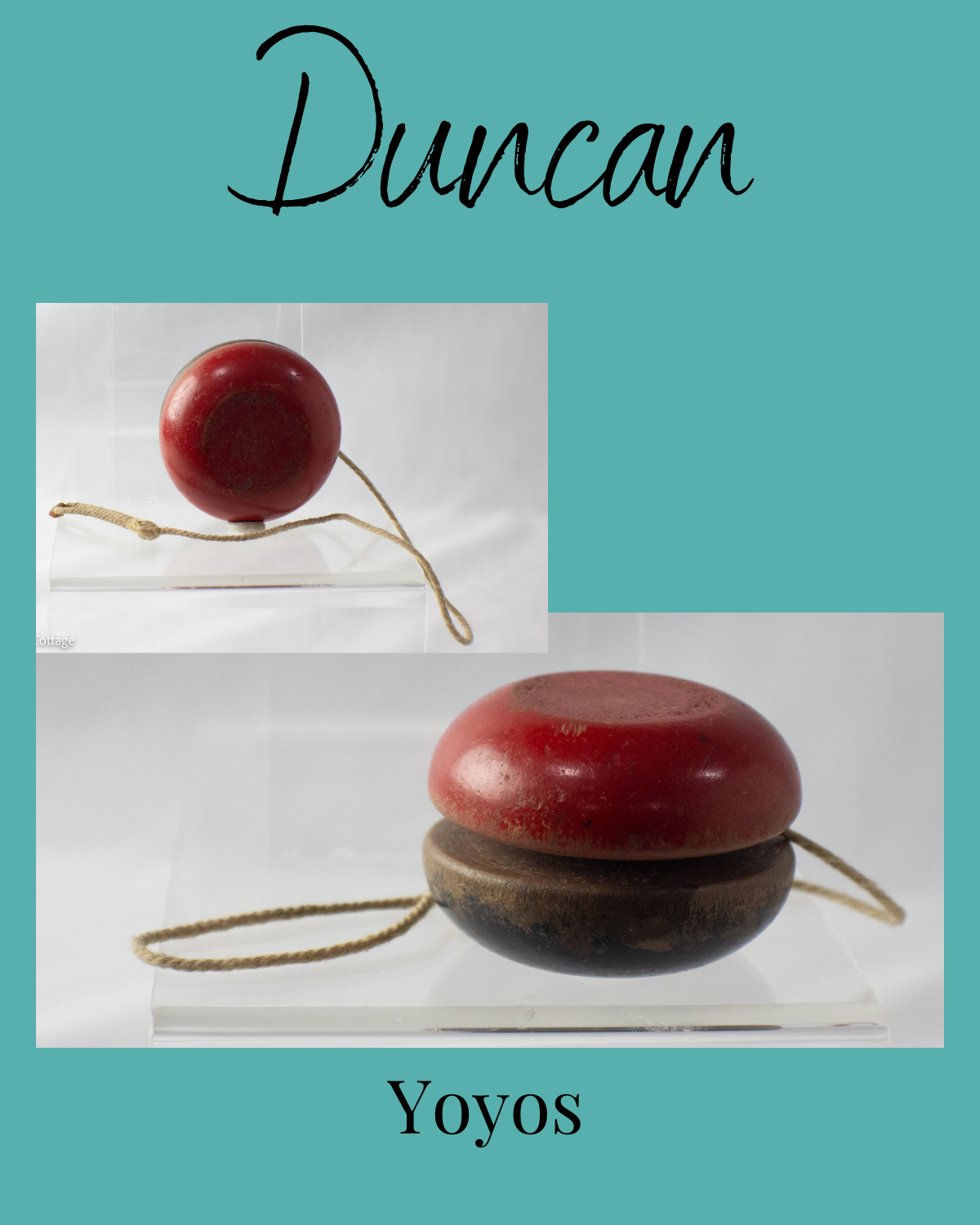
The red-and-black Duncan yo-yo in our collection, dating from the 1950s–60s, reflects this golden period of play. Crafted from painted hardwood and fitted with a cotton string, it shows gentlewear consistent with use — the soft edge marks of repeated spins and returns.
These mid-century wooden models predate the widespread adoption of plastic injection-moulded designs introduced in the early 1960s. As a result, earlier wooden examples are increasingly sought afterby collectors for their craftsmanship and nostalgic appeal.
In 1965, a landmark court ruling declared “yo-yo” a generic term, meaning Duncan could no longer claim exclusive rights to the name. Despite this set back, the company endured and eventually became part of Flambeau Products Corporation.
Today, Duncan Toys continues to produce both classic fixed-axle models and modern high-performance yo-yos, carrying forward a legacy that began nearly a century ago.
https://duncantoys.com/collections/yo-yos
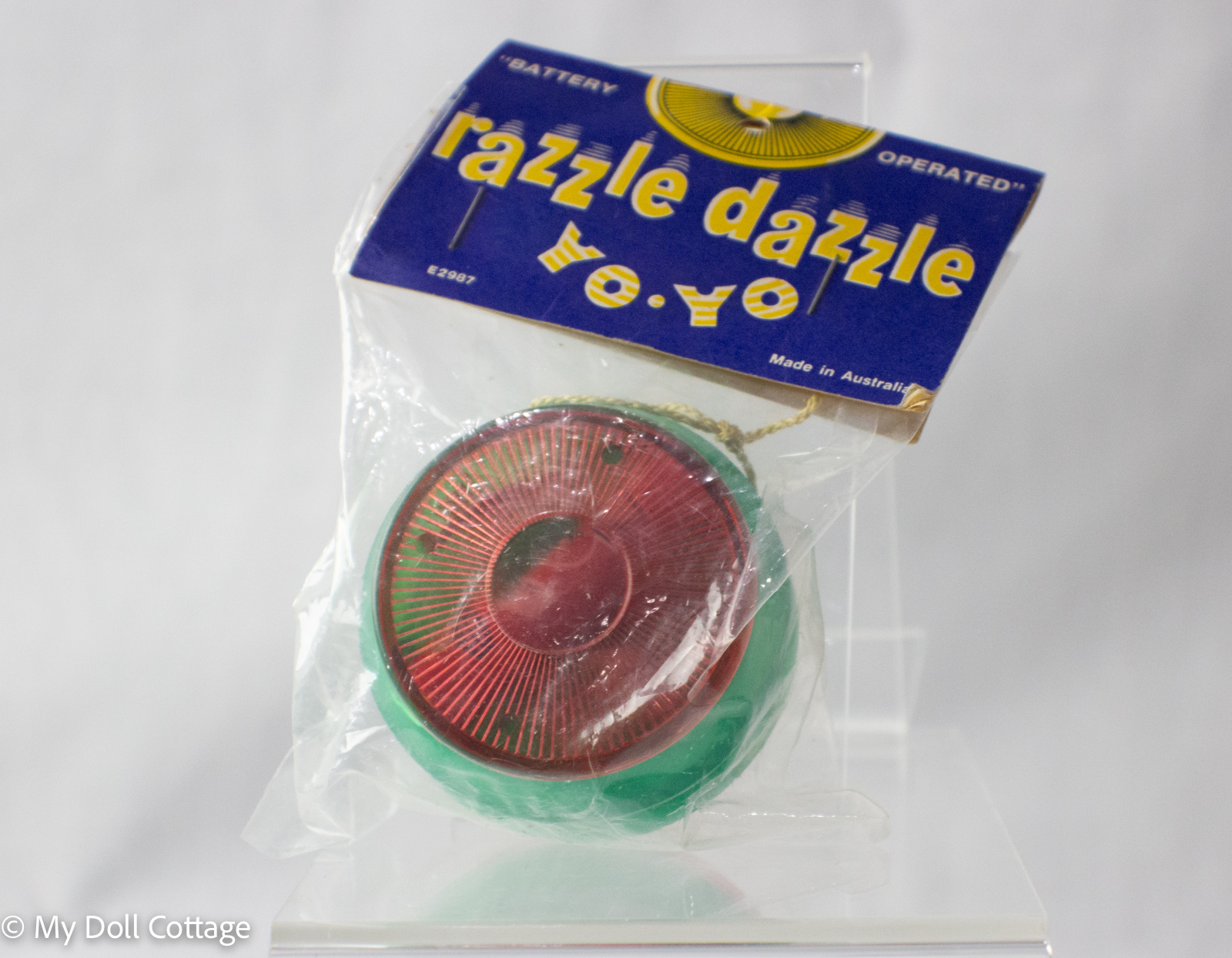
Why We Love It
This humble yo-yo represents more than a toy. It reflects an era when skill-based play was passed from child to child, when school yards echoed with spinning demonstrations, and when simple mechanics inspired mastery.
In a world of digital entertainment, the Duncan yo-yo remains a reminder that joy can be found in something beautifully uncomplicated.
With love
Shyloh
Tales from the youngest daughter of adoll collector — raised on Milo, Vegemite, and more antiques than a country opshop.