Not all damage is visible at first — and in the world of vintage dolls, one of the more distressing problems we encounter is something often called "vinyl disease", or more accurately, vinyl degradation.
It’s sometimes referred to as the “cancer of doll collections”, and for good reason. Left unchecked, it can quietly spread from one doll to another, causing sticky residue, chemical leaching, and irreversible damage — not just to the affected doll, but to any that come into contact with it.
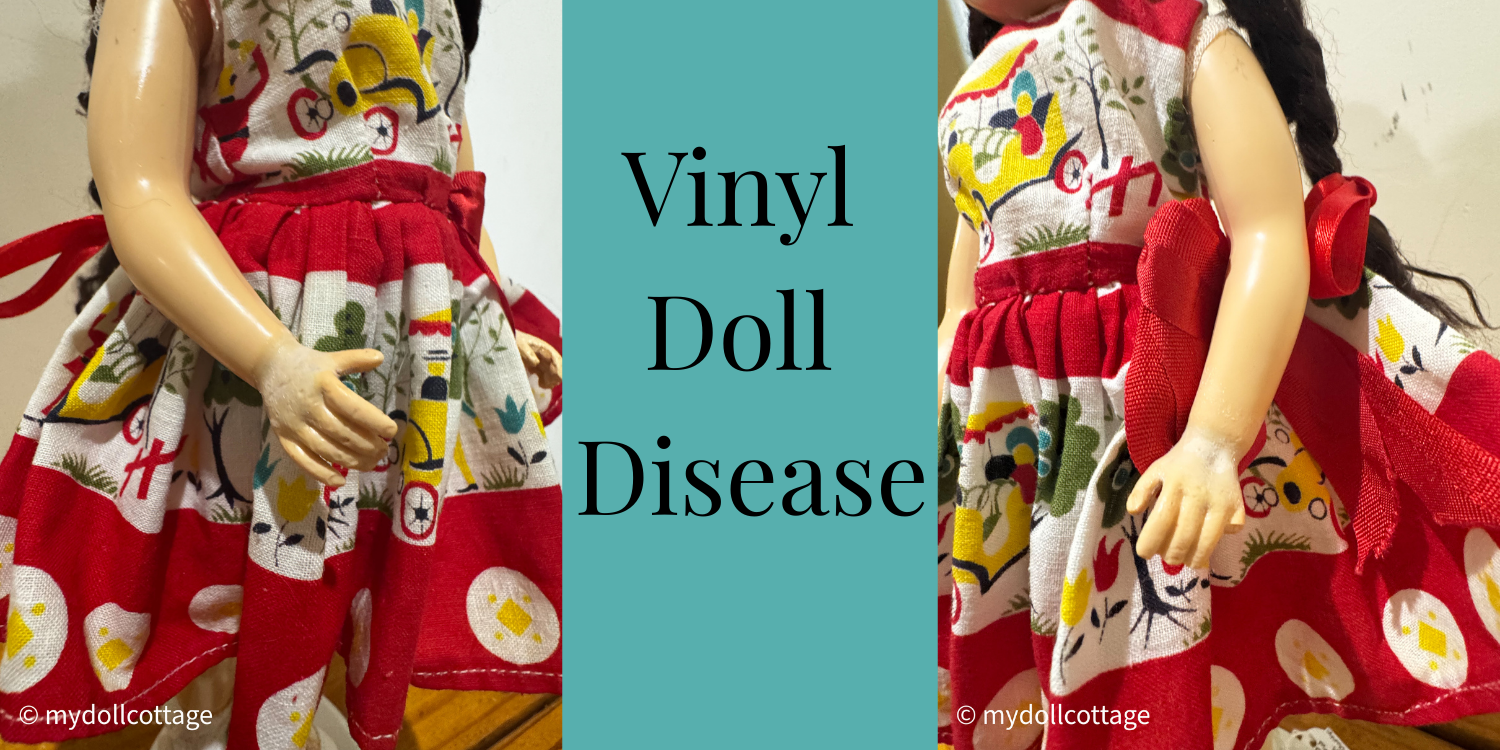
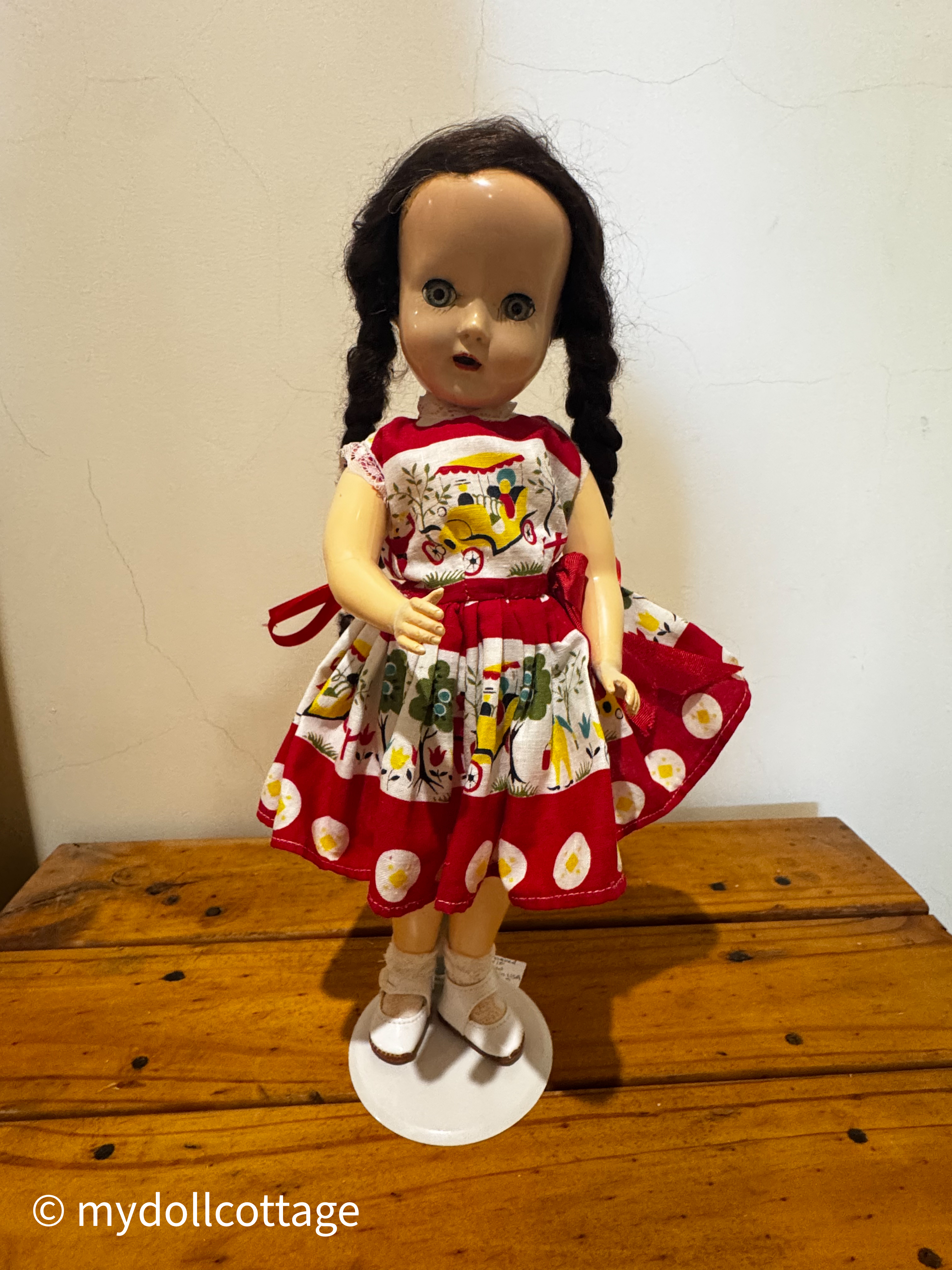
At My Doll Cottage, Mum has seen it first hand sadly getting rid of many beautiful dolls. Luckily she detected this prior to them entering the museum. There is one lucky survivor why damage was just to her hands and at this stage has not spread further. Mums looking for space to display her in the museum seperately under her own glass dome.
Here’s what you need to know to spot, prevent, and manage vinyl deterioration in your own collection.
"Vinyl disease" isn’t an official scientific term, but it's widely used by collectors to describe the break down of poly vinyl chloride (PVC) in vintage dolls. It’s most commonly seen in dolls made between the 1950s and 1980s, though it can affect others depending on material blends.
Over time, the plasticisers (the chemicals that keep vinyl soft and flexible) begin to leach out. This causes:
In severe cases, the vinyl becomes brittle, distorts, or oozes, leaving damage on anything touching it.
Yes —that’s one of the most concerning parts. Vinyl disease isn’t infectious like a germ, but the off-gassed chemicals released from the degrading vinyl can damage other dolls, especially those stored closely together or touching.
It can also affect:
This is why we always recommend isolating any affected dolls immediately — just like Mum did when she noticed signs on one of hers.
Several things can speed up vinyl degradation:
Some dolls were made with materials that were less stable over time, especially early soft vinyl blends or cheap factory batches made in warmer countries.
Check your dolls regularly for:
These are all signs that vinyl disease may be beginning.
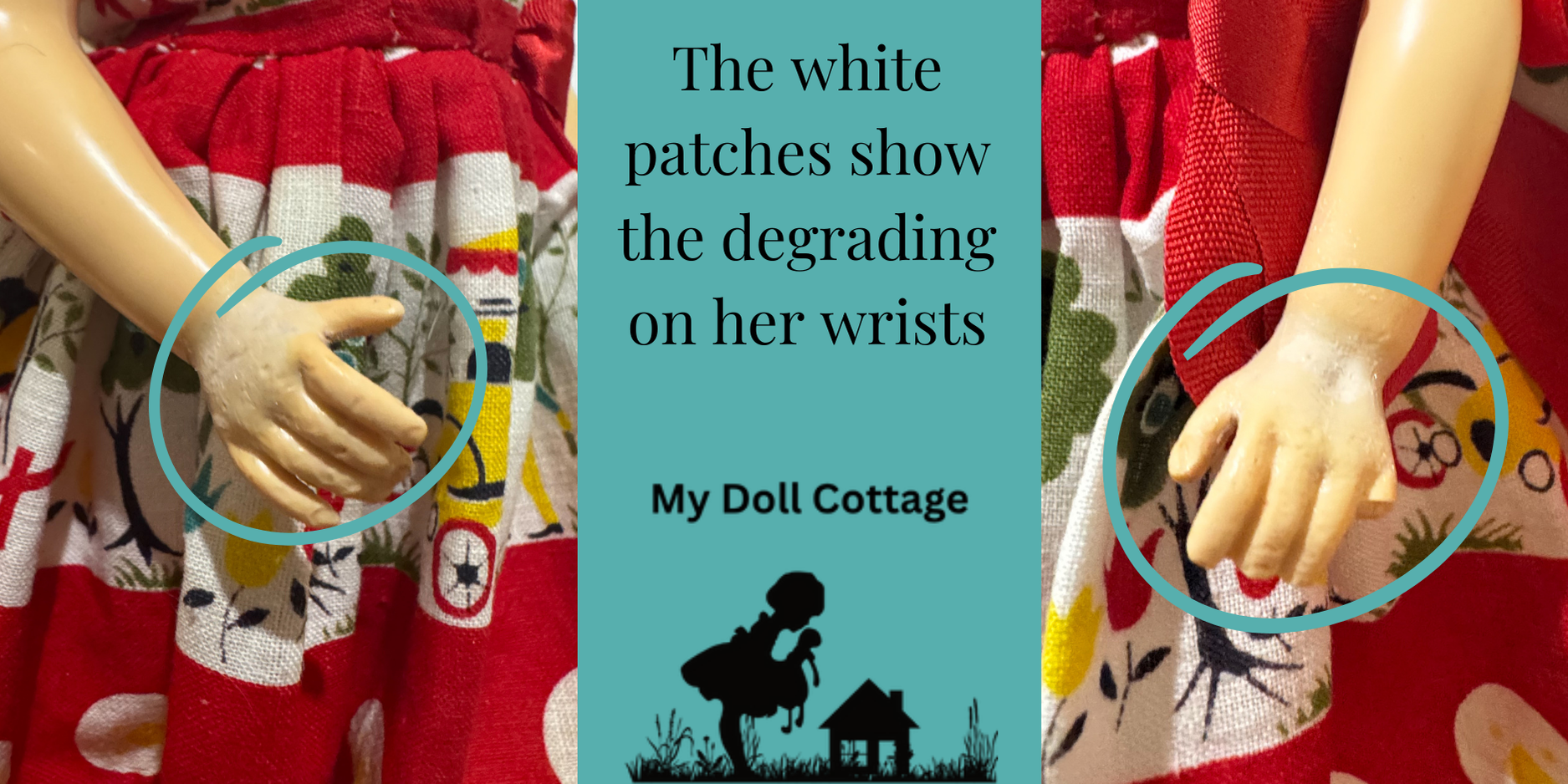
Due to mums attention to detail and obsession with the restoration and cleanliness of all dolls before they enter the museum she was able to catch the dolls that have had this disease. Mum said you can't not smell the odour with vinyl disease, it's just a matter of understanding what the smell is about. Thankfully, she was able to save this little HP pedigree girl. The disease hasn't spread and mums just thinking of ways to safely put her on display that keeps the collection safe and doesn't take up oo much space.
Final Thoughts
Vinyl disease is one of those hidden risks that many collectors don’t learn about until it’s too late. But with care, regular checks, and gentle storage, you can keep your collection safe for years to come.
At MyDoll Cottage, we continue to share what we learn as we catalogue and protect our family’s collection — so others can do the same with theirs.
Or visit www.mydollcottage.com.auto explore our collection and upcoming printable care guides.
With love
Shyloh
Tales from the youngest daughter of a doll collector — raised on Milo, Vegemite, and more antiques than a country opshop.