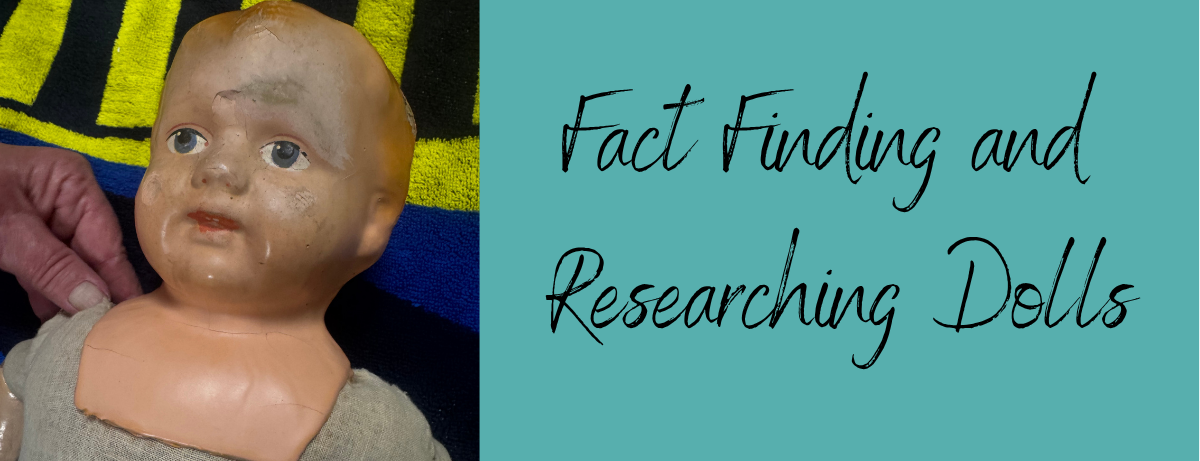
One of the most delicate dolls assessed during our preparation work for the doll hospital at the start of the year was an early papier-mâché doll. It is remarkable not only for its construction, but for a rare historical miracle: its original crier mechanism still works.
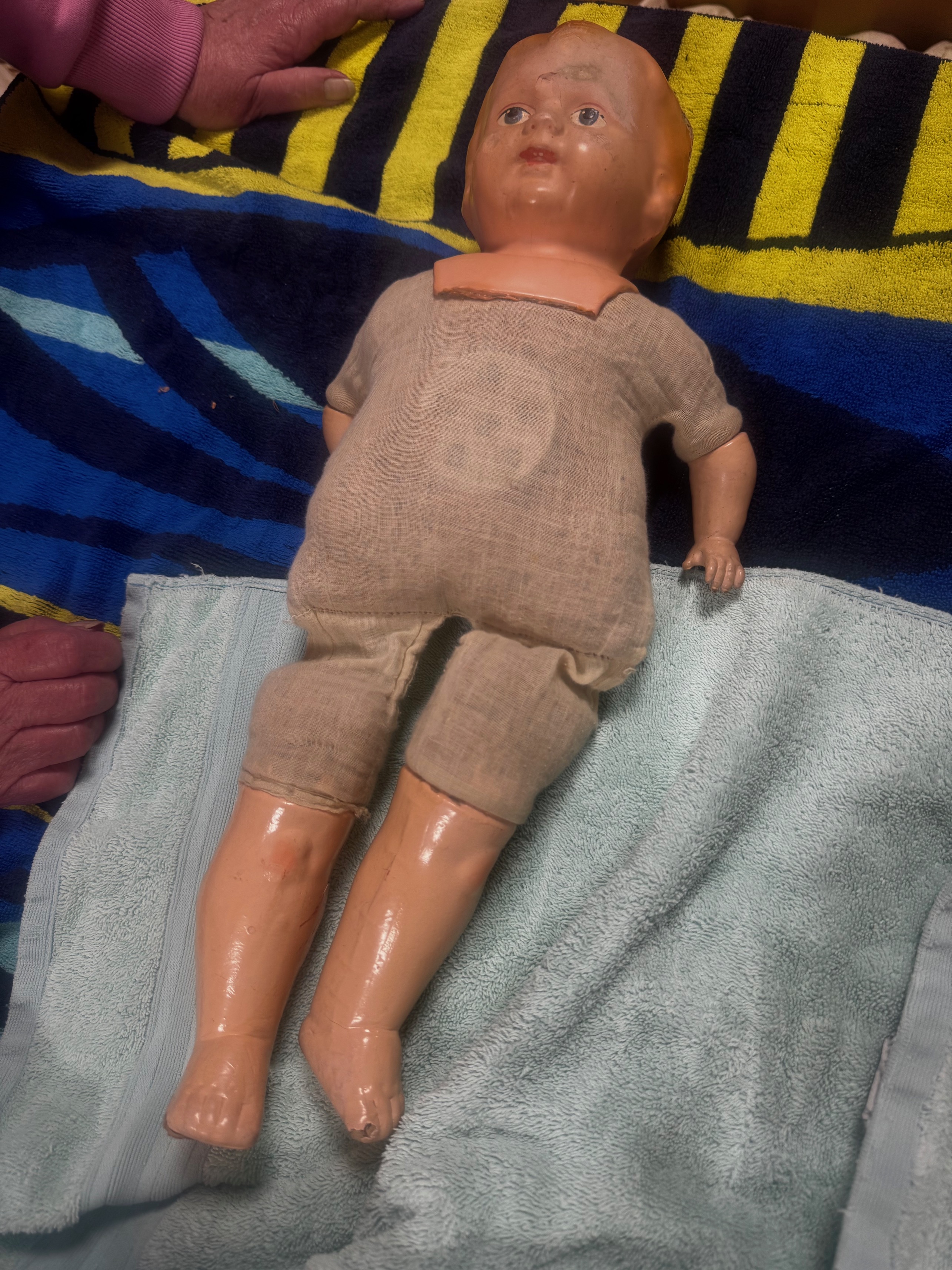
At first glance, he appears simple—softly modeled features, painted eyes, and a plain cloth body. But a closer look reveals a complex and vulnerable combination of materials that place him firmly in the late 19th to very early 20th century.
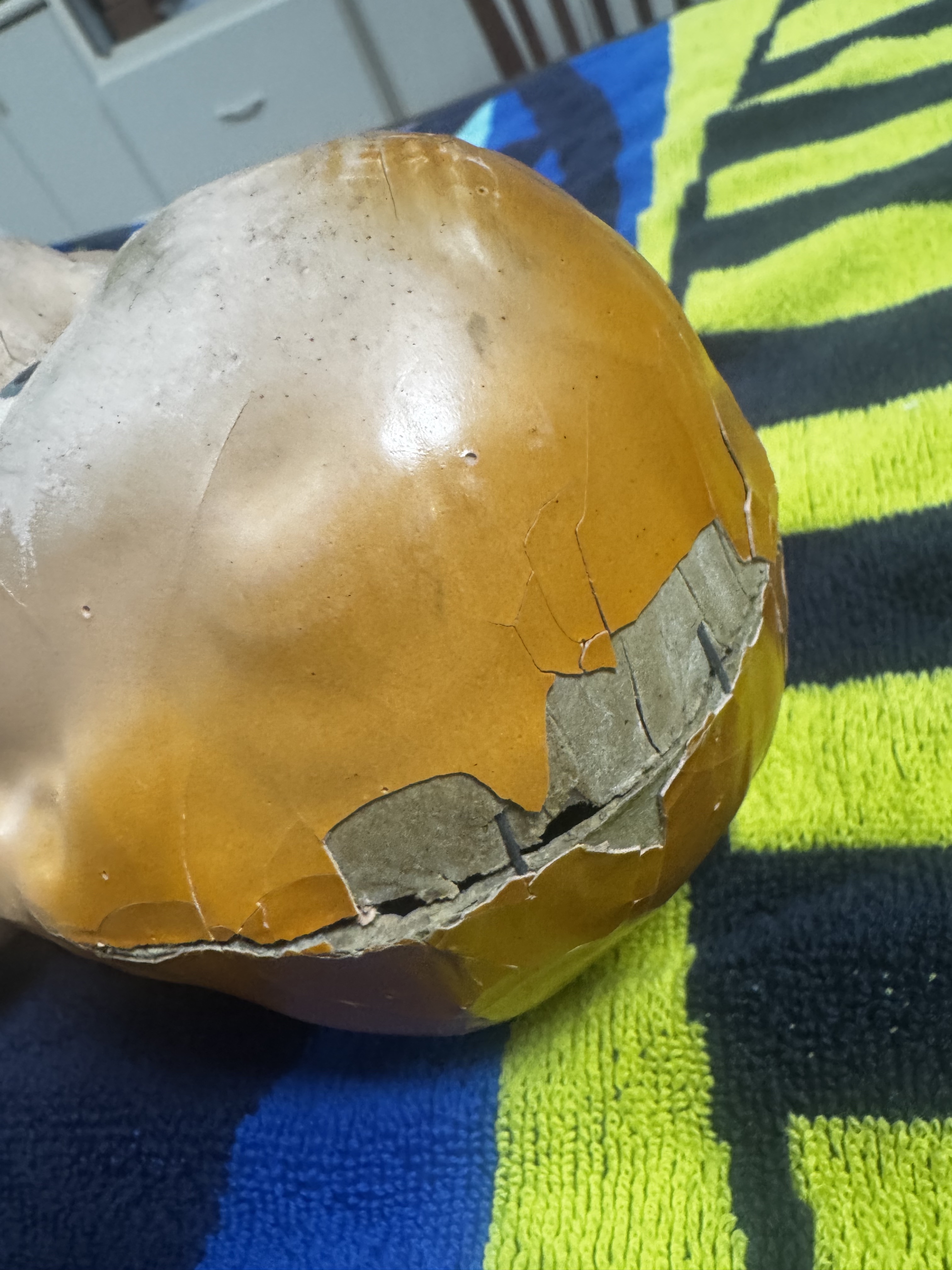
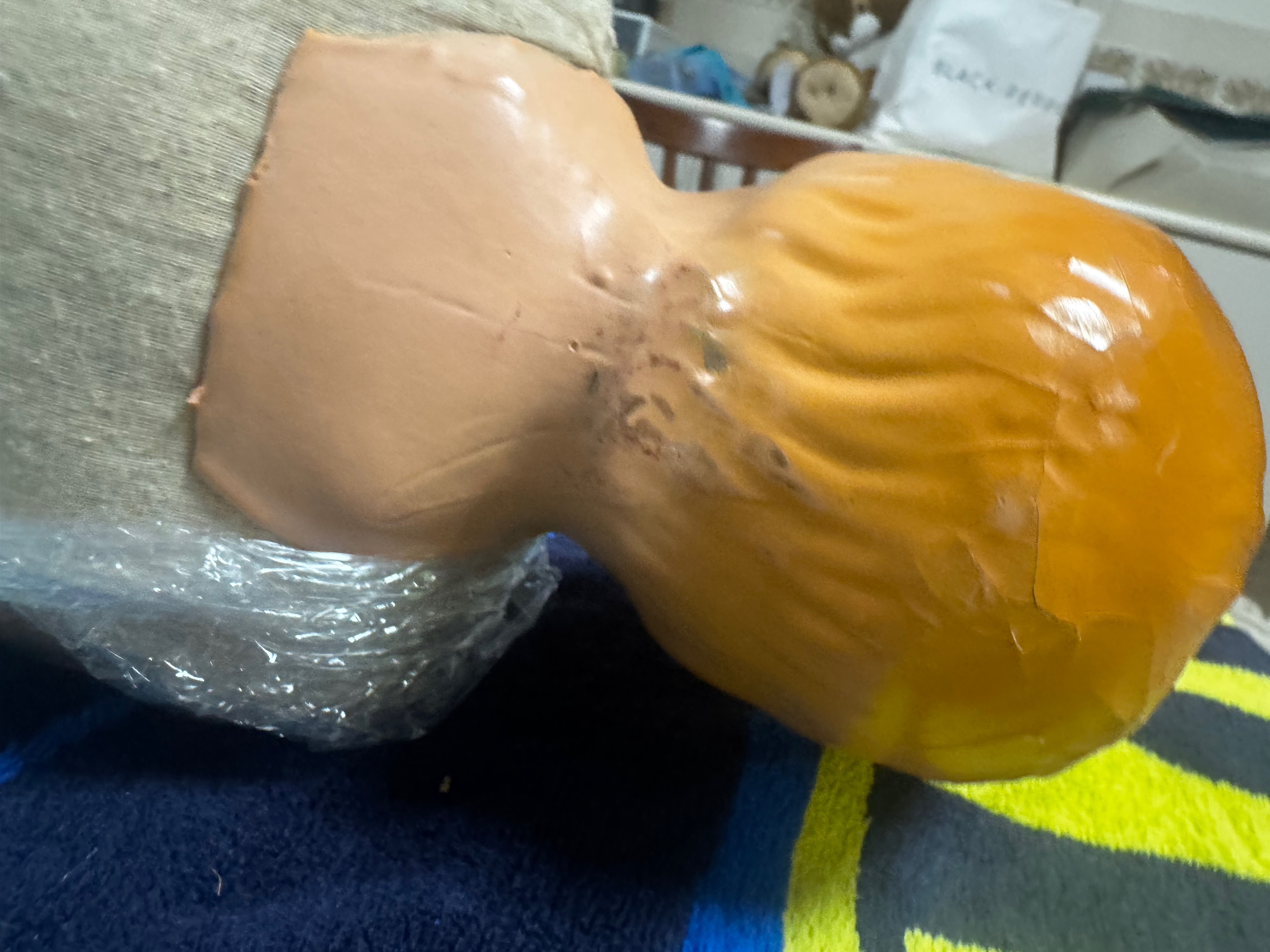
His head is made from papier-mâché, formed in two moulded halves — a front section and a rear section — joined around the centre seam with small metal staples. The joined head was then dipped in a composition-type finishing material, creating a smooth, hardened outer surface over the paper structure before the flesh tones, moulded hair and painted facial features were applied.
The damage visible today is particularly valuable from a construction point of view because it exposes the layers beneath the finished surface. Where the outer coating has lifted or broken away, the underlying papier-mâché and the stapled join can be clearly seen. Rather than being a separate cap or later addition, this surface coating formed part of the original manufacturing process.
The doll has no wig. His hair is moulded directly as part of the head and then painted, consistent with his presentation as a baby boy.
Beneath the head, the body provides another important insight into early doll construction. The torso is made from very thin woven fabric and packed with excelsior, or wood wool, rather than straw. The original round crier mechanism sits directly within this filling and is supported by the packed excelsior rather than by an internal frame.
This lightweight construction helped create a soft-bodied doll that could be held and carried more easily than a fully rigid doll. More than a century later, however, the same materials have become extremely fragile. The fine fabric can tear easily, while disturbance to the excelsior may alter the body's shape or reduce the support around the crier and attached limbs.
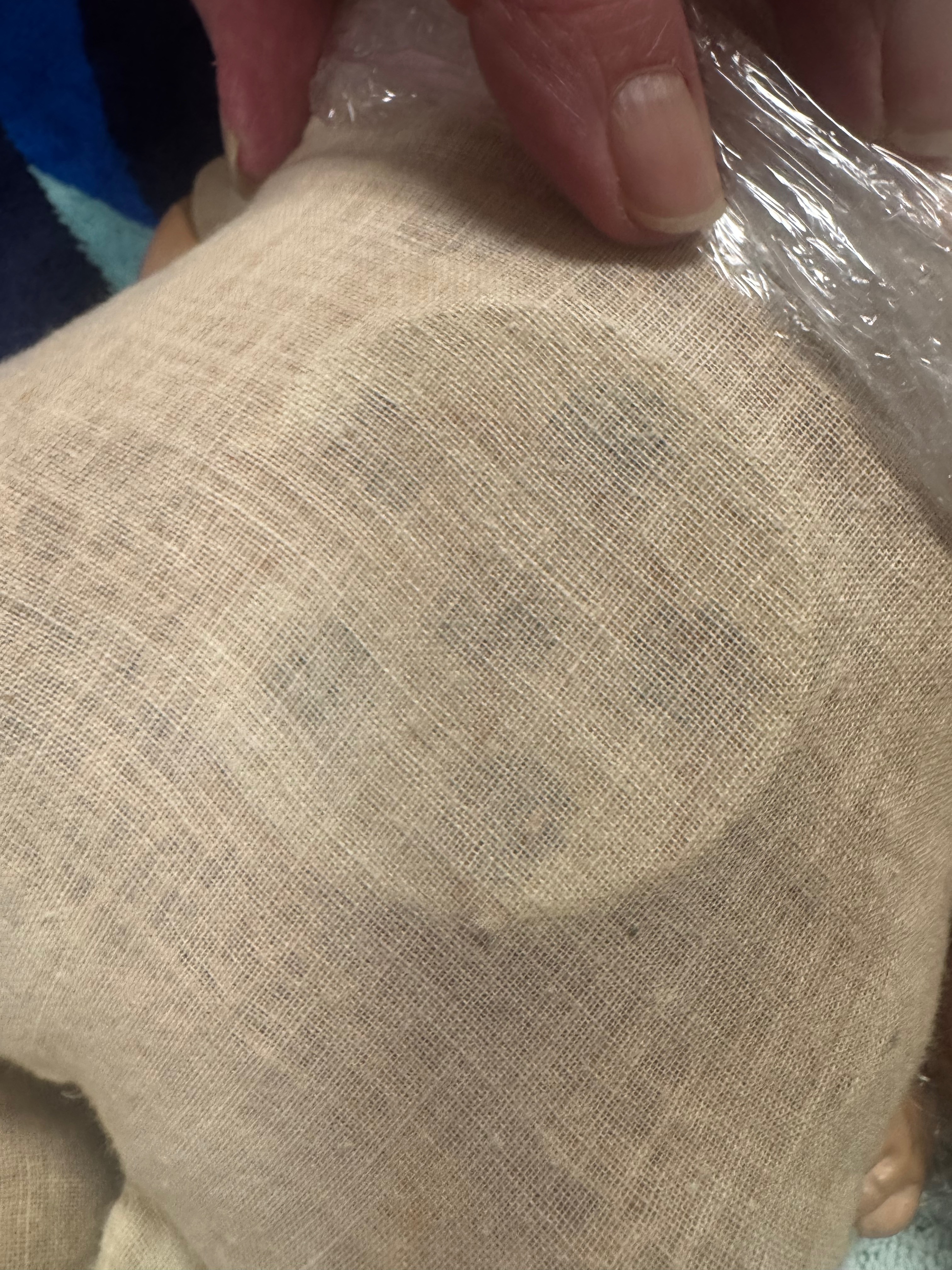
Inside the torso sits her original crier mechanism, still operational—a true survival. Early criers were often lost, removed, or rendered silent as bodies deteriorated. Her arms and legs are composition, showing surface wear and fine cracking consistent with age and handling. These materials, while more durable than papier-mâché, are now under stress due to changes in the body’s internal support.
The fact that this doll's crier still functions makes conservation decisions especially careful. Any intervention must protect the mechanism while stabilizing the surrounding structure. But it also presents a fascinating, modern archival paradox: the doll can literally "speak" to us through its voice box, yet the history behind who exactly made it remains frustratingly quiet.
In the digital age, we expect instant answers. When investigating an artifact like this, we turn to the standard routes of modern research. We dig through digital databases, cross-reference collector forums, and search for matching design features. Yet, we quickly hit a wall.
Without a physical manufacturer's stamp on the head or a preserved paper tag on the cloth, we enter the "digital dark age" of niche history. So much early industrial knowledge is simply not digital. Instead, researchers are forced to rely on a precarious echo chamber of internet blogs, memory-based forum posts, or expensive, out-of-print reference books from decades ago.
When we pull back the layers of available information, the clues we can verify point toward a likely candidate: Louis Amberg & Son of New York. Amberg was a prolific distributor in the early 1900s known for outsourcing German-designed heads and marrying them to American-made, cloth-stuffed crier bodies.
But finding definitive, indisputable proof? That is the real challenge. A century ago, manufacturers didn't anticipate the internet; they skipped stamping cloth bodies to save on production costs, leaving future historians with zero breadcrumbs. At the end of the day, we are left with a highly probable origin story, but a paper trail that has vanished into time.
This doll is a perfect example of why preparation matters. Before any work is undertaken, every material must be understood, and every interaction considered. Moisture, adhesives, pressure, and even temperature all pose risks. The goal of the doll hospital in this case is not cosmetic improvement, but stabilization—slowing deterioration while preserving her voice, structure, and authenticity.
Dolls like this were never meant to last centuries. That she has survived at all—still unmarked, still mysterious, and still able to cry—is a testament to both early craftsmanship and generations of care. Our responsibility now is to ensure that any steps taken allow her to continue telling her story, quietly and safely, for many years to come.
Further updates will be shared once conservation planning has been completed.
If you would like to adjust the pacing, emphasize the Amberg connection even more, or change the formatting for your specific blog platform, let me know!
With love
Shyloh
Tales from the youngest daughter of a doll collector — raised on Milo, Vegemite, and more antiques than a country op shop.