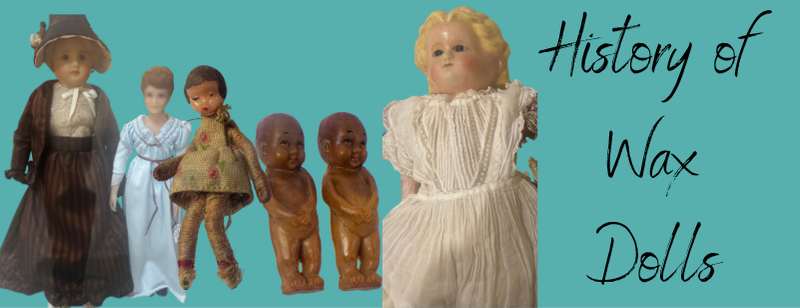
Throughout history, doll makers have experimented with many different materials in their quest to create life like dolls. Long before vinyl, hard plastic and even porcelain became household names, wax was considered one of the most remarkable materials available. Its soft translucency and ability to imitate human skin allowed artists to create dolls of extraordinary realism, making wax dolls some of the most admired and treasured dolls of their time.
The story of wax dolls is one of innovation, artistry and changing fashions. Although their popularity eventually declined, their influence can still be seen in modern artist dolls and collectors’ pieces today.

Long before wax dolls appeared, children played with dolls made from materials that were readily available within their communities. Archaeological discoveries have revealed dolls and human figures carved from wood, fashioned from clay or terracotta, sewn from cloth, and made from bone or ivory. These early dolls served many purposes. Some were simple toys, while others may have held ceremonial or religious significance.
As civilisations developed, dolls gradually became more sophisticated. Craftsmen experimented with new materials and techniques, searching for ways to create increasingly realistic faces and expressions. It was this desire for realism that eventually led to the use of wax.

Wax had been valued by artists for centuries before it was used extensively in doll making. Bees wax was widely used throughout Europe for religious sculptures, devotional figures, portrait modelling and anatomical teaching models because it could becarefully shaped, coloured and refined to resemble human skin more closely than carved wood or painted clay.
As sculpting techniques improved during the Renaissance, artists recognised that wax could capture subtle facial features, gentle expressions and delicate skin tones in ways that few other materials could achieve.
These artistic developments paved the way for the first wax dolls.

Read More: Mid 1800's Split head Wax Dolls
By the fifteenth and sixteenth centuries, wax dolls were beginning to appear in parts of Europe, particularly in Italy, France and England. Early examples were often handcrafted for wealthy families rather than produced as children’s toys. Their realistic appearance made them prized decorative objects and demonstrations of an artisan’s skill.
During the seventeenth and eighteenth centuries, wax dolls became increasingly fashionable among affluent households. Some were beautifully dressed in miniature versions of contemporary clothing, while others were created as portrait dolls resembling specific individuals. Fashion dolls also played an important roleduring this period, helping to showcase the latest styles from European courts long before fashion magazines existed.
Although still considered luxury items, wax dolls gradually became more accessible as manufacturing methods improved.
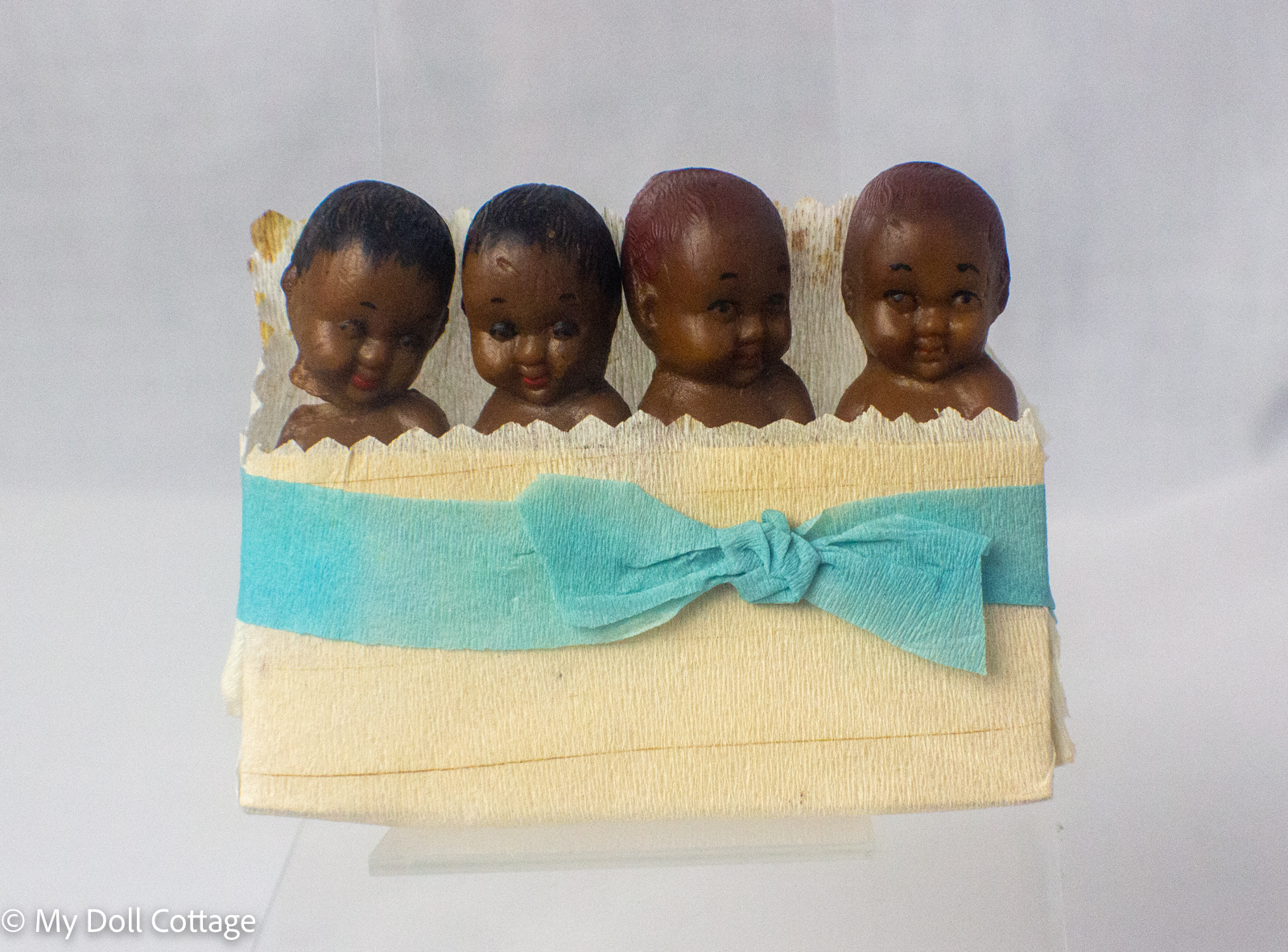
The nineteenth century marked the height of wax doll production.
Victorian families valued dolls that appeared as lifelike as possible, and wax offered qualities that few other materials could match. Skilled makers carefully modelled delicate facial features before painting soft complexions, adding glass eyes, inserting real or natural fibre hair, and dressing each doll in finely made clothing.
Many Victorian wax dolls were not made entirely from wax. Instead, manufacturers often used a layer of wax over a stronger base such as papier-mâché or composition. This provided greater stability while preserving the realistic appearance that made wax so desirable.
Wax dolls ranged from elegant display dolls owned by wealthy families to nursery dolls loved by children. Their gentle expressions and carefully modelled faces helped establish the sentimental image of childhood that became so popular during the Victorian era.

Despite their beauty, wax dolls presented many practical challenges.
Wax is naturally sensitive to heat and can soften when exposed to high temperatures. It can also become brittle with age, making it vulnerable to cracks, chips andbroken fingers or noses. Surface dust, finger prints and accidental knocks canpermanently affect its appearance.
As manufacturing technology advanced during the nineteenth century, new materials began offering greater durability and lower production costs. Papier-mâché and composition produced sturdy, affordable dolls, while bisque and porcelain provided beautifully detailed faces with greater resistance to everyday handling. During the twentieth century, celluloid, hard plastic and vinyl transformed doll making once again, producing lightweight dolls suitable for mass production.
Gradually, wax dolls became less common as everyday play dolls, although they continued to be appreciated by collectors and specialist makers.
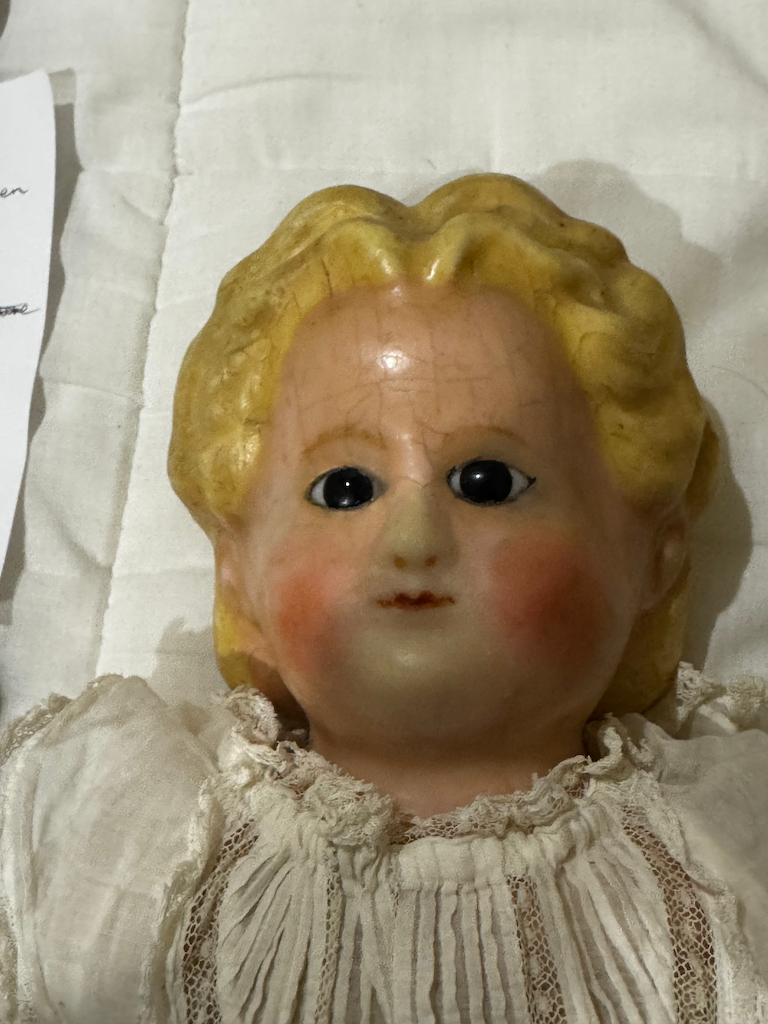
Although few modern dolls are made entirely from wax, the material has never disappeared completely.
Contemporary doll artists continue to use wax finishes and wax-over-resin techniques to recreate the soft, natural appearance that made historic wax dolls so admired. Museum reproductions and specialist collectors also appreciate wax for its unique artistic qualities.
At the sametime, antique wax dolls remain highly sought after because of their craftsmanship and historical significance. Each surviving example provides a glimpse into the artistic traditions and childhood experiences of earlier generations.
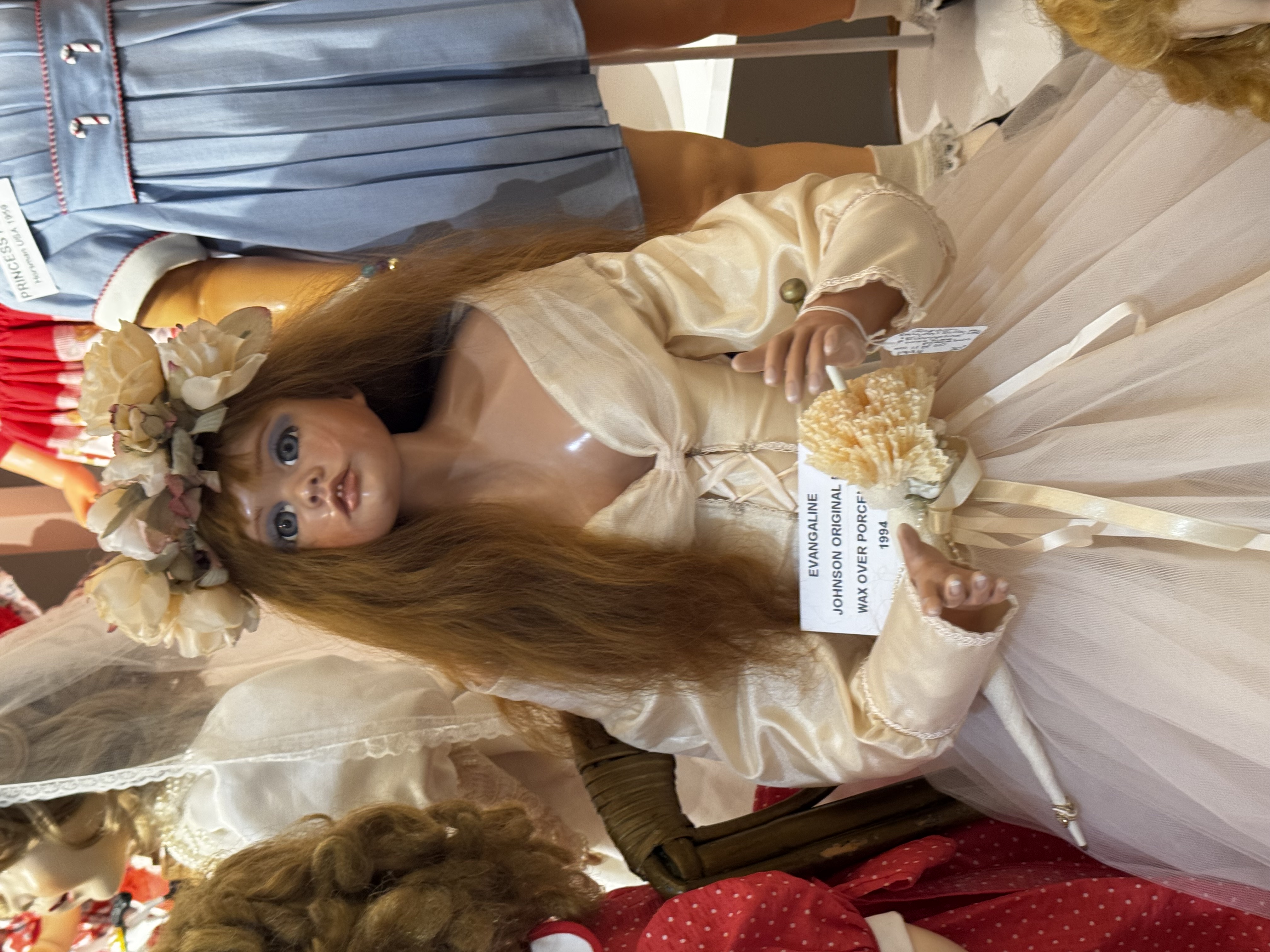
Because wax remains a delicate material, antique wax dolls require careful handling and stable environmental conditions. Heat, direct sunlight and sudden changes in temperature can damage the wax, while careless handling may leave permanent marks or cause fragile features to break.
For this reason, conservation and restoration of wax dolls is considered highly specialised. Historic wax formulations varied between makers, and repairs often require carefully matched conservation materials and techniques. Professional conservators focus on preserving as much original material as possible while ensuring any restoration is sympathetic to the doll’s history.
Wax dolls represent an important chapter in the evolution of doll making. They reflect a period when realism, artistry and skilled craftsmanship were highly valued, bridging the gap between the handmade dolls of earlier centuries and the factory-produced dolls that followed.
At My Doll Cottage Museum, every doll helps tell the story of childhood through the ages. Whether made from wood, cloth, wax, porcelain or plastic, each material reflects the technology, artistic skill and social values of its time. Wax dolls, with their remarkable realism and delicate beauty, continue to remind us why dolls have fascinated both children and collectors for centuries.
With love
Shyloh
Tales from the youngest daughter of adoll collector — raised on Milo, Vegemite, and more antiques than a country opshop.
Further reading: Caring for wax dolls, Split Head Wax Dolls